Key Takeaways
-
Claude is a powerful AI writing assistant requiring manual SEO optimization, while SEO Rocket offers complete end-to-end content automation for search engines.
-
SEO Rocket automates entire content workflow from keyword research to publishing, reducing per-article costs to $3 compared to traditional $500-$1,000 manual methods.
-
AI search optimization now demands structured content that can be easily extracted by platforms like Google AI Overviews, ChatGPT, and Claude Search.
-
SEO Rocket integrates keyword discovery, content generation, and platform publishing automatically, eliminating tool-switching and workflow friction for businesses.
-
The platform supports unlimited team members and offers scalable pricing models, making it attractive for both individual content creators and marketing agencies.
The SEO landscape in 2026 demands more than just well-written content. Search engines powered by artificial intelligence—including Google’s AI Overviews, ChatGPT, Perplexity, Claude, Gemini, Copilot, and Grok—now determine which content reaches audiences. Businesses face a critical decision: invest in AI writing assistants like Claude or adopt comprehensive SEO automation platforms like SEO Rocket. This comparison examines both tools through the lens of automation, content quality, search visibility, and practical business value.
Claude has earned recognition for generating natural, contextually rich content that performs well in SEO-related tasks. Recent benchmarks show Claude excelling in keyword analysis, engagement rate visualization, and growth rate predictions. However, Claude functions primarily as a writing assistant requiring significant manual input, editing, and SEO implementation. SEO Rocket, conversely, represents a complete automation ecosystem handling every step from keyword discovery to daily publishing without manual intervention.

Understanding the Fundamental Difference Between Tools
The core distinction between these platforms centers on their operational philosophy. Claude operates as an AI language model designed to assist content creators with writing tasks. Users provide prompts, receive generated text, then manually optimize, format, add metadata, source images, build links, and publish content. This workflow resembles hiring a skilled writer who requires constant direction and editorial oversight.
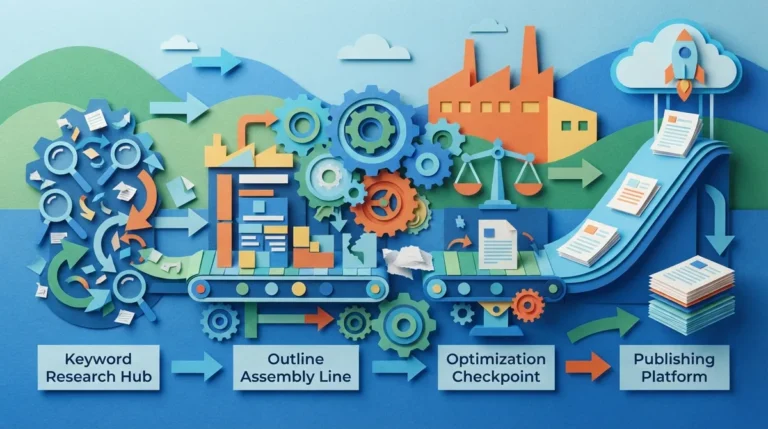
SEO Rocket functions as an end-to-end content automation system. After initial setup taking under 10 minutes, the platform autonomously discovers keyword opportunities, analyzes competitors, generates 3,000+ word articles, optimizes for search engines, creates metadata, adds relevant images and videos, builds internal and external links, incorporates business mentions, scores SEO performance, suggests fixes, and publishes directly to WordPress, Webflow, Shopify, or Wix sites daily. According to recent research, practices neglecting AI-first strategies could lose up to 50% of new patient leads by 2026, emphasizing the importance of comprehensive automation.
This distinction matters significantly for businesses evaluating long-term scalability and resource allocation. Claude requires ongoing human involvement for every piece of content. SEO Rocket eliminates this bottleneck entirely.

Content Generation Capabilities and Quality
Claude demonstrates impressive natural language generation capabilities. The model produces coherent, contextually appropriate prose that often requires minimal editing for grammar and readability. In head-to-head comparisons with competing models like Grok, Claude achieved a 272% growth rate in tested SEO analysis tasks, showcasing its analytical strength. The platform excels at understanding complex prompts and generating content that addresses user intent with nuance.
However, Claude’s content quality depends heavily on prompt engineering expertise. Users must craft detailed instructions specifying tone, structure, keyword placement, target audience, and content depth. Even with excellent prompts, generated content requires manual SEO optimization including keyword density adjustments, header structuring, meta description creation, and internal linking strategies.
SEO Rocket produces 3,000+ word long-form articles optimized specifically for search engine ranking. The platform’s AI system automatically incorporates target keywords at appropriate density (~1.5%), structures content with descriptive H2 and H3 headings, generates SEO-optimized meta descriptions, creates compelling titles, and builds relevant internal and external link structures. Each article includes AI-generated images, embedded videos where appropriate, and automatic business mentions that strengthen brand presence without appearing promotional.
The quality distinction extends beyond initial generation. SEO Rocket includes real-time SEO scoring with automated fix suggestions, ensuring every published article meets current search engine requirements. This built-in optimization layer addresses technical SEO elements that Claude users must handle manually through separate tools.

Automation and Workflow Efficiency
Workflow efficiency represents perhaps the most significant operational difference between these platforms. Claude’s typical content creation workflow involves multiple manual steps:
- Conducting keyword research using separate tools
- Crafting detailed content prompts for Claude
- Generating initial draft content
- Editing and optimizing text for SEO requirements
- Adding metadata, headers, and formatting
- Sourcing and inserting relevant images
- Building internal and external links
- Creating meta descriptions and optimizing titles
- Uploading and publishing to CMS platforms
- Scheduling publication timing
This workflow requires several hours per article, even with Claude’s assistance. Content teams must repeat these steps for every piece of content, creating scalability challenges and ongoing labor costs.
SEO Rocket’s automated workflow eliminates these manual touchpoints entirely. The platform continuously monitors search opportunities, automatically populates a visual content calendar with high-potential keywords, generates fully optimized articles, and publishes directly to connected websites daily. Users review the content calendar periodically, but the system operates independently without daily intervention.
This automation delivers substantial time savings. Traditional SEO agencies charge $3,000–$5,000 monthly for comparable content output. Freelance writers producing similar quality require 4-6 hours per long-form article. SEO Rocket reduces per-article cost to approximately $3 while requiring zero ongoing time investment after initial setup.

AI Search Engine Optimization in 2026
Modern SEO extends far beyond Google rankings. AI-powered search engines including ChatGPT, Perplexity, Claude Search, Gemini, Copilot, and Grok now answer user queries by synthesizing information from trusted sources. Getting cited in AI responses requires specific content structuring that traditional Google SEO approaches often miss.
Research on Claude Search visibility reveals that traditional SEO strategies fall short for AI-first search optimization. Studies show dental practices publishing content daily achieved 40% higher Claude visibility than monthly publishers. Technical performance matters significantly—nearly half of tested sites failed Claude’s speed benchmarks requiring load times under 2 seconds. Modern AI models reject outdated SEO tactics, favoring fresh, authoritative content structured for easy extraction.
Claude the language model can generate content optimized for these AI search engines when properly prompted. However, users must understand AI search requirements, incorporate these specifications into prompts, and manually verify implementation. This requires staying current with evolving AI search algorithms across multiple platforms—a significant knowledge burden.
SEO Rocket builds AI search optimization into every generated article by default. The platform structures content specifically so AI models can reference it as a trusted source, increasing the likelihood of appearing in AI-generated answers and overviews. This optimization covers Google’s AI Overviews plus emerging AI search platforms, positioning businesses for visibility across the expanding AI search ecosystem. Learn more about SEO Rocket’s AI search optimization features.

Keyword Research and Content Strategy
Effective SEO begins with identifying the right keyword opportunities. Claude can assist with keyword research when provided with competitor URLs or topic areas, generating lists of potential keywords and analyzing search intent. Users must still employ dedicated keyword research tools like SEMrush, Ahrefs, or Google Keyword Planner to validate search volume, competition levels, and ranking difficulty before committing to content production.
This multi-tool approach creates workflow friction. Data flows manually between research platforms, Claude for content generation, and SEO tools for optimization validation. Each handoff introduces potential errors and requires decision-making about which keywords to prioritize.
SEO Rocket integrates keyword discovery directly into its automation engine. The platform automatically identifies keyword opportunities by analyzing your website, monitoring competitors, and mapping market opportunities. It prioritizes keywords based on search volume, competition, and ranking probability, then automatically populates your content calendar with high-potential targets. This integrated approach eliminates tool-switching and ensures every article targets validated opportunities.
The strategic advantage becomes clear over time. SEO Rocket’s daily publishing creates compounding SEO growth as accumulated articles cover increasingly comprehensive keyword portfolios. Manual approaches using Claude struggle to maintain this publishing velocity consistently, limiting total keyword coverage and ranking potential.

Publishing and Platform Integration
Content reaches audiences only after publication. Claude generates text that users must manually copy, paste, format, and publish through their content management system. This requires CMS access, understanding platform-specific formatting requirements, and ensuring proper metadata implementation. For businesses publishing multiple articles weekly, this becomes a significant operational bottleneck.
SEO Rocket publishes directly to WordPress, Webflow, Shopify, and Wix without manual intervention. After connecting your website during initial setup, the platform handles all publishing logistics automatically. Articles appear on schedule with proper formatting, optimized images, functional links, and complete metadata. This direct integration eliminates the copy-paste workflow entirely while ensuring consistent publication quality.
For agencies managing multiple clients, this distinction multiplies in importance. Claude requires separate manual publishing for each client website. SEO Rocket’s Agency plan supports 10 client workspaces with 300 monthly articles, each publishing automatically to the appropriate website. This scalability enables agencies to serve more clients without proportional increases in labor costs.

Pricing and Value Comparison
Understanding total cost of ownership requires examining both direct platform costs and associated labor expenses. Claude Pro costs approximately $20 monthly or $17 monthly when billed annually, providing access to advanced models with 200K token limits suitable for SEO content generation. This represents an affordable entry point for AI-assisted writing.
However, Claude’s cost represents only one component of total content production expenses. Users must account for:
- Keyword research tool subscriptions ($99-$399 monthly for platforms like Ahrefs or SEMrush)
- Content editing and optimization labor (2-4 hours per article at $25-$75 hourly rates)
- Image sourcing and creation tools ($10-$50 monthly for stock photos or Canva subscriptions)
- SEO audit and optimization tools ($50-$200 monthly for platforms like Surfer or Clearscope)
- Project management and workflow coordination time
- CMS management and publishing labor
When totaled, producing one high-quality 3,000-word SEO article weekly using Claude typically costs $500-$1,000 monthly when accounting for all tools and labor. Producing daily articles would cost $2,000-$4,000 monthly—comparable to traditional SEO agency pricing.
SEO Rocket’s transparent pricing structure includes all functionality in simple tiers. The Business plan costs $99 monthly and includes 30 fully automated articles (one daily), unlimited rewrites, unlimited team members, all platform integrations, and complete automation from keyword research through publishing. This represents approximately $3 per article—a 95% cost reduction compared to manual approaches using Claude.
The Agency plan costs $799 monthly and provides 300 articles across 10 client workspaces, enabling agencies to serve multiple clients while maintaining healthy profit margins. A unique lifetime plan at $1,499 offers permanent access without ongoing subscription costs—particularly attractive for long-term SEO strategies.
| Cost Factor | Claude Approach | SEO Rocket |
|---|---|---|
| Base Platform Cost | $20/month | $99/month (Business) |
| Keyword Research Tools | $99-$399/month | Included |
| Optimization Tools | $50-$200/month | Included |
| Content Labor (30 articles) | $1,500-$4,500/month | Included |
| Publishing Labor | $300-$900/month | Automated |
| Image Creation | $10-$50/month | AI-generated |
| Total Monthly Cost | $1,979-$6,069 | $99 |
| Cost Per Article | $66-$202 | $3.30 |
Team Collaboration and Scalability
Growing content operations requires considering team collaboration capabilities. Claude supports individual accounts with conversation history and custom instructions. Teams using Claude typically share login credentials or purchase multiple subscriptions, then coordinate through external project management tools. This approach works for small teams but creates collaboration friction as operations scale.
SEO Rocket includes unlimited team members in all plans. Multiple team members access shared workspaces with unified content calendars, performance tracking, and collaborative approval workflows. Content managers review and approve automatically generated content calendars while team members monitor published article performance. This built-in collaboration eliminates the need for separate coordination tools.
For agencies, this distinction matters significantly. The Agency plan’s 10 client workspaces allow separate teams to manage different client accounts within one unified platform. This organizational structure supports agency growth without platform limitations or coordination complexity.
Performance Tracking and Optimization
Measuring SEO success requires ongoing performance monitoring. Claude provides no built-in analytics or ranking tracking. Users must employ separate tools like Google Search Console, Google Analytics, and rank tracking platforms to monitor how Claude-generated content performs. Connecting performance data back to content decisions requires manual analysis and interpretation.
SEO Rocket includes integrated performance tracking showing how published articles rank, drive traffic, and contribute to overall SEO growth. The platform’s real-time SEO scoring provides immediate feedback on content quality before publication, while post-publication analytics demonstrate ranking improvements over time. This closed-loop system enables data-driven content strategy refinement without additional tools.
The compounding nature of SEO makes this tracking particularly valuable. As SEO Rocket publishes daily, accumulated articles build topical authority and internal linking networks that strengthen domain-wide rankings. Performance tracking reveals which topics and keywords generate the strongest results, informing future content prioritization. According to the Search Quality Rater Guidelines, consistent content quality and expertise signals significantly impact search visibility.
Ideal Use Cases for Each Platform
Understanding when each tool provides optimal value helps businesses make informed decisions. Claude excels in scenarios requiring:
- One-off content pieces requiring specific creative direction
- Content types beyond SEO articles (emails, social posts, scripts)
- Brainstorming and ideation sessions
- Content editing and refinement assistance
- Businesses with in-house SEO expertise and time for manual optimization
- Writers seeking AI assistance while maintaining hands-on content control
SEO Rocket provides superior value for:
- Businesses requiring consistent, scalable SEO content production
- Companies without dedicated SEO or content teams
- Agencies managing multiple client SEO programs simultaneously
- Organizations prioritizing time efficiency and automation
- Businesses targeting visibility across AI search engines beyond Google
- Long-term SEO strategies requiring daily publishing consistency
- Budget-conscious operations seeking maximum content output per dollar
Many successful content strategies employ both tools in complementary roles. Teams use SEO Rocket for automated daily SEO content while leveraging Claude for specialized creative pieces, social media content, or email campaigns. This hybrid approach maximizes automation benefits while preserving flexibility for custom content needs.
The Future of SEO Content Production
The SEO industry continues evolving rapidly as AI search engines gain prominence. Google’s integration of AI Overviews, combined with the growth of ChatGPT, Perplexity, Claude Search, and other AI search platforms, fundamentally changes content strategy requirements. Businesses must optimize for both traditional search rankings and AI answer citations to maintain visibility.
This evolution favors automation platforms purpose-built for multi-channel AI search visibility. Manual approaches using general-purpose AI assistants like Claude struggle to keep pace with algorithm changes across multiple platforms. Staying current requires continuous learning about platform-specific optimization requirements—a significant knowledge burden for most businesses. Check the SEO Rocket roadmap to see upcoming features addressing emerging AI search platforms.
Automation platforms like SEO Rocket centralize this expertise, continuously updating optimization algorithms to match current requirements across all major search platforms. Users benefit from these improvements automatically without manual intervention or ongoing education requirements. This knowledge centralization represents a significant competitive advantage as AI search complexity increases.
Daily content publication creates another forward-looking advantage. Search algorithms increasingly favor frequently updated websites demonstrating ongoing expertise. Research shows that 40% higher Claude visibility accrued to practices publishing daily versus monthly. Manual content approaches rarely sustain true daily publishing over extended periods. Automation makes this consistency achievable and sustainable.
Making the Strategic Decision
Choosing between SEO Rocket and Claude ultimately depends on business priorities, resources, and content strategy goals. Claude represents an excellent tool for businesses with existing SEO expertise, available time for content optimization, and preference for hands-on content control. The platform provides powerful AI assistance while preserving human direction throughout the creation process.
SEO Rocket delivers superior value for businesses prioritizing scalability, automation, and comprehensive end-to-end content management. The platform eliminates the learning curve, tool coordination, and ongoing labor requirements that make manual SEO content production expensive and time-consuming. For agencies, small business owners, and marketing teams seeking maximum efficiency, the automation advantages prove decisive.
Consider these questions when making your decision: Does your team have time to manually optimize, link, format, and publish content daily? Do you possess current SEO expertise across Google and emerging AI search platforms? Can you afford $2,000-$4,000 monthly for daily content production using manual methods? Will your content strategy benefit from 95% cost reduction and complete automation? Review recent platform updates to understand how automation capabilities continue expanding.
The most successful SEO strategies in 2026 prioritize consistency, quality, and multi-platform optimization. Whether achieved through manual excellence using tools like Claude or comprehensive automation through platforms like SEO Rocket, these fundamental requirements remain constant. The critical decision centers on which approach aligns with your resources, expertise, and long-term content goals.
For businesses ready to eliminate manual SEO work while scaling content production to industry-leading levels, start your SEO Rocket automation today and experience the difference comprehensive automation makes for search visibility and organic traffic growth.
FAQs
Q: What is the main difference between SEO Rocket and Claude for SEO content?
A: The fundamental difference lies in automation scope. Claude functions as an AI writing assistant requiring manual input, editing, optimization, and publishing for each piece of content. SEO Rocket operates as a complete automation system handling everything from keyword research through daily publishing without ongoing manual intervention. While Claude assists with content creation, SEO Rocket manages the entire SEO content lifecycle automatically.
Q: Can Claude generate content optimized for AI search engines like ChatGPT and Perplexity?
A: Claude can generate content optimized for AI search engines when properly prompted with specific instructions. However, users must understand AI search requirements across multiple platforms and manually incorporate these specifications into each prompt. SEO Rocket builds AI search optimization into every article by default, structuring content specifically for visibility across Google AI Overviews, ChatGPT, Perplexity, Claude Search, Gemini, Copilot, and Grok without requiring specialized knowledge.
Q: Which platform offers better value for agencies managing multiple clients?
A: SEO Rocket provides superior value for agencies through its dedicated Agency plan supporting 10 client workspaces with 300 monthly articles at $799. This enables automated content production across multiple clients without proportional labor increases. Using Claude requires manual work for each client, making it difficult to scale profitably. SEO Rocket’s per-article cost of approximately $3 versus $66-$202 using manual Claude approaches allows agencies to maintain healthy margins while delivering consistent results.
Q: How does content quality compare between SEO Rocket and Claude?
A: Both platforms produce high-quality content suitable for SEO purposes. Claude generates natural, contextually appropriate prose with strong analytical capabilities, achieving 272% growth rates in tested SEO analysis tasks. SEO Rocket produces comprehensive 3,000+ word articles with built-in SEO optimization including proper keyword density, strategic header structuring, metadata generation, internal linking, and real-time SEO scoring. The key difference is that Claude requires manual optimization after generation, while SEO Rocket delivers publication-ready optimized content automatically.
Q: Do I need SEO expertise to use SEO Rocket effectively?
A: No specialized SEO expertise is required to use SEO Rocket effectively. The platform automates all technical SEO requirements including keyword research, competitor analysis, content optimization, metadata creation, linking strategies, and AI search structuring. Users simply connect their website during the 10-minute setup process and review the automatically generated content calendar periodically. In contrast, using Claude effectively for SEO requires understanding keyword research, on-page optimization, linking strategies, and current algorithm requirements across multiple search platforms.