Key Takeaways
-
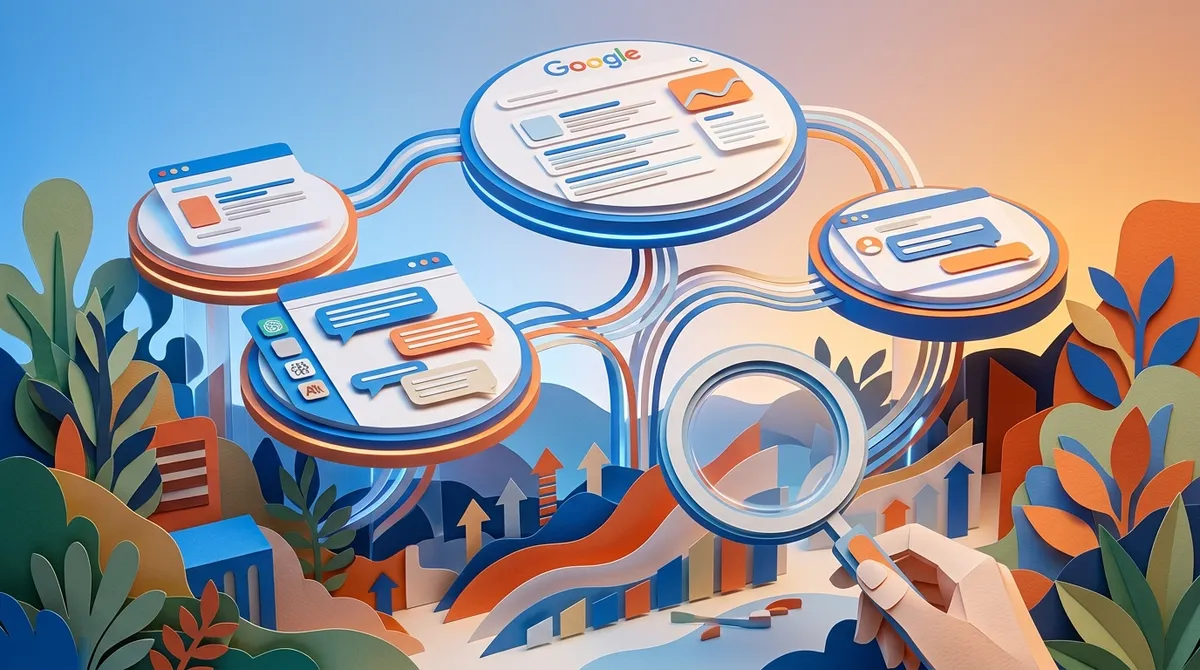
Search visibility tools now must track both Google rankings and AI platform appearances (ChatGPT, Perplexity, Claude, Gemini) since AI engines handle millions of daily searches and determine which content gets cited in AI Overviews.
-
All-in-one SEO automation platforms deliver the best ROI by combining visibility tracking with automated content creation, allowing teams to identify ranking gaps and publish optimized articles within hours instead of weeks.
-
Google's AI Overviews now summarize content at the top of results without clicks, making it critical that your articles are cited as authoritative sources and optimized for AI discoverability, not just traditional rankings.
-
Effective visibility tracking requires connecting data insights to action—knowing a keyword has low visibility is useless without a content plan to address gaps, ideally through automated publishing workflows.
-
Key features to prioritize include multi-engine tracking across Google and AI platforms, AI Overview detection, competitor benchmarking, and historical snapshots to spot trends rather than reacting to daily ranking fluctuations.
-
Small businesses can compete with larger brands by using visibility tools to identify lower-competition, intent-driven keywords and consistently publishing optimized content—building compounding organic traffic without large budgets.
If you’ve ever published blog posts and wondered why nobody finds them, you’re not alone. Thousands of business owners, marketers, and content managers face the same frustration. You write great content. You hit publish. And then… crickets. A search visibility tool can change that completely. It shows you exactly where your content stands in search results — and what you need to do to climb higher. In 2026, with AI-powered search engines reshaping how people find information, visibility has never mattered more. Google is still important. But now ChatGPT, Perplexity, Claude, and Gemini are also answering questions and sending traffic. If your content isn’t optimized for all of these, you’re leaving a lot of organic traffic on the table. This guide breaks down what a search visibility tool does, who needs one, and how to use it to get real results.

What Is a Search Visibility Tool?
A search visibility tool tracks how often your website appears in search results. It measures your presence across search engines like Google and, increasingly, AI platforms. Think of it like a scoreboard for your SEO performance. The higher your visibility score, the more people are finding your content organically.
These tools typically measure several things at once. They look at keyword rankings, click-through rates, AI Overview appearances, and branded mentions. Some also track competitor visibility so you can benchmark your progress. If you want to improve your AI search visibility in 2026, you first need a way to measure it accurately.

Why Search Visibility Matters More in 2026
Search has fundamentally changed. Google’s AI Overviews (AIO) now appear at the top of results pages for millions of queries. When someone searches for advice, Google often summarizes content directly — without the user clicking through to your site. This makes it critical for your content to be the source that gets cited.
At the same time, AI tools like ChatGPT and Perplexity are handling millions of searches daily. They pull from trusted, well-structured content across the web. If your articles are thin, outdated, or poorly optimized, they won’t get referenced. A good search visibility tool helps you track where you stand across all of these channels — not just traditional Google rankings.
You can also learn how to get featured in AI Overviews to understand how AI-powered results work and what it takes to appear inside them consistently.
Key Features to Look for in a Search Visibility Tool
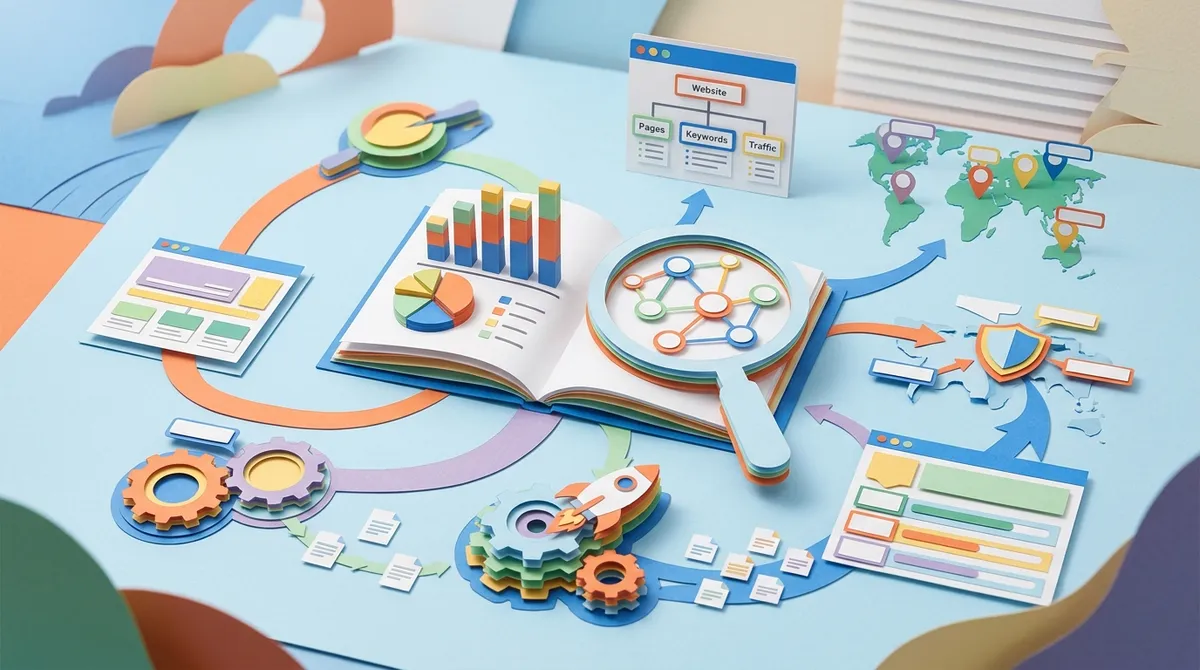
Not all visibility tools are created equal. Here are the most important features to look for when choosing one:
- Multi-engine tracking: Monitors rankings on Google, Bing, and AI platforms like ChatGPT and Perplexity
- AI Overview detection: Identifies when your content appears inside Google’s AI Overviews
- Keyword tracking: Monitors target keywords across hundreds or thousands of search queries
- Competitor benchmarking: Shows how your visibility compares to others in your niche
- Sentiment analysis: Flags whether AI tools mention your brand positively or negatively
- Historical snapshots: Tracks changes in visibility over time so you can spot trends
- Content scoring: Grades individual articles for SEO strength and AI discoverability
For enterprise teams, tools that handle massive keyword sets with historical SERP data are especially useful for large-scale AI Overview analysis. For smaller businesses and agencies, simplicity and automation matter more.

Popular Types of Search Visibility Tools in 2026
Traditional SEO Visibility Trackers
These tools focus mainly on Google rankings. They track keyword positions over time and show you how visible your site is for specific search terms. They’re useful for monitoring organic performance and spotting drops before they become serious problems.
AI Search Visibility Platforms
These are newer tools built specifically for the AI search era. They track brand mentions and citations inside platforms like ChatGPT, Perplexity, Claude, and Gemini. Some platforms track visibility across six or more AI engines simultaneously, with sentiment analysis to show whether your brand is being portrayed positively. This is increasingly important for brands trying to stay relevant across all discovery channels.
Content Optimization and Scoring Tools
These tools grade your content in real time. They measure how well your articles are optimized for both Google and AI search engines. Features like content scoring, internal linking suggestions, and format recommendations help writers produce content that ranks. If you’re interested in SEO content writing best practices for 2026, content scoring tools can be a great complement.
All-in-One SEO Automation Platforms
These platforms combine visibility tracking with automated content creation and publishing. Instead of just showing you what’s wrong, they actually fix it. They generate optimized content, schedule it, publish it, and track performance — all in one place. This is the most powerful category for businesses that want results without managing multiple tools.
How Search Visibility Tools Fit Into Content Automation
A search visibility tool is most powerful when it’s connected to your content workflow. Knowing that a keyword has low visibility is only helpful if you can act on it quickly. That’s where content automation changes everything.
When your visibility data feeds directly into an automated content calendar, you can respond to ranking drops or opportunities within hours — not weeks. Instead of manually researching what to write next, the system identifies gaps and fills them automatically. Check out daily blog posting strategies that drive results in 2026 to see how consistent publishing impacts long-term visibility.
Here’s how a connected visibility and automation workflow typically looks:
- Visibility scan: The tool identifies keywords where your site ranks below page one or doesn’t appear in AI results
- Opportunity mapping: It surfaces the highest-value gaps based on search volume and competition
- Content scheduling: Identified topics are automatically added to a publishing calendar
- Article generation: Long-form, SEO-optimized articles are created for each topic
- Publishing: Articles go live directly on your site — no copy-pasting required
- Re-tracking: The visibility tool monitors how rankings respond over the following weeks
This loop — track, plan, create, publish, repeat — is what creates compounding SEO growth over time.
Comparing Search Visibility Tool Approaches
Here’s a quick comparison of how different types of tools approach visibility tracking:
| Tool Type | Best For | AI Search Support | Content Automation |
|---|---|---|---|
| Traditional rank trackers | Google-focused SEO monitoring | Limited or none | No |
| AI visibility platforms | Brand tracking in AI engines | Strong (6+ platforms) | Partial |
| Content scoring tools | Optimizing individual articles | Moderate | Partial |
| All-in-one automation platforms | End-to-end SEO content workflows | Full (Google + AI engines) | Full |
For most businesses in 2026, the all-in-one approach delivers the best return. You get visibility data AND the tools to act on it immediately.
Who Needs a Search Visibility Tool?
The short answer: anyone who relies on organic traffic. But let’s get more specific. Here’s who benefits most:
- Small SEO agencies managing multiple clients who need clear reporting on each client’s search performance
- In-house marketing teams that need to justify SEO spend with concrete visibility data
- Content managers responsible for large blogs who need to spot underperforming pages quickly
- E-commerce specialists tracking visibility across hundreds of product and category pages
- Small business owners who want to compete with bigger brands without hiring an agency
- Digital marketing consultants who need fast, reliable results for clients
If you manage content at any scale, visibility data helps you focus effort where it matters most. Without it, you’re essentially publishing in the dark and hoping something sticks.
How SEO Rocket Handles Search Visibility
SEO Rocket was built with search visibility at its core. It’s not just a tracking tool — it’s a full SEO content automation platform that combines visibility insight with daily content production. You can explore the full feature set to see exactly how it works.
Here’s what sets SEO Rocket apart for visibility-focused content teams:
- Built-in keyword research: Live SEO data surfaces real opportunities based on search volume, competition, and intent — not guesswork
- Automated content calendar: Approved keywords are scheduled automatically and turned into full articles
- AI-optimized articles: Every article is structured to rank on Google AND appear in AI-generated answers from ChatGPT, Perplexity, Claude, Gemini, Copilot, and Grok
- Real-time SEO scoring: Each article gets a score before publishing, with automated fix suggestions built in
- Direct publishing: Articles publish directly to WordPress, Webflow, Shopify, or Wix — zero manual work
The platform generates one 3,000+ word article per day on the Business plan, creating a compounding visibility advantage that grows over time. To understand what the best AI blog post generator in 2026 looks like in practice, SEO Rocket is a strong benchmark. For agencies, the Agency plan supports 10 client workspaces and 300 articles per month. You can review the pricing options starting at $99/month to find the right fit for your team.
Common Mistakes When Using Search Visibility Tools
Even with great tools, it’s easy to make avoidable mistakes. Here are a few to watch out for:
- Tracking vanity keywords only: High-volume keywords are competitive. Focus on intent-driven, achievable keywords too
- Ignoring AI engine visibility: Only monitoring Google means missing a growing share of search traffic
- Not acting on the data: Visibility tools show you problems. You still need a content plan to fix them
- Checking rankings too frequently: Rankings fluctuate daily. Look at weekly or monthly trends instead
- Skipping competitor analysis: Understanding where competitors are visible helps you find content gaps faster
The best approach is to use visibility data as a regular part of your content planning — not just a one-time audit. To understand the full process, the complete guide to blog writing with AI in 2026 covers how to turn visibility insights into consistent, ranking content. You can also check the SEO Rocket product roadmap to see how visibility features are evolving in the platform.
Getting Started with Search Visibility Tracking
Starting is simpler than most people expect. Here’s a straightforward process for getting up and running:
- Audit your current visibility: Use a tool to see where you currently rank and which pages get the most organic impressions
- Identify your target keywords: Focus on terms that match what your audience is actually searching for
- Set a visibility baseline: Record your current scores so you can measure improvement over time
- Connect visibility to content planning: Use what you find to prioritize your next articles or updates
- Review monthly: Track changes, celebrate wins, and adjust your strategy based on what the data shows
For a deeper look at how to structure this process, understanding organic search vs. paid search can help you set realistic visibility goals. If you’re new to the whole process, the SEO Rocket FAQ page answers common questions about getting started with automated content and visibility tracking.
Conclusion
A search visibility tool isn’t a luxury in 2026 — it’s a necessity. Whether you’re a solo business owner or a growing agency, knowing how your content performs across Google and AI search engines is the foundation of smart SEO. Visibility data tells you what’s working, what isn’t, and where the biggest opportunities are hiding.
The real power comes when visibility tracking is paired with automated content production. That’s how you stop playing catch-up and start building consistent, compounding organic traffic. If you’re ready to make SEO work for you without spending hours on it every week, get started with SEO Rocket today and see what automated, visibility-driven content can do for your site. With a free 3-day trial and plans starting at just $99/month, there’s no reason to keep publishing in the dark.
FAQs
Q: What does a search visibility tool actually measure?
A: A search visibility tool measures how often your website appears in search results across Google and AI platforms like ChatGPT and Perplexity. It tracks keyword rankings, AI Overview appearances, competitor benchmarks, and branded mentions — giving you a clear picture of how discoverable your content really is.
Q: Do I need a separate tool for AI search visibility and Google rankings?
A: Not necessarily! Many modern all-in-one platforms now track both traditional Google rankings and AI engine visibility in one dashboard. This saves you from juggling multiple tools and gives you a unified view of your total search presence across every major channel.
Q: How often should I check my search visibility scores?
A: We’d recommend reviewing your visibility data weekly or monthly rather than daily. Rankings naturally fluctuate day to day, so looking at trends over time gives you much more useful insights. Monthly reviews are great for strategic planning, while weekly check-ins help you catch any sudden drops early.
Q: Can a search visibility tool help small businesses compete with larger brands?
A: Absolutely — and this is one of the most exciting things about modern visibility tools! They help you find lower-competition keywords where smaller sites can genuinely rank. By identifying the right content gaps and acting on them consistently, small businesses can build real organic visibility without needing a huge budget.
Q: How does search visibility relate to content automation?
A: Search visibility data tells you what content to create next, while automation handles the actual writing, optimization, and publishing. Together, they create a system where you’re constantly producing the right content for the right keywords — building compounding organic traffic without spending hours on manual work every week.