Key Takeaways
- Organic search delivers 5x more cost-effective traffic compared to paid search, generating compounding value over time without per-click expenses.
- Users trust organic search results significantly more, with 94% of clicks going to organic listings versus only 6% for paid advertisements.
- Organic search ROI can exceed 500% within 6-12 months, with a single optimized article potentially generating traffic for years.
- Paid search provides immediate visibility and precise targeting, ideal for time-sensitive promotions and quick market testing.
- Emerging AI search engines favor organic content, offering expanded visibility beyond traditional search engine results pages.
- Combining organic and paid search strategies creates synergistic marketing approach, occupying more search real estate and increasing brand trust.
Understanding the distinction between organic search and paid search is critical for any business building an online presence in 2026. As digital marketing continues to evolve with AI-powered search engines and changing user behavior, the choice between organic and paid strategies directly impacts your budget, visibility, and long-term growth. This comprehensive comparison explores seven fundamental differences between organic search and paid search, helping you determine which approach—or combination—best serves your business goals.
Both organic and paid search aim to drive traffic from search engines like Google, but they operate through entirely different mechanisms. Organic search relies on search engine optimization (SEO) to earn unpaid rankings based on content quality, relevance, and authority. Paid search uses pay-per-click (PPC) advertising to purchase immediate visibility through sponsored placements. The strategic implications of choosing between these approaches extend far beyond simple cost considerations—they affect your brand credibility, conversion rates, and competitive positioning for years to come.

1. Cost Structure and Budget Requirements
The most immediate difference between organic search and paid search lies in their cost structures. Organic search requires investment in content creation, technical optimization, and ongoing SEO efforts, but delivers traffic without paying for individual clicks. According to recent industry data, organic search is approximately five times more cost-effective than paid advertising in the long term. Once your content ranks, it continues generating traffic without additional per-click costs, creating compounding value over time.
Paid search operates on a pay-per-click model where you bid on keywords and pay each time someone clicks your ad. While this provides immediate traffic control and predictable costs, it requires continuous budget allocation. The moment you stop funding campaigns, traffic disappears entirely. For businesses with limited marketing budgets, this fundamental difference often determines which strategy to prioritize first.
Small businesses typically find organic search more sustainable for building long-term visibility, while enterprises often deploy both strategies simultaneously. The average cost per click varies dramatically by industry and keyword competition, ranging from under $1 to over $50 for highly competitive commercial terms. In contrast, organic search investments focus on content production and optimization—expenses that decrease per-article when using automated content platforms that handle research, writing, and publishing at scale.

2. Time to Results and Traffic Generation Speed
Paid search delivers immediate visibility and traffic. Launch a campaign today, and qualified visitors can arrive within hours. This speed makes PPC invaluable for time-sensitive promotions, product launches, seasonal campaigns, or testing new markets quickly. Businesses needing instant results—such as e-commerce stores during holiday seasons or event promotions with fixed deadlines—benefit enormously from paid search’s predictability and speed.
Organic search requires patience and consistent effort. Most websites see meaningful ranking improvements within three to six months of implementing comprehensive SEO strategies, with full maturity often taking 6-12 months. However, this investment compounds over time. While paid campaigns stop generating traffic immediately when paused, organic rankings can maintain visibility for months or years with proper maintenance, creating an asset that appreciates rather than expires.
The compounding nature of organic search makes it particularly valuable for businesses focused on sustainable growth. Publishing one SEO-optimized article today contributes to domain authority and topical relevance that benefits all future content. Platforms like SEO Rocket address the time challenge by automating daily content production, allowing businesses to publish 30-300 articles monthly without manual effort, dramatically accelerating the timeline to organic search dominance.

3. Click-Through Rates and User Trust
One of the most significant advantages of organic search is user trust. Studies consistently show that 94% of clicks on Google go to organic results, while only 6% go to paid advertisements. This dramatic preference reflects users’ perception that organic results are more credible, relevant, and trustworthy than sponsored content. The top-ranking organic result achieves an average click-through rate of 27.6%—approximately ten times higher than the tenth organic position and significantly higher than most paid ad placements.
Paid search placements, despite appearing prominently at the top of search results (especially on mobile devices), face user skepticism. Many searchers scroll past ads entirely to reach organic results, associating paid placements with commercial intent rather than informational value. This trust gap translates directly into conversion performance: organic search leads convert at approximately 14.6%, compared to just 1.7% for paid search leads, according to recent conversion optimization research.
The trust advantage extends to brand perception. Companies ranking organically for competitive keywords signal authority and expertise in their field. Users unconsciously associate high organic rankings with industry leadership. This halo effect benefits all marketing efforts, as visitors who discover your brand through organic search are more likely to engage with other channels, subscribe to newsletters, and become long-term customers rather than one-time transactional buyers.

4. Return on Investment Comparison
When evaluating ROI, the timeframe matters enormously. Paid search typically delivers a 200% average ROI—meaning you generate $2 in revenue for every $1 spent. This return materializes quickly but remains linear; doubling your budget roughly doubles your results, but stopping investment immediately halts returns. For businesses with strong unit economics and immediate cash flow needs, this predictable return structure provides valuable flexibility.
Organic search demonstrates dramatically higher long-term ROI, often exceeding 500% within 6-12 months and continuing to grow as content ages and authority compounds. A single well-optimized article can generate traffic for years without additional investment, creating returns that multiply over time. This exponential growth pattern makes organic search one of the highest-ROI marketing channels available, particularly for businesses committed to multi-year growth strategies.
The ROI comparison becomes even more favorable for organic search when considering customer lifetime value. Organic traffic tends to attract users earlier in their research journey, building relationships over time that result in higher retention rates and repeat purchases. Additionally, organic search accounts for approximately 53% of all website traffic across industries, demonstrating its dominance as a traffic source. Businesses using automated SEO content platforms can achieve organic search ROI at a fraction of traditional costs, producing 3,000-word optimized articles for roughly $3 each versus $200-500 for manual content creation.
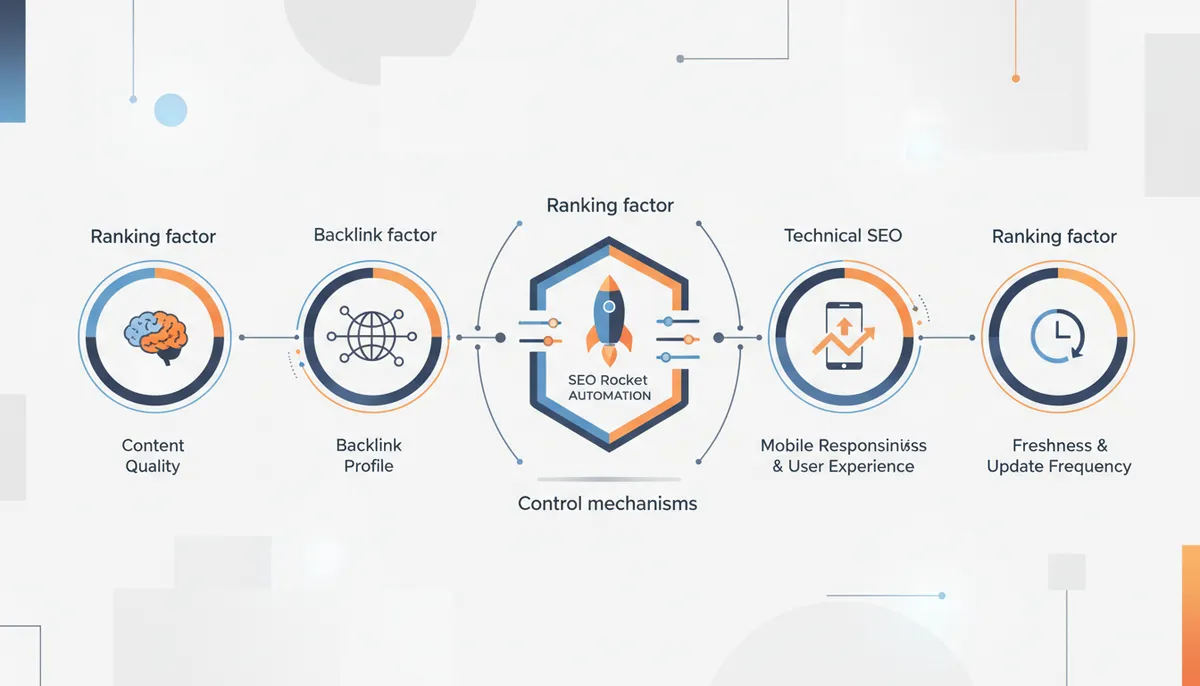
5. Ranking Factors and Control Mechanisms
Paid search provides granular control over virtually every campaign element. Advertisers determine exact keywords to target, set maximum bid amounts, define audience demographics and behaviors, control ad creative and messaging, schedule ads by time and location, and adjust budgets in real-time based on performance. This precision makes paid search ideal for testing messaging variations, targeting specific customer segments, or responding quickly to market conditions and competitor activities.
Organic search rankings depend on complex algorithms evaluating hundreds of factors, including content quality and relevance, technical website performance, backlink profile and domain authority, user engagement metrics, page speed and mobile optimization, and semantic keyword usage. While you cannot directly control rankings, you can optimize these factors systematically. Modern SEO requires understanding E-E-A-T principles (Experience, Expertise, Authoritativeness, Trustworthiness) that Google emphasizes in its Search Quality Rater Guidelines.
The control difference creates distinct strategic implications. Paid search allows rapid experimentation—you can test ten different headlines in a single day and identify winners within hours. Organic search requires longer-term thinking but rewards comprehensive content strategies. Climbing just one position in organic rankings boosts click-through rates by approximately 2.8%, incentivizing continuous optimization. Businesses succeeding in organic search typically adopt systematic content production processes, publishing consistently while continuously improving technical foundations.

6. Visibility Duration and Sustainability
Paid search visibility is entirely dependent on active campaigns and budget allocation. The moment funding stops, ads disappear immediately and traffic ceases completely. This creates a perpetual expense model where visibility requires ongoing investment. For businesses with seasonal demand or fluctuating cash flow, this lack of residual value can create challenging budget decisions during slow periods.
Organic search creates lasting assets. A well-written article ranking on page one can maintain that position for months or years with minimal maintenance, continuing to drive traffic long after publication. This durability transforms content from an expense into an investment that appreciates over time. Articles published years ago often remain top traffic drivers, providing ongoing returns without additional costs beyond occasional updates to maintain freshness and relevance.
The sustainability advantage becomes exponential with consistent publishing. Each new article contributes to topical authority, internal linking opportunities, and overall domain strength, benefiting all existing content. Businesses publishing daily through platforms like SEO Rocket create compounding visibility advantages that become increasingly difficult for competitors to overcome. After 6-12 months of consistent publishing, the accumulated organic traffic often exceeds what paid search could deliver at comparable investment levels, while continuing to grow rather than requiring perpetual funding.
7. Optimization for AI Search Engines
The search landscape in 2026 extends far beyond traditional Google rankings. AI-powered search engines including ChatGPT, Perplexity, Claude, Gemini, Copilot, and Grok now generate billions of queries monthly, creating new visibility opportunities. Organic content optimized for AI search—often called GEO (Generative Engine Optimization)—can appear as cited sources within AI responses, dramatically expanding reach beyond traditional search results pages.
Paid search remains largely confined to traditional search engines and their advertising networks. While Google Ads reaches massive audiences, it does not position your brand within AI-generated answers or conversational search contexts. As users increasingly rely on AI assistants for research and decision-making, businesses depending exclusively on paid search miss emerging traffic sources that may define the next decade of online discovery.
Organic content structured for both traditional SEO and AI search captures visibility across all channels. This includes comprehensive coverage of topics with clear, factual information, structured data markup that AI models can parse efficiently, authoritative citations and external references, natural language that answers questions directly, and internal linking that establishes topical relationships. Forward-thinking businesses are investing in content strategies that serve both traditional search engines and AI models simultaneously, future-proofing their visibility as search behavior continues evolving.
Strategic Recommendations: Choosing Your Approach
Most successful digital marketing strategies incorporate both organic and paid search, leveraging each approach’s strengths while mitigating weaknesses. Paid search excels for immediate results, precise targeting, time-sensitive campaigns, and rapid testing. Organic search dominates for long-term growth, cost efficiency, brand building, and sustainable traffic generation. The optimal allocation depends on your business stage, budget, timeline, and competitive landscape.
Startups and small businesses with limited budgets typically benefit from prioritizing organic search, accepting slower initial growth in exchange for sustainable long-term visibility without ongoing per-click costs. Established businesses with healthy cash flow often deploy paid search for immediate revenue while building organic assets simultaneously. E-commerce companies frequently use paid search for transactional bottom-funnel keywords while developing organic content for informational top-funnel queries that build brand awareness and authority.
The most effective approach combines both strategies to dominate search results pages. When your brand appears in both paid and organic positions, you occupy more visual real estate, increase overall click-through probability, and signal market leadership. Users seeing your brand multiple times develop stronger recall and trust, improving conversion rates across all channels. This synergistic effect makes the combined approach more valuable than either strategy in isolation.
Conclusion: Building Your Search Strategy for 2026
The organic search versus paid search decision fundamentally shapes your digital marketing trajectory, budget allocation, and long-term competitive positioning. While paid search delivers immediate traffic and precise control, organic search builds lasting assets that compound in value over time, ultimately delivering superior ROI, higher conversion rates, and greater user trust. The data is compelling: organic search accounts for 53% of website traffic, attracts 20 times more clicks than paid ads, and converts at rates nearly nine times higher than paid search leads.
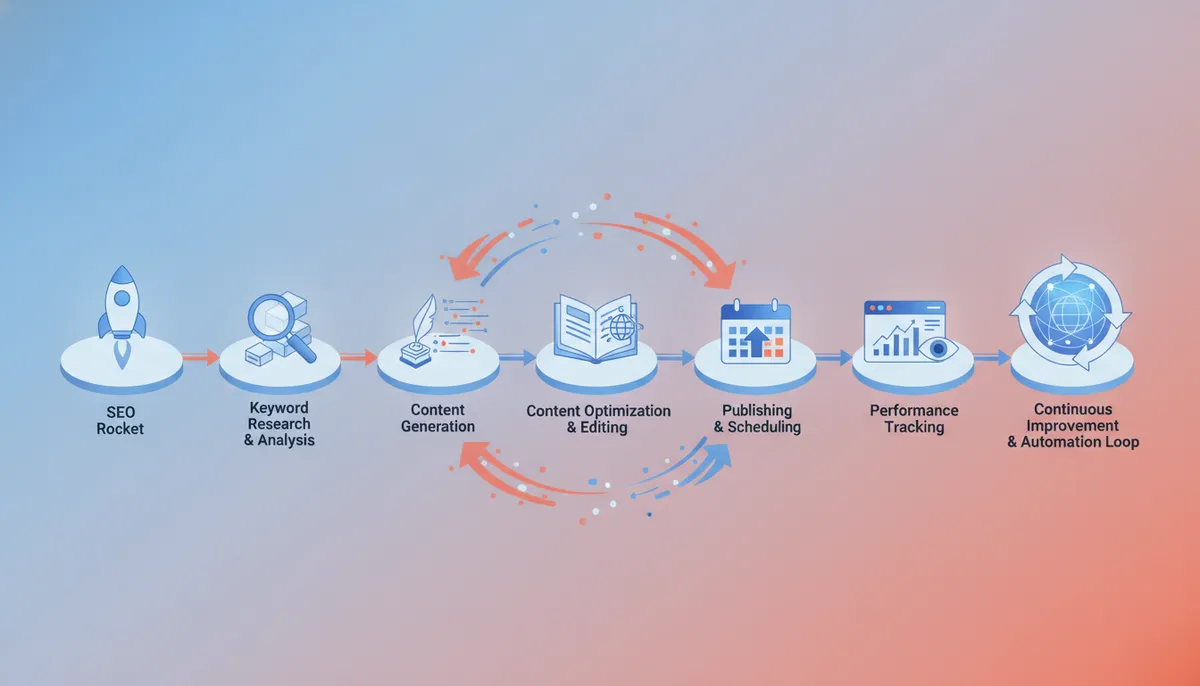
For businesses committed to sustainable growth in 2026 and beyond, investing in organic search is non-negotiable. The challenge lies in producing the volume and quality of content required to compete effectively—a task that traditionally demands significant time, expertise, and resources. This is where automation transforms the equation. By eliminating the manual work of keyword research, content creation, optimization, and publishing, modern platforms make enterprise-grade SEO accessible to businesses of all sizes.
Whether you’re a small business competing for local visibility, an e-commerce store scaling product content, or an agency managing multiple clients, the path to organic search dominance requires consistent, high-quality content production. The choice is clear: continue struggling with manual processes or embrace automation that delivers 3,000-word optimized articles daily. Start building your organic search advantage today for just $99/month and experience the compounding returns that transform content from an expense into your most valuable marketing asset.
FAQs
Q: What is the main difference between organic search and paid search?
A: Organic search results are unpaid listings ranked by search engines based on content quality, relevance, and SEO factors, while paid search results are sponsored advertisements where businesses pay per click. Organic search builds long-term visibility and costs nothing per click, whereas paid search provides immediate traffic but stops entirely when budget ends.
Q: Which is more cost-effective: organic search or paid search?
A: Organic search is approximately five times more cost-effective than paid search in the long term. While paid search delivers predictable 200% ROI, organic search often exceeds 500% ROI within 6-12 months and continues generating traffic without ongoing per-click costs, making it significantly more sustainable for businesses focused on long-term growth.
Q: How long does it take to see results from organic search compared to paid search?
A: Paid search delivers immediate results—traffic can begin within hours of launching a campaign. Organic search typically requires 3-6 months to see meaningful ranking improvements, with full maturity taking 6-12 months. However, organic rankings persist for months or years once achieved, while paid traffic stops immediately when campaigns end.
Q: Can combining organic and paid search improve overall visibility?
A: Yes, combining both strategies creates powerful synergies. When your brand appears in both paid and organic positions, you occupy more search result space, increase total click-through probability, and signal market authority. Users seeing your brand multiple times develop stronger trust and recall, improving conversion rates across all channels beyond what either strategy achieves independently.
Q: Why do organic search results get more clicks than paid ads?
A: Organic results receive approximately 94% of clicks while paid ads get only 6%, primarily due to user trust. Searchers perceive organic rankings as more credible and relevant than sponsored content, often scrolling past ads entirely. The top organic result achieves a 27.6% click-through rate, roughly ten times higher than most paid positions, and organic leads convert at 14.6% versus 1.7% for paid leads.