
Key Takeaways
-
Publish long-form content of 2,000–3,000+ words instead of thin 300–500 word articles to meet Google’s E-E-A-T standards and avoid site authority damage.
-
Conduct keyword research before automating to target topics with real search volume and intent; publishing without strategy results in zero organic traffic regardless of volume.
-
Use AI-generated original content instead of RSS feed aggregation to avoid duplicate content penalties, copyright violations, and Google spam detection triggers.
-
Implement a human review process before publishing to catch factual errors, off-brand messaging, and broken links that could embarrass your brand or trigger penalties.
-
Set up automatic internal linking between articles and monitor Google Search Console monthly to track impressions, rankings, and click-through rates for ongoing optimization.
-
Treat autoblogging as an evolving system requiring quarterly maintenance—review keywords, audit rankings, update content calendars, and adjust strategies as SEO landscapes and competitor content change.
WordPress autoblogging sounds like a dream come true. Set it up once, and your blog fills itself with fresh content every day. Your rankings climb. Traffic grows. You barely lift a finger.
But here’s the reality: most people set it up wrong. They make the same mistakes over and over, and those mistakes don’t just hurt their SEO — they can get their site penalized by Google entirely. If you’re running a WordPress site and you’re thinking about automating your content, this guide is for you.
We’ll walk through the seven biggest wordpress autoblogging mistakes people make in 2026, and more importantly, how to avoid every single one. Whether you’re a small business owner, a content manager, or an SEO agency handling multiple clients, these pitfalls are worth knowing before you hit publish on anything automated.
Let’s jump in and make sure your automated content works for you — not against you.
Mistake #1: Publishing Thin, Unoptimized Content
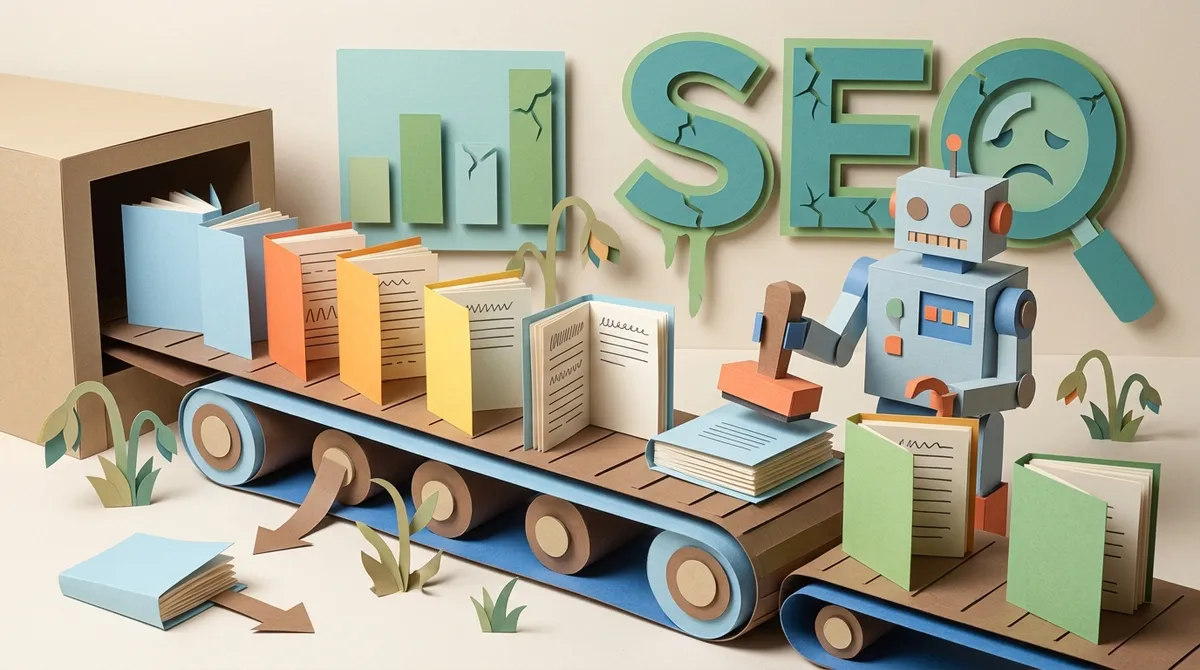
The most common wordpress autoblogging mistake is generating short, hollow articles. We’re talking 300–500 word posts with no real depth. Google’s Search Quality Rater Guidelines are clear: content needs to demonstrate experience, expertise, authority, and trust (E-E-A-T). Thin content fails every one of those tests.
Many automation tools still produce shallow content by default. If your automated posts are barely covering a topic, you’re not going to rank for anything meaningful. You might even drag your entire site’s authority down.
The fix is simple: aim for long-form content. Articles of 2,000–3,000+ words consistently outperform shorter posts in search rankings. Tools like SEO Rocket are built specifically to generate 3,000+ word articles by default, so you’re never accidentally publishing thin content that hurts your domain authority.

Mistake #2: Ignoring Keyword Research Before Automating
Here’s a mistake that’s painfully common: people set up wordpress autoblogging tools and just… start generating articles. No keyword research. No strategy. Just content for the sake of content.
That’s a recipe for writing about topics nobody searches for. You could publish 100 articles and get zero organic traffic if you’re targeting the wrong terms.
Good keyword research is the foundation of any autoblogging strategy. You need to know:
- What your audience is actually searching for
- How competitive each keyword is
- The search intent behind each term
- Which keywords offer real ranking opportunities
Platforms with built-in keyword discovery tools solve this problem automatically. If you want to learn the fundamentals first, check out this guide on SEO content writing for 2026 — it’s a great starting point before you automate anything.

Mistake #3: Using Only RSS Feeds as Your Content Source
RSS feed aggregation was the original form of wordpress autoblogging. Pull content from other sites, repost it, done. But in 2026, this approach is basically a fast track to a Google penalty.
Here’s why RSS-only autoblogging is dangerous:
- It produces duplicate content — Google hates this
- It doesn’t add any original value for readers
- It can violate copyright and intellectual property rules
- It triggers Google’s spam detection algorithms
- It damages your brand’s credibility and trustworthiness
The smart approach is AI-generated original content. Instead of pulling someone else’s work, you generate fresh, unique articles based on your own keyword targets. This is what modern wordpress autoblogging should look like — original content at scale, not recycled content from competitors.

Mistake #4: Skipping the Content Review Process
Automation is powerful. But it still needs a human eye — at least occasionally. One of the biggest autoblogging mistakes is setting up full autopilot without any quality review queue.
Even the best AI tools can sometimes produce:
- Factually inaccurate information
- Off-brand tone or messaging
- Repetitive content that covers the same ground twice
- Missing or broken internal/external links
A simple content review workflow protects you from publishing anything that could embarrass your brand or mislead your readers. You don’t need to read every single article word-for-word. But a quick skim before publishing — or even a scheduled batch review — goes a long way.
Think of it this way: automation handles the heavy lifting. You handle quality control. That balance is what separates thriving autoblogging setups from ones that get shut down by Google.
Mistake #5: Forgetting Internal Linking and Site Structure
WordPress autoblogging can produce a lot of content fast. That’s great for volume. But if those articles aren’t linking to each other — and to your key pages — you’re leaving a massive SEO opportunity on the table.
Internal linking does several important things:
- It helps Google crawl and index your content more efficiently
- It distributes page authority across your site
- It keeps readers on your site longer by guiding them to related content
- It signals to search engines which pages are most important
- It creates a logical content structure that improves user experience
Many basic autoblogging setups generate standalone articles with zero internal links. This is a serious mistake. Your automated content should be part of a connected web, not a collection of isolated posts.
If you want to see how proper internal linking and publishing consistency work together, check out these daily blog posting strategies that actually drive results. The principles apply directly to any autoblogging workflow.
Mistake #6: Not Monitoring Performance in Google Search Console
You’ve got your wordpress autoblogging running. Articles are being published daily. But are they actually working? Most people never check.
Not tracking performance is a critical mistake. Google Search Console shows you exactly which articles are getting impressions, clicks, and rankings — and which ones are dead weight. Without this data, you’re flying blind.
| Metric to Track | Why It Matters | Action to Take |
|---|---|---|
| Impressions | Shows if Google is indexing your content | Fix indexing issues if impressions are zero |
| Click-Through Rate | Reveals if titles and meta descriptions are compelling | Rewrite weak titles and meta descriptions |
| Average Position | Shows where you rank in search results | Update and improve articles ranked 5–20 |
| Core Web Vitals | Page speed and user experience signals | Optimize images and reduce page load time |
Set a monthly calendar reminder to review your Search Console data. Look for your highest-impression articles that aren’t getting clicks — those are quick wins waiting to happen with a title or meta description update.
Mistake #7: Treating Autoblogging as a Set-and-Forget System Forever
WordPress autoblogging is incredibly powerful when it’s treated as a system — not a magic button. The biggest mistake of all? Thinking you can set it up in January and completely ignore it for the rest of the year.
The SEO landscape changes constantly. What worked six months ago might not work today. Google updates its algorithms. Search trends shift. New competitor content enters your niche. Your autoblogging strategy needs to evolve with these changes.
Here’s what a healthy autoblogging maintenance routine looks like on a quarterly basis:
- Review your keyword list and add new targets based on trending topics
- Check which articles are ranking and which ones need improvement
- Update your content calendar with fresh topics and angles
- Audit your internal linking structure for gaps
- Review your SEO plugin settings and meta description templates
This doesn’t need to take more than a few hours per quarter. But doing it consistently is what separates sites that maintain their rankings from sites that plateau and fade. For deeper insight into staying visible in 2026’s search landscape, this article on improving AI search visibility is worth reading alongside your SEO audit.
What Good WordPress Autoblogging Actually Looks Like
Now that we’ve covered what NOT to do, let’s paint a picture of what a successful wordpress autoblogging setup looks like in practice.
| Element | Basic Autoblogging | Smart Autoblogging |
|---|---|---|
| Content Length | 300–700 words | 2,000–3,000+ words |
| Keyword Strategy | None or guesswork | Research-backed targeting |
| Content Source | RSS feeds only | AI-generated original content |
| Internal Linking | Missing | Automatic and structured |
| SEO Optimization | Manual or skipped | Automated titles, meta, schema |
| Performance Tracking | Never reviewed | Monthly Search Console audits |
| Quality Review | No review process | Scheduled batch reviews |
The difference between these two approaches is the difference between a site that gets penalized and a site that grows steadily month after month.
Smart wordpress autoblogging uses AI to generate original, long-form content. It targets real keywords with real search volume. It links articles together. It tracks results. And it evolves based on what the data says.
How to Choose the Right Autoblogging Platform
Not all wordpress autoblogging tools are created equal. There are over 17 active plugins and platforms in the market right now, and their quality varies wildly. When evaluating any autoblogging solution, look for these key capabilities:
- Built-in keyword research with live SEO data
- AI-generated original content (not RSS aggregation)
- Automatic internal and external linking
- Native SEO optimization (titles, meta descriptions, schema markup)
- Direct publishing integration with WordPress
- A visual content calendar for scheduling
- Performance tracking and reporting
If you want to explore how AI blog writing tools compare, this breakdown of the best AI blog writers for 2026 is a helpful resource. It’ll give you a sense of what the market looks like and what features matter most.
For agencies managing multiple clients, scalability becomes even more critical. You need a platform that can handle multiple WordPress sites from one dashboard, maintain brand consistency across accounts, and generate content at volume without breaking your workflow. Platforms like SEO Rocket (starting at $99/month) are built with exactly this use case in mind — one setup, daily publishing, zero manual effort per article.
Just like skilled professionals such as Mobile Area Massage of Tampa Bay or precision craftsmen like Bucheli Trim rely on reliable systems to deliver consistent results for their clients, the best autoblogging platforms give content teams that same dependability — quality output, every single day, without fail.
Final Thoughts Before You Automate
WordPress autoblogging is one of the most powerful strategies available to content teams and SEO agencies in 2026. Done right, it creates a compounding content advantage that’s very hard for competitors to catch up with. Done wrong, it can set your entire site back months.
The good news is that avoiding these mistakes isn’t complicated. It mostly comes down to using the right tools, setting up a proper review process, and staying engaged with your performance data. Automation doesn’t mean abandonment — it means smart systems that free up your time for higher-level strategy.
Want to see what a fully automated SEO content system looks like in action? You can read our blog for more practical guides, or explore the product roadmap to see where the future of content automation is headed. You can also check the latest platform updates to stay current with new features as they roll out.
Ready to turn your WordPress blog into a consistent traffic-generating machine? Get started with SEO Rocket today and experience what fully automated, SEO-optimized daily publishing actually feels like — without the headaches.
FAQs
Q: Can WordPress autoblogging content actually rank in Google search results?
A: Absolutely — but only if it’s done right! AI-generated original content that’s long-form, well-structured, and keyword-targeted can absolutely rank on Google. The key is avoiding thin content and duplicate material, which are the quickest ways to get filtered out of search results.
Q: What’s the biggest risk of WordPress autoblogging in 2026?
A: The biggest risk is triggering Google’s spam policies by publishing low-quality, duplicate, or RSS-scraped content at scale. The good news is this is 100% avoidable — just use AI-generated original content and maintain a basic review process, and you’ll stay well clear of any penalties.
Q: How many articles should I publish per day with WordPress autoblogging?
A: One high-quality article per day is the sweet spot for most sites — it’s consistent enough to signal regular activity to Google without looking like a content farm. Publishing too many articles too fast can sometimes raise red flags, so steady and consistent wins the race!
Q: Do I need an SEO plugin to run WordPress autoblogging effectively?
A: Yes, integrating with an SEO plugin like Yoast or RankMath is highly recommended. These plugins help ensure your automated articles have optimized titles, meta descriptions, and structured data — all of which are important signals for ranking well in search results.
Q: How much does a good WordPress autoblogging setup cost compared to hiring writers?
A: Traditional content writers can cost anywhere from $50 to $300+ per article, which adds up fast. Modern autoblogging platforms can bring that cost down to as little as $3 per long-form article — that’s a massive saving, especially for agencies managing multiple clients or websites.