
Key Takeaways
-
Full end-to-end content automation platforms can generate 30+ SEO-optimized articles monthly for around $99, dramatically reducing content production costs.
-
WordPress AI plugins like Trafficontent enable one-click content generation directly in your admin dashboard, automating daily blog posting.
-
SEO plugins such as Yoast and Rank Math now offer automated optimization features like meta description generation and schema markup.
-
Integration tools like Zapier allow custom content workflows, connecting keyword research, AI writing, and WordPress publishing in a seamless system.
-
Scheduled bulk content publishing lets you batch-create articles and automatically release them over weeks or months, maintaining consistent posting.
-
RSS feed automation can supplement your content strategy by curating and republishing industry news with proper attribution.
-
Advanced AI content systems now generate articles that understand search intent, optimize for multiple platforms, and produce high-quality, unique content.
Running a blog in 2026 means competing with millions of other websites for visibility. Every day you skip publishing is a lost opportunity for organic traffic. But here’s the good news: you don’t need to write every article yourself anymore. Automation tools have evolved dramatically, making it possible to run a thriving WordPress blog without spending countless hours at your keyboard.
The real question isn’t whether you should automate, but how to do it effectively. Smart automation saves time, maintains quality, and helps you stay consistent with publishing. This guide breaks down seven practical ways to automate your WordPress blog posts so you can focus on growing your business instead of getting stuck in content creation loops.
Whether you’re managing a small business blog or running content for multiple clients, these automation strategies will transform how you approach SEO content. Let’s explore what’s actually working right now.

Understanding WordPress Blog Post Automation
Blog post automation means using software to handle repetitive content tasks without manual intervention. Instead of researching topics, writing drafts, optimizing for SEO, and scheduling posts yourself, automation platforms take over these steps. The goal is simple: publish high-quality content consistently while reducing your workload.
Modern automation tools do much more than basic scheduling. They integrate keyword research, content generation, SEO optimization, and direct publishing into WordPress. This creates an end-to-end system where you approve strategy and let software handle execution.
For businesses in SEO content automation, this approach solves a critical problem. Marketing teams and agencies need to produce large volumes of content without hiring armies of writers. Automation makes this possible by combining AI writing technology with SEO best practices. The result is content that ranks in search engines while costing a fraction of traditional methods.
1. Full End-to-End Content Automation Platforms
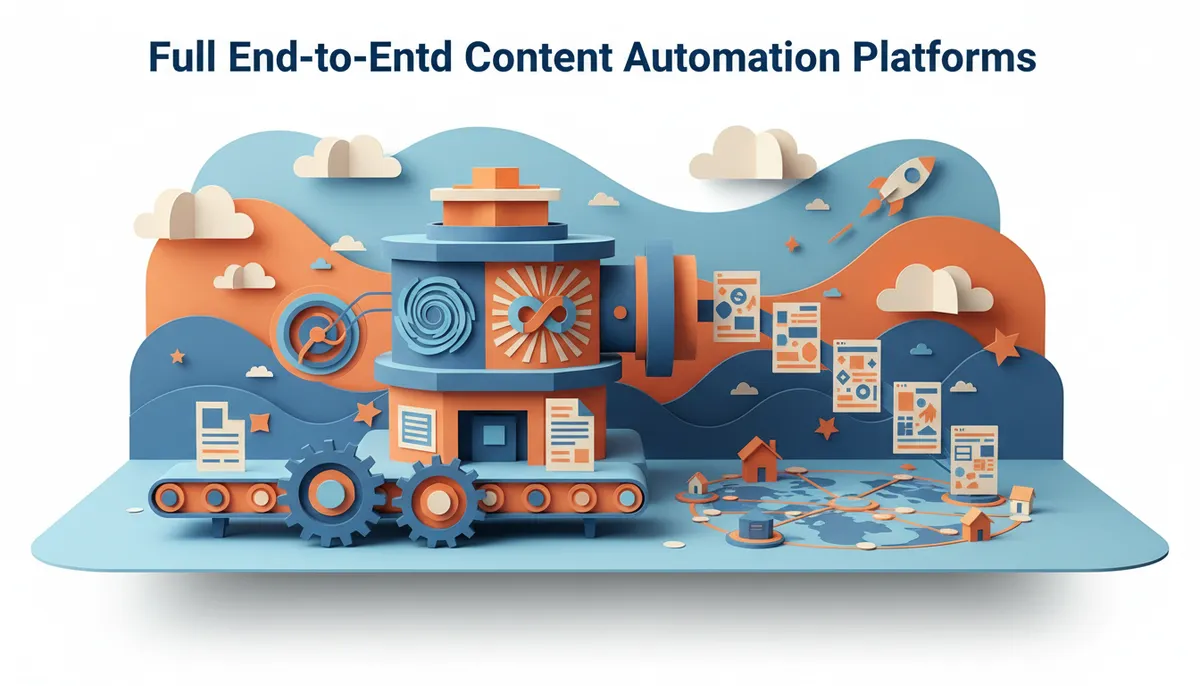
The most powerful way to automate WordPress blog posts is using platforms designed for complete automation. These systems handle everything from finding keywords to publishing finished articles on your website.
SEO Rocket represents this category perfectly. It discovers keyword opportunities based on your niche, generates long-form articles optimized for Google and AI search engines, and publishes them directly to WordPress every day. Setup takes less than 10 minutes, and the system runs continuously without requiring your input.
What makes full automation platforms different from basic writing tools? They include built-in keyword research engines with live SEO data. You’re not guessing what to write about or manually analyzing search volume and competition. The platform identifies real opportunities and turns them into ranked content automatically.
These platforms also handle technical SEO elements most people forget. Metadata gets generated automatically. Internal and external links are added strategically. Images are created and embedded. Even business mentions are woven naturally into articles. This level of detail would take hours if done manually but happens instantly with automation.
Key Benefits of Full Automation
- Eliminates manual keyword research and topic brainstorming
- Produces 3,000+ word articles that actually rank in search results
- Handles daily publishing schedules without reminders or management
- Includes real-time SEO scoring with automated optimization suggestions
- Costs approximately $3 per article compared to $200-500 for freelance writers
- Optimizes content for both traditional search engines and AI platforms like ChatGPT and Perplexity
The Business plan starts at $99 per month and generates 30 fully optimized articles. For agencies managing multiple clients, the Agency plan publishes 300 articles monthly across 10 workspaces for $799. There’s also a lifetime plan at $1,499 for permanent access with no recurring fees.
Full automation platforms work best for businesses that need consistent content output without dedicating staff to content creation. If you want to set up a system once and let it run, this approach delivers the highest return on investment.
2. WordPress Plugins for Content Generation
If you prefer keeping automation inside WordPress itself, specialized plugins provide solid options. These tools live in your WordPress admin area and add AI writing capabilities directly to your publishing workflow.
Plugins like Trafficontent offer one-click automation for daily blog posting. You connect the plugin to your WordPress site, configure your preferences, and it generates SEO-optimized articles automatically. The content appears in your drafts folder, ready for quick review before publishing.
Most AI content plugins integrate with GPT-4 models and provide features like keyword targeting, readability optimization, and meta description generation. Some include bulk content creation, letting you queue multiple articles at once. This works well if you want more control over the publishing process while still benefiting from AI writing.
Popular WordPress Automation Plugins
- Trafficontent: Focuses on SEO autopilot with automated daily posting and traffic generation strategies
- AI Content Writer Pro: Generates articles with customizable tone and style settings
- WordLift: Adds semantic SEO and structured data to AI-generated content
- Auto Content Generator: Creates posts from RSS feeds and external sources
The advantage of plugins is direct integration with your existing WordPress setup. You don’t need to connect external platforms or manage separate tools. Everything happens inside the dashboard you already use daily.
However, plugins typically require more hands-on management than full automation platforms. You’ll still need to trigger content generation, review drafts, and click publish manually. They automate the writing step but not the entire workflow.

3. SEO Plugin Automation Features
Popular SEO plugins like Yoast SEO and Rank Math have evolved beyond basic optimization. They now include automation features that streamline content creation and publishing workflows.
These plugins provide real-time keyword suggestions while you write, automatically generate meta titles and descriptions, and create XML sitemaps without manual configuration. Some versions include AI-powered content analysis that recommends improvements for readability and SEO performance.
Rank Math’s Pro version offers automated schema markup for different content types. This helps search engines understand your content better and can improve your chances of appearing in rich snippets. The plugin also runs automated SEO audits, identifying technical issues and suggesting fixes without requiring you to remember checking.
While SEO plugins don’t write full articles automatically, they dramatically reduce the time spent on optimization tasks. Combined with AI writing tools, they create a semi-automated workflow where you focus on strategy while software handles technical details.
Automation Tasks SEO Plugins Handle
- Auto-generation of meta descriptions based on content analysis
- Automatic internal linking suggestions using existing content
- Real-time readability scoring with improvement recommendations
- Automated XML sitemap updates when new content publishes
- Schema markup application without coding knowledge
- Automated social media preview optimization
For businesses using SEO Rocket, these technical optimizations happen automatically during content generation. The platform builds in proper metadata, schema, and linking without requiring separate plugins. But for those managing WordPress sites manually, SEO plugins provide essential automation layers.
4. Workflow Automation with Integration Tools
Sometimes the best automation solution combines multiple tools through integration platforms. Services like n8n, Zapier, and Uncanny Automator let you build custom workflows connecting WordPress with AI writing services, keyword tools, and content databases.
A typical automated workflow might look like this: A Google Sheet contains your target keywords and content briefs. An integration tool reads this data, sends it to an AI writing API like OpenAI, receives the generated article, and posts it directly to WordPress with proper formatting and featured images.
This approach offers maximum flexibility. You can design workflows matching your exact requirements instead of adapting to pre-built solutions. Want to pull trending topics from social media, generate articles about them, and publish automatically? Integration tools make it possible.
The n8n workflow for SEO-optimized WordPress posting includes automated image generation, meta description creation, and even content auditing before publishing. You control every step while letting software execute the repetitive work.
Building Your Automation Workflow
- Choose an integration platform (n8n, Zapier, Make, Uncanny Automator)
- Connect your WordPress site using API credentials
- Link your AI content generation tool (OpenAI, Anthropic, etc.)
- Set up trigger conditions (new row in spreadsheet, scheduled time, webhook)
- Configure content generation parameters (length, tone, keywords)
- Add optimization steps (SEO analysis, image generation, link insertion)
- Enable automatic publishing or draft saving based on preference
The downside of custom workflows is setup complexity. You need technical skills to configure APIs and troubleshoot issues. Updates to connected services can break workflows, requiring maintenance. This works best for teams with development resources or businesses comfortable with technical tools.
For most businesses, dedicated platforms like SEO Rocket provide better value because they handle workflow management automatically. But if you need unique automation sequences not available in standard products, integration tools deliver that capability.
5. Scheduled Bulk Content Publishing
Another automation approach focuses on publishing rather than creation. You generate multiple articles in advance (using AI tools or writers), then schedule them to publish automatically over weeks or months.
WordPress includes basic scheduling functionality in its editor. You write a post, set a future publication date, and WordPress publishes it automatically at that time. This simple feature becomes powerful when combined with batch content creation.
Here’s how it works: Dedicate one day to creating or commissioning 20-30 articles. Upload them all to WordPress and schedule each for different dates. Now you have a month of consistent publishing without daily effort. This approach maintains the SEO benefit of regular posting while compressing your actual work time.
Advanced scheduling plugins extend this capability with recurring post features and social media auto-sharing. When scheduled content publishes, these plugins can automatically share it across your social channels and send newsletter notifications.
Best Practices for Scheduled Publishing
- Maintain consistent publishing frequency (daily or every 2-3 days works best for SEO)
- Use a content calendar to track scheduled posts and avoid gaps
- Schedule posts during peak traffic hours for your audience
- Include a mix of content types (tutorials, listicles, case studies)
- Review scheduled content periodically to ensure relevance and accuracy
- Set up automated internal linking between older and newer scheduled posts
The limitation of this method is that someone still needs to create the content initially. It automates distribution but not production. Combining scheduled publishing with AI generation tools creates a more complete automation system.
Businesses serious about SEO growth benefit more from continuous automation that handles both creation and publishing. Platforms starting at $99 per month remove the need for manual batch creation while ensuring daily posting happens automatically.
6. RSS Feed and Content Curation Automation
Content curation automation pulls articles from external sources and republishes them on your WordPress site with proper attribution. While this doesn’t create original content, it can supplement your publishing schedule and keep your site active.
WordPress plugins like WP RSS Aggregator and Feedzy automatically import content from RSS feeds you specify. You can set rules to publish curated content immediately or save it as drafts for review. The plugins typically include options to add your commentary or introduction to curated pieces.
This approach works well for news-focused sites or industry roundup blogs where aggregating information adds value. However, search engines prefer original content over curated pieces. Using curation as your only automation strategy won’t build strong SEO performance.
A better application combines curation with original content. You might curate industry news daily while publishing original, in-depth analysis articles several times per week. The curated content keeps your site fresh between major publications.
Curation Automation Best Practices
- Always provide proper attribution and links to original sources
- Add substantial original commentary to curated content (at least 200-300 words)
- Curate from authoritative sources in your industry
- Mix curated content with original articles at a 30/70 ratio
- Use curation to supplement, not replace, original content strategy
For SEO-focused businesses, original content delivers far better results than curation. Search algorithms reward unique insights and comprehensive information. Curation can fill gaps but shouldn’t form the foundation of your content strategy.
7. AI-Powered Complete Content Systems
The most advanced automation in 2026 combines multiple AI capabilities into unified systems. These platforms don’t just generate text—they research topics, analyze competitors, optimize for search intent, create supporting media, and measure performance.
SEO Rocket exemplifies this category by integrating keyword discovery, market opportunity mapping, long-form content generation, technical SEO optimization, AI-generated images, and direct WordPress publishing. The system operates as your complete content department, handling tasks that would traditionally require multiple team members.
What sets complete content systems apart is their understanding of SEO as a holistic process. They don’t just write articles; they analyze what’s ranking for your target keywords, identify content gaps, and create articles structured to outperform existing results. This includes optimizing for both traditional search engines and AI platforms like ChatGPT, Perplexity, Claude, and Gemini.
These systems also address content quality concerns. Early AI writing tools produced generic, obviously automated content. Modern platforms generate articles that read naturally, include specific examples, and incorporate industry knowledge. The content is unique and passes detection tools, making it safe for SEO purposes.
Features of Advanced Content Systems
- Automated keyword discovery with real search volume and competition data
- Competitor content analysis to identify ranking opportunities
- Long-form article generation (3,000+ words) optimized for featured snippets
- Automatic internal linking strategy to boost site-wide SEO
- AI-generated images and embedded media to improve engagement
- Real-time SEO scoring with one-click optimization improvements
- Direct publishing integration with WordPress, Webflow, Shopify, and Wix
- Performance tracking showing ranking improvements and traffic growth
The efficiency gain is substantial. Traditional content creation might cost $200-500 per article when hiring writers, plus time for briefing, editing, and SEO optimization. Complete automation systems reduce this to approximately $3 per article while maintaining quality and consistency.
For agencies managing multiple clients, these platforms scale efficiently. The Agency plan supports 10 client workspaces with 300 monthly articles, replacing the work of entire content teams at a fraction of the cost.
Why Automation Matters for SEO Success
Consistency drives SEO results more than occasional high-quality posts. Search engines reward websites that publish regularly and demonstrate expertise over time. Automation makes consistency achievable without burnout or massive content budgets.
Publishing daily compounds your SEO advantage. Each new article targets additional keywords, creates more entry points for traffic, and strengthens your site’s topical authority. After six months of daily publishing, you have 180+ pages competing in search results. This volume becomes nearly impossible to match manually.
Automation also eliminates the feast-or-famine cycle many businesses experience. Without automation, content output depends on available time and resources. Projects stall during busy periods, and publishing becomes irregular. Automation maintains your content schedule regardless of other business demands.
The financial argument is equally compelling. A content writer costs $50,000-80,000 annually plus benefits. Freelancers charge $200-500 per article. Even assuming lower rates, producing 30 monthly articles costs $6,000-15,000. Automation platforms deliver the same output for $99-799 per month while including keyword research, SEO optimization, and publishing.
Measurable Benefits of Content Automation
- Time savings: Reduce content creation from 40+ hours weekly to under one hour
- Cost efficiency: Lower per-article cost from $200-500 to approximately $3
- Publishing consistency: Maintain daily posting schedule without manual effort
- SEO compound growth: Build topical authority faster with higher content volume
- Reduced burnout: Eliminate content creation stress for business owners and small teams
- Scalability: Manage multiple websites or clients without proportional resource increases
Beyond these metrics, automation frees mental bandwidth for strategy and business development. Instead of writing articles, you focus on analyzing results, adjusting targeting, and growing your business.
Choosing the Right Automation Approach
With multiple automation options available, selecting the right approach depends on your specific needs, technical comfort level, and budget. Here’s how to evaluate your best option.
If you want zero maintenance and complete hands-off operation, full automation platforms deliver the best experience. SEO Rocket and similar services handle everything after initial setup. You review performance periodically but don’t manage daily operations. This works perfectly for small businesses, solopreneurs, and agencies wanting to scale without expanding their team.
For businesses preferring more control over content creation while still benefiting from AI writing, WordPress plugins offer a middle ground. You trigger content generation manually, review drafts before publishing, and maintain direct oversight. This requires more time investment but gives you approval authority over every piece.
Technical teams comfortable with API integrations might prefer building custom workflows. This approach offers maximum flexibility and can integrate with existing business systems. However, it requires development resources and ongoing maintenance.
Budget also influences the decision. Full automation platforms typically charge monthly subscriptions ($99-799) but include all necessary features. WordPress plugins might have lower upfront costs ($50-200) but require you to handle keyword research, strategy, and optimization separately. Custom workflows involve integration platform fees plus development time.
Decision Framework
| Priority | Best Automation Type | Why It Works |
|---|---|---|
| Zero maintenance | Full automation platform | Complete hands-off operation after setup |
| Maximum control | WordPress plugins + manual review | Approve every piece before publishing |
| Custom requirements | Integration workflows | Flexible configuration for unique needs |
| Budget conscious | Scheduled bulk publishing | Lower monthly cost but requires content creation |
| Scale to agencies | Multi-client automation platforms | Manage many sites from one dashboard |
Most businesses benefit most from platforms designed specifically for SEO content automation. They combine all necessary features without requiring technical expertise or ongoing management. The time and cost savings outweigh any control trade-offs.
Getting Started with WordPress Blog Automation
Implementing automation doesn’t require complex technical skills. Modern platforms make setup straightforward, typically completed in under 10 minutes. Here’s what the process looks like.
First, connect your WordPress site to your chosen automation platform. This usually involves installing a lightweight plugin or providing API credentials. The connection allows the platform to publish content directly without manual uploads or copy-pasting.
Next, configure your content preferences. Specify your industry, target keywords, content length preferences, and brand voice guidelines. Advanced platforms automatically discover keyword opportunities based on your niche, but you review and approve them before content generation begins.
Then review your content calendar. Automation platforms typically generate calendars showing planned articles and publication dates. You can adjust dates, remove topics, or add specific keywords you want to target. This ensures the automation aligns with your content strategy.
Finally, activate automation and let the system run. Content gets generated, optimized, and published according to your schedule. You receive notifications when new articles go live and can review performance metrics showing traffic growth and ranking improvements.
Implementation Checklist
- Choose your automation platform based on needs and budget
- Connect your WordPress site via plugin or API
- Configure brand voice and content preferences
- Review and approve automatically discovered keywords
- Set publication frequency (daily, every other day, etc.)
- Activate automation and monitor initial performance
- Adjust strategy based on results after 30-60 days
The key is starting simple and expanding over time. Begin with one website and a moderate publishing frequency. As you see results, you can increase volume or add additional sites. Automation scales easily without proportional effort increases.
For businesses ready to implement comprehensive automation, signing up for SEO Rocket provides immediate access to the complete system. The free 3-day trial lets you test the full platform without commitment, seeing real results before making a financial decision.
Conclusion
Automating WordPress blog posts isn’t just possible in 2026—it’s become essential for competitive SEO performance. The tools and platforms available today handle everything from keyword research to final publishing, making consistent content output achievable for any business size.
Whether you choose full automation platforms, WordPress plugins, custom workflows, or scheduled publishing, the key is maintaining consistency. Search engines reward regular publishing, and automation ensures you never miss a day regardless of other business demands.
The businesses winning at SEO today aren’t necessarily those with the biggest content teams. They’re the ones using automation to publish consistently, target the right keywords, and build topical authority faster than competitors. This approach delivers compounding results over time, with each new article strengthening your overall search visibility.
Don’t let content creation become the bottleneck limiting your growth. Modern automation technology makes it possible to run a thriving blog without spending hours writing, researching, and optimizing. The time you save goes directly toward strategic activities that move your business forward.
Ready to experience true content automation? Start your free 3-day trial with SEO Rocket and see how effortless WordPress blog automation can be. Setup takes less than 10 minutes, and you’ll have your first automatically generated, SEO-optimized article published within 24 hours.
FAQs
Q: Can WordPress automatically post blog articles without manual work?
A: Yes, WordPress can automatically post blog articles using automation platforms that handle content creation, SEO optimization, and publishing. Tools like SEO Rocket connect to your WordPress site and generate fully optimized articles on a daily schedule. After a quick 10-minute setup, the system runs completely hands-off, creating and publishing SEO-focused content without requiring your daily involvement.
Q: How much does WordPress blog automation typically cost?
A: WordPress blog automation costs vary by approach. Full automation platforms like SEO Rocket start at $99 per month for 30 articles, which works out to about $3 per article. WordPress plugins might cost $50-200 initially but require manual management. Traditional content creation with freelance writers costs $200-500 per article. The most cost-effective option for consistent output is typically a dedicated automation platform.
Q: Will automated blog posts hurt my SEO rankings?
A: No, properly automated blog posts actually improve SEO rankings when done correctly. Modern AI content platforms generate unique, high-quality articles optimized for search engines and AI platforms like ChatGPT. The key is using systems that include proper keyword targeting, natural writing, and technical SEO elements like metadata and internal linking. Consistent publishing through automation helps build topical authority faster than irregular manual posting.
Q: What’s the difference between basic scheduling and true automation?
A: Basic scheduling means you create content manually and set publication dates in advance. True automation handles the entire process including keyword research, content creation, SEO optimization, and publishing without your involvement. Scheduling saves distribution time but still requires hours of content creation work. Full automation platforms eliminate both creation and distribution effort, making them far more efficient for businesses needing consistent output.
Q: Can automated content be customized to match my brand voice?
A: Yes, quality automation platforms allow brand voice customization during setup. You specify your industry, tone preferences, and style guidelines, and the AI adapts its writing accordingly. Advanced systems like SEO Rocket learn from your existing content and generate articles that naturally fit your brand. You can also request unlimited rewrites if initial output needs adjustment, ensuring every published piece matches your standards.