
Key Takeaways
-
SEO Rocket offers complete end-to-end content automation, generating SEO-optimized articles daily with minimal manual intervention.
-
Top AI writing tools now integrate keyword research, SERP analysis, and content optimization into seamless systems for efficient content creation.
-
Real-time content optimization tools like Surfer SEO provide instant SEO scoring and actionable recommendations to improve content ranking potential.
-
Integrated workflow automation allows direct publishing to platforms like WordPress, saving 15-30 minutes per article and enabling consistent content schedules.
-
AI writing tools in 2026 are designed to optimize content for both traditional search engines and emerging AI search platforms like ChatGPT and Perplexity.
-
Affordable platforms like Scalenut enable fast SEO-ready article generation in under 5 minutes, making professional content accessible to small businesses.
-
Comprehensive SEO tools like Semrush now combine keyword research, competitive analysis, and AI writing capabilities in a single integrated platform.
Finding the best AI writing tool for SEO content in 2026 feels like searching for a needle in a haystack. With so many options promising to revolutionize your content strategy, how do you choose the right one? The truth is, the best AI writing tool isn’t just about generating words—it’s about creating content that ranks, converts, and saves you time. Whether you’re a small SEO agency juggling multiple clients or an in-house marketing team trying to scale your content output, the right tool can transform your entire workflow.
The landscape of AI writing tools has evolved dramatically. Gone are the days when AI simply filled blank pages with generic text. Today’s top AI writing tools integrate keyword research, SERP analysis, content optimization, and automated publishing into one seamless system. For businesses in the SEO content automation space, this means you can finally escape the endless cycle of manual content creation and focus on strategy and growth.
In this guide, we’ll explore what makes an AI writing tool truly exceptional for SEO purposes. We’ll compare the leading platforms, examine their strengths and weaknesses, and help you understand which tool aligns best with your specific needs. By the end, you’ll have a clear roadmap for selecting the AI writing tool that will take your SEO content strategy to the next level.

Understanding AI Writing Tools for SEO Content Automation
AI writing tools designed for SEO content automation are fundamentally different from general-purpose AI writers. While tools like ChatGPT can generate decent text, they lack the specialized features that help content rank in search engines. The best AI writing tools for SEO combine natural language generation with search engine optimization technology, creating a powerful system that produces ranking-ready content.
These specialized tools analyze top-ranking pages for your target keywords, identify semantic terms and phrases that search engines expect to see, and structure content in ways that maximize visibility. They also provide real-time SEO scoring, suggesting improvements as you write or generate content. This integration of AI writing with SEO intelligence is what separates professional-grade tools from basic text generators.
According to recent industry analysis, the most effective AI writing tools for SEO in 2026 share several core characteristics. They offer built-in keyword research capabilities, SERP analysis features, content optimization scoring, and automated publishing workflows. Some platforms even include AI search optimization for newer search experiences like ChatGPT, Perplexity, Claude, Gemini, Copilot, and Grok.
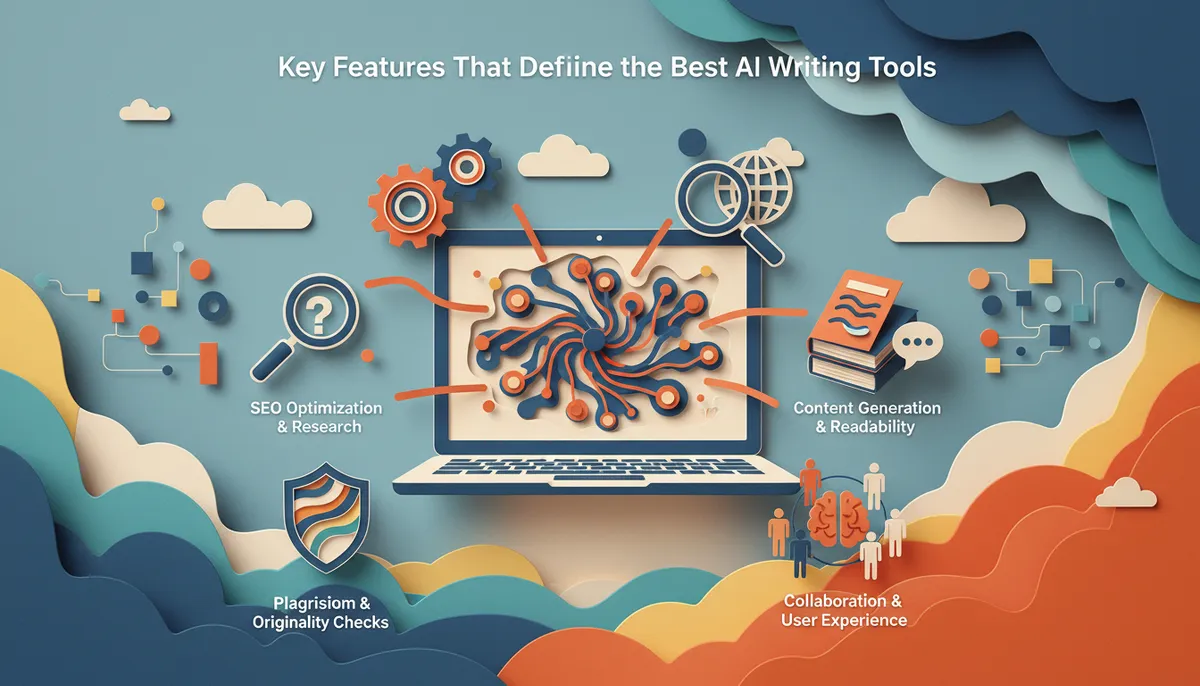
Key Features That Define the Best AI Writing Tools
When evaluating AI writing tools for SEO content automation, certain features separate the exceptional from the mediocre. Understanding these key capabilities will help you make an informed decision that aligns with your business goals and workflow requirements.
Integrated Keyword Research and SERP Analysis
The best AI writing tools don’t force you to juggle multiple platforms. They include comprehensive keyword research engines that show real search volume, competition levels, and keyword difficulty scores. Tools like Surfer SEO and Scalenut excel in this area, providing NLP-based optimization and live SEO data that inform your content strategy from the start.
SERP analysis features allow you to see exactly what’s ranking for your target keywords. These tools examine the top 10 or 20 search results, identifying patterns in content length, heading structure, semantic keywords, and topic coverage. This competitive intelligence becomes the foundation for creating content that can outrank existing pages.
For SEO content automation to work effectively, you need tools that automatically discover keyword opportunities based on your industry and business focus. Platforms like SEO Rocket take this further by mapping out content calendars filled with relevant keywords, eliminating the guesswork from content planning.
Real-Time Content Optimization and Scoring
AI writing tools that offer real-time optimization feedback dramatically improve content quality. As you generate or edit content, these platforms analyze your text against top-ranking pages and provide instant scores showing how well-optimized your content is for search engines.
Surfer SEO is particularly strong in this area, offering real-time scoring with one-click auto-optimization features. The platform uses natural language processing to ensure your content includes the right semantic terms and phrases that search engines expect. Industry data suggests that INK’s SEO Optimizer scoring is 5x better at predicting SERP rank compared to competitors, demonstrating the value of sophisticated optimization algorithms.
These optimization features typically include recommendations for keyword density, content length, heading structure, image usage, and internal linking opportunities. The best tools make these suggestions actionable, allowing you to implement improvements with minimal effort.
Automated Publishing and Workflow Integration
True SEO content automation requires seamless publishing capabilities. The most advanced AI writing tools connect directly to your website platform, publishing optimized content without manual intervention. This feature alone can save hours each week and ensure consistent publishing schedules that search engines reward.
Platforms that integrate with WordPress, Webflow, Shopify, and Wix eliminate the copy-paste workflow that plagues traditional content creation. Some tools go even further, automatically adding metadata, internal links, images, and business mentions as they publish. This comprehensive automation transforms SEO content creation from a time-consuming chore into a systematic process.
For agencies managing multiple clients, workflow automation becomes even more critical. The ability to set up automated content calendars for different clients, with each generating optimized articles on schedule, represents a massive efficiency gain that traditional tools cannot match.

Top AI Writing Tools for SEO Content in 2026
The AI writing tool landscape in 2026 offers several standout platforms, each with unique strengths. Understanding how these tools compare will help you select the option that best fits your specific needs and budget.
1. SEO Rocket: Complete End-to-End Automation
SEO Rocket represents the pinnacle of SEO content automation, handling everything from keyword research to daily publishing in one integrated system. Unlike tools that focus on single aspects of content creation, SEO Rocket automates the entire content lifecycle, making it ideal for businesses and agencies that want to eliminate manual SEO work entirely.
The platform generates long-form, 3,000+ word articles optimized for both Google and AI search engines like ChatGPT, Perplexity, Claude, Gemini, Copilot, and Grok. This AI search optimization is particularly valuable in 2026, as more users discover content through AI-powered search experiences rather than traditional search engines alone.
Setup takes under 10 minutes. You connect your website, review automatically discovered keyword opportunities, approve your content calendar, and SEO Rocket handles everything else. The system publishes one SEO-optimized article daily for the Business plan or up to 10 per day for the Agency plan, creating the consistent publishing schedule that drives compounding SEO growth.
2. Surfer SEO: NLP-Based Optimization Excellence
Surfer SEO has earned its reputation as one of the best AI writing tools for on-page optimization. The platform excels in NLP-based content analysis, providing real-time scoring, detailed SERP analysis, and one-click auto-optimization features that make improving content straightforward.
What sets Surfer apart is its Content Editor, which analyzes top-ranking pages and creates a detailed brief showing exactly what your content needs to include. As you write, the platform scores your content in real-time, highlighting areas that need more coverage or optimization. This feedback loop helps ensure every piece of content you publish has the best chance of ranking.
Surfer integrates with popular writing tools and content management systems, though it requires more manual involvement than fully automated platforms. For teams that want detailed control over content creation while benefiting from advanced SEO insights, Surfer represents an excellent choice.
3. Scalenut: Fast SEO-Ready Article Generation
Scalenut has positioned itself as a speed champion in the AI writing tool space, generating SEO-ready articles in under 5 minutes. The platform combines AI-guided writing with content scoring and complete SEO planning tools, all starting at an affordable $20 per month for 100,000 words and 5 SEO articles.
The platform’s AI Copilot feature guides users through the content creation process, from keyword research through final optimization. Scalenut’s competitive pricing makes it accessible for small businesses and solo marketers who need professional-grade SEO content without enterprise-level budgets.
While Scalenut excels at speed and affordability, it still requires manual topic selection and publishing. For users comfortable with some hands-on involvement in the content creation process, Scalenut delivers excellent value and quality.
4. Semrush: Comprehensive SEO Toolkit with AI Writing
Semrush has expanded beyond its roots as a keyword research and competitor analysis tool to include powerful AI writing capabilities. The platform’s SEO Writing Assistant and Content Toolkit offer keyword research, competitive analysis, and an AI Copilot that creates data-driven content based on comprehensive SEO insights.
What makes Semrush compelling is its all-in-one approach. The same platform that handles keyword research, backlink analysis, and competitive intelligence also generates optimized content. This integration eliminates the need to export data between tools, streamlining the content creation workflow.
Semrush pricing reflects its comprehensive feature set, with plans starting at higher price points than specialized writing tools. For agencies and larger marketing teams that need the full suite of SEO tools alongside content creation capabilities, Semrush delivers significant value.
5. NightOwl: AI SEO Strategist and Content Automation
NightOwl by Nightwatch takes a unique approach by positioning itself as a complete AI SEO strategist. The platform automates keyword clustering, SERP analysis, content generation, and site audits, functioning as a 24/7 SEO team member that never sleeps.
The tool provides instant keyword volume and difficulty scores, helping users identify opportunities quickly. NightOwl’s automation extends beyond content creation to include strategic planning, making it valuable for teams that need both execution and strategy support.
While relatively new compared to established players, NightOwl’s comprehensive automation and strategic capabilities make it worth considering, especially for teams that lack dedicated SEO expertise.

Comparing AI Writing Tools: Features and Pricing
Understanding how different AI writing tools compare in terms of features, pricing, and capabilities helps you make an informed decision. The following comparison examines key factors that impact your content creation workflow and budget.
| Platform | Best For | Starting Price | Key Strength | Automation Level |
|---|---|---|---|---|
| SEO Rocket | Complete automation | $99/month | End-to-end workflow automation with daily publishing | Fully automated |
| Surfer SEO | On-page optimization | $69/month | NLP-based real-time content scoring | Semi-automated |
| Scalenut | Speed and affordability | $20/month | Fast article generation under 5 minutes | Semi-automated |
| Semrush | All-in-one SEO suite | $119/month | Comprehensive SEO toolkit with AI writing | Manual with AI assist |
| NightOwl | Strategic automation | Varies | 24/7 SEO strategist with clustering and audits | Highly automated |
Cost Per Article Analysis
When evaluating AI writing tools, calculating the cost per article provides valuable perspective. This metric helps you understand the true financial impact of different platforms on your content budget.
SEO Rocket delivers approximately 30 articles per month on its Business plan at $99/month, resulting in a cost of roughly $3 per article. This cost includes keyword research, writing, optimization, image generation, and automated publishing—representing exceptional value for comprehensive SEO content.
Other platforms calculate costs differently. Scalenut’s $20/month plan allows 5 SEO articles, resulting in a $4 per article cost, though you’ll need to handle publishing manually. Surfer SEO charges monthly fees but doesn’t limit article creation, making cost-per-article calculations dependent on your publishing volume.
For agencies, the cost calculation becomes even more favorable with volume. SEO Rocket’s Agency plan at $799/month includes 300 articles across 10 client workspaces, dropping the per-article cost to approximately $2.67 while supporting multiple clients simultaneously.
Integration Capabilities
The best AI writing tools integrate seamlessly with your existing technology stack. Integration capabilities determine how much manual work remains in your content workflow and how efficiently you can scale content production.
Direct publishing integrations with WordPress, Webflow, Shopify, and Wix represent the gold standard. Platforms offering these integrations eliminate the time-consuming process of copying content, formatting it in your CMS, adding images, and configuring metadata. This single feature can save 15-30 minutes per article, adding up to significant time savings when publishing consistently.
API access and webhook support enable advanced automation for technical teams. These features allow you to build custom workflows that connect AI writing tools with project management systems, client reporting platforms, and quality assurance processes.
Choosing the Right AI Writing Tool for Your Needs
Selecting the best AI writing tool depends on your specific requirements, budget, technical expertise, and content goals. Different users have different priorities, and understanding your needs helps you avoid paying for features you won’t use or missing capabilities that matter most.
For Small SEO Agencies
Small SEO agencies need tools that maximize efficiency while maintaining quality across multiple clients. The ability to produce consistent, optimized content without expanding your team represents the primary value proposition for agencies.
Fully automated platforms like SEO Rocket offer the best solution for agencies, handling everything from keyword research through daily publishing for multiple clients. The Agency plan’s support for 10 client workspaces with 300 monthly articles means you can serve clients at scale while keeping labor costs minimal. This efficiency allows small agencies to compete with larger firms without comparable staff sizes.
For agencies that prefer more hands-on control, Surfer SEO combined with a general AI writing tool provides flexibility. This approach requires more manual work but offers detailed oversight of every piece of content before publication.
For In-House Marketing Teams
In-house marketing teams at mid-sized companies face unique challenges: limited resources, tight deadlines, and pressure to show measurable results. The right AI writing tool should amplify your team’s capabilities without requiring extensive training or ongoing management.
Platforms offering comprehensive automation work exceptionally well for in-house teams. When setup takes under 10 minutes and content flows automatically to your website, your team can focus on strategy, promotion, and measuring results rather than grinding through content creation. This shift from execution to strategy often leads to better overall marketing performance.
Content scoring features also help in-house teams maintain quality standards without deep SEO expertise. Real-time feedback guides writers toward better optimization, essentially providing on-demand SEO consultation with every article.
For Content Managers at Large Websites
Content managers responsible for large websites or blogs need tools that can maintain consistent quality across hundreds or thousands of pages. Scalability, workflow management, and quality assurance become the primary concerns.
Visual content calendars that automatically fill with keyword opportunities streamline planning for large content operations. The ability to see your entire content strategy at a glance, with articles automatically scheduled and published on specific dates, transforms content management from chaos to systematic execution.
Unlimited team member access allows content managers to bring writers, editors, and stakeholders into the platform without per-seat pricing penalties. This collaboration capability becomes increasingly valuable as content operations scale.
For E-commerce SEO Specialists
E-commerce SEO specialists need to generate large volumes of product and category page content while maintaining optimization standards. The challenge lies in creating unique, valuable content at scale without generic descriptions that hurt rankings.
AI writing tools optimized for e-commerce should handle product-focused keywords efficiently, creating content that balances SEO requirements with conversion goals. The ability to generate hundreds of optimized product descriptions, buying guides, and category pages represents massive time savings for e-commerce teams.
Integration with e-commerce platforms like Shopify becomes critical for specialists managing online stores. Direct publishing to product pages and category pages eliminates the manual data entry that otherwise consumes hours of time.
The Future of AI Writing Tools and SEO Content
The AI writing tool landscape continues evolving rapidly. Understanding emerging trends helps you select tools that will remain relevant and valuable as technology and search engines change.
AI Search Optimization Beyond Google
In 2026, optimization for AI-powered search experiences has become just as important as traditional Google SEO. Tools that optimize content for ChatGPT, Perplexity, Claude, Gemini, Copilot, and Grok position your content to appear in AI-generated answers and overviews.
This shift toward AI search optimization requires content structured so AI models can reference it as a trusted source. Articles need clear, authoritative information presented in formats that AI systems can easily parse and cite. The best AI writing tools now consider both traditional search engines and AI search experiences when optimizing content.
As more users discover information through AI chat interfaces rather than traditional search results pages, content that appears in AI answers gains significant visibility advantages. Forward-thinking SEO content strategies now prioritize this AI search visibility alongside traditional rankings.
Increased Automation and Workflow Integration
The trend toward comprehensive automation continues accelerating. Modern AI writing tools increasingly handle entire content workflows rather than just the writing portion. This evolution from tool to system represents a fundamental shift in how businesses approach content creation.
Future developments will likely include even tighter integration between keyword research, content creation, optimization, publishing, and performance tracking. The goal is a completely autonomous content system that identifies opportunities, creates optimized content, publishes it automatically, and adjusts strategy based on performance data.
This level of automation will make consistent daily publishing standard practice for businesses serious about SEO. The compound effect of publishing optimized content every day creates ranking momentum that sporadic publishing cannot match.
Quality Improvements in AI-Generated Content
AI-generated content quality has improved dramatically from early versions that produced obviously robotic text. The best tools in 2026 generate content that reads naturally, provides genuine value, and maintains consistent brand voice throughout articles.
As language models continue advancing, expect AI writing tools to better understand nuance, context, and audience needs. The gap between AI-generated and human-written content continues narrowing, with many readers unable to distinguish between them in blind tests.
However, the most effective approach combines AI efficiency with human oversight. Tools that allow unlimited rewrites enable teams to refine AI-generated content until it perfectly matches their standards and voice.
Common Mistakes When Choosing AI Writing Tools
Selecting the wrong AI writing tool can waste time and money while producing disappointing results. Avoiding these common mistakes helps ensure you choose a platform that delivers real value for your business.
Prioritizing Price Over Features
The cheapest tool is rarely the best investment for SEO content automation. While budget constraints matter, focusing solely on price often leads to choosing platforms that lack critical features, requiring additional tools to fill gaps. This piecemeal approach ultimately costs more in both money and time.
Calculate the total cost of your content creation workflow, including all tools, labor hours, and opportunity costs. A more expensive platform that eliminates manual work and integrates multiple functions often delivers better ROI than a cheap tool requiring extensive supplemental resources.
Consider the cost per published article rather than just the monthly subscription price. A tool that costs $200/month but automatically publishes 60 optimized articles delivers better value than a $50/month tool requiring 10 hours of manual work to publish 10 articles.
Ignoring Automation Capabilities
Many businesses underestimate the value of automation when evaluating AI writing tools. They focus on content quality alone, overlooking how automation impacts scalability, consistency, and team productivity.
Tools requiring manual keyword research, topic selection, optimization review, and publishing create workflow bottlenecks that limit content output. Even if the AI generates quality text, the manual steps surrounding that generation prevent scaling to daily publishing schedules.
Fully automated platforms transform content creation from a labor-intensive process requiring constant attention to a systematic operation running in the background. This shift frees your team to focus on strategy, promotion, and revenue-generating activities rather than execution details.
Overlooking Publishing Integration
The publishing step often gets overlooked during tool evaluation, yet it represents significant time investment. Manually copying content from a writing tool, formatting it in your CMS, adding images, configuring metadata, and setting up internal links can take 20-30 minutes per article.
Platforms with direct publishing integration to WordPress, Webflow, Shopify, and Wix eliminate this manual work entirely. Articles flow from generation to publication automatically, saving hours each week. For businesses publishing daily, this automation saves approximately 10-15 hours per month—time that can be redirected to strategy and growth.
Before committing to a tool, verify it integrates with your specific website platform and can handle publishing automatically. This single feature often justifies higher pricing through pure time savings.
Maximizing Results with AI Writing Tools
Selecting the right AI writing tool represents only half the equation. Maximizing results requires strategic implementation, consistent publishing, and ongoing optimization based on performance data.
Establish a Consistent Publishing Schedule
Search engines reward websites that publish fresh, high-quality content consistently. Daily publishing creates momentum that sporadic content creation cannot match. Over time, this consistency builds domain authority and topical relevance that improve rankings across your entire site.
AI writing tools make daily publishing achievable for businesses of all sizes. Platforms that automatically generate and publish content on schedule remove the execution barriers that prevent consistent publishing. This consistency creates compound growth as new articles begin ranking while older content gains authority.
For the best results, commit to publishing at least one optimized article daily. Track how this consistency impacts your overall organic traffic, noting that results typically compound over 3-6 months as articles mature and build authority.
Monitor Performance and Refine Strategy
The best AI writing tools provide performance tracking features that show how published content performs in search results. Regular review of this data helps you identify successful topics, optimize underperforming content, and refine your keyword strategy over time.
Pay attention to articles that rank quickly and generate significant traffic. These successes reveal topic areas where you have strong topical authority, suggesting opportunities for related content that can build on this strength. Similarly, articles that underperform often reveal gaps in optimization or topic selection that you can address.
Use performance data to guide your content calendar. Double down on topics and keywords that work well for your site while adjusting or eliminating strategies that consistently underperform. This data-driven approach ensures your content strategy improves over time.
Leverage AI Search Optimization
In 2026, optimizing for AI-powered search experiences provides significant competitive advantages. Tools that structure content for maximum visibility in ChatGPT, Perplexity, Claude, Gemini, Copilot, and Grok help you reach audiences who discover information through AI chat interfaces.
AI search optimization requires different content structures than traditional SEO. Articles need clear, authoritative answers to specific questions formatted so AI models can easily reference them. The best AI writing tools automatically implement these structures, ensuring your content appears in AI-generated answers.
As users increasingly turn to AI assistants for information, this visibility becomes crucial for brand awareness and website traffic. Early adoption of AI search optimization strategies positions your content ahead of businesses still focused exclusively on traditional search engines.
Why SEO Rocket Stands Out as the Best Choice
While several excellent AI writing tools exist, SEO Rocket’s comprehensive automation and AI search optimization make it the standout choice for businesses and agencies serious about SEO content in 2026. The platform eliminates every manual step in the content creation workflow, from keyword discovery through daily publishing.
What makes SEO Rocket exceptional is its complete system approach. You don’t manage multiple tools for keyword research, content creation, optimization, and publishing. Instead, one integrated platform handles everything automatically, generating 3,000+ word articles optimized for Google and AI search engines, complete with images, internal links, and metadata.
The platform’s under-10-minute setup and zero monthly maintenance requirements represent game-changing efficiency. Traditional SEO content workflows demand hours of daily attention. SEO Rocket automates this entirely, freeing your team to focus on strategy and growth rather than execution.
For agencies, the ability to manage 10 client workspaces with 300 monthly articles at $799/month represents exceptional value. This scalability allows small agencies to serve more clients without proportionally expanding staff, dramatically improving profitability.
SEO Rocket’s lifetime plan option provides permanent access without subscription requirements, a rarity in the SaaS space that appeals to businesses wanting predictable long-term costs.
Take Action on Your SEO Content Strategy Today
The best AI writing tool for your business depends on your specific needs, budget, and goals. However, one truth remains constant: automated, optimized content creation produces better results than manual processes that limit publishing consistency.
If you’re a small SEO agency, in-house marketing team, content manager, or e-commerce specialist, investing in the right AI writing tool will transform your content strategy. The compound effect of consistent, optimized publishing creates momentum that sporadic manual efforts simply cannot match.
Platforms offering complete automation, from keyword research through daily publishing, provide the most significant advantages. These systems eliminate the workflow bottlenecks that prevent scaling while maintaining the optimization standards that drive rankings.
For businesses ready to commit to daily publishing and systematic content creation, the investment in a comprehensive platform pays dividends through increased organic traffic, improved rankings, and reduced labor costs. The time savings alone often justify the investment within the first month.
The SEO content landscape in 2026 rewards consistency, quality, and optimization. AI writing tools that deliver all three while eliminating manual work represent the future of content marketing. The question isn’t whether to adopt these tools—it’s which platform will help you achieve your specific goals most effectively. Choose wisely, implement systematically, and watch your organic traffic grow month after month.
Ready to transform your content strategy with complete automation? Start your free 3-day trial with SEO Rocket and experience the power of daily automated publishing that drives real SEO results.
FAQs
Q: What makes an AI writing tool good for SEO content?
A: The best AI writing tools for SEO combine natural language generation with built-in keyword research, SERP analysis, real-time content scoring, and optimization recommendations. They should integrate these features seamlessly and ideally offer automated publishing to your website platform, eliminating manual workflow steps.
Q: How much does a quality AI writing tool for SEO cost?
A: Quality AI writing tools for SEO range from $20/month for basic platforms like Scalenut to $799/month for agency-level solutions like SEO Rocket’s Agency plan. When evaluating cost, calculate the price per published article and factor in time savings from automation features, which often justify higher pricing through efficiency gains.
Q: Can AI writing tools really replace human writers for SEO content?
A: Modern AI writing tools in 2026 generate high-quality, SEO-optimized content that performs well in search engines. While they excel at systematic content creation and optimization, the best results often come from combining AI efficiency with human oversight. Platforms offering unlimited rewrites let you refine AI-generated content to perfectly match your standards and brand voice.
Q: What’s the difference between general AI writers and SEO-specific tools?
A: General AI writers like ChatGPT generate text based on prompts but lack specialized SEO features. SEO-specific AI writing tools integrate keyword research, SERP analysis, content optimization scoring, semantic keyword suggestions, and often automated publishing. This integration makes them far more effective for creating content that ranks in search engines.
Q: How important is automation in an AI writing tool?
A: Automation is critical for scaling SEO content production. Fully automated platforms eliminate manual steps in keyword research, topic selection, content generation, optimization, and publishing. This allows consistent daily publishing that compounds SEO results over time, something manual workflows struggle to maintain. The time savings often justify higher platform costs through pure efficiency gains.