
Key Takeaways
-
SEO Rocket provides comprehensive end-to-end blogging automation, generating fully optimized 3,000+ word articles daily with zero manual maintenance.
-
AI blogging tools in 2026 enable businesses to publish daily content, building topical authority and compounding SEO growth without massive time investments.
-
Modern AI platforms optimize for both traditional search engines and AI search platforms like ChatGPT, expanding content visibility and traffic potential.
-
Automated content tools reduce article production costs from $100-$500 per article to approximately $3 per article, making content marketing accessible for small businesses.
-
Effective AI blogging tools now include built-in keyword research, content planning, long-form generation, and direct website publishing integration.
-
The best AI platforms go beyond basic text generation, handling entire content workflows including SERP analysis, internal linking, and metadata creation.
-
Consistent daily publishing, made possible by AI automation, is proven to accelerate ranking improvements and build stronger topical authority.
If you’re asking “any good blogging AI tools?” in 2026, you’re asking the right question at the right time. The blogging world has completely transformed. Manual keyword research, writing, editing, and publishing used to take hours or even days. Now, AI-powered blogging tools automate nearly everything, helping businesses publish consistent, high-ranking content without the massive time investment.
The best AI blogging tools in 2026 don’t just generate text. They handle the entire workflow: keyword discovery, SERP analysis, content optimization, internal linking, metadata generation, and direct publishing. For small business owners, marketing teams, and agencies, this means you can finally achieve consistent organic growth without hiring writers or spending weekends on content creation.
This guide breaks down the best AI blogging tools available today, what makes them effective, and how to choose the right one for your business. Whether you manage one website or ten client sites, you’ll find practical insights to make smarter decisions about your content automation strategy.

Why AI Blogging Tools Matter More in 2026
Search engines have evolved dramatically. Google’s algorithms now prioritize consistent publishing, topical authority, and content depth. At the same time, AI-powered search platforms like ChatGPT, Perplexity, Claude, Gemini, Copilot, and Grok are reshaping how people find information online.
Traditional blogging workflows can’t keep up. Writing one high-quality article per week isn’t enough anymore. Businesses that publish daily see compounding SEO benefits, but maintaining that pace manually is unrealistic for most teams.
AI blogging tools solve this problem by automating repetitive tasks while maintaining quality. They analyze search intent, structure content based on what’s already ranking, and optimize for both Google and AI search engines. The result? More traffic, better rankings, and significantly less time spent on content production.
The Shift Toward Full Automation
Early AI writing tools required constant human input. You’d need to research keywords separately, create outlines manually, prompt the AI multiple times, and then edit heavily before publishing. That’s not true automation.
The best AI blogging tools in 2026 handle everything end-to-end. They discover ranking opportunities, generate long-form articles, optimize for SEO, add images and links, and publish directly to your website. This shift from “AI-assisted” to “fully automated” is what separates modern platforms from older tools.

Top AI Blogging Tools Transforming Content Creation
Let’s examine the most effective AI blogging tools available in 2026. Each serves different needs, but they all aim to make content production faster and more scalable.
1. SEO Rocket: Complete End-to-End Automation
SEO Rocket stands out as the most comprehensive automated blogging platform. It doesn’t just write content—it replaces your entire SEO workflow. Setup takes under 10 minutes: connect your WordPress, Webflow, Shopify, or Wix site, approve your content calendar, and the system handles everything else.
The platform generates one 3,000+ word article daily for the Business plan or ten daily articles for the Agency plan. Each article is fully optimized for Google and AI search engines like ChatGPT and Perplexity. The system includes built-in keyword research with live SEO data, automatic competitor analysis, internal and external linking, AI-generated images, metadata creation, and direct publishing.
What makes SEO Rocket different is the zero-maintenance approach. Traditional tools require you to run keyword reports, create briefs, prompt the AI, edit drafts, format content, add links, upload images, and schedule posts. SEO Rocket automates every single step. You simply review what’s published and watch your organic traffic grow.
For agencies managing multiple clients, the Agency plan supports 10 client workspaces with 300 monthly articles. That’s scalability no other platform matches. Plus, the lifetime plan option eliminates recurring subscription costs entirely.
2. Koala AI: SERP-Aligned Content Generation
Koala AI specializes in analyzing live search results and structuring posts based on what’s already ranking. It’s ideal for bloggers who publish frequently and need content that aligns with current SERP patterns. The tool examines top-ranking pages for your target keyword and builds outlines that mirror successful content structures.
However, Koala requires more hands-on work than fully automated platforms. You still need to research keywords separately, input them manually, review AI-generated outlines, and handle publishing yourself. It’s faster than writing from scratch, but it’s not a complete automation solution.
3. Surfer SEO: Real-Time Optimization Feedback
Surfer SEO provides real-time feedback during writing with clear comparisons against top-ranking pages. It suggests headings, entities, and internal links based on SERP analysis. The tool integrates with Google Docs and WordPress, making it easy to optimize while you write.
Surfer works well for teams that want to maintain control over the writing process but need data-driven optimization guidance. The downside is that you’re still doing the actual writing. Surfer assists with optimization, but it doesn’t generate full articles or automate publishing.
4. Writesonic: All-in-One Platform with Real-Time Data
Writesonic integrates real-time data from Ahrefs, Semrush, and Google Search Console, enabling research, writing, optimization, and publishing from a single interface. It’s designed for marketers who want multiple tools in one platform.
The challenge with Writesonic is complexity. Because it tries to do everything, the learning curve is steeper. You’ll spend time learning the interface and figuring out which features to use for each task. For businesses that want simplicity, this can feel overwhelming.
5. Clearscope: Optimizing Human-Written Content
Clearscope focuses on optimizing human-written content through data-backed suggestions rather than generating articles. It provides term recommendations, readability scores, and competitive analysis to improve existing drafts. Integrations for Google Docs and WordPress make it convenient for teams already writing content.
Clearscope is best for businesses that have writers on staff and want to enhance their output. If you’re looking to reduce writing time altogether, Clearscope won’t solve that problem since it doesn’t generate content.
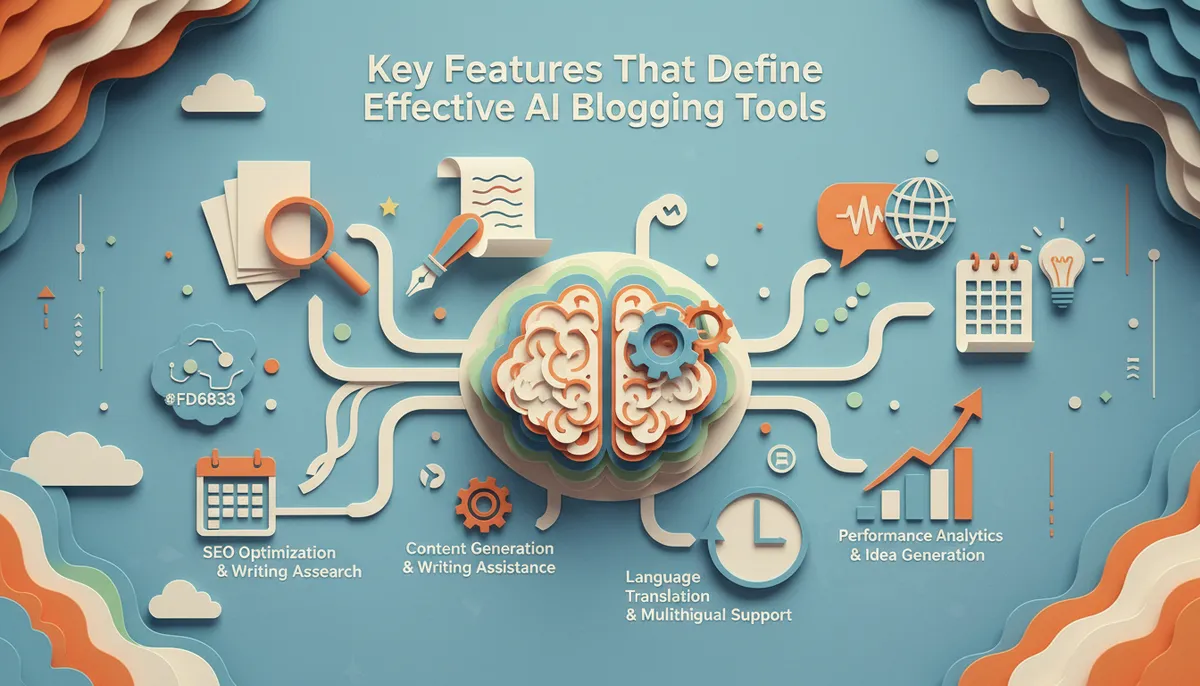
Key Features That Define Effective AI Blogging Tools
Not all AI blogging tools are created equal. The most effective platforms share several critical features that separate them from basic AI writers.
Built-In Keyword Research
The best tools include keyword research engines with live SEO data. Instead of guessing what to write about, you get keyword lists showing real opportunities based on search volume, competition, and intent. This eliminates the need for separate keyword research subscriptions.
Automated Content Planning
Effective platforms use built-in calendars to schedule content production. When you add a keyword to the calendar, the system automatically generates a full article. This approach follows SEO best practices for consistent publishing, letting you plan weeks or months in advance.
Long-Form Article Generation
Quality AI blogging tools generate comprehensive articles, typically 2,000 to 3,500 words. Short 500-word posts don’t rank well in 2026. Search engines reward depth and thoroughness. Tools that default to long-form content give you a competitive advantage.
AI Search Optimization
Modern tools optimize for both Google and AI search engines. This means structuring content so AI models like ChatGPT, Perplexity, and Gemini can reference it as a trusted source. Businesses that appear in AI answers get significantly more visibility than those optimizing only for traditional search.
Direct Publishing Integration
The most valuable platforms publish directly to your website. They connect with WordPress, Webflow, Shopify, and Wix, eliminating the copy-paste step. This saves hours per week and ensures content goes live consistently without manual intervention.
Automatic Internal and External Linking
Smart AI tools add relevant internal links to your existing content and authoritative external links to credible sources. This improves SEO signals and user experience without requiring you to manually research and insert links.

Common Challenges with AI Blogging Tools
While AI blogging tools offer tremendous benefits, they’re not without limitations. Understanding these challenges helps you set realistic expectations and choose the right platform.
Quality Control and Brand Voice
Some AI tools generate generic content that lacks personality. The best platforms allow customization to match your brand voice and ensure content feels authentic. Look for tools that let you set tone preferences and provide examples of your preferred writing style.
Over-Reliance on Templates
Basic AI writers use repetitive templates that create predictable, formulaic content. Search engines can detect patterns, and readers notice when every article follows the same structure. Advanced platforms vary content structure and avoid template-based generation.
Limited Automation Scope
Many tools market themselves as “automated” but still require significant manual work. You might need to research keywords, create briefs, review drafts, add images, format content, and schedule publishing separately. True automation handles all these steps without human intervention.
Weak SEO Optimization
Not all AI writing tools understand SEO. Some generate readable content but miss critical optimization elements like proper heading structure, keyword placement, meta descriptions, and internal linking. Choose platforms specifically built for SEO, not general-purpose AI writers.
How to Choose the Right AI Blogging Tool
Selecting the best AI blogging tool depends on your specific needs, budget, and technical capabilities. Here’s a practical framework for making the right choice.
Assess Your Automation Needs
Determine how much control you want versus how much time you want to save. If you enjoy writing but need optimization help, tools like Surfer SEO or Clearscope work well. If you want complete automation from keyword research to publishing, platforms like SEO Rocket are the better choice.
Consider Your Publishing Frequency
How often do you need to publish? If you publish weekly, manual-assisted tools might suffice. If you need daily content to build topical authority and compound SEO growth, full automation becomes essential. Daily publishing is proven to accelerate ranking improvements, but it’s impossible to sustain manually.
Evaluate Integration Requirements
Check which platforms your chosen tool supports. Most AI blogging tools integrate with WordPress, but support for Webflow, Shopify, and Wix varies. Direct integration saves hours of manual work each week.
Calculate True Cost Per Article
Compare subscription costs against the number of articles you’ll actually produce. Some tools charge per article, while others offer unlimited generation. Factor in the time you’ll spend on manual tasks. A tool that costs more but saves hours of work may deliver better ROI than a cheaper option requiring constant attention.
Review AI Search Optimization
In 2026, optimizing only for Google isn’t enough. Tools that structure content for AI-powered search engines give you visibility across ChatGPT, Perplexity, Claude, Gemini, and other AI platforms. This multi-platform visibility multiplies your traffic potential.
Practical Comparison: Key Differences Across AI Blogging Platforms
| Feature | SEO Rocket | Koala AI | Surfer SEO | Clearscope |
|---|---|---|---|---|
| Keyword Research Included | Yes, built-in | No, manual input | Limited | No |
| Full Article Generation | Yes, 3,000+ words | Yes, varies | No, optimization only | No, optimization only |
| Automated Publishing | Yes, direct to CMS | No, manual | No, manual | No, manual |
| AI Search Optimization | Yes, multi-platform | Google focus | Google focus | Google focus |
| Daily Content Automation | Yes, fully automated | Manual triggers | Manual process | Manual process |
| Setup Time | Under 10 minutes | Moderate | Moderate | Moderate |
The Business Case for AI Blogging Automation
Understanding the financial and strategic benefits of AI blogging tools helps justify the investment. The numbers speak for themselves when you compare traditional content creation methods to automated platforms.
Time Savings Add Up Fast
Writing one high-quality blog post manually takes 4 to 6 hours. That includes keyword research, outlining, writing, editing, optimizing, adding images, formatting, and publishing. For daily publishing, that’s 28 to 42 hours per week—more than a full-time job.
Automated platforms reduce this to minutes. You review the content calendar, approve topics, and let the system handle production. The time savings allow you to focus on strategy, product development, or client relationships instead of content creation.
Cost Efficiency Compared to Agencies
Traditional SEO agencies charge $3,000 to $5,000 per month for content services. Freelance writers cost $100 to $500 per article depending on quality and length. For daily publishing, you’d spend $3,000 to $15,000 monthly on writing alone.
AI blogging platforms like SEO Rocket cost $99 per month for 30 articles or $799 per month for 300 articles. That’s approximately $3 per article—a fraction of human-written content costs. The savings let small businesses compete with larger companies that have bigger budgets.
Compounding SEO Growth
Consistent publishing creates compounding returns. Each article builds topical authority, adds internal linking opportunities, and targets new keywords. Over time, your site becomes more authoritative, helping new content rank faster.
Manual content creation can’t sustain the publishing frequency needed for compound growth. Automation makes it possible to publish daily without burning out your team. This consistency is what separates sites that grow steadily from those that plateau.
Real-World Applications: Who Benefits Most from AI Blogging Tools
Different professionals and businesses gain unique advantages from AI blogging automation. Understanding these use cases helps you see where these tools fit in your workflow.
Small Business Owners
Small business owners with 1 to 50 employees need cost-effective SEO solutions. They can’t afford full-time writers or expensive agencies, but they know content marketing drives growth. AI blogging tools give them enterprise-level capabilities at small-business prices. They can compete for rankings without hiring a content team.
In-House Marketing Teams
Mid-sized companies with in-house marketing teams face constant pressure to produce more content with limited resources. AI automation multiplies their output without expanding headcount. Marketing managers use these tools to maintain consistent publishing schedules while focusing their human writers on high-priority projects like case studies and whitepapers.
Small SEO Agencies
SEO agencies need to produce high-quality content quickly for multiple clients. Manual content creation doesn’t scale, and hiring more writers increases overhead. AI blogging platforms let agencies deliver better results to more clients without expanding their team. The Agency plan supporting 10 clients and 300 monthly articles is specifically designed for this use case.
Content Managers
Content managers responsible for large websites or blogs need automated solutions to maintain consistent output across many pages and topics. They use AI tools to fill content calendars, ensure regular publishing, and keep sites fresh without micromanaging writers.
E-commerce SEO Specialists
E-commerce businesses need large volumes of product and category page content to improve rankings and drive organic traffic. AI automation generates SEO-optimized product descriptions, buying guides, and category pages at scale. This is especially valuable for stores with hundreds or thousands of SKUs.
Advanced Strategies: Maximizing AI Blogging Tool Effectiveness
Getting the most from AI blogging tools requires strategic thinking beyond basic setup. These advanced approaches help you multiply results.
Build Topical Authority Through Clusters
Don’t target random keywords. Build topical clusters around core themes relevant to your business. Create pillar pages covering broad topics, then surround them with cluster content targeting specific subtopics. AI tools can automate this process by identifying related keywords and generating interconnected content.
Leverage Daily Publishing for Compound Growth
Consistent daily publishing signals to search engines that your site is active and authoritative. Each new article creates internal linking opportunities and targets fresh keywords. Over months, this compounds into significant traffic growth. Automation makes daily publishing sustainable without overwhelming your team.
Optimize for AI Search Visibility
Structure content so AI models can easily extract information. Use clear headings, concise answers to common questions, and structured data. Tools that optimize for AI search engines position your content to appear in ChatGPT responses, Perplexity citations, and other AI-powered results.
Integrate Performance Tracking
Monitor which articles drive traffic and conversions. Use this data to refine your keyword targeting and content strategy. The best AI platforms include analytics to show which topics perform best, helping you double down on what works.
Common Mistakes to Avoid When Using AI Blogging Tools
Even powerful tools can deliver poor results if misused. Avoid these common pitfalls to maximize your success.
Publishing Without Review
While automation handles most work, you should still review content periodically to ensure quality and brand alignment. Skipping reviews entirely can lead to errors or off-brand messaging. Schedule quick weekly audits to maintain quality control.
Ignoring Keyword Strategy
Randomly generating content without keyword strategy wastes effort. Focus on keywords with realistic ranking potential based on your site’s authority. AI tools with built-in keyword research help you target winnable opportunities instead of impossible terms.
Neglecting Internal Linking
Internal links help search engines understand your site structure and distribute authority. Some AI tools automate this, but if yours doesn’t, manually add links between related articles. Strong internal linking improves rankings across your entire site.
Overlooking Multi-Platform Optimization
Don’t optimize only for Google. AI-powered search engines are growing rapidly. Ensure your tool structures content for visibility across multiple platforms. This future-proofs your content as search behavior evolves.
The Future of AI Blogging: What’s Coming in 2026 and Beyond
The AI blogging landscape continues evolving rapidly. Understanding emerging trends helps you stay ahead of the curve.
Deeper AI Search Integration
AI search engines will become even more prominent. Tools that optimize for AI citations and references will deliver increasing value. Businesses appearing in AI answers will capture traffic traditional search can’t provide.
Improved Content Quality and Personalization
AI models are getting better at matching brand voice and creating genuinely helpful content. Future tools will generate content that’s nearly indistinguishable from expert human writing while maintaining perfect SEO optimization.
Enhanced Analytics and Attribution
Expect more sophisticated tracking showing exactly which AI-generated articles drive revenue. This will help businesses refine their content strategy based on actual ROI rather than vanity metrics like page views.
Greater Automation Scope
Future platforms will automate even more tasks, including video creation, podcast production, and social media distribution. The best tools will manage your entire content ecosystem from a single interface.
Making the Switch: How to Transition to AI Blogging Automation
Moving from manual content creation to AI automation requires planning. Follow these steps for a smooth transition.
Step 1: Audit Your Current Content Process
Document how much time you spend on each content task: keyword research, writing, editing, optimization, and publishing. Calculate your true cost per article including time and resources. This baseline helps you measure improvement after automation.
Step 2: Choose Your Platform
Based on your needs and budget, select an AI blogging tool. Consider factors like automation level, publishing frequency, integration requirements, and cost per article. Most platforms offer trials, so test before committing.
Step 3: Connect Your Website
Integrate the tool with your CMS. This typically takes minutes for WordPress, Webflow, Shopify, or Wix sites. Proper integration enables automated publishing and ensures content goes live without manual intervention.
Step 4: Build Your Content Calendar
Use the tool’s keyword research features to identify opportunities. Add target keywords to your content calendar. Most platforms schedule article generation automatically once keywords are approved.
Step 5: Monitor and Refine
Track performance over the first few weeks. Review articles for quality and brand alignment. Adjust keyword targeting based on what ranks well. The best results come from combining automation with strategic oversight.
Conclusion: Choosing the Right AI Blogging Solution for Your Business
The question “any good blogging AI tools?” has a clear answer in 2026: yes, and they’re transforming how businesses approach content marketing. The best platforms don’t just assist with writing—they automate your entire SEO content workflow from keyword research to publishing.
For businesses serious about organic growth, tools like SEO Rocket deliver the most comprehensive solution. Complete automation, daily long-form content generation, AI search optimization, direct publishing, and agency-scale support make it possible to compete with much larger competitors.
Whether you’re a small business owner needing cost-effective SEO, an agency managing multiple clients, or a marketing team trying to scale output, AI blogging automation gives you the tools to succeed. The compounding benefits of consistent publishing, combined with time and cost savings, make these platforms essential for modern content marketing.
The businesses that embrace AI blogging automation now will build insurmountable traffic advantages over those still relying on manual processes. Start your free 3-day trial and experience how automated SEO content can transform your organic growth strategy.
FAQs
Q: What makes an AI blogging tool effective for SEO in 2026?
A: The best AI blogging tools combine keyword research, long-form content generation, real-time optimization, and direct publishing. They should optimize for both Google and AI search engines like ChatGPT and Perplexity. Look for platforms that automate the entire workflow, not just the writing part, so you save time while maintaining consistent quality.
Q: How much do AI blogging tools typically cost?
A: AI blogging tools range from $99 to $799 per month depending on features and article volume. Some offer per-article pricing while others provide unlimited generation. When calculating true cost, consider both subscription fees and time saved. Automated platforms that cost $99/month for 30 articles ($3 per article) deliver better ROI than hiring freelance writers at $100+ per post.
Q: Can AI blogging tools replace human writers completely?
A: Modern AI blogging tools can handle most content production tasks automatically, but strategic oversight still matters. They excel at generating SEO-optimized articles, handling technical optimization, and maintaining publishing schedules. You should still review content periodically for brand alignment and quality. Think of them as multiplying your team’s output rather than eliminating writers entirely.
Q: How do AI blogging tools optimize for AI search engines like ChatGPT?
A: AI search optimization involves structuring content so AI models can easily extract and reference information. This includes using clear headings, providing concise answers to common questions, adding structured data, and maintaining high factual accuracy. Tools built for AI visibility ensure your content appears in ChatGPT responses, Perplexity citations, and other AI-powered results, multiplying your traffic beyond traditional Google searches.
Q: What’s the difference between AI writing assistants and full automation platforms?
A: AI writing assistants like Surfer SEO and Clearscope help optimize content you write manually. They provide suggestions but require hands-on work. Full automation platforms like SEO Rocket handle the entire workflow: keyword research, article generation, optimization, linking, image creation, and publishing. If you want to reduce time spent on content by 90%, choose full automation. If you enjoy writing but want optimization help, assistants work well.