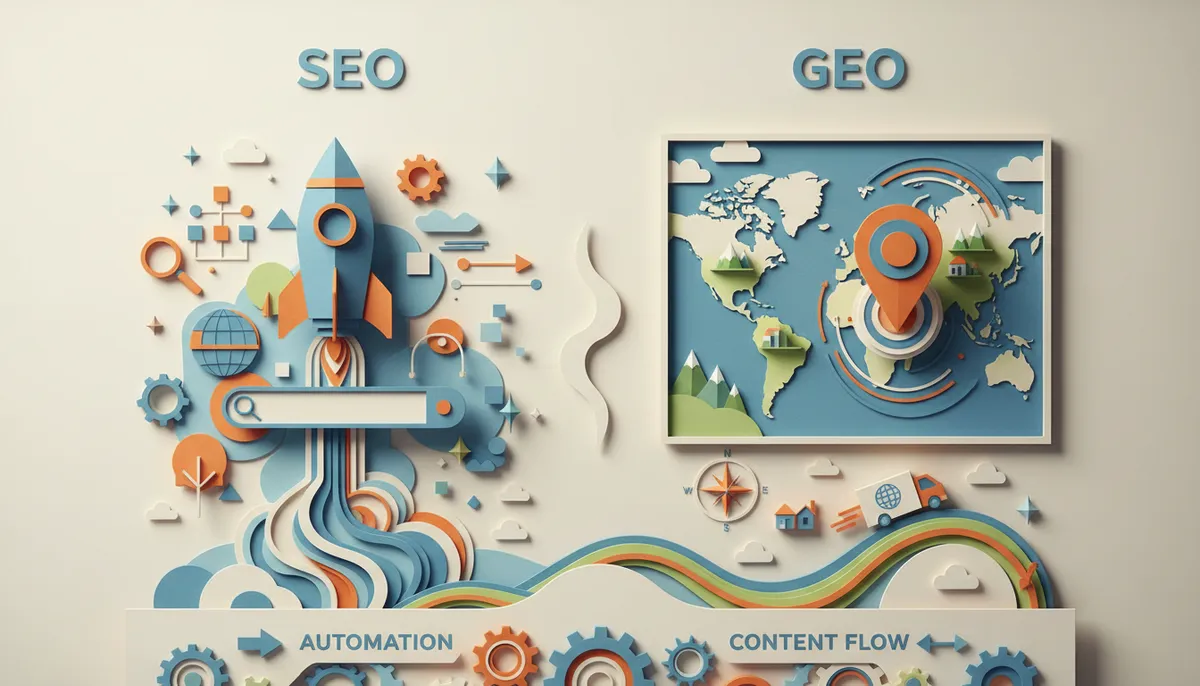
If you’re building a content strategy in 2026, you’ve probably heard people throw around the terms SEO and GEO. Both are critical for getting your business found online, but they work in different ways. SEO (Search Engine Optimization) focuses on ranking your website in traditional search engines like Google. GEO (Generative Engine Optimization) is the new frontier, designed to get your content featured inside AI-powered answers from tools like ChatGPT, Perplexity, Claude, Gemini, and Copilot.
Understanding the difference between SEO and GEO is essential because the way people search is changing fast. More users are skipping Google’s blue links and going straight to AI chatbots for instant answers. If your content isn’t optimized for both, you’re missing out on a huge chunk of potential traffic. In this article, we’ll break down what makes SEO and GEO different, why you need both, and how to optimize for each one effectively.
Whether you’re a small business owner, an SEO agency, or a content manager, this guide will help you understand how to adapt your strategy for the modern search landscape. Let’s dive in.
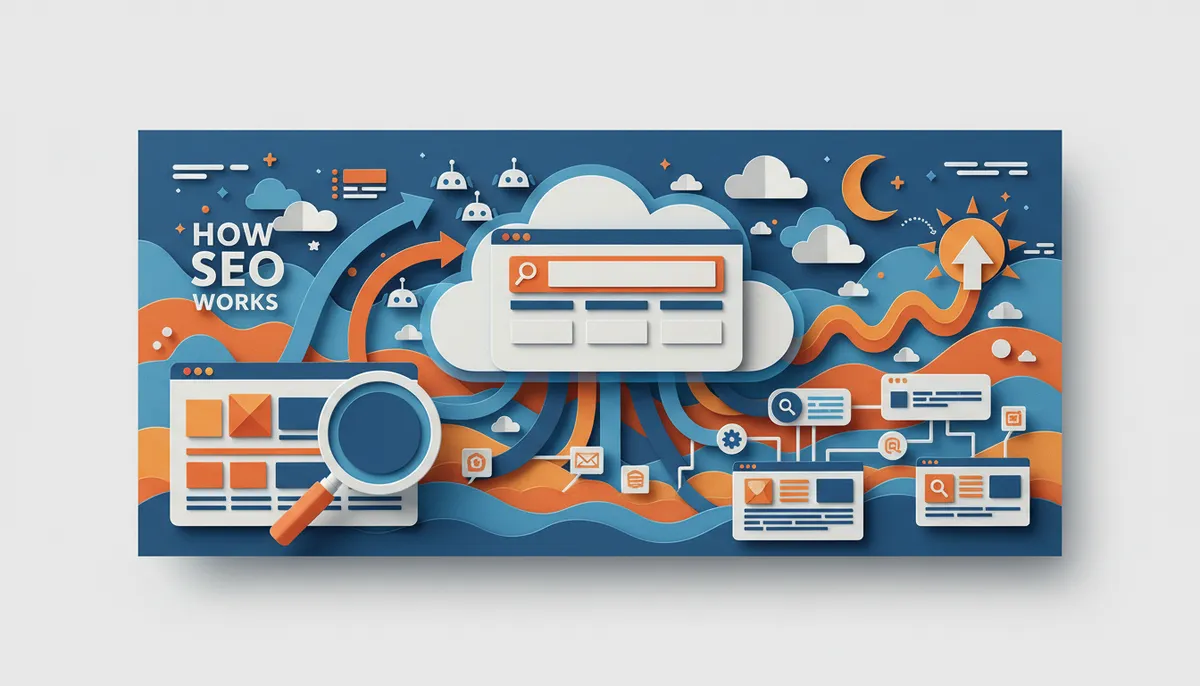
What is SEO and How Does It Work?
SEO stands for Search Engine Optimization. It’s the practice of improving your website so it ranks higher in search engine results pages (SERPs) like Google, Bing, or Yahoo. The goal is simple: when someone searches for a keyword related to your business, you want your website to show up on the first page of results.
SEO involves several key components. First, there’s on-page SEO, which includes optimizing your content, headlines, meta descriptions, and internal links. Then there’s technical SEO, which covers site speed, mobile responsiveness, and structured data. Finally, there’s off-page SEO, which focuses on building backlinks and establishing authority in your industry.
Traditional SEO has been around for decades and remains incredibly important. Google processes over 8.5 billion searches per day, and ranking well can drive massive organic traffic to your site. However, SEO takes time. You need to research keywords, create high-quality content, build links, and wait for Google to crawl and index your pages. It can take months to see real results.
For businesses using automated SEO platforms, the process becomes much faster. Instead of manually writing and optimizing each article, tools can handle keyword research, content creation, and daily publishing automatically. This consistency is what helps websites build long-term ranking momentum.

What is GEO and Why Does It Matter in 2026?
GEO stands for Generative Engine Optimization. It’s a newer concept that focuses on getting your content cited and featured inside AI-generated answers. When someone asks ChatGPT, Perplexity, or Claude a question, these tools pull information from trusted sources across the web. GEO is about making sure your content is one of those sources.
Unlike traditional search engines that show a list of links, AI engines provide direct answers. Users don’t click through to websites as often. Instead, they read the AI’s response and move on. This means your content needs to be structured in a way that AI models can easily understand, extract, and cite.
GEO is critical in 2026 because AI search is growing rapidly. Google’s own research shows that users increasingly prefer instant, conversational answers over scrolling through search results. Businesses that ignore GEO risk becoming invisible in this new era of search.
The key difference is this: SEO gets you ranked in search results. GEO gets you referenced inside AI answers. Both are essential for visibility, but they require different optimization strategies.

Key Differences Between SEO and GEO
Now that we understand what SEO and GEO are, let’s break down the main differences between them. These distinctions will help you tailor your content strategy to maximize visibility across both traditional and AI-powered search platforms.
| Factor | SEO | GEO |
|---|---|---|
| Primary Goal | Rank higher in search engine results pages | Get cited in AI-generated answers |
| User Behavior | Users click through to your website | Users read AI answers without clicking |
| Content Structure | Keyword-focused, backlink-driven | Clear, structured, easily extractable |
| Traffic Source | Google, Bing, Yahoo | ChatGPT, Perplexity, Claude, Gemini, Copilot |
| Optimization Focus | Keywords, backlinks, page speed | Authority, clarity, factual accuracy |
| Time to Results | 3-6 months | Immediate once indexed by AI models |
One of the biggest shifts is how content gets consumed. With SEO, you’re optimizing for clicks. With GEO, you’re optimizing for citations. AI models don’t care about keyword density or meta descriptions in the same way Google does. They care about clear, authoritative, well-structured information that answers questions directly.
This doesn’t mean SEO is dead. It means your content strategy needs to evolve. You need to optimize for both to stay competitive in 2026 and beyond.

How Traditional SEO Strategies Work
Traditional SEO strategies revolve around three main pillars: content, authority, and technical optimization. Let’s break down each one so you can see how they contribute to ranking in Google and other search engines.
1. Content Optimization
Content is the foundation of SEO. You need to create articles, blog posts, and pages that match what people are searching for. This starts with keyword research. You identify terms your audience is typing into Google, then build content around those keywords. The content should be comprehensive, well-written, and provide real value.
Keyword placement matters too. You want your main keyword in the title, first paragraph, and a few subheadings. But avoid stuffing keywords unnaturally. Google penalizes over-optimization. The goal is to write for humans first, then fine-tune for search engines.
2. Link Building
Backlinks are one of the strongest ranking signals in SEO. When reputable websites link to your content, Google sees it as a vote of confidence. The more high-quality backlinks you earn, the more authoritative your site becomes. Link building takes time and effort. You can guest post on industry blogs, create shareable content, or reach out to journalists and influencers.
3. Technical SEO
Even great content won’t rank if your website has technical issues. Technical SEO includes optimizing site speed, making your site mobile-friendly, using HTTPS, fixing broken links, and adding structured data. These factors help search engines crawl and index your site more efficiently.
For businesses managing multiple clients or publishing daily content, manual SEO work becomes overwhelming. That’s why platforms like SEO Rocket automate the entire process. From keyword research to publishing, everything happens automatically, freeing up your time while still driving consistent traffic growth.
How GEO Optimization Differs from Traditional SEO
GEO optimization requires a different mindset. Instead of optimizing for keywords and backlinks, you’re optimizing for clarity, authority, and extractability. AI models like ChatGPT and Perplexity prioritize content that directly answers questions and provides factual, well-organized information.
1. Structured, Scannable Content
AI engines love content that’s easy to parse. This means using clear headings, bullet points, numbered lists, and tables. When your content is well-structured, AI models can quickly extract relevant information and include it in their answers. Avoid long, rambling paragraphs. Break ideas into digestible chunks.
2. Authoritative Sources and Citations
AI models prioritize content from trusted, authoritative websites. If your site has a strong domain authority, regularly publishes expert-level content, and earns backlinks from reputable sources, you’re more likely to be cited. This is where consistent publishing matters. The more high-quality content you publish, the more AI models recognize your site as a reliable source.
3. Direct, Factual Answers
GEO content should answer questions directly. Don’t bury the answer deep in the article. Start with a clear, concise answer in the first paragraph, then elaborate. AI models often pull from the first 100-200 words of an article, so front-load your most important information.
For example, if someone asks “What is the difference between SEO and GEO?”, you should answer that question immediately, then expand with details, examples, and context. This structure improves both SEO and GEO performance.
4. Long-Form, Comprehensive Content
AI models favor long-form content that covers topics thoroughly. Articles over 3,000 words tend to perform better in both SEO and GEO because they provide more value and context. However, length alone isn’t enough. The content must be useful, accurate, and well-organized.
This is where automation becomes a game-changer. AI-powered content platforms can generate comprehensive, 3,000+ word articles daily, ensuring consistent output without sacrificing quality. This consistency helps you build authority faster, which improves both SEO rankings and GEO citations.
Why You Need Both SEO and GEO in 2026
Relying on SEO alone in 2026 is like using a flip phone when everyone else has a smartphone. It still works, but you’re missing out on the future. Here’s why you need both SEO and GEO working together:
- Diversified Traffic Sources: SEO brings traffic from traditional search engines. GEO brings visibility from AI platforms. Together, they ensure you’re reaching audiences across multiple channels.
- Future-Proofing Your Strategy: AI search is growing rapidly. By optimizing for GEO now, you’re positioning yourself ahead of competitors who are still focused only on Google.
- Increased Authority: Content optimized for both SEO and GEO tends to be higher quality. This improves your overall authority, which benefits both ranking and citations.
- Better User Experience: GEO optimization requires clear, well-structured content. This makes your articles easier to read, which reduces bounce rates and improves SEO performance.
- Compounding Results: When you publish consistently and optimize for both SEO and GEO, your results compound over time. Each new article strengthens your authority, leading to more traffic, more citations, and more growth.
The businesses that win in 2026 are the ones that adapt quickly. Waiting to optimize for GEO means falling behind competitors who are already capturing AI-driven traffic.
How to Optimize Content for Both SEO and GEO
Optimizing for both SEO and GEO isn’t as complicated as it sounds. Many of the best practices overlap. Here’s a step-by-step approach to creating content that ranks in Google and gets cited by AI engines:
Step 1: Start with Keyword Research
Even though GEO focuses on answers, keyword research is still important. Identify the questions your audience is asking. Use tools to find keywords with high search volume and low competition. This gives you a foundation for both SEO and GEO content.
Step 2: Write Comprehensive, Long-Form Content
Aim for 3,000+ words per article. Cover the topic thoroughly, answering related questions and providing examples. Use clear headings, bullet points, and numbered lists to make the content scannable. This structure works for both search engines and AI models.
Step 3: Front-Load Key Information
Answer the main question in the first 150-200 words. This helps with featured snippets in Google and makes it easier for AI models to extract your answer. Then, expand with supporting details, data, and examples.
Step 4: Add Structured Data
Use schema markup to help search engines and AI models understand your content. FAQ schema, article schema, and how-to schema are particularly useful. This increases your chances of appearing in rich snippets and AI-generated answers.
Step 5: Build Authority Through Consistency
Publish regularly. The more high-quality content you produce, the more authoritative your site becomes. This improves both SEO rankings and GEO citations. Daily publishing is ideal, but even weekly publishing can make a difference.
Step 6: Optimize for Readability
Use short sentences, simple words, and clear explanations. Avoid jargon unless absolutely necessary. Content that’s easy to understand performs better in both SEO and GEO.
For businesses managing large content volumes, automated platforms can handle all of these steps simultaneously. Instead of spending hours writing and optimizing, you get fully optimized, long-form articles published daily with no manual work.
Common Mistakes to Avoid with SEO and GEO
Even experienced marketers make mistakes when optimizing for SEO and GEO. Here are the most common pitfalls to avoid:
- Keyword Stuffing: Overusing keywords hurts both SEO and GEO. Write naturally and focus on answering questions clearly.
- Ignoring AI Search: Many businesses still optimize only for Google. This leaves money on the table as AI search grows.
- Thin Content: Short, shallow articles don’t rank well in SEO or get cited by AI models. Aim for comprehensive, valuable content.
- Poor Structure: Walls of text are hard to read and harder for AI to parse. Use headings, lists, and tables to organize information.
- Inconsistent Publishing: Sporadic content publishing hurts your authority. Consistency is key for long-term growth.
- Neglecting Mobile Optimization: Most searches happen on mobile devices. If your site isn’t mobile-friendly, you’ll lose traffic and rankings.
Avoiding these mistakes requires discipline and attention to detail. However, automation can eliminate many of these issues entirely. When content is generated using proven SEO and GEO best practices, you avoid common pitfalls automatically.
The Role of AI in Modern SEO and GEO Strategies
AI isn’t just changing how people search—it’s also transforming how content gets created and optimized. In 2026, businesses that leverage AI for content production have a massive advantage. Here’s why:
- Speed: AI can generate a 3,000-word article in minutes, not hours. This allows you to publish daily instead of weekly or monthly.
- Consistency: AI follows the same optimization rules every time, ensuring every article meets SEO and GEO best practices.
- Scalability: Whether you need 10 articles or 300 articles per month, AI can handle the volume without hiring a large team.
- Cost Efficiency: Traditional SEO agencies charge thousands per month. AI-powered platforms cost a fraction of that while delivering comparable or better results.
- Real-Time Optimization: AI can analyze SEO scores in real-time and suggest fixes instantly, eliminating guesswork.
Platforms like SEO Rocket combine AI-powered content generation with full automation. You get keyword research, long-form writing, optimization, image generation, and daily publishing—all handled automatically. This lets you focus on running your business while your content strategy runs itself.
How SEO Rocket Simplifies SEO and GEO Optimization
Managing SEO and GEO manually is time-consuming and complex. You need to research keywords, write long-form content, optimize for search engines, structure for AI models, add images, and publish consistently. For most businesses, this is overwhelming.
SEO Rocket solves this problem with complete automation. Here’s how it works:
- Automated Keyword Discovery: The platform identifies keyword opportunities based on search volume, competition, and relevance. You don’t need to use separate keyword tools.
- Daily Content Generation: SEO Rocket generates one fully optimized, 3,000+ word article per day for the Business plan. The Agency plan generates 10 articles per day across multiple clients.
- SEO and GEO Optimization: Every article is structured for both traditional search engines and AI models. This includes clear headings, bullet points, tables, and direct answers.
- Automatic Publishing: Articles publish directly to your WordPress, Webflow, Shopify, or Wix site. No copy-pasting required.
- Built-In SEO Scoring: Each article gets a real-time SEO score with automated fix suggestions, ensuring top performance.
- AI-Generated Images: Every article includes custom images and video embeds, improving engagement and rankings.
This level of automation means you spend less than 10 minutes setting up the platform, then everything runs on autopilot. You get consistent, high-quality content optimized for both SEO and GEO without the manual work. Plans start at just $99 per month, making it accessible for small businesses and scalable for agencies.
Measuring Success in SEO vs. GEO
Tracking performance is essential for any content strategy. However, SEO and GEO require different metrics. Here’s what to measure for each:
SEO Metrics
- Organic Traffic: The number of visitors coming from search engines.
- Keyword Rankings: Where your pages rank for target keywords.
- Backlinks: The number and quality of sites linking to your content.
- Bounce Rate: The percentage of visitors who leave without interacting.
- Page Speed: How fast your site loads, which affects rankings.
- Conversion Rate: How many visitors take desired actions like signing up or purchasing.
GEO Metrics
- AI Citations: How often your content gets referenced in AI-generated answers.
- Brand Mentions: How frequently your brand appears in AI responses.
- Direct Traffic Spikes: Increases in traffic from users who found you through AI search.
- Content Extractability: How easily AI models can pull information from your articles.
- Authority Signals: Backlinks, domain authority, and content depth that AI models value.
Many analytics tools focus only on SEO metrics. To track GEO performance, you need to monitor brand mentions in AI platforms manually or use specialized tracking tools. However, the simplest approach is to focus on content quality and consistency—if you’re doing GEO optimization right, the results will follow.
Future Trends in SEO and GEO for 2026 and Beyond
The search landscape is evolving rapidly. Here are the key trends shaping SEO and GEO in 2026 and beyond:
- AI Search Dominance: More users will rely on AI chatbots for information, reducing traditional search engine usage.
- Voice and Visual Search: Optimizing for voice queries and image search will become more important.
- Real-Time Content Updates: Search engines and AI models will prioritize fresh, frequently updated content.
- Personalized Results: AI will deliver more personalized answers based on user behavior and preferences.
- Multimodal Search: Users will search using text, voice, and images simultaneously, requiring more diverse content formats.
- Increased Automation: More businesses will adopt AI-powered content platforms to keep up with demand.
Staying ahead of these trends requires agility and the right tools. Businesses that invest in automation, publish consistently, and optimize for both SEO and GEO will dominate their industries. Platforms that evolve with these trends give you a competitive edge without constant manual adjustments.
Conclusion
The difference between SEO and GEO comes down to how content gets discovered and consumed. SEO focuses on ranking in traditional search engines like Google, while GEO optimizes for getting cited in AI-generated answers from tools like ChatGPT, Perplexity, and Claude. Both are essential in 2026, and the businesses that master both will see the most growth.
Optimizing for SEO and GEO requires consistency, quality, and the right structure. You need long-form content, clear headings, authoritative sources, and daily publishing. For most businesses, this is too time-consuming to manage manually. That’s where automation makes all the difference.
SEO Rocket handles everything from keyword research to daily publishing, optimizing every article for both SEO and GEO automatically. You get 3,000+ word articles, AI-generated images, real-time SEO scoring, and direct publishing to your website—all without lifting a finger. Start your free 3-day trial today and see how automation can transform your content strategy. Stop spending hours on SEO work and let SEO Rocket build your traffic on autopilot.
FAQs
Q: What does GEO stand for in digital marketing?
A: GEO stands for Generative Engine Optimization. It’s the practice of optimizing your content so it gets cited and featured inside AI-generated answers from tools like ChatGPT, Perplexity, Claude, and Gemini. Unlike traditional SEO that focuses on ranking in search results, GEO focuses on becoming a trusted source that AI models reference when answering user questions.
Q: Can I do SEO without worrying about GEO?
A: You can focus only on SEO, but you’ll miss out on a growing traffic source. In 2026, more people are using AI chatbots for instant answers instead of clicking through traditional search results. If your content isn’t optimized for GEO, competitors who are will capture that audience. The best strategy is to optimize for both SEO and GEO to maximize visibility across all platforms.
Q: How long does it take to see results from GEO optimization?
A: GEO results can appear faster than traditional SEO. Once your content is indexed by AI models, it can start getting cited almost immediately if it’s authoritative and well-structured. However, building enough authority to be consistently cited takes time—usually 3-6 months of consistent publishing. The more high-quality content you produce, the faster you’ll see results.
Q: Do I need different content for SEO and GEO?
A: No, you don’t need separate content. The best approach is to create comprehensive, well-structured articles that work for both SEO and GEO. Use clear headings, bullet points, tables, and direct answers. This structure helps you rank in Google while making it easy for AI models to extract and cite your content. Platforms like SEO Rocket automatically optimize every article for both SEO and GEO.
Q: Is GEO going to replace SEO?
A: GEO won’t replace SEO, but it will become equally important. Traditional search engines like Google aren’t going away, but AI-powered search is growing rapidly. Smart businesses optimize for both to capture traffic from all sources. Think of GEO as the evolution of SEO, not a replacement. The strategies overlap significantly, so investing in quality content benefits both.