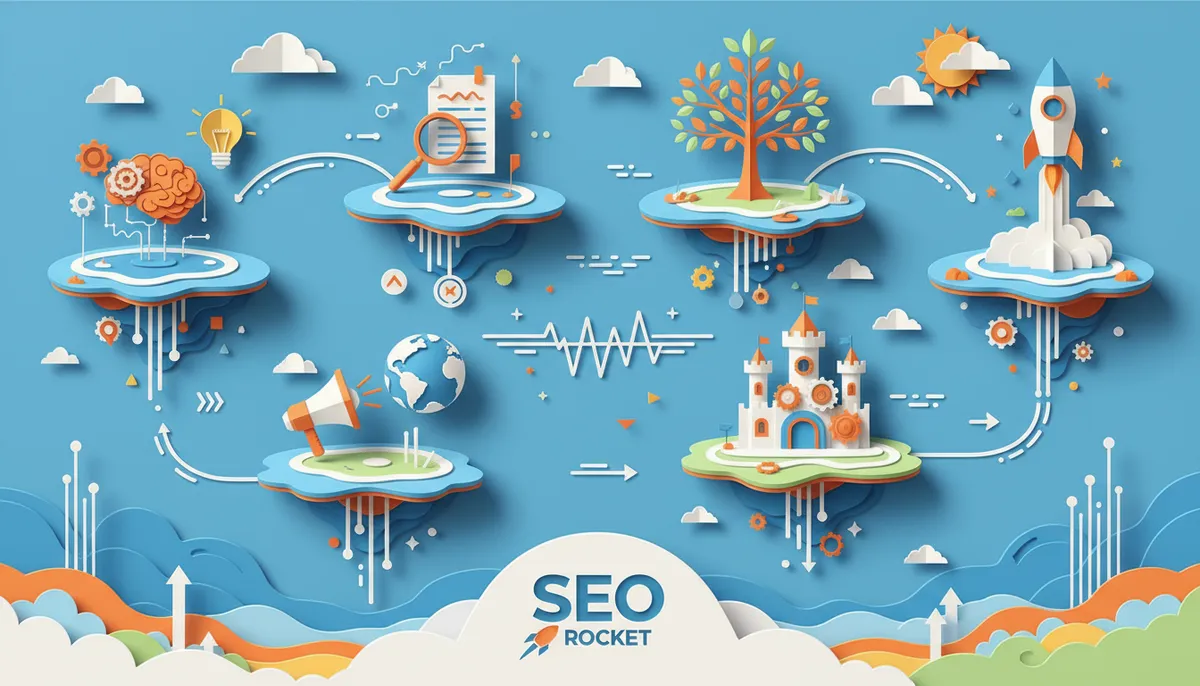
Writing articles with AI has become one of the most practical ways to maintain a consistent content strategy in 2026. If you’re a content manager, marketing team leader, or agency owner, you’ve probably felt the pressure of producing quality content faster than ever before. The good news? AI writing technology has evolved dramatically, and it’s no longer just about generating text—it’s about creating content that ranks on Google and appears in AI search results like ChatGPT, Perplexity, and Claude.
The shift toward AI-powered content creation isn’t just a trend. It’s a response to the reality that modern businesses need to publish regularly to stay competitive in organic search. Traditional content creation methods are too slow and expensive for most teams. AI offers a solution that balances quality, speed, and cost efficiency.
In this article, we’ll explore six practical ways to write articles with AI in 2026, focusing on methods that deliver real SEO results. Whether you’re managing content for a single website or handling multiple clients, these strategies will help you streamline your workflow and improve your rankings.
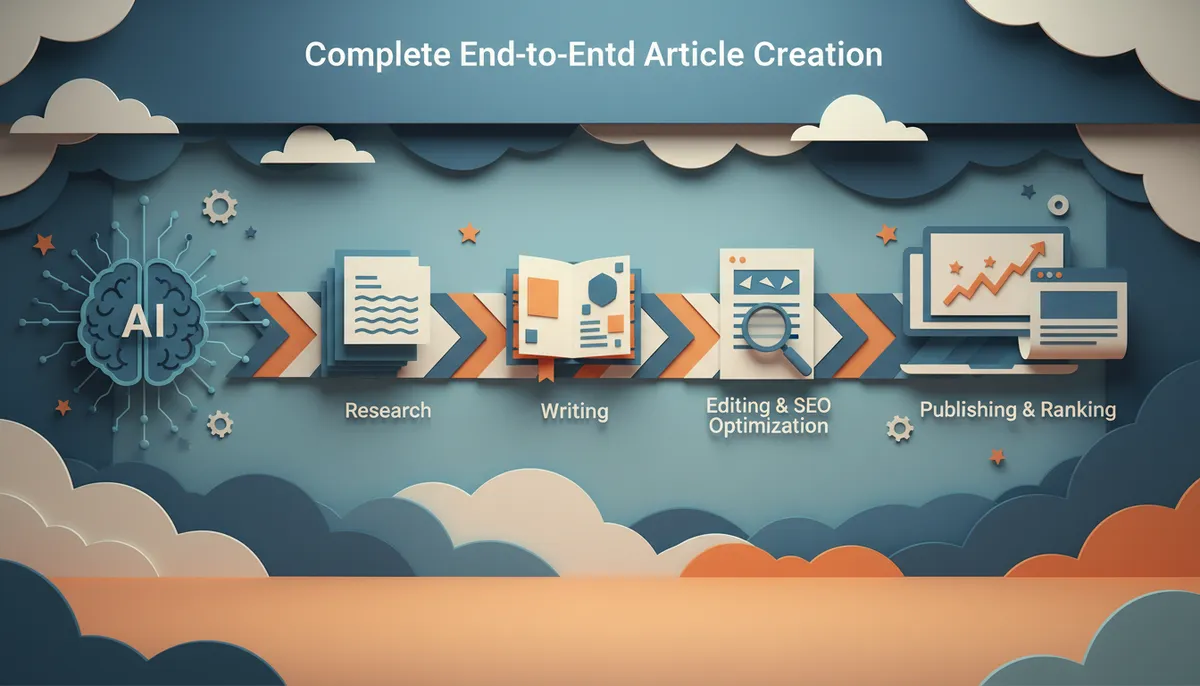
1. Use AI for Complete End-to-End Article Creation
The most efficient way to write articles with AI is to use a platform that handles the entire process from start to finish. This means more than just generating text. A true end-to-end system includes keyword research, content structure planning, writing, optimization, and publishing—all automated.
Traditional AI writing tools require you to provide detailed prompts, manually edit outputs, and handle SEO optimization separately. This defeats the purpose of automation. Instead, look for platforms that automatically discover keyword opportunities based on your industry, analyze competitor content, and generate fully optimized articles without manual intervention.
For example, platforms like SEO Rocket can produce 3,000+ word articles daily without requiring you to write prompts or edit content manually. The system handles keyword selection, content structure, internal linking, metadata creation, and even image generation. This approach saves hours of work per article and ensures consistency across your content calendar.
Benefits of Full Automation
- Eliminates manual prompt engineering and editing
- Ensures consistent publishing schedules
- Reduces content production costs significantly
- Maintains SEO best practices automatically
- Scales easily for agencies managing multiple clients
When you write articles with AI using a complete automation approach, you’re not just saving time. You’re building a sustainable content system that compounds over time. Daily publishing creates momentum in search engines, which is difficult to achieve with manual processes.

2. Optimize for Both Google and AI Search Engines
One critical mistake content creators make in 2026 is focusing only on traditional Google search. The search landscape has expanded to include AI-powered search engines like ChatGPT, Perplexity, Claude, Gemini, and Copilot. These platforms answer user questions by referencing authoritative content across the web.
When you write articles with AI, you need to structure content so both Google’s algorithm and AI models can understand and reference it. This means using clear headings, answering specific questions directly, providing well-organized information, and including relevant data that AI models can cite.
Articles optimized for AI search visibility typically include several characteristics that make them more likely to be referenced in AI-generated answers:
- Clear topic definitions at the beginning of articles
- Direct answers to common questions without fluff
- Well-structured information using headings and lists
- Data and statistics that support claims
- Practical examples that demonstrate concepts
How AI Search Changes Content Strategy
AI search engines don’t just rank content—they extract and synthesize information to create answers. This means your content needs to be authoritative, well-cited, and structured for easy extraction. When AI models reference your content, it drives awareness and traffic from users who trust those recommendations.
The best AI content platforms automatically structure articles to maximize visibility in both traditional and AI search results. This dual optimization approach is essential for long-term organic growth in 2026 and beyond.

3. Implement Daily Publishing for Compounding SEO Results
Consistency matters more than perfection when it comes to SEO content. Publishing one highly polished article per month won’t generate the same results as publishing one solid article every day. This is where AI writing becomes transformative for businesses and agencies.
Daily publishing creates several compounding advantages that improve your search visibility over time:
- Search engines recognize your site as actively maintained and relevant
- You target more keywords and capture more search traffic
- Internal linking opportunities multiply as your content library grows
- Domain authority increases with consistent, quality content
- You build topical authority in your niche faster than competitors
The challenge with daily publishing has always been resource constraints. Creating quality content every day requires either a large content team or significant freelance budgets. AI eliminates this bottleneck entirely.
How to Maintain Quality with Daily AI Publishing
Quality concerns are valid when considering daily AI content generation. However, modern AI writing platforms address this through several mechanisms. They use advanced language models trained on high-quality content, implement SEO best practices automatically, and include real-time optimization scoring to ensure each article meets ranking standards.
For example, when you use automated content systems, each article goes through optimization checks that evaluate readability, keyword usage, content structure, and technical SEO elements. This ensures consistent quality without manual review.
Daily publishing also allows for faster testing and iteration. You can identify which topics and keywords perform best, then adjust your content strategy based on real data rather than assumptions.

4. Leverage AI for Comprehensive Keyword Research and Content Planning
Before you write articles with AI, you need a solid content plan. This starts with keyword research—identifying what your target audience is searching for and which opportunities offer the best return on investment.
Traditional keyword research involves juggling multiple tools, analyzing competition manually, and building spreadsheets to track opportunities. Modern AI platforms integrate this entire process into a single workflow.
Comprehensive AI-powered keyword research includes several components that streamline content planning:
- Automatic keyword discovery based on your industry and competitors
- Search volume and competition analysis with real-time data
- Keyword clustering to identify related topics and content themes
- Intent analysis to match content to user search goals
- Opportunity scoring to prioritize high-value keywords
Visual Content Calendar Management
Once you’ve identified keyword opportunities, the next step is organizing them into a publishing schedule. AI platforms with built-in content calendars let you visualize your entire content strategy at a glance. You can drag and drop keywords into specific dates, ensuring consistent coverage of important topics.
This visual approach makes content planning intuitive rather than overwhelming. You can plan weeks or months in advance, ensuring your content strategy supports business goals and seasonal opportunities. When the system automatically fills your calendar with keyword suggestions, the planning process becomes effortless.
| Traditional Keyword Research | AI-Powered Keyword Research |
|---|---|
| Manual tool switching between 3-5 platforms | Integrated single-platform experience |
| Hours of analysis per keyword batch | Automatic discovery and scoring |
| Spreadsheet management and updates | Visual calendar with drag-and-drop planning |
| Subjective competition assessment | Data-driven opportunity scoring |
| Separate content brief creation | Automatic article generation from keywords |
5. Automate Technical SEO Elements Within Your Content
Writing great content is only part of the SEO equation. Technical optimization determines whether search engines can properly crawl, understand, and rank your articles. When you write articles with AI, these technical elements should be handled automatically rather than requiring manual implementation.
Critical technical SEO elements that AI platforms should automate include meta descriptions, title tag optimization, header structure and hierarchy, internal linking to related content, external links to authoritative sources, image alt text and optimization, schema markup for rich snippets, and URL slug creation.
Manual implementation of these elements is time-consuming and prone to inconsistency. Different team members may apply different standards, resulting in uneven SEO quality across your content library. Automation ensures every article meets the same high standards.
Real-Time SEO Scoring and Auto-Fix Suggestions
Advanced AI writing platforms include real-time SEO scoring that evaluates each article against ranking best practices. This scoring considers factors like keyword placement, content length, readability, link structure, and metadata quality. When issues are detected, the system provides specific recommendations or automatically implements fixes.
For example, if an article’s meta description is too long, the system can automatically trim it to the optimal length while preserving the core message. If internal linking is insufficient, it can suggest or insert relevant links to other articles on your site. These automated optimizations eliminate the need for manual SEO audits and corrections.
The result is consistently high-quality content that meets technical SEO requirements without requiring specialized expertise from your team. This is particularly valuable for small businesses and agencies that may not have dedicated SEO specialists on staff.
6. Integrate AI Writing with Direct Publishing to Your Website
The final step in efficient AI content creation is seamless publishing. Generating great content means nothing if it sits in a document waiting for someone to manually upload and format it. Direct integration with your content management system eliminates this bottleneck.
Modern AI writing platforms connect directly with popular CMS platforms including WordPress, Webflow, Shopify, and Wix. This means articles can be automatically published to your website on a predetermined schedule without any manual intervention.
Direct publishing integration offers several advantages that complete the automation cycle:
- Eliminates copy-paste errors and formatting issues
- Maintains consistent publishing schedules without manual work
- Ensures proper category and tag assignment
- Automatically includes images, links, and media
- Reduces the time from content creation to publication from hours to minutes
Set It and Forget It Publishing
The ultimate goal when you write articles with AI is a truly passive content system. This means you can set up your content calendar, approve keywords and topics, and let the system handle everything else. Articles are researched, written, optimized, and published automatically on a daily schedule.
This level of automation transforms content marketing from a constant time drain into a strategic asset that works in the background. Your team can focus on high-value activities like strategy, customer engagement, and business development while your content engine builds organic traffic automatically.
For agencies managing multiple clients, this automation scales effortlessly. Agency plans typically support multiple workspaces, allowing you to manage 10 or more client websites from a single dashboard. Each client gets their own customized content calendar and publishing schedule without additional overhead.
Understanding the Cost Efficiency of AI Article Writing
One of the most compelling reasons to write articles with AI is the dramatic cost reduction compared to traditional content creation methods. Let’s break down the economics to understand why AI writing makes sense for businesses of all sizes.
Traditional content creation through agencies or freelancers typically costs between $200 and $500 per long-form article. For a consistent publishing schedule of one article per day, that’s $6,000 to $15,000 per month. These costs quickly become prohibitive for small businesses and even strain the budgets of mid-sized companies.
| Content Creation Method | Cost per Article | Monthly Cost (30 Articles) |
|---|---|---|
| Traditional SEO Agency | $300-$500 | $9,000-$15,000 |
| Freelance Writers | $200-$400 | $6,000-$12,000 |
| In-House Content Team | $250-$350 (with overhead) | $7,500-$10,500 |
| AI Content Platform | ~$3-$10 | $99-$299 |
AI writing platforms reduce these costs by 95% or more while maintaining quality and increasing output. A platform that produces one fully optimized article per day for $99 per month costs approximately $3 per article. This makes consistent daily publishing financially viable for businesses that previously couldn’t afford regular content creation.
Return on Investment Considerations
Beyond direct cost savings, AI writing delivers ROI through faster results and reduced time investment. Traditional content strategies take months to build momentum because publishing frequency is limited by budget and resources. AI-powered daily publishing accelerates traffic growth by targeting more keywords and building topical authority faster.
For agencies, the cost efficiency creates new business opportunities. You can offer content marketing services at competitive prices while maintaining healthy profit margins. Client results improve because of consistent publishing, leading to better retention and referrals.
Small business owners benefit from reclaiming time previously spent managing freelancers or writing content themselves. The automation allows you to focus on core business activities while your organic traffic grows in the background.
Common Concerns When You Write Articles with AI
Despite the clear benefits, many people have legitimate concerns about using AI for content creation. Let’s address the most common questions and explain how modern AI writing platforms handle these issues.
Will AI Content Rank on Google?
Yes, when done correctly. Google’s Search Quality Rater Guidelines make it clear that they evaluate content based on quality, not the method of creation. Google cares about whether content is helpful, accurate, and trustworthy—not whether a human or AI wrote it.
The key is ensuring your AI content meets Google’s E-E-A-T standards: Experience, Expertise, Authoritativeness, and Trustworthiness. Quality AI platforms achieve this through comprehensive research, proper citation of sources, clear structure, and optimization for user intent.
Does AI Content Sound Generic or Robotic?
Early AI writing tools often produced generic, repetitive content that was easy to identify as machine-generated. Modern AI writing platforms have evolved significantly. They produce natural-sounding content that maintains consistent tone and style while avoiding common AI writing patterns.
The quality depends heavily on the platform you choose. Look for systems that generate long-form content (3,000+ words), include real examples and data, and structure information in a reader-friendly way. The best platforms allow tone customization to match your brand voice.
How Much Editing Do AI Articles Require?
This varies by platform. Basic AI writing tools require significant editing and fact-checking. However, advanced automation platforms are designed to produce publish-ready content with minimal or no editing required. They include built-in accuracy checks, SEO validation, and quality scoring before publication.
The goal of true automation is to eliminate editing entirely. While you may want to review articles periodically to ensure alignment with your brand, the system should handle the heavy lifting. Unlimited rewrite options allow you to regenerate content if needed without additional cost.
Choosing the Right Platform to Write Articles with AI
Not all AI writing platforms are created equal. The market includes everything from basic text generators to comprehensive content automation systems. Understanding the key differences will help you choose a platform that actually delivers results rather than just generating text.
When evaluating platforms, consider these essential features that separate true automation from simple text generation tools:
- Integrated keyword research – Does it discover opportunities or just generate content from your prompts?
- Automatic content planning – Can you set up a content calendar that fills itself?
- Complete SEO optimization – Are technical elements handled automatically?
- Direct publishing – Does it connect to your website or require manual uploads?
- Content length – Does it generate comprehensive articles or short blog posts?
- AI search optimization – Is content structured for modern AI search engines?
- Scalability – Can it handle multiple websites or clients?
- Maintenance requirements – How much ongoing management does it need?
Why SEO Rocket Stands Out for AI Article Writing
SEO Rocket represents the evolution of AI content creation from a tool that requires management to a system that runs itself. It’s specifically designed for businesses and agencies that want consistent organic traffic without spending hours on content management.
The platform handles everything from keyword discovery to daily publishing without manual intervention. Setup takes under 10 minutes—you connect your website, review automatically discovered keyword opportunities, approve your content calendar, and the system does the rest. It generates and publishes one fully optimized 3,000-word article every day for the Business plan or up to 10 articles daily for the Agency plan.
What makes SEO Rocket different is its focus on complete automation rather than assisted writing. You don’t need to write prompts, edit content, or manually publish articles. The system manages the entire workflow, including AI-generated images, internal and external linking, metadata optimization, and real-time SEO scoring. For agencies, it supports 10 client workspaces with 300 monthly articles, making it scalable for growing service businesses.
The pricing is straightforward and dramatically more affordable than traditional content creation methods. At $99 per month for 30 articles or $799 per month for 300 articles across multiple clients, the cost per article is approximately $3—a 95% reduction compared to agency or freelance rates. For businesses committed to long-term content strategy, the lifetime plan at $1,499 provides permanent access with no recurring fees.
Getting Started: Your First Steps to Write Articles with AI
If you’re ready to start writing articles with AI, the process is simpler than you might expect. Modern platforms have streamlined onboarding to get you publishing quickly. Here’s what you need to do to get started effectively.
First, define your content goals clearly. Are you trying to increase organic traffic? Build topical authority in your niche? Support product pages with informational content? Generate leads through educational articles? Your goals will guide your keyword selection and content strategy.
Next, connect your website to your chosen AI content platform. Most systems support major CMS platforms through simple integrations that take just a few minutes to set up. This connection allows the platform to publish directly to your site and potentially analyze your existing content for optimization opportunities.
Setting Up Your Content Calendar
Once connected, review the keyword opportunities the platform discovers for your industry. Quality platforms automatically identify relevant keywords based on your niche, competition, and search volume data. You’ll see opportunities ranked by potential value, making it easy to prioritize topics that will drive meaningful traffic.
Select keywords that align with your goals and add them to your content calendar. Most platforms allow you to schedule articles for specific dates, creating a consistent publishing rhythm. A good starting strategy is to schedule 30 days of content immediately, ensuring you have a full month of automated publishing ahead of you.
Finally, configure your preferences for tone, style, and any specific requirements for your industry. Some platforms offer customization options that ensure your content maintains a consistent brand voice across all articles. Once these settings are configured, they apply to all future content automatically.
After setup, your primary task is monitoring performance and occasionally adding new keywords to maintain a full content calendar. The automation handles everything else, allowing you to focus on strategy rather than execution.
The Future of Writing Articles with AI in 2026 and Beyond
The AI content creation landscape continues to evolve rapidly. Understanding where the technology is heading helps you make strategic decisions that position your business for long-term success rather than short-term gains.
One major trend is the increasing importance of AI search visibility. As more users rely on ChatGPT, Perplexity, and similar tools for information, appearing in AI-generated answers becomes as important as ranking on Google. Content platforms are adapting by structuring articles specifically for AI model comprehension and citation.
Another significant development is the shift from assisted writing to complete automation. Early AI tools required prompt engineering and manual editing. Current platforms eliminate these steps entirely, handling the full workflow from research to publication. Future iterations will likely include even more sophisticated optimization based on real-time performance data and competitive analysis.
Multi-Platform Content Strategies
As content distribution channels multiply, AI writing platforms are expanding beyond blog articles to support social media posts, email newsletters, video scripts, and other formats. The goal is a unified content strategy where a single keyword research session generates assets for multiple channels automatically.
For businesses and agencies, this means even greater efficiency. Instead of managing separate tools for different content types, you’ll work with integrated platforms that understand how different formats support each other and amplify overall reach.
The economic model of content creation is also shifting. As AI reduces production costs, success increasingly depends on strategic planning and consistent execution rather than pure content volume. Staying informed about SEO best practices and algorithm updates becomes more important than ever.
Conclusion: Transform Your Content Strategy with AI Automation
Writing articles with AI has evolved from an experimental approach to a proven strategy for building organic traffic in 2026. The technology now offers complete automation that handles everything from keyword research to daily publishing, making consistent content marketing accessible to businesses of all sizes.
The key is choosing a platform that truly automates the process rather than just assisting with parts of it. Look for systems that include integrated keyword research, automatic content planning, comprehensive SEO optimization, and direct publishing to your website. These features transform content from a resource-intensive project into a strategic asset that compounds over time.
For agencies managing multiple clients, scalability becomes the deciding factor. Platforms that support multiple workspaces with centralized management allow you to deliver consistent results across your client base without proportionally increasing your workload or costs.
The economic benefits are undeniable. Reducing content costs by 95% while maintaining or improving quality makes daily publishing financially viable for businesses that previously couldn’t afford consistent content creation. This levels the playing field, allowing smaller companies to compete with larger competitors through strategic content marketing.
If you’re ready to eliminate manual content work and build a sustainable organic traffic engine, now is the time to implement AI article writing into your strategy. The platforms exist, the technology works, and the competitive advantage goes to those who adopt it effectively. Start with a free trial to see how automation can transform your content marketing results without adding to your workload.
FAQs
Q: Can AI-written articles actually rank on Google in 2026?
A: Yes, AI-written articles can rank very well on Google when properly optimized. Google evaluates content based on quality and helpfulness, not creation method. The key is using AI platforms that follow SEO best practices, structure content correctly, and ensure accuracy. Modern AI writing tools produce comprehensive, well-researched articles that meet Google’s quality standards and rank competitively.
Q: How much does it cost to write articles with AI compared to hiring writers?
A: AI article writing costs approximately $3-10 per article compared to $200-500 for traditional freelance or agency writers. This represents a 95% cost reduction. For example, producing 30 articles monthly costs around $99-299 with AI automation versus $6,000-15,000 with human writers. This makes consistent daily publishing financially accessible for small businesses and agencies.
Q: Do AI articles need editing before publishing?
A: It depends on the platform. Basic AI writing tools require significant editing and fact-checking. However, advanced automation platforms like SEO Rocket produce publish-ready content with built-in quality checks, SEO optimization, and accuracy validation. These systems are designed for zero-edit publishing, though you can request unlimited rewrites if you want adjustments. The goal is complete automation without manual editing.
Q: How long does it take to set up AI article writing for my website?
A: Setup with modern AI platforms takes under 10 minutes. You simply connect your website through a CMS integration, review automatically discovered keyword opportunities for your niche, approve your content calendar, and configure basic preferences. The system then handles everything else automatically. There’s no complex onboarding or technical knowledge required.
Q: Can AI-written content appear in ChatGPT and other AI search results?
A: Yes, properly structured AI content can be referenced by ChatGPT, Perplexity, Claude, and other AI search engines. These platforms cite authoritative sources when answering questions. AI content platforms that optimize specifically for AI search visibility structure articles with clear information, direct answers, and proper organization that AI models can easily reference and synthesize into their responses.