
Key Takeaways
-
SEO Rocket offers end-to-end blog automation with daily 3,000+ word article generation, direct WordPress publishing, and real-time SEO optimization.
-
AI blog automation tools can dramatically reduce content creation costs compared to traditional agencies, with some platforms producing articles for as low as $3 each.
-
Consistent daily publishing creates compounding SEO growth, helping websites get indexed faster and build topical authority more quickly.
-
The best AI blog automation tools handle entire content workflows, from keyword research to publishing, without requiring manual intervention.
-
Choose an AI content tool based on your specific needs: small businesses should prioritize affordability, agencies need scalability, and e-commerce sites require high-volume content generation.
If you’re looking for a way to publish SEO content without spending hours writing and optimizing every article, AI blog automation tools can help. These platforms handle everything from keyword research to content creation to publishing. But with so many options available in 2026, which one actually delivers the best results?
The answer depends on what you need. Some tools are great for social media scheduling. Others focus on workflow automation. But if your goal is to grow organic traffic through consistent, high-quality blog content, you need a platform built specifically for SEO content automation.
In this guide, we’ll break down the best AI blog automation tools available today. We’ll compare their features, pricing, and real-world performance so you can choose the right one for your business or agency.
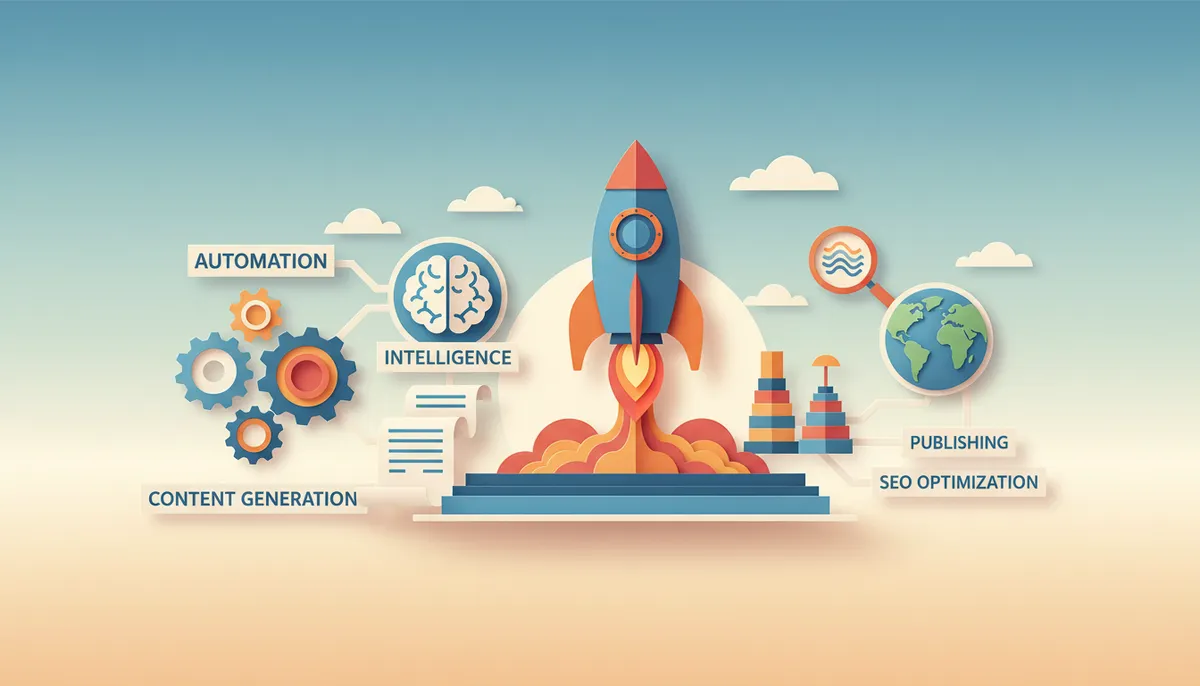
What Makes a Great AI Blog Automation Tool
Not all AI blog automation tools are created equal. The best ones share several key characteristics that set them apart from basic writing assistants or social media schedulers.
First, they need to handle the entire content workflow. That means keyword research, content planning, article generation, SEO optimization, and publishing should all happen in one place. If you’re jumping between five different tools, you’re not really automating anything.
Second, the content quality matters. An AI tool that produces thin, repetitive, or poorly structured articles won’t help you rank. You need a platform that generates comprehensive, well-researched content that matches search intent and follows Search Quality Rater Guidelines.
Third, consistency is crucial. Publishing once a month won’t move the needle. The best AI blog automation tools enable daily or near-daily publishing, which creates compounding SEO growth over time.
Essential Features to Look For
- Built-in keyword research with live SEO data showing search volume, competition, and ranking opportunities
- Automated content calendar that schedules and generates articles without manual intervention
- Long-form content generation (2,000-3,000+ words) optimized for both Google and AI search engines
- Direct publishing integration with WordPress, Webflow, Shopify, and other popular platforms
- Real-time SEO scoring and optimization suggestions to improve rankings
- Auto-generated images, internal links, external links, and metadata

Top AI Blog Automation Tools Compared
Let’s look at the leading platforms in 2026 and how they stack up against each other. We’ll focus on tools specifically designed for SEO content automation rather than general writing assistants.
SEO Rocket: Best for End-to-End Automation
SEO Rocket is built specifically for businesses and agencies that want to automate their entire SEO content process. Unlike tools that only handle one part of the workflow, SEO Rocket manages everything from keyword discovery to daily publishing.
The platform includes a complete keyword research engine with live SEO data. Instead of guessing what to write about, you get a keyword list showing real opportunities based on search volume, competition, and intent. When you add a keyword to the calendar, SEO Rocket schedules it to become a full article.
What sets SEO Rocket apart is its focus on AI search visibility. In 2026, showing up in AI Overviews from ChatGPT, Perplexity, Claude, Gemini, and Copilot matters as much as ranking on Google. SEO Rocket structures content so AI models can reference it as a trusted source.
Key Advantages of SEO Rocket
- Generates 3,000+ word articles daily with complete automation
- Under 10 minutes to set up, zero monthly maintenance required
- Direct publishing to WordPress, Webflow, Shopify, and Wix
- Real-time SEO scoring with automated fix suggestions
- Unlimited AI rewrites and unlimited team members
- Agency plan supports 10 clients and 300 monthly articles
The pricing is straightforward. The Business plan costs $99/month for 30 articles. The Agency plan is $799/month for 300 articles across 10 client workspaces. There’s also a $1,499 lifetime plan with permanent access.
At roughly $3 per long-form article, SEO Rocket costs a fraction of what traditional SEO agencies charge. Most agencies bill $3,000-$5,000 per month for similar work.
AirOps: Built for Content Marketers
AirOps is designed specifically for content marketers and SEO professionals. It offers integrations with industry-standard tools like Semrush and Moz alongside workflow automation capabilities.
The platform excels at connecting your existing SEO tools with AI-powered writing workflows. If you already use Semrush for keyword research, AirOps can pull that data and use it to guide content creation.
AirOps offers a free tier with 1,000 tasks before requiring paid plans. This makes it accessible for smaller teams testing AI automation for the first time.
Zapier: Best for Multi-Platform Integration
Zapier connects with more than 7,000 apps, making it one of the most comprehensive automation platforms available. It includes integrated AI tools for building workflows, identifying data trends, and automating content creation.
You can use Zapier to create workflows that draft email campaigns, generate blog post outlines, or schedule social media content. The platform works well if you need to connect many different tools together.
However, Zapier isn’t specifically built for SEO content automation. You’ll need to configure workflows manually and connect multiple services to achieve what dedicated SEO platforms do out of the box.
Gumloop: Visual Workflow Builder
Gumloop is an AI-powered workflow automation tool used by major brands like Shopify, Instacart, and Webflow. It features a visual canvas where you connect tools with LLM AI models.
The platform includes all premium LLM models in its subscription, so you’re not limited to one AI engine. Gumloop’s free plan lets you create your first AI-powered workflow without even creating an account.
Like Zapier, Gumloop is a general automation tool rather than an SEO-specific platform. It’s powerful for custom workflows but requires more setup and technical knowledge than purpose-built SEO tools.

How AI Blog Automation Tools Handle SEO
The best AI blog automation tools don’t just generate content. They optimize it for search engines using multiple strategies.
First, they analyze search intent. When you target a keyword like “best project management software,” the tool should recognize whether searchers want a comparison guide, a how-to article, or a listicle. Matching intent is critical for ranking.
Second, they structure content properly. This means using descriptive headings, short paragraphs, bullet points, numbered lists, and tables where appropriate. Structured content ranks better and performs well in featured snippets.
Third, they handle technical SEO elements. Meta descriptions, title tags, image alt text, internal links, and external links should all be generated automatically based on SEO best practices.
SEO Features That Matter Most
- Keyword density optimization (typically 1-2% for primary keywords)
- Semantic keyword integration using LSI terms and related phrases
- Internal linking suggestions based on existing site content
- External linking to authoritative sources for E-E-A-T signals
- Schema markup generation for rich snippets
- Image optimization with descriptive file names and alt text

Pricing Comparison: What You Actually Pay
Understanding the true cost of AI blog automation tools requires looking beyond monthly subscription fees. You need to consider cost per article, setup time, and ongoing maintenance.
| Tool | Starting Price | Articles per Month | Cost per Article |
|---|---|---|---|
| SEO Rocket (Business) | $99/month | 30 | $3.30 |
| SEO Rocket (Agency) | $799/month | 300 | $2.66 |
| AirOps | Free (1,000 tasks) | Varies | Varies |
| Zapier | $19.99/month | N/A | N/A |
| Gumloop | Free tier available | Varies | Varies |
Traditional SEO agencies typically charge $3,000-$5,000 per month for content creation services. Freelance writers cost $200-$500 per article for high-quality SEO content. AI blog automation tools reduce these costs dramatically.
Hidden Costs to Consider
- Setup time and technical configuration
- Monthly maintenance and workflow updates
- Additional subscriptions for keyword research or SEO tools
- Content editing and quality control time
- Publishing and CMS management
The best AI blog automation tools minimize these hidden costs by handling everything in one platform. If you’re spending hours each week managing your content automation system, you’re not really saving time or money.
Workflow Automation vs. Content Automation
It’s important to understand the difference between general workflow automation tools and SEO-specific content automation platforms.
General workflow automation tools like Zapier, Make, and n8n excel at connecting different apps and creating custom workflows. You can build systems that move data between platforms, trigger actions based on events, and automate repetitive tasks.
However, these tools aren’t optimized for SEO content creation. You’ll need to manually configure AI writing models, set up publishing workflows, and create keyword research integrations. This requires technical knowledge and ongoing maintenance.
SEO-specific content automation platforms like SEO Rocket are purpose-built for one thing: creating and publishing optimized blog content. Everything from keyword discovery to publishing happens automatically without custom configuration.
When to Choose Workflow Automation
- You need to connect many different business tools
- You have complex, multi-step processes across various platforms
- You have technical resources to build and maintain custom workflows
- You need automation beyond content creation (CRM, email, project management)
When to Choose Content Automation
- Your primary goal is growing organic search traffic
- You want consistent, daily blog publishing without manual work
- You need long-form, SEO-optimized articles that rank
- You prefer a turnkey solution over custom configuration
- You manage content for multiple clients or websites
AI Models and Content Quality
The AI model powering your blog automation tool significantly impacts content quality. Different models have different strengths and weaknesses.
ChatGPT (GPT-4 and GPT-4 Turbo) excels at conversational writing and following complex instructions. It produces natural-sounding content that engages readers. However, it sometimes lacks specificity and can be repetitive without proper prompting.
Claude (by Anthropic) is known for accuracy and nuanced understanding. It tends to produce more balanced, thoughtful content with fewer hallucinations. Claude works well for technical or informative articles.
Gemini (by Google) has strong research capabilities and factual accuracy. Since Google develops it, Gemini understands search intent and SEO concepts natively.
The best AI blog automation tools either use multiple models or fine-tune their prompts extensively to overcome each model’s limitations. Some platforms like Gumloop and Lindy.ai let you choose which AI model to use for different tasks.
Integration with WordPress and Other Platforms
Direct publishing integration is crucial for true automation. If you’re copying and pasting articles manually, you’re adding unnecessary work to your workflow.
WordPress is the most common blogging platform, used by over 40% of websites. The best AI blog automation tools offer native WordPress integration that publishes articles directly to your site with one click.
Beyond WordPress, look for integrations with Webflow, Shopify, Wix, Ghost, and Squarespace. Agency-focused tools should support multiple client sites across different platforms.
Publishing integration should handle more than just text. The tool should also upload images, set featured images, assign categories and tags, configure SEO metadata, and set publication dates automatically.
What Good Publishing Integration Looks Like
- One-click publishing with no manual steps required
- Automatic image uploads with optimized file names and alt text
- Category and tag assignment based on content topics
- Meta title, description, and schema markup configuration
- Internal and external link insertion
- Scheduled publishing for optimal timing
How Daily Publishing Drives SEO Growth
One of the biggest advantages of AI blog automation is the ability to publish consistently. Daily or near-daily publishing creates compounding SEO growth that manual content creation can’t match.
When you publish regularly, search engines crawl your site more frequently. This means new content gets indexed faster, and you start ranking sooner. A site that publishes daily can see results in weeks instead of months.
Regular publishing also builds topical authority. When you cover a topic comprehensively through multiple articles, search engines recognize your site as an authority in that space. This helps all your content rank better, not just individual articles.
Additionally, more content means more internal linking opportunities. Each new article can link to existing content, strengthening your site’s overall link structure and helping older articles rank better.
The Compound Effect of Consistent Publishing
| Publishing Frequency | Articles per Year | Estimated Traffic Growth |
|---|---|---|
| Weekly | 52 | Slow, gradual growth |
| 3x per week | 156 | Moderate, steady growth |
| Daily | 365 | Rapid, compounding growth |
Manual content creation makes daily publishing nearly impossible. Even with a team of writers, producing high-quality, SEO-optimized content every day is expensive and time-consuming. AI blog automation tools make this achievable for businesses of any size.
Choosing the Right Tool for Your Business
The best AI blog automation tool depends on your specific needs, budget, and technical capabilities. Here’s how to choose.
Small businesses and startups should prioritize ease of use and affordability. Look for tools with simple setup, minimal maintenance, and pricing under $100 per month. SEO Rocket’s Business plan fits this profile perfectly, offering 30 articles monthly for $99 with no technical setup required.
Small SEO agencies need scalability and client management features. The ability to manage multiple client websites from one dashboard is essential. Agency-tier plans that support 5-10 client workspaces work best. Pricing between $500-$1,000 per month is typical for agency-level tools.
In-house marketing teams at mid-sized companies need consistent output without expanding headcount. Tools that integrate with existing marketing stacks and provide collaboration features work well. Look for platforms with unlimited team members and role-based access.
E-commerce SEO specialists need high-volume content creation for product and category pages. Tools that generate hundreds of articles monthly at low cost per article are ideal. The ability to customize templates for product descriptions is also valuable.
Decision Framework
- Define your primary goal (traffic growth, client services, content volume)
- Set your budget for both tools and time investment
- Identify must-have features (publishing integration, keyword research, AI model)
- Test 2-3 tools with free trials or low-cost entry plans
- Measure results over 30-60 days before committing long-term
The Future of AI Blog Automation
AI blog automation will continue evolving rapidly in 2026 and beyond. Several trends are shaping where these tools are heading.
First, AI search optimization is becoming as important as Google SEO. Platforms like ChatGPT, Perplexity, and Claude are answering questions directly instead of sending users to websites. Tools that optimize content for AI citations and references will have a significant advantage.
Second, multi-modal content is growing. The best tools will generate not just text but also images, videos, infographics, and interactive elements. This makes content more engaging and improves time on page metrics.
Third, personalization will increase. Future AI blog automation tools will customize content based on audience segments, user behavior, and search intent variations. The same keyword might generate different article versions for different audiences.
Finally, real-time SEO adaptation will become standard. Instead of static optimization, tools will continuously update content based on ranking changes, competitor movements, and search trend shifts. SEO Rocket’s roadmap includes several features in this direction.
Conclusion
Choosing the best AI blog automation tool comes down to what you’re trying to achieve. If you want a general workflow automation platform that connects many apps, Zapier or Gumloop might fit. If you need SEO integrations with existing tools, AirOps is worth considering.
But if your goal is consistent, high-quality, SEO-optimized content that drives organic traffic without manual work, SEO Rocket is the clear choice. It’s the only platform built specifically for end-to-end SEO content automation, from keyword research to daily publishing.
With setup taking under 10 minutes, pricing starting at just $99 per month, and true automation requiring zero monthly maintenance, SEO Rocket eliminates the barriers that make consistent SEO content creation difficult. The platform handles everything traditional agencies charge thousands for at a fraction of the cost.
Ready to automate your SEO content and start growing organic traffic consistently? Start your free 3-day trial today and see how automated content creation can transform your search rankings.
FAQs
Q: What is the main difference between AI blog automation tools and regular AI writing assistants?
A: AI blog automation tools handle the entire content workflow from keyword research to publishing, while regular AI writing assistants only help with writing. Automation tools include features like content calendars, SEO optimization, direct publishing integration, and automated scheduling that writing assistants lack.
Q: How much does AI blog automation typically cost per article?
A: AI blog automation tools typically cost $2-$5 per article when you calculate monthly subscription divided by article output. For comparison, freelance writers charge $200-$500 per article, and traditional SEO agencies bill $100-$300 per piece. The cost savings with automation tools is significant, especially at scale.
Q: Can AI blog automation tools really help you rank on Google?
A: Yes, when they follow SEO best practices. The best AI blog automation tools optimize for search intent, use proper heading structure, include internal and external links, generate meta descriptions, and create comprehensive long-form content. Consistent publishing also helps because Google rewards sites that update regularly with fresh, quality content.
Q: Do I need technical knowledge to use AI blog automation tools?
A: It depends on the tool. Purpose-built SEO platforms like SEO Rocket require minimal technical knowledge and can be set up in under 10 minutes. General workflow automation tools like Zapier or Gumloop require more technical skill to configure properly. Choose a tool based on your comfort level with technology and available time for setup.
Q: What’s the best AI blog automation tool for small businesses?
A: For small businesses, SEO Rocket offers the best balance of affordability, ease of use, and results. At $99 per month for 30 articles with complete automation, it provides professional-level SEO content without requiring agency budgets or technical expertise. The platform handles everything from keyword research to publishing with minimal setup and zero ongoing maintenance.