
Key Takeaways
-
Entry-level blog automation plans start at $15-$99 monthly, offering basic AI content optimization for small businesses and solo marketers.
-
Mid-tier solutions ($200-$400) target growing businesses, providing advanced features like competitor analysis and higher article generation capacity.
-
The cost per article drops significantly with volume pricing, with some tools producing 300 articles monthly at just $2.67 per article.
-
Annual payment options can save 17-20% compared to monthly billing, but always use free trials before committing long-term.
-
Advanced blog automation tools now optimize for AI search engines, a critical feature that can compound visibility across multiple platforms.
-
Automated keyword research and content generation features can replace standalone tools, potentially saving $50-$200 monthly.
-
Choosing the cheapest automation tool often leads to more manual work, so calculate total time investment when selecting a platform.
If you’re exploring blog automation to boost your organic traffic, you’re probably wondering about the price tag. The good news? Blog automation costs have become surprisingly affordable in 2026, with options ranging from $15 to $599 per month depending on your needs. The bad news? Many businesses overpay for features they don’t need or choose tools that promise automation but still require hours of manual work.
Understanding blog automation pricing helps you avoid wasting money on inflated agency fees or purchasing multiple disconnected tools that drain your budget. In this guide, we’ll break down exactly what you should expect to pay, what features matter most, and how to choose the right solution without breaking the bank. Whether you’re a small business owner managing your first website or an agency handling multiple clients, you’ll learn how to get maximum value from your investment.
Let’s explore the real costs of blog automation and help you make a smart decision that drives results without unnecessary expenses.
Understanding Blog Automation Pricing Tiers
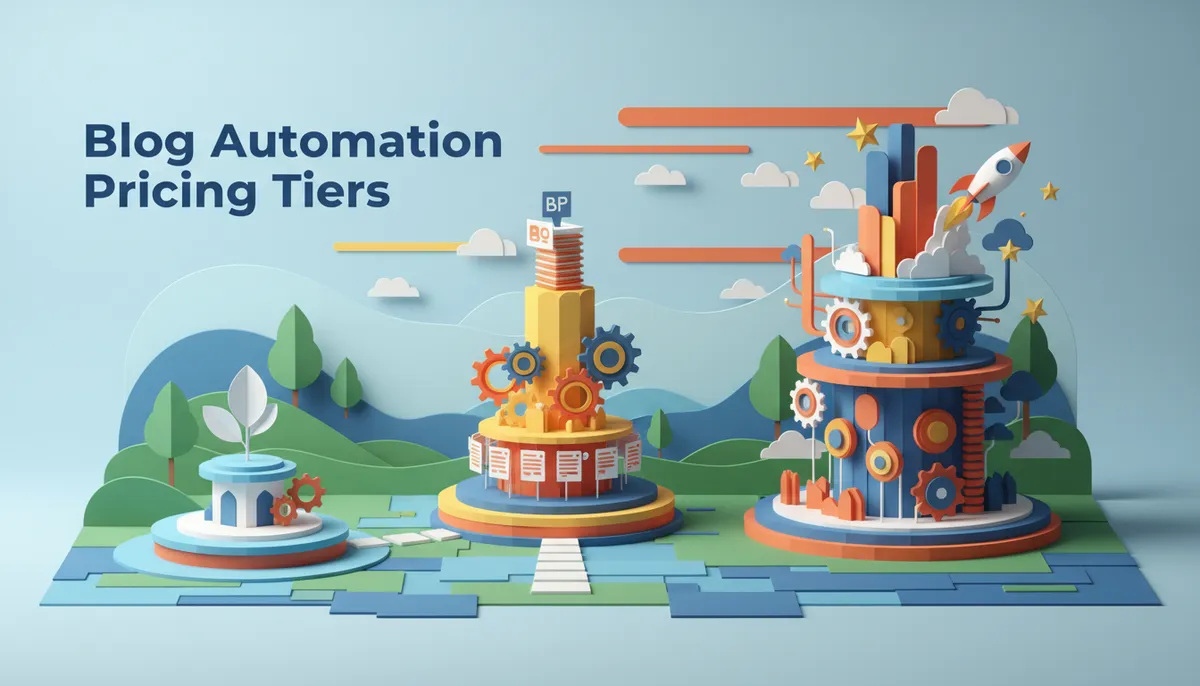
Blog automation tools in 2026 typically fall into three main pricing categories: entry-level, mid-tier, and enterprise solutions. Each tier offers different capabilities, and understanding where you fit helps you avoid paying for unused features or choosing a solution that can’t scale with your growth.
Entry-level plans start around $15 to $99 per month and work well for small businesses, solo marketers, or new blogs. These plans usually include basic AI content optimization, keyword suggestions, and limited article generation. For example, Surfer SEO’s Essential plan costs $99 per month and supports up to 360 articles per year, which breaks down to about 30 articles monthly.
Mid-tier solutions range from $200 to $400 per month and target growing businesses or small agencies. Surfer SEO’s Scale plan at $219 per month supports 1,200 articles annually, providing enough capacity for consistent daily publishing across multiple topic areas. These plans typically include advanced optimization features, competitor analysis, and better integration options.
Enterprise and agency plans cost $500 to $2,000 per month or more. Alli AI’s Agency plan, priced at $599 monthly, covers 15 websites and 5,000 pages, making it suitable for agencies managing multiple client accounts. At the highest end, tools like Ahrefs charge $1,499 per month for enterprise features including extensive keyword databases and comprehensive site audits.
What Drives Price Differences
Several factors influence why one blog automation tool costs significantly more than another. The number of articles generated per month is the most common pricing variable. Tools charging $99 monthly might cap you at 30 articles, while $299 plans could offer 100 or more.
Feature depth also impacts cost. Basic plans may only optimize existing content, while premium options include keyword research, content calendars, automated publishing, image generation, and performance tracking. Advanced features like AI-powered internal linking and SEO scoring can justify higher monthly fees if they save you significant time.
The number of websites or projects you can manage affects pricing too. Single-site plans cost less than multi-site solutions designed for agencies. Alli AI’s Business plan at $299 monthly covers 5 sites with 1,250 pages, while their Agency plan at $599 monthly expands to 15 sites with 5,000 pages.
Integration capabilities matter as well. Tools that directly publish to WordPress, Webflow, Shopify, and Wix typically cost more than platforms requiring manual content uploads. The convenience of automated publishing can save hours weekly, making the extra cost worthwhile for busy teams.

Budget Recommendations by Business Size
Choosing the right blog automation budget depends heavily on your business size, content needs, and growth goals. Spending too little leaves you with limited features that still require manual work, while overspending on enterprise tools wastes money on capabilities you won’t use.
Small Businesses (1-50 Employees)
Small businesses should allocate $100 to $300 monthly for blog automation and related SEO tools. This budget covers a solid content generation platform plus essential keyword research capabilities. At this level, you can produce consistent, optimized content without hiring writers or agencies that charge thousands per month.
For example, a $99 monthly plan that generates 30 long-form articles equals roughly $3 per article. Compare this to hiring freelance writers at $100 to $300 per article, and the savings become obvious. Tools like Konvart, starting at $29 per month, include content creation, SEO audits, and reporting in one package, making them excellent value for budget-conscious small businesses.
Small businesses benefit most from tools that automate the entire process from keyword research to publishing. Platforms that handle everything in one system eliminate the need to purchase separate keyword tools, writing software, and optimization plugins, which can easily exceed $300 monthly when combined.
Agencies and Marketing Teams
Agencies and in-house marketing teams managing multiple clients or websites need $500 to $2,000 monthly for blog automation tools. This budget supports higher article volumes, multi-site management, and advanced features that improve efficiency across client accounts.
At this level, you’re looking at tools that can generate 100 to 300 articles monthly and manage 10 or more websites simultaneously. The cost per article drops significantly with volume pricing. A $799 monthly plan producing 300 articles costs about $2.67 per article, making it highly profitable when you charge clients standard content rates.
Agency plans typically include team collaboration features, white-label options, and dedicated support. These capabilities justify the higher cost because they help you scale operations without proportionally increasing your team size. One content manager using powerful automation can oversee content production for dozens of clients.
Digital marketing consultants working solo or with small teams can start at the lower end of this range ($500 monthly) and scale up as they add clients. The key is choosing platforms that offer flexible pricing and easy upgrades without requiring complete workflow changes.

Hidden Costs to Watch For
Many blog automation tools advertise attractive base prices but hide additional costs that inflate your actual monthly expenses. Being aware of these hidden fees helps you accurately compare options and avoid budget surprises.
Add-on features represent one of the most common hidden costs. Some platforms charge extra for keyword tracking, competitor analysis, or advanced reporting that should be standard features. Always check what’s included in the base price versus what requires additional monthly fees.
User limits can drive up costs unexpectedly. Tools that seem affordable might only include one or two user seats, charging $20 to $50 monthly for each additional team member. If you have a marketing team of five people, those extra seats could add $100 to $200 to your monthly bill.
Content volume overages are another surprise expense. Plans with strict article limits may charge $10 to $30 per additional article beyond your monthly quota. If you regularly exceed your limit, you might end up paying more than a higher-tier plan would cost.
Integration and API access sometimes require premium plans. If you need to connect your blog automation tool to your CMS, analytics platform, or other marketing software, check whether the base plan supports these integrations or if they’re locked behind higher pricing tiers.
Annual vs Monthly Pricing Considerations
Most blog automation platforms offer annual payment options that save 17% to 20% compared to monthly billing. Ahrefs and Surfer SEO both provide these discounts, which can amount to two free months of service annually.
Annual commitments make sense if you’re confident in the tool and plan to use it long-term. However, they carry risk if the platform doesn’t meet your needs or if your content strategy changes. Always take advantage of free trials (typically 7 to 14 days) before committing to annual payments.
Some platforms offer money-back guarantees even on annual plans. Alli AI provides a 10-day trial, giving you time to test the full feature set before fully committing. Look for similar guarantees when considering annual subscriptions.
For new users or businesses testing blog automation for the first time, monthly billing offers more flexibility despite the higher per-month cost. You can cancel or switch tools without losing a large upfront investment if the platform doesn’t deliver expected results.
Key Features Worth Paying For
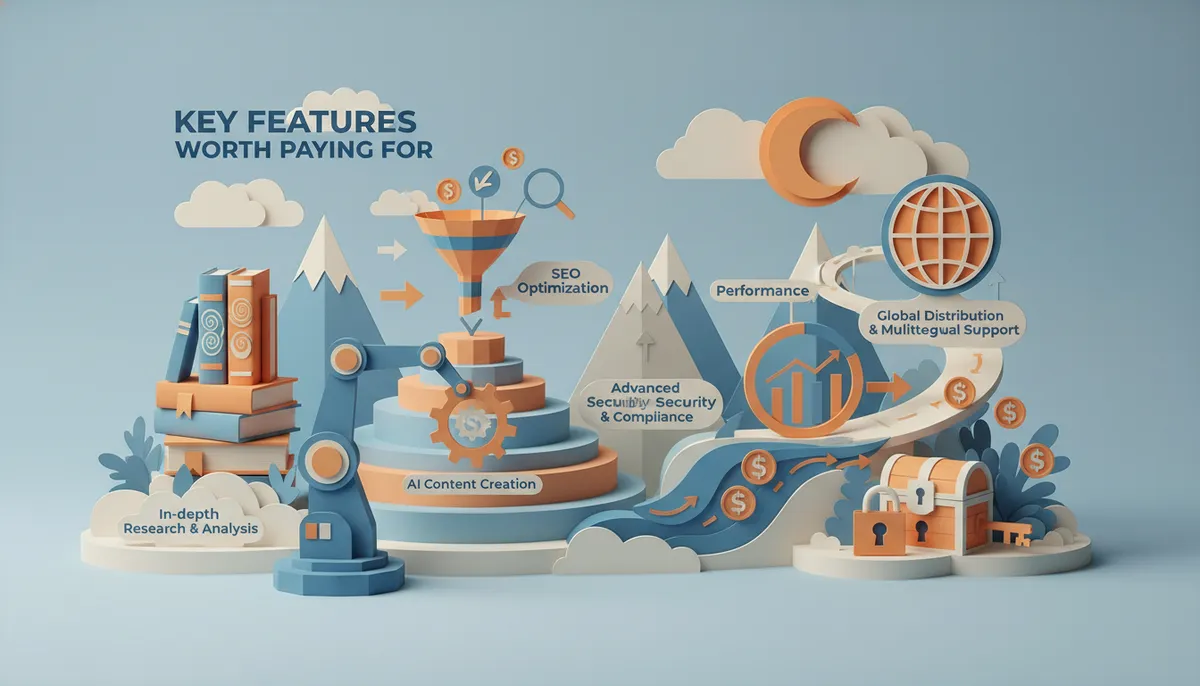
Not all blog automation features provide equal value. Some capabilities save significant time and improve results, while others are nice-to-have extras that don’t justify higher costs. Understanding which features matter most helps you choose the right pricing tier.
Automated Keyword Research
Built-in keyword research eliminates the need for separate tools like Ahrefs Starter (starting at $29 monthly) or SEMrush. Quality blog automation platforms include keyword databases with search volume, competition metrics, and ranking difficulty scores.
This feature alone can save $50 to $200 monthly if it replaces standalone keyword tools. The best systems don’t just provide keyword data—they automatically identify content opportunities based on your industry, competitors, and existing website performance.
Automated keyword discovery that populates your content calendar with ready-to-publish topics is worth premium pricing because it eliminates the most time-consuming part of SEO content planning.
Full Content Generation and Optimization
Basic blog automation might only optimize content you write manually, while advanced tools generate complete articles from scratch. The difference is substantial—one requires hours of writing time, while the other produces finished content automatically.
Look for platforms that generate 2,000 to 3,000 word articles, not just 500-word blog posts. Longer content typically ranks better and provides more value to readers. Tools producing comprehensive articles justify higher monthly fees because they truly replace human writers.
Optimization features should include meta descriptions, title tag suggestions, heading structure recommendations, and readability improvements. Real-time SEO scoring that shows exactly what to fix saves hours compared to manually checking content against SEO guidelines.
Direct Publishing Integration
Automated publishing to your CMS is a premium feature that drastically reduces workload. Instead of copying content, uploading images, and manually formatting posts, the system does everything automatically.
This capability matters most for teams managing multiple websites or publishing daily content. If you’re producing 30 to 100 articles monthly, automated publishing saves 10 to 30 hours of manual work, easily justifying an extra $100 to $200 in monthly costs.
Check which platforms your automation tool supports. WordPress integration is common, but Webflow, Shopify, and Wix connections are less universal. Systems that integrate with multiple CMS platforms offer more flexibility as your business grows or as you add clients using different technologies.
AI Search Optimization: The 2026 Game Changer
Traditional blog automation tools optimize only for Google search results, but the search landscape has fundamentally changed in 2026. AI-powered search engines like ChatGPT, Perplexity, Claude, Gemini, Copilot, and Grok now drive significant traffic, and content must be structured for AI visibility.
Blog automation platforms that optimize for AI search engines command premium pricing, but this feature delivers enormous value. When AI models cite your content as a trusted source in their answers, you gain visibility across multiple platforms instead of just Google rankings.
Content structured for AI search uses specific formatting, citation-friendly language, and authoritative sourcing that AI models prefer. Optimizing for AI overviews and AI-powered search requires understanding how these systems evaluate and reference content, which goes beyond traditional SEO techniques.
Tools offering AI search optimization typically cost $100 to $300 more monthly than basic SEO-only platforms. This premium is worthwhile because AI search visibility compounds over time, just like traditional SEO. As more users rely on AI assistants for information, being the referenced source becomes increasingly valuable.
Long-Form Content as Standard
Many blog automation tools generate 500 to 1,500 word articles, which rank poorly compared to comprehensive 3,000+ word content. Article length significantly impacts cost per article, but longer content delivers better results.
Platforms that default to long-form content (2,500 to 3,500 words) justify higher pricing because they produce articles that actually rank and drive traffic. Paying $99 monthly for 30 comprehensive articles beats paying $49 monthly for 50 short posts that don’t perform.
Long-form content also provides more opportunities for internal linking, keyword variations, and answering multiple related questions. This depth improves SEO performance and time-on-page metrics, both crucial ranking factors in 2026.
Common Budget Mistakes to Avoid
Even with clear pricing information, businesses often make costly mistakes when budgeting for blog automation. Avoiding these common errors ensures you get maximum value from your investment.
Mistake #1: Choosing the Cheapest Option
The lowest-priced blog automation tool rarely delivers the best value. Tools under $30 monthly typically offer limited features, require significant manual work, or produce low-quality content that doesn’t rank.
Choosing a $15 monthly tool that still requires 20 hours of manual editing and publishing defeats the purpose of automation. You’ll spend more time (and money, considering your hourly value) than if you’d chosen a $99 tool that handles everything automatically.
Calculate the true cost including your time investment. If a tool saves you 40 hours monthly and you value your time at $50 per hour, a $200 monthly tool that provides complete automation actually saves you $1,800 monthly compared to a $30 tool requiring extensive manual work.
Mistake #2: Paying for Unused Features
Enterprise plans with extensive features appeal to businesses wanting “the best,” but many never use advanced capabilities like API access, white-label reporting, or support for 50+ websites.
Be honest about your actual needs. A small business with one website doesn’t need an agency plan supporting 15 sites. Paying $599 monthly when a $99 plan meets all your requirements wastes $500 monthly or $6,000 annually.
Start with a plan matching your current needs and upgrade when you actually require more capacity. Most platforms make upgrading easy, and you’ll avoid overpaying during your growth phase.
Mistake #3: Ignoring Scalability
Some businesses choose tools that work for current needs but can’t scale as they grow. Switching platforms later requires migrating content, retraining teams, and potentially losing SEO momentum during the transition.
Check whether your chosen tool offers upgrade paths that support growth without requiring platform changes. Tools with flexible pricing tiers from $99 to $799 monthly let you scale within one system as your content needs increase.
Ask about enterprise options even if you’re starting small. Knowing the platform can support 300 articles monthly and 10 websites gives you confidence to invest in building your content library without worrying about outgrowing the tool.
Mistake #4: Buying Multiple Disconnected Tools
Some businesses cobble together keyword research tools ($50/month), writing software ($40/month), SEO optimization plugins ($30/month), and scheduling platforms ($20/month), spending $140 monthly on a fragmented workflow.
This approach costs more than integrated platforms and creates inefficiencies. Moving data between systems, learning multiple interfaces, and manually connecting workflows wastes time and creates opportunities for errors.
All-in-one platforms that handle keyword research, content generation, optimization, and publishing in one system cost similar amounts but eliminate workflow friction and save hours weekly.
ROI: What to Expect from Your Investment
Understanding expected returns helps you evaluate whether blog automation costs are justified. While specific results vary by industry and implementation, certain benchmarks help gauge whether you’re getting good value.
Traffic Growth Timeline
Blog automation typically produces measurable traffic increases within 3 to 6 months of consistent publishing. The first month focuses on setup and initial content creation, while months 2 and 3 see articles beginning to rank for long-tail keywords.
By month 4, you should see 20% to 40% organic traffic growth compared to your baseline. By month 6, businesses publishing daily often experience 100% to 200% traffic increases as their content library compounds and older articles gain authority.
This timeline assumes you’re publishing high-quality, optimized content consistently. Tools that promise immediate results or overnight ranking improvements typically underdeliver. Real SEO growth compounds over time, making consistency more valuable than quick wins.
Daily publishing strategies accelerate results because search engines reward websites that regularly add valuable content. A $99 monthly investment in automation that publishes daily outperforms a $500 monthly investment that publishes sporadically.
Cost Comparison: Automation vs Traditional Methods
Traditional SEO agencies charge $3,000 to $5,000 monthly for content services that typically produce 8 to 12 articles. That’s $250 to $625 per article. Blog automation at $99 to $299 monthly producing 30 to 100 articles costs $1 to $10 per article, representing 95% to 98% cost savings.
Freelance writers charge $100 to $300 per article for quality SEO content. If you need 30 articles monthly, that’s $3,000 to $9,000 plus the time spent managing freelancers, editing content, and handling publishing. Automation at $99 monthly plus 2 hours of setup time dramatically outperforms this model.
In-house writers cost even more when you factor in salaries, benefits, and overhead. A content writer earning $50,000 annually costs roughly $70,000 total when including benefits and overhead. That writer might produce 100 to 150 articles annually. Blog automation at $1,200 annually (100 per month) produces 1,200 articles, achieving 8 to 12 times the output at 98% lower cost.
Calculating Your Break-Even Point
Most businesses break even on blog automation costs within 3 to 6 months by replacing just one alternative expense. If you currently pay a freelancer $500 monthly for 3 articles, switching to a $99 automation tool that produces 30 articles breaks even in the first month while providing 10 times the content volume.
For businesses not currently investing in content, calculate break-even based on customer acquisition. If your average customer value is $500 and blog automation brings 2 new customers monthly through organic search, that’s $1,000 in new revenue against a $99 monthly cost, achieving 900% ROI.
These calculations assume reasonable content quality and implementation. Poorly optimized content from any source won’t drive results, so invest in tools that emphasize quality and optimization, not just volume.
Free Trials and Testing Strategies
Smart buyers test blog automation tools before committing to long-term contracts. Most quality platforms offer free trials ranging from 3 to 14 days, giving you time to evaluate features, content quality, and ease of use.
During your trial period, focus on testing core capabilities rather than exploring every feature. Generate at least 5 to 10 articles to assess content quality consistency. One excellent article could be an outlier, but 10 strong articles indicate reliable performance.
Test the actual workflow you’ll use daily. If automated publishing is important, connect the tool to your website during the trial and publish test content. This reveals integration issues or formatting problems before you commit financially.
Compare content quality against your current sources. If the automated content matches or exceeds your freelancer’s work, the tool provides clear value. If it requires extensive editing to reach acceptable quality, the time savings disappear and the investment becomes questionable.
Questions to Answer During Trials
Use free trials to answer specific questions that determine whether a platform meets your needs. Does the tool understand your industry and produce relevant content? Generic content generation that requires heavy customization isn’t true automation.
How much manual editing does content require before publishing? If you spend 30 minutes editing each article, multiply that by your monthly article volume to calculate true time investment. True automation should require minimal editing for acceptable quality.
Does the platform integrate smoothly with your existing tools and workflows? Friction during setup or publishing creates ongoing frustration and reduces the time savings automation should provide.
Is customer support responsive and helpful during the trial? Good support during free trials indicates the company values customers and will help resolve issues after you become a paying customer. Poor trial support suggests future problems.
SEO Rocket: Complete Automation at $99 Monthly
Most blog automation tools require juggling multiple platforms, manual processes, or compromise between features and affordability. SEO Rocket eliminates these tradeoffs by offering complete end-to-end automation starting at just $99 monthly, making enterprise-level capabilities accessible to small businesses.
The platform generates 3,000+ word SEO-optimized articles daily for the Business plan ($99/month) or 10 articles daily for the Agency plan ($799/month). This volume alone provides exceptional value—30 articles monthly at $99 equals $3.30 per article, while 300 articles monthly at $799 equals $2.67 per article.
Unlike competitors requiring separate tools for keyword research, writing, optimization, and publishing, SEO Rocket handles everything in one platform. Setup takes under 10 minutes: connect your website, review automatically discovered keyword opportunities, approve your content calendar, and the system handles the rest.
The platform includes features typically locked behind premium tiers on competing platforms: automated keyword discovery, competitor analysis, market opportunity mapping, AI-generated images and videos, real-time SEO scoring, internal and external linking, metadata optimization, and direct publishing to WordPress, Webflow, Shopify, and Wix.
AI Search Optimization Built In
SEO Rocket is specifically built for 2026’s search landscape, optimizing content for Google AND AI search engines including ChatGPT, Perplexity, Claude, Gemini, Copilot, and Grok. This capability typically costs $100 to $200 extra monthly on competing platforms but comes standard with SEO Rocket.
Articles are structured so AI models can reference them as trusted sources, helping your business appear inside AI answers and overviews. This multi-platform visibility compounds over time, driving traffic from traditional search engines and AI assistants simultaneously.
Getting featured in AI overviews requires specific content structures and optimization techniques that SEO Rocket applies automatically, giving you competitive advantages without requiring AI search expertise.
Agency Scalability Without Enterprise Costs
The Agency plan at $799 monthly supports 10 client workspaces and produces 300 articles monthly, providing full agency scalability at a fraction of typical enterprise costs. Competing agency solutions charge $1,500 to $3,000 monthly for similar capabilities.
Unlimited team members and unlimited rewrites come standard, eliminating per-seat fees and revision charges that inflate costs on other platforms. This pricing structure makes SEO Rocket particularly valuable for agencies building their content services or consultants managing multiple client accounts.
The visual content calendar automatically fills with keyword opportunities for each client, eliminating the planning work that consumes hours weekly. One content manager can oversee content production for 10 clients efficiently using SEO Rocket’s automation.
Lifetime Plan: Eliminate Ongoing Costs
For businesses committed to long-term content production, SEO Rocket offers a $1,499 lifetime plan with permanent access and no ongoing subscriptions. This one-time payment equals 15 months of the Business plan or 2 months of the Agency plan.
The lifetime plan includes all core features and future updates, making it an exceptional value for businesses planning multi-year content strategies. Over 5 years, the lifetime plan saves $4,441 compared to monthly Business plan payments ($99 × 60 months = $5,940).
This pricing option is rare in the blog automation industry and demonstrates SEO Rocket’s confidence in delivering lasting value. Compare pricing options to see which plan best fits your content volume and business goals.
Making Your Final Decision
Choosing the right blog automation tool and pricing plan requires balancing features, budget, and growth potential. The lowest-cost option rarely delivers the best value, while the most expensive tools often include features you’ll never use.
Start by calculating your current content costs, including writer fees, editing time, keyword research tools, and publishing labor. This baseline helps you identify how much you can save through automation while setting a realistic budget.
Test multiple platforms using free trials before committing. Generate actual content for your website during trials to assess quality, workflow efficiency, and integration smoothness. Real-world testing reveals more than feature lists or marketing claims.
Prioritize complete automation over partial solutions. Tools that still require significant manual work don’t provide the time savings or scalability that make automation worthwhile. True automation handles keyword research, content generation, optimization, and publishing without your constant involvement.
Consider your 12-month needs, not just immediate requirements. Choosing a platform that supports your growth prevents expensive migrations later. Look for flexible pricing tiers that let you upgrade as your content needs increase.
Don’t overlook AI search optimization in 2026. Platforms optimizing only for Google miss significant traffic opportunities from ChatGPT, Perplexity, and other AI search engines. This capability will become increasingly important throughout 2026 and beyond.
Get started with a free 3-day trial to experience complete blog automation that handles everything from keyword research to daily publishing. See firsthand how the right platform eliminates manual work while producing content that ranks across Google and AI search engines.
FAQs
Q: What is the average cost of blog automation software in 2026?
A: Blog automation software typically costs between $99 and $299 per month for small businesses, with entry-level plans starting around $15-$30 monthly. Agency and enterprise solutions range from $500 to $2,000 per month. The exact cost depends on article volume, number of websites, and features like AI search optimization and automated publishing.
Q: Is blog automation cheaper than hiring writers?
A: Yes, blog automation is significantly cheaper than traditional content creation. Freelance writers charge $100-$300 per article, while agencies cost $3,000-$5,000 monthly. Blog automation tools at $99-$299 monthly produce 30-100 articles, costing just $1-$10 per article, representing 95-98% cost savings compared to manual content creation.
Q: What features should I prioritize when choosing blog automation tools?
A: Prioritize automated keyword research, full content generation (2,000+ words), real-time SEO optimization, direct CMS publishing, and AI search engine optimization. These features provide the most value by eliminating manual work and improving content performance. Avoid tools that require extensive editing or manual publishing, as they defeat the purpose of automation.
Q: Do blog automation tools offer free trials?
A: Most quality blog automation platforms offer free trials ranging from 3 to 14 days. During trials, test content quality by generating 5-10 articles, evaluate workflow integration with your website, and assess the editing time required. This hands-on testing helps you choose the right platform before committing financially.
Q: How long before I see ROI from blog automation?
A: Most businesses see measurable traffic increases within 3-6 months of consistent blog automation. You’ll typically experience 20-40% organic traffic growth by month 4 and 100-200% increases by month 6. ROI often becomes positive within the first month when comparing automation costs to alternative content creation methods like freelancers or agencies.