Key Takeaways
-
AI SEO tools require clear automation goals and specific problem-solving strategies before implementation.
-
Always review and customize AI-generated content to maintain brand voice and authenticity.
-
Optimize content for both traditional Google search and emerging AI search engines like ChatGPT and Perplexity.
-
Maintain consistent daily publishing schedules to signal authority and accelerate SEO growth.
-
Use comprehensive keyword research tools that provide current search volume, intent, and competition data.
-
Generate long-form content (2,500+ words) with comprehensive topic coverage to improve search rankings.
-
Implement strategic internal linking to distribute ranking power and improve site architecture.
-
Ensure AI SEO tools integrate seamlessly with your existing content management and marketing technology stack.
AI tools for SEO are transforming how businesses create content and optimize for search engines. In 2026, nearly every digital marketing team relies on some form of AI automation to maintain their competitive edge. However, many marketers make critical mistakes when implementing these tools, leading to wasted budgets, poor rankings, and content that fails to connect with real audiences.
Understanding which pitfalls to avoid can mean the difference between sustainable organic growth and spinning your wheels with generic content that search engines ignore. This guide reveals the most common errors businesses make when using AI SEO tools and provides actionable strategies to help you succeed with automated content creation.
Whether you’re a small agency managing multiple clients or an in-house marketing team stretched thin across too many responsibilities, recognizing these mistakes early will save you time, money, and frustration. Let’s explore what to avoid and how to implement AI-powered SEO automation correctly.

The Biggest Mistake: Choosing AI Tools Without Clear Automation Goals
Most businesses rush into purchasing AI tools for SEO without defining what they actually need to automate. This leads to investing in platforms that don’t solve their specific problems or require extensive manual work despite being marketed as “automated.”
Before selecting any AI SEO tool, identify your core bottlenecks. Are you struggling with keyword research? Does article writing consume too much time? Do you need help with on-page optimization or publishing consistency? Different tools excel at different tasks, and choosing the wrong one wastes resources.
Common Tool Selection Errors
- Purchasing multiple disconnected tools that don’t integrate with each other
- Selecting platforms that require extensive prompts and manual editing
- Choosing tools focused solely on Google while ignoring AI search engines like ChatGPT and Perplexity
- Investing in expensive agency tools when you only need basic automation
- Overlooking direct CMS publishing capabilities, forcing manual copy-pasting
The most effective approach is finding an all-in-one platform that handles your entire workflow from keyword discovery through publishing. SEO Rocket eliminates this common mistake by combining keyword research, content generation, optimization, and automatic daily publishing into one integrated system.
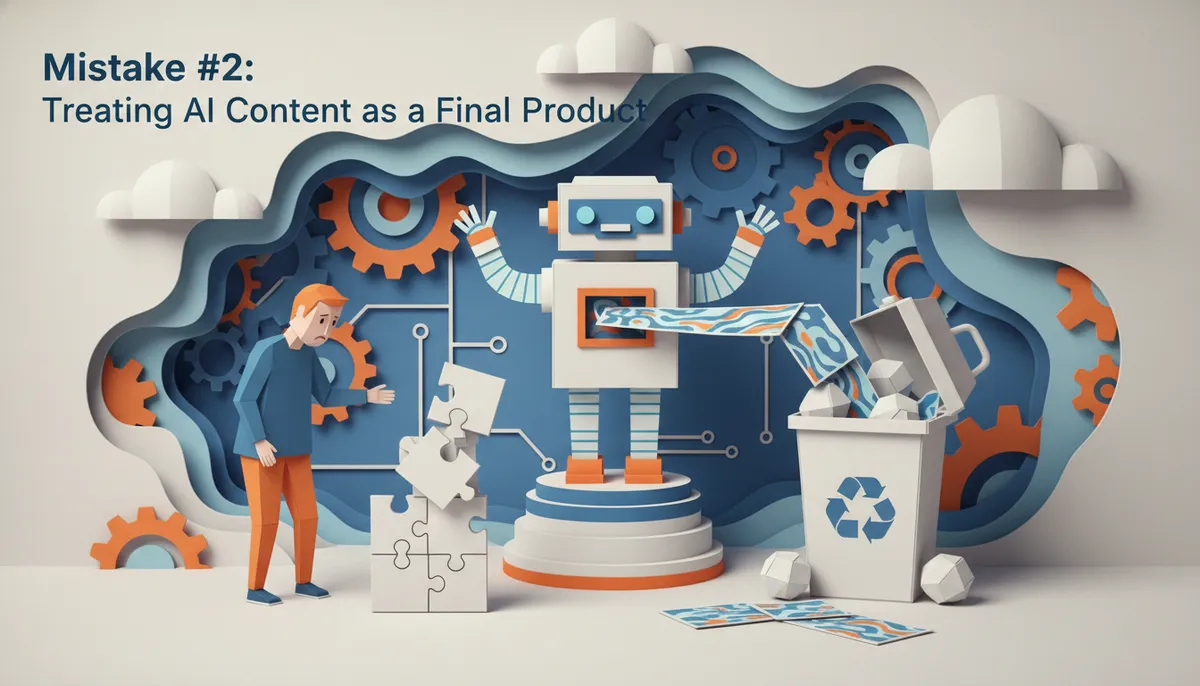
Mistake #2: Treating AI Content as a Final Product
Many marketers believe they can generate AI content and publish it immediately without any review or customization. This approach produces generic articles that lack brand voice, miss key details, and fail to address your specific audience’s needs.
AI tools for SEO are powerful assistants, not replacement writers. The best results come from AI-generated foundations that you refine with industry expertise, real examples, and brand personality. Articles published without human oversight often contain subtle inaccuracies or miss opportunities to connect authentically with readers.
Signs Your AI Content Needs More Work
- The article sounds like it could be about any business in your industry
- Statistics and data points lack specific sources or dates
- Examples feel generic rather than drawn from real experiences
- The tone doesn’t match your established brand voice
- Technical details are vague or oversimplified
Quality AI platforms include built-in review workflows and optimization features. Modern systems provide real-time SEO scoring with automated fix suggestions, helping you identify areas that need refinement before publishing. The goal is balancing automation efficiency with content quality that actually ranks and converts.

Ignoring AI Search Optimization (The 2026 Critical Error)
One of the most damaging mistakes in 2026 is optimizing exclusively for traditional Google search while ignoring AI-powered search engines. ChatGPT, Perplexity, Claude, Gemini, Copilot, and Grok are now major traffic sources, yet most AI tools for SEO still focus only on Google’s algorithms.
AI search engines work differently than traditional search. They pull information from trusted sources and present synthesized answers rather than just listing links. If your content isn’t structured for AI comprehension, you’re invisible to these platforms regardless of your Google rankings.
AI Search Optimization Requirements
- Clear, structured content with well-defined sections and headers
- Direct answers to common questions early in articles
- Authoritative citations and data-backed claims
- Natural language that AI models can easily parse and reference
- Schema markup and semantic HTML that machines understand
Forward-thinking businesses are already seeing significant traffic from AI search engines by optimizing their content strategy accordingly. Platforms like SEO Rocket specifically build articles for both Google and AI search visibility, ensuring your content appears when users ask questions across any platform.
| Search Type | Optimization Focus | Traffic Potential (2026) |
|---|---|---|
| Traditional Google | Keywords, backlinks, technical SEO | Declining market share |
| AI Search Engines | Structured answers, authority signals | Rapidly growing market share |
| Combined Strategy | Both traditional and AI optimization | Maximum visibility and traffic |
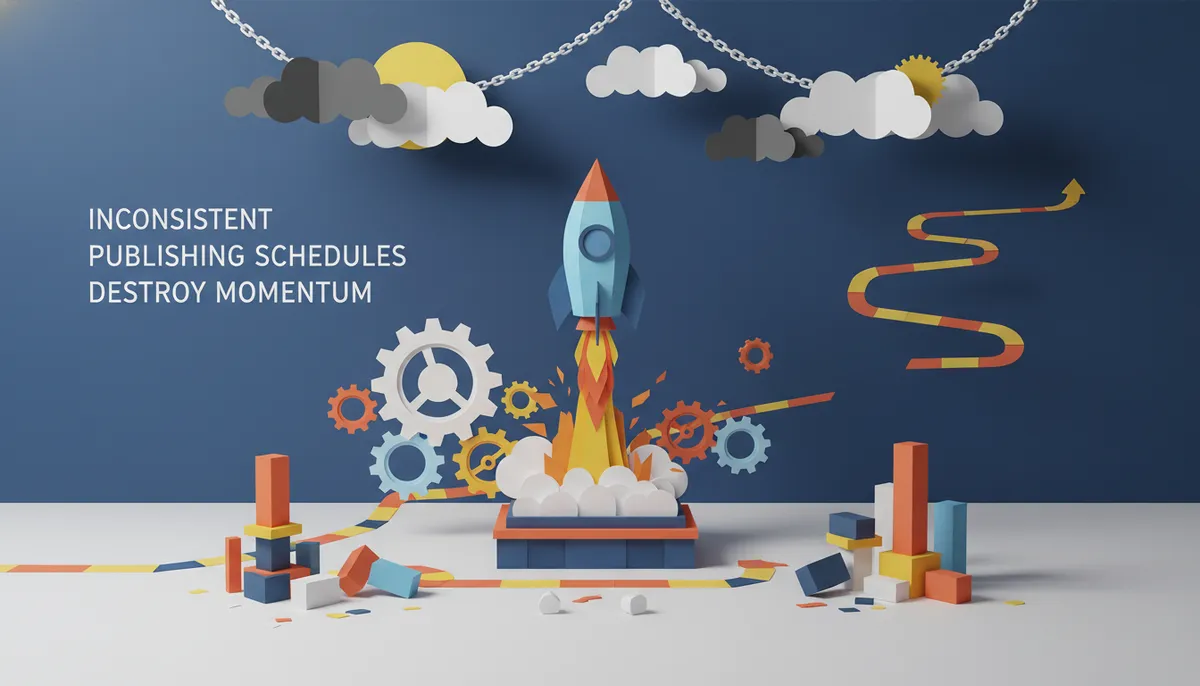
Mistake #3: Inconsistent Publishing Schedules Destroy Momentum
Publishing sporadic content is one of the fastest ways to waste your AI SEO investment. Many businesses generate a few articles when they’re motivated, then go weeks without publishing anything new. This inconsistency sends negative signals to search engines and prevents the compounding growth that SEO requires.
Search engines reward websites that demonstrate consistent authority through regular, high-quality content updates. Algorithms interpret publishing frequency as a signal of site freshness and relevance. Sporadic posting suggests an abandoned or low-priority website.
Daily or near-daily publishing creates exponential SEO benefits over time. Each new article targets additional keywords, attracts backlinks, and strengthens your site’s topical authority. However, maintaining this pace manually requires enormous resources that most teams simply don’t have.
Publishing Frequency Impact
- Weekly Publishing: Slow growth, takes years to build meaningful traffic
- Daily Publishing: Compounding visibility, faster authority building, more keyword coverage
- Multiple Daily Posts: Agency-level growth, dominates niche search results
True automation solves the consistency problem by removing human labor from the equation. Systems that automatically generate and publish content daily ensure you never miss opportunities while competitors struggle to maintain their schedules. Learn more about daily blog posting strategies that deliver measurable results.
Failing to Use Comprehensive Keyword Research Features
Another common mistake is generating content based on guesswork rather than data-driven keyword research. Many marketers skip proper keyword analysis or rely on outdated keyword tools that don’t reflect current search behavior and AI search patterns.
Effective AI tools for SEO include integrated keyword research that shows real opportunities based on search volume, competition levels, and user intent. Without this foundation, you’re creating content that might sound good but doesn’t align with what people actually search for.
Keyword Research Elements You Need
- Current search volume data (updated for 2026 trends)
- Competition analysis showing ranking difficulty
- Search intent classification (informational, commercial, transactional)
- Related keyword suggestions for comprehensive topic coverage
- Semantic keyword mapping for natural content flow
- Long-tail variations that capture specific queries
Advanced platforms provide visual content calendars where you can see keyword opportunities at a glance and schedule articles accordingly. This strategic approach ensures every piece of content targets viable search terms rather than vanity topics that generate zero traffic.
SEO Rocket includes a complete keyword research engine with live SEO data, eliminating the need for separate research tools. The platform automatically identifies keyword opportunities and schedules them for content creation, streamlining your entire workflow into one system.
Neglecting Content Length and Depth Requirements
A critical mistake is accepting AI-generated content that’s too short or superficial to compete in modern search results. Many AI tools produce 500-1,500 word articles that simply can’t rank for competitive keywords in 2026.
Search algorithms increasingly favor comprehensive, in-depth content that thoroughly addresses user questions. Studies consistently show that long-form content (2,500+ words) significantly outperforms shorter articles in search rankings and user engagement metrics.
| Content Length | Average Ranking Position | Engagement Metrics |
|---|---|---|
| 500-1,000 words | Page 3-5 | High bounce rate |
| 1,500-2,000 words | Page 2-3 | Moderate engagement |
| 3,000+ words | Page 1 | Strong engagement |
However, longer content must maintain quality throughout. Simply padding articles with filler text damages credibility and increases bounce rates. The goal is comprehensive coverage that genuinely helps readers solve problems or answer questions.
Characteristics of Effective Long-Form Content
- Multiple subtopics within the main keyword theme
- Practical examples and real-world applications
- Data, statistics, and authoritative citations
- Visual elements like tables, lists, and structured data
- FAQ sections addressing related queries
- Clear navigation with descriptive headers and subheaders
Quality AI SEO tools generate 3,000+ word articles as standard output, ensuring your content has the depth needed to compete. This length provides enough space to naturally incorporate keywords, address multiple user intents, and establish topical authority without artificial padding.
Mistake #5: Missing Internal Linking Opportunities
Internal linking is one of the most overlooked aspects of AI-generated SEO content. Many marketers publish articles without strategically connecting them to existing website content, missing opportunities to distribute link equity and guide users through related topics.
Effective internal linking serves multiple purposes. It helps search engines understand your site structure and topical relationships. It distributes ranking power across pages. It reduces bounce rates by providing relevant next steps for readers. And it significantly improves the user experience by making information easy to discover.
Internal Linking Best Practices
- Link to 5-10 relevant internal pages per article
- Use descriptive anchor text that includes target keywords
- Connect new content to high-authority existing pages
- Create topic clusters around your main service areas
- Update old articles with links to new relevant content
- Avoid generic anchor text like “click here” or “read more”
Manual internal linking is time-consuming and often inconsistent. Advanced AI tools automatically identify linking opportunities and insert contextual links during content generation. This automation ensures every article strengthens your overall site architecture without requiring additional work.
Explore SEO content writing fundamentals to understand how internal linking fits into broader optimization strategies.
Overlooking Integration with Your Existing Tech Stack
Choosing AI tools for SEO that don’t integrate with your website platform creates unnecessary friction. Many businesses select tools that require manual copying and pasting content into their CMS, defeating the purpose of automation and introducing opportunities for errors.
True automation means content flows directly from generation to publication without human intervention. Your AI tool should connect seamlessly with WordPress, Webflow, Shopify, Wix, or whatever platform powers your website.
Integration Requirements to Verify
- Direct publishing to your CMS without manual steps
- Automatic image uploads and media management
- Metadata and SEO tag population
- Category and tag assignment
- Author attribution and publishing status control
Additionally, consider how the AI tool connects with your existing SEO stack. Does it work with Google Search Console? Can it pull data from Ahrefs or SEMrush? Integration capabilities determine whether you’re creating a streamlined workflow or adding another disconnected tool to manage.
Platforms designed specifically for end-to-end automation handle these integrations natively. SEO Rocket connects directly to major CMS platforms and publishes optimized content automatically, eliminating the manual steps that slow down most AI SEO workflows.
Not Leveraging Semantic SEO and NLP Optimization
Modern search engines use natural language processing (NLP) to understand content meaning beyond simple keyword matching. Many marketers still focus exclusively on exact-match keywords, missing the semantic relationships that drive rankings in 2026.
Semantic SEO involves optimizing for topic clusters, related terms, and the overall context of your content. Search algorithms evaluate how comprehensively you cover subjects rather than just counting keyword appearances. Articles that demonstrate deep topical understanding rank higher than those optimizing for narrow keyword phrases.
Semantic Optimization Elements
- Related keyword phrases naturally incorporated throughout content
- Synonyms and variations of your target terms
- Entity recognition for proper nouns, brands, and concepts
- Topic modeling that covers subtopics within your main theme
- Question-and-answer structures that address user intent
Quality AI tools for SEO automatically incorporate semantic optimization during content generation. They analyze top-ranking pages, identify semantic patterns, and structure content to match these requirements without manual intervention.
This approach not only improves rankings but also creates more valuable content for readers. Comprehensive topic coverage naturally answers related questions and provides depth that establishes your authority. For insights on improving AI search visibility, focus on semantic richness rather than keyword repetition.
Mistake #7: Ignoring On-Page SEO Automation Features
Many marketers focus exclusively on content creation while neglecting on-page SEO elements. Title tags, meta descriptions, header structure, image alt text, and URL optimization significantly impact rankings but often get overlooked in manual workflows.
AI tools should automatically handle these technical elements during content generation. However, many platforms require manual optimization after content creation, reducing efficiency and introducing inconsistency.
Essential On-Page Elements to Automate
- Title Tags: Keyword-optimized, character-limited, compelling
- Meta Descriptions: Engaging summaries under 160 characters
- Header Tags: Properly nested H2 and H3 structure
- Image Optimization: Compressed files with descriptive alt text
- URL Structure: Clean, keyword-rich slugs
- Internal Links: Strategic connections to related content
Platforms with real-time SEO scoring analyze these elements as content generates and provide automated fix suggestions. This proactive approach prevents publishing content with technical issues that hurt rankings.
Complete automation ensures consistent optimization across all published content. Rather than relying on manual checklists or hoping nothing gets missed, automated systems apply SEO best practices to every article without exception.
Choosing Tools Without Scalability for Growth
Small businesses often select AI tools based on current needs without considering future growth. This short-sighted approach leads to outgrowing platforms quickly and facing expensive migrations or workflow disruptions.
Whether you’re managing one website today or planning to expand to multiple clients, your AI SEO tool should scale accordingly. Agencies particularly need platforms that support multi-client management without requiring separate subscriptions or complicated workarounds.
Scalability Features to Evaluate
- Unlimited team member access without per-user fees
- Multiple website or client workspace management
- Flexible article volume that grows with your needs
- White-label capabilities for agency branding
- API access for custom integrations and automation
- Performance tracking across multiple properties
Cost per article is another critical scalability metric. Platforms charging $50-100 per article become prohibitively expensive at scale. Look for solutions offering high-volume pricing that makes sense for aggressive content strategies.
| Plan Type | Articles/Month | Cost Per Article |
|---|---|---|
| Basic Plans | 10-30 | $10-20 |
| Professional Plans | 30-100 | $5-10 |
| Agency Plans | 300+ | $2-3 |
SEO Rocket’s agency plan supports 10 client workspaces with 300 monthly articles at approximately $3 per article, making it economically viable for aggressive content strategies. This pricing structure enables agencies to profitably serve clients while maintaining high content volumes.
Not Taking Advantage of Performance Tracking and Analytics
Publishing content without tracking its performance is a fundamental mistake. Many marketers generate articles but fail to monitor rankings, traffic, engagement metrics, or conversion rates, making it impossible to refine their strategy based on actual results.
Effective AI tools for SEO include built-in analytics that show which articles drive traffic, which keywords rank, and how content performance evolves over time. This data informs future content decisions and helps you double down on what works.
Key Metrics to Monitor
- Organic traffic growth over time
- Individual article performance and rankings
- Keyword position changes and movement
- Engagement metrics (time on page, bounce rate)
- Conversion rates from organic traffic
- Backlink acquisition from published content
Regular performance reviews reveal patterns about what content resonates with your audience and what search engines reward. Articles that underperform might need updates, while successful topics suggest opportunities for related content expansion.
Platforms integrating with Google Search Console and Google Analytics provide comprehensive visibility without requiring separate tools or complex dashboards. This unified approach makes performance monitoring simple and actionable rather than overwhelming.
Mistake #9: Forgetting About Brand Voice and Authenticity
AI-generated content can sound generic and impersonal if you don’t configure tools to reflect your brand’s unique voice and perspective. This authenticity gap makes content feel like it could come from any business, reducing its ability to build genuine connections with readers.
Your content should reflect your business values, communication style, and industry expertise. Generic articles fail to differentiate you from competitors and miss opportunities to establish thought leadership in your niche.
Maintaining Brand Voice in AI Content
- Configure AI tools with brand guidelines and tone preferences
- Include specific examples from your business experience
- Reference your actual products, services, and methodologies
- Use industry-specific terminology your audience expects
- Incorporate customer stories and real-world results
- Add personality through natural language and conversational elements
Advanced AI platforms allow brand voice customization where you define writing style, preferred terminology, and content approach. These settings ensure generated content aligns with your established brand identity rather than producing cookie-cutter articles.
Remember that AI is a tool for scaling your expertise, not replacing it. The most effective content combines AI efficiency with human insight, creating articles that both rank well and genuinely help your target audience. Check out blog writing with AI for strategies on maintaining authenticity.
Underestimating the Setup and Onboarding Time Required
Many businesses abandon AI tools for SEO because they underestimate the time required to set them up properly. Complex platforms with steep learning curves frustrate teams who expected immediate results, leading to incomplete implementations that never deliver value.
The best AI SEO tools prioritize quick setup and intuitive interfaces that get you producing content within minutes rather than weeks. Complicated configurations, extensive training requirements, and unclear workflows are red flags that suggest a tool will drain resources rather than save them.
What Quick Setup Should Include
- Website connection in under 10 minutes
- Automatic keyword opportunity discovery
- Pre-configured content calendars ready for approval
- Simple interface requiring minimal training
- Clear documentation and support resources
Platforms designed for true automation eliminate complicated prompts, extensive editing requirements, and multi-step workflows. The technology should work intelligently in the background while you focus on strategy and growth rather than managing technical processes.
SEO Rocket’s setup takes under 10 minutes from connection to first scheduled article. The platform automatically discovers keyword opportunities, populates your content calendar, and begins daily publishing without requiring ongoing management. This simplicity makes automation accessible even for small teams without dedicated SEO specialists.
Not Understanding AI Tool Pricing Models and Hidden Costs
Pricing confusion causes many businesses to overspend on AI tools for SEO or select platforms that seem affordable but include hidden costs. Understanding the total cost of ownership helps you make informed decisions and avoid budget surprises.
Some common pricing pitfalls include per-user fees that multiply as your team grows, article credits that run out unexpectedly, expensive add-ons for essential features, and separate charges for integrations or publishing capabilities.
Pricing Models to Compare
| Pricing Model | Typical Cost | Hidden Costs to Watch |
|---|---|---|
| Per Article | $20-100 each | Expensive at scale |
| Monthly Subscription | $99-500/month | Per-user fees, article limits |
| Agency Plans | $500-2000/month | Client limits, feature restrictions |
| Lifetime Access | $1000-3000 one-time | Rare but best long-term value |
Calculate your cost per article across different pricing models to understand true affordability. A platform charging $500/month for 100 articles ($5/article) offers better value than one charging $200/month for 20 articles ($10/article) if you need volume.
Look for platforms offering unlimited team members, no per-user fees, and transparent pricing without surprise charges. Lifetime plans eliminate ongoing subscription costs entirely, making them ideal for businesses committed to long-term content strategies.
Choosing the Right AI SEO Automation Platform
After understanding the common mistakes, selecting the right platform becomes clearer. The ideal AI tool for SEO automation should handle your entire workflow from research through publishing while avoiding the pitfalls discussed throughout this article.
Evaluate platforms based on automation completeness, content quality, AI search optimization, integration capabilities, scalability, pricing transparency, and ease of implementation. The goal is finding a solution that genuinely saves time and delivers results rather than adding complexity to your workflow.
Essential Platform Capabilities
- End-to-end automation from keyword research to publishing
- Long-form content generation (3,000+ words)
- Optimization for both Google and AI search engines
- Direct CMS publishing without manual steps
- Built-in keyword research with live data
- Automatic internal linking and on-page SEO
- Real-time content scoring and optimization suggestions
- Scalable pricing that makes sense at volume
- Quick setup requiring minimal technical expertise
- Performance tracking and analytics integration
SEO Rocket specifically addresses the mistakes outlined in this article by providing complete automation, AI search optimization, daily publishing consistency, integrated keyword research, proper content length, automatic internal linking, seamless CMS integration, and transparent pricing. The platform eliminates manual work while ensuring consistent, high-quality output that actually ranks.
For businesses serious about scaling organic traffic in 2026, choosing a comprehensive automation platform is no longer optional. The competitive advantage goes to organizations that publish consistently, optimize strategically, and leverage AI technology effectively. Discover more about AI writing tools for content creation and find the solution that fits your specific needs.
Conclusion
AI tools for SEO offer tremendous potential for businesses willing to implement them correctly. However, common mistakes like choosing the wrong platform, ignoring AI search optimization, maintaining inconsistent publishing schedules, and overlooking automation features prevent many organizations from realizing these benefits.
Success with AI SEO automation requires strategic thinking, proper tool selection, and commitment to consistent implementation. Avoid the pitfalls discussed in this article by prioritizing complete automation, content quality, scalability, and platforms designed specifically for ranking in both traditional search engines and emerging AI search platforms.
The businesses winning with SEO in 2026 aren’t necessarily those with the largest budgets or biggest teams. They’re the ones leveraging automation intelligently to maintain consistent publishing schedules, optimize for evolving search algorithms, and scale their content production efficiently.
If you’re ready to eliminate the guesswork and manual work from your SEO content strategy, consider platforms that handle everything automatically. Start automating your SEO content today and experience the difference that true end-to-end automation makes for your organic traffic growth. Visit our product roadmap to see upcoming features and improvements.
FAQs
Q: What are the best AI tools for SEO automation in 2026?
A: The best AI tools for SEO in 2026 combine complete automation from keyword research through publishing, generate long-form content (3,000+ words), optimize for both Google and AI search engines, integrate directly with CMS platforms, and offer transparent pricing. Look for platforms that handle your entire workflow without requiring manual steps or extensive technical expertise.
Q: How do AI SEO tools optimize content for AI search engines like ChatGPT?
A: AI SEO tools optimize for AI search engines by structuring content with clear headers, providing direct answers to common questions, using semantic keyword relationships, incorporating authoritative citations, and formatting with schema markup. This structured approach helps AI models parse and reference your content when generating answers to user queries across platforms like ChatGPT, Perplexity, and Claude.
Q: What mistakes should I avoid when choosing AI tools for SEO?
A: Avoid choosing tools without clear automation goals, selecting platforms that require extensive manual work, ignoring AI search optimization capabilities, overlooking CMS integration features, and underestimating scalability needs. Additionally, verify that tools generate adequate content length (3,000+ words), handle internal linking automatically, and offer transparent pricing without hidden costs or per-user fees.
Q: How much should AI-generated SEO content cost per article?
A: Cost per article varies significantly by platform and volume. Basic plans typically cost $10-20 per article for lower volumes. Professional plans range from $5-10 per article with moderate volume. Agency plans offering high volumes can reduce costs to $2-3 per article. Calculate total cost of ownership including subscription fees, article limits, and any per-user charges to determine true affordability for your content strategy.
Q: Can AI tools completely automate SEO content creation and publishing?
A: Yes, advanced AI platforms in 2026 can completely automate the entire SEO content workflow including keyword research, topic selection, long-form article generation, on-page optimization, internal linking, image creation, and direct publishing to your CMS. True automation requires minimal setup time and ongoing management, allowing consistent daily publishing without manual intervention while maintaining content quality that ranks effectively in search results.