
Key Takeaways
-
SEO APIs automatically fetch search data like rankings, keywords, and backlinks in seconds, eliminating hours of manual research and enabling content automation systems to build smart briefs before writing begins.
-
SERP APIs are the backbone of content automation—they reveal real-time search patterns, title styles, heading structures, and search intent that inform content strategy before a single word is written.
-
Standard queue processing costs roughly $0.60 per 1,000 SERP requests, while live mode costs ~$2.00 per 1,000; choose queued requests for scheduled content work and live mode only for time-sensitive publishing needs.
-
JSON output from SEO APIs integrates cleanly with databases and content management systems, making automation seamless—unlike manual copy-pasting which is slow, messy, and error-prone.
-
Human editorial review remains essential even with API automation; automated systems need fact-checking and quality verification to ensure content feels genuinely useful rather than hollow to readers and search engines.
-
All-in-one platforms like SEO Rocket eliminate the need to manage multiple separate APIs, spreadsheets, and developer costs; at $99/month for 30 articles, automated solutions cost roughly $3 per article versus thousands in agency fees.
If you’ve ever wondered how some websites seem to pump out fresh, well-researched content every single day, the secret often comes down to one thing: an SEO API. Sounds technical, right? Don’t worry, we’re going to make this simple and fun. Think of an SEO API as a helpful messenger that fetches search data for you in seconds, instead of you digging through browser tabs for hours.
Whether you run a small agency, manage a big brand’s blog, or you’re a solo business owner trying to keep up with content demands, understanding SEO APIs can save you time and money. In this friendly guide, we’ll walk through 15 things you need to know about SEO APIs in 2026. We’ll cover what they do, how much they cost, and how they fit into a smart content automation workflow. Grab a coffee, and let’s dig in together.

1. What Exactly Is an SEO API?
An SEO API is a tool that lets software talk to search engine data. It pulls things like rankings, keywords, backlinks, and technical audit details automatically. Instead of manually checking search results one by one, your content system can grab this info instantly.
In the world of SEO content automation, APIs act like connective tissue. They link your keyword research, your writing tools, your publishing schedule, and your performance tracking into one smooth pipeline. If you want to understand how this fits into a bigger content strategy, check out our guide on SEO content writing for beginners in 2026.
2. The Main Types of SEO APIs You Should Know
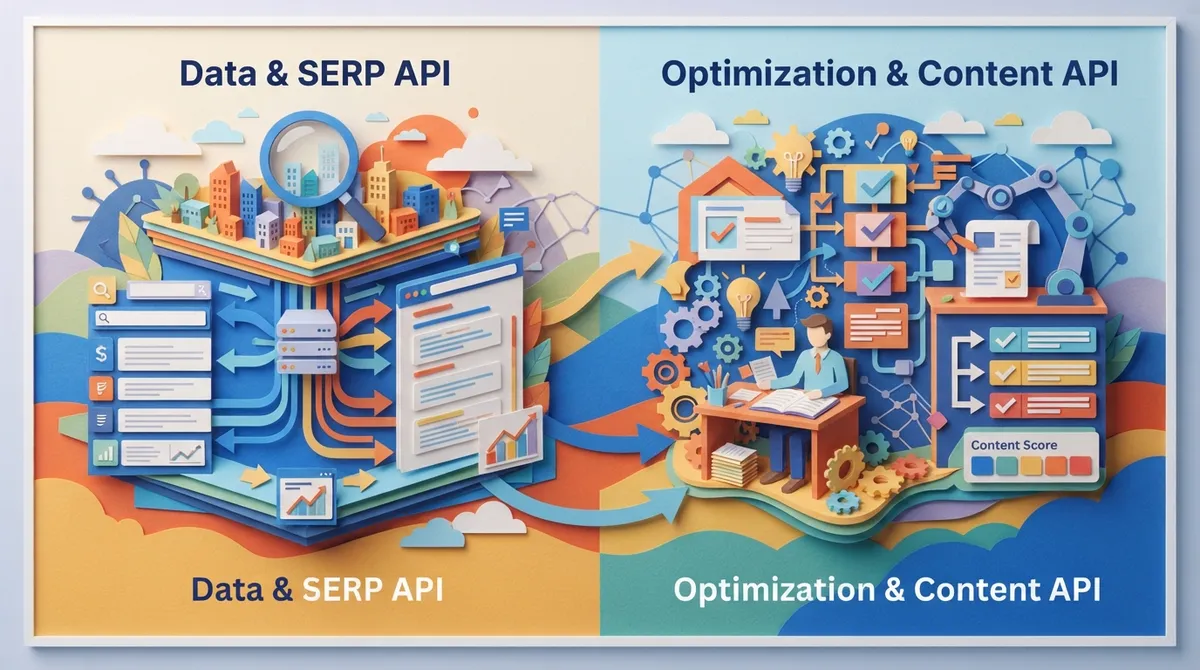
Not all SEO APIs do the same job. Here’s a quick breakdown of the most common categories used in content automation today:
- SERP APIs – Pull live search results for any keyword, location, or device.
- Keyword-data APIs – Provide search volume, competition, and intent signals.
- Rank-tracking APIs – Monitor where your pages sit in search results over time.
- Backlink APIs – Show who is linking to your site and your competitors.
- On-page and technical-audit APIs – Check things like page speed, headers, and structure.
- Competitor-analysis APIs – Reveal what’s working for other sites in your niche.
- Content-optimization APIs – Suggest improvements based on top-ranking pages.
- Google Search Console API – Gives you first-party data straight from Google itself.
3. Why SERP APIs Are the Backbone of Content Automation
SERP APIs are especially handy because they show you exactly what’s ranking right now. They can grab results for a specific keyword, country, language, and even device type. That’s a lot of useful context packed into one request.
Automated content systems use this data to spot patterns. They look at title styles, heading structures, and search intent before a single word gets written. This means your content brief starts smart instead of starting blank.
4. Google Search Console API: Your First-Party Data Friend
While SERP APIs show you the outside world, the Google Search Console API shows you your own backyard. It gives clicks, impressions, click-through rate, and average position for your verified site.
This data is gold for measuring whether your automated content is actually working. Google’s own documentation notes separate load and queries-per-second limits for these requests, so large systems need smart caching and scheduling to avoid hitting a wall.
5. How SEO APIs Fit Into an Automated Content Workflow
Here’s a simple way to picture the process, step by step:
- Collect keyword and SERP data using an API.
- Cluster related topics together based on intent.
- Generate a content brief from the data.
- Create or revise the article draft.
- Apply internal linking and metadata rules automatically.
- Publish the piece to your site.
- Monitor rankings and organic traffic afterward.
This is basically the engine behind modern content automation platforms. If you’re curious how this connects to daily publishing habits, our post on daily blog posting strategies that actually drive results breaks it down further.
6. Why JSON Output Makes Automation Easier
Most SEO APIs return data in a format called JSON. It sounds fancy, but it’s really just neatly organized information that software can read easily. This makes it simple to plug data into databases, content management systems, and AI writing pipelines.
Compare that to manually copying data from a browser. It’s slow, messy, and easy to mess up. JSON keeps everything clean and ready to use right away.
7. Real Talk: What SEO APIs Cannot Do
Here’s the honest truth. An SEO API is not a magic wand. The numbers it gives you, like keyword volume or difficulty scores, are estimates. Search results also change based on location, device, and even the time of day.
Automated recommendations still need a human check. That means editorial review, fact-checking, and making sure your content follows search engine rules. For more on how quality standards work, take a look at Google’s own Search Quality Rater Guidelines, which explain what makes content genuinely helpful.
8. Cost Breakdown: What SEO APIs Actually Cost
Pricing for SEO APIs varies a lot depending on the provider and how you use them. Some charge per request, others per keyword or per row of data. Here’s a simple table to help you picture typical costs based on published queue-based pricing models.
| Processing Mode | Approx. Cost per SERP | Cost for 1,000 SERPs |
|---|---|---|
| Standard Queue | $0.0006 | ~$0.60 |
| Priority Queue | $0.0012 | ~$1.20 |
| Live Mode | $0.002 | ~$2.00 |
These figures come from published rate cards and can change, so always double-check current pricing before you budget. One important note: a typical base unit usually covers around 10 results per SERP. Deeper competitor analysis may cost more.
9. Standard Queue vs Live Mode: Which Should You Choose?
If you’re doing scheduled content research or routine rank monitoring, standard queue processing is usually the cheaper and smarter option. It’s not instant, but it doesn’t need to be for most content planning tasks.
Live mode is faster but pricier. It makes more sense when you need real-time answers, like checking a SERP right before publishing something time-sensitive. For most day-to-day content automation, queued requests do the job just fine.
10. Protecting Your API Keys and Data
A solid content automation setup should treat API keys like house keys. Here are a few best practices worth following:
- Store keys securely and never expose them in public code.
- Set quotas so one runaway process doesn’t burn your budget.
- Log requests to spot errors or unusual spikes early.
- Cache data that doesn’t change often to save on repeat calls.
- Build in retry logic for timeouts or partial results.
These steps sound technical, but the good news is you don’t have to build them from scratch. Platforms like SEO Rocket’s features handle this behind the scenes, so you get clean data without the headache.
11. Choosing the Right SEO API Provider
When picking a provider, think about more than just price. Here’s what matters most:
- Data coverage across countries, languages, and devices
- How fresh and accurate the data actually is
- Rate limits and system uptime
- Clear documentation you can actually follow
- Privacy rules and whether you can store the returned data
Skipping this research can lead to messy integrations down the road. It’s worth spending an afternoon comparing options before locking in a provider.
12. Why Human Review Still Matters
Even the best SEO API can’t replace a human’s judgment. Automated systems are great at gathering data fast, but they still need someone to check for originality, accuracy, and tone.
This is why the smartest content automation workflows include an approval step before anything goes live. Speed matters, but so does trust. Readers (and search engines) can tell when content feels hollow versus genuinely useful.
13. How SEO Rocket Uses API-Style Data Without the Headache
Here’s where things get exciting. SEO Rocket was built to remove the manual grind of managing APIs, spreadsheets, and separate tools. It brings keyword research, SERP-style data, content generation, and publishing into one simple dashboard.
Instead of stitching together five different tools and writing your own scripts, SEO Rocket handles it all automatically. Setup takes under 10 minutes. You connect your site, review keyword opportunities, and approve your content calendar. From there, the system writes and publishes long-form, SEO-optimized articles daily. You can peek at real examples in our writing examples section.
14. Automation Without Losing Quality Control
One worry people have with automation is losing control over quality. SEO Rocket solves this with built-in real-time SEO scoring and auto-fix suggestions. That means every article gets checked before it goes live, keeping standards high without you lifting a finger.
The platform also builds in internal linking, metadata, and even relevant images automatically. This mirrors what a smart SEO API workflow should do, minus the technical setup. If you want to see how this compares to doing things manually, our article on manual SEO versus automated SEO explains the tradeoffs clearly.
15. Cost Efficiency: Why Automation Beats Traditional API Juggling
Managing multiple SEO APIs yourself can get expensive fast, especially once you add developer time, hosting, and maintenance. Traditional agencies charge thousands per month for similar output.
SEO Rocket flips this equation. For around $99 a month, you get 30 long-form articles automatically researched, written, and published. That works out to roughly $3 per article, which is a fraction of what manual API management or agency fees would cost. Agencies managing multiple clients can scale up to 300 articles a month across 10 client workspaces. You can see the full breakdown on the pricing page.
Bringing It All Together
SEO APIs are powerful tools that connect research, writing, and publishing into one smooth system. They pull rankings, keywords, and performance data faster than any human could do by hand. But raw data alone doesn’t create great content. It takes smart automation, human oversight, and consistent publishing to actually move the needle.
That’s exactly what SEO Rocket was built for. It takes the heavy lifting of API-style data collection and turns it into finished, optimized articles without the technical setup. If you’ve been wrestling with spreadsheets, developer costs, or slow manual research, it might be time for a change. You can explore how the system works on our how it works page, browse real feedback in our reviews section, or dive deeper into related strategies on our blog.
Ready to see what daily, automated, API-powered content could do for your traffic? Sign up and start your free trial today, or explore plans starting at $99/month to get your content engine running without the manual grind.
FAQs
Q: What is an SEO API and how does it work?
A: An SEO API is basically a messenger that fetches search data for you automatically, like rankings, keywords, and backlinks. Instead of manually checking search results, your software sends a request and gets structured data back in seconds. It’s the behind-the-scenes engine that powers a lot of modern content automation.
Q: How can an SEO API automate keyword research and content briefs?
A: SEO APIs pull live search results and keyword data, which automation systems use to spot patterns like common headings, search intent, and content gaps. This means a content brief can be built automatically before anyone starts writing. It saves hours of manual digging and guesswork.
Q: What is the difference between a SERP API and the Google Search Console API?
A: A SERP API shows you what’s happening across the wider web, like competitor rankings and search results for any keyword. The Google Search Console API, on the other hand, shows your own site’s performance, including clicks and impressions. Both are useful, but they answer very different questions.
Q: How much does an SEO API cost for rank tracking and content research?
A: Costs vary depending on the provider and how you process requests. Standard queue processing can cost roughly $0.60 per 1,000 SERP requests, while live mode can run closer to $2.00 per 1,000. Pricing changes often, so it’s smart to check current rates before budgeting.
Q: Are SEO APIs allowed, and what should businesses consider about data usage?
A: Yes, SEO APIs are widely used and considered a normal part of modern content workflows. That said, businesses should always check licensing terms, privacy rules, and whether they’re allowed to store the data long-term. It’s also important to follow search engine spam policies and keep human review in the loop.