Key Takeaways
-
AI schema markup automation generates clean structured data across hundreds of pages in minutes instead of days, making it approximately 10 times faster and more accurate than manual implementation.
-
Automated schema markup increases visibility in rich snippets, AI Overviews, and ChatGPT recommendations, directly improving click-through rates without requiring new content creation.
-
AI tools automatically identify the correct schema type from 811+ available classes, eliminating guesswork and reducing human error that occurs with manual JSON-LD implementation.
-
Schema automation is now critical for AI search visibility in 2026—without proper structured data, AI search engines like ChatGPT and Perplexity may overlook your content entirely.
-
Agencies can scale schema implementation across multiple clients with unified AI workflows, enabling teams to handle more clients without hiring additional staff.
-
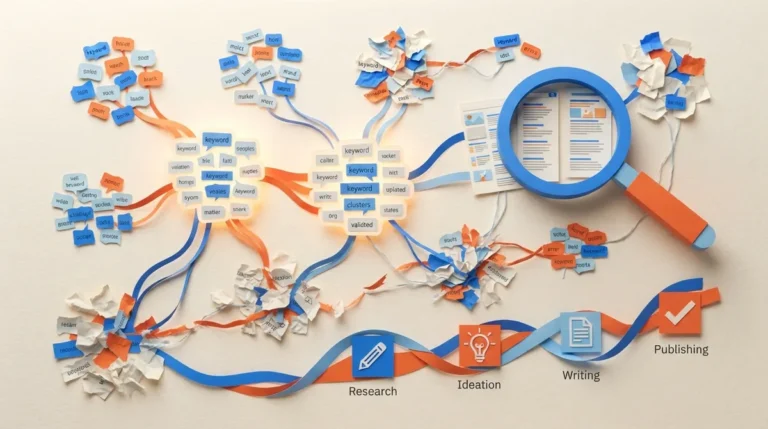
Integrating schema automation into a complete SEO pipeline that includes keyword research, content writing, and publishing ensures every article is optimized for both Google and AI search engines from day one.
If you’ve ever tried to add schema markup manually, you know the pain. It’s slow, technical, and easy to get wrong. But in 2026, AI-powered schema markup automation has changed everything. Now you can generate clean, accurate structured data across hundreds of pages in minutes — not days.
Schema markup tells search engines (and AI models) exactly what your content means. It’s the difference between showing up as a plain blue link and landing in a rich snippet, an AI Overview, or a ChatGPT recommendation. For SEO content teams, agencies, and small business owners, automating this process is a massive competitive advantage.
In this article, we’ll walk you through 10 powerful ways AI-powered schema markup automation can level up your SEO strategy. Whether you manage one website or fifty, these insights will help you work smarter — and rank higher. Let’s dive in!

What Is AI-Powered Schema Markup Automation?
Schema markup is structured data added to your web pages. It helps search engines understand your content. Think of it as a label that says, “This page is an article,” or “This page has a FAQ section.” Search engines use this data to create rich results in search listings.
AI-powered schema markup automation uses large language models (LLMs) to generate this structured data automatically. Tools like GPT-4o can read your page content, identify the right schema type, and output clean JSON-LD code — ready to deploy. With over 811 schema classes available on Schema.org, AI makes it much easier to pick the right one.
Manually writing schema for a 500-page site would take weeks. AI does it in minutes. According to research, AI schema generation is approximately 10 times faster than manual implementation — and more accurate at scale. That’s a game-changer for any content team. You can also learn more about what AI-powered content creation means for your strategy.

10 Ways AI-Powered Schema Markup Automation Boosts SEO
1. Generate Schema for Hundreds of Pages Instantly
Manual schema writing is a bottleneck. With AI automation, you can scale across your entire site at once. AI reads each page, understands the content type, and generates the correct schema — all without human input per page.
This is especially valuable for e-commerce sites, content-heavy blogs, and large agency clients. One SEO professional using AI tools can now perform the work of 5–10 people. That’s the kind of efficiency that changes how you operate. Want to understand how automation in SEO actually saves you time? It starts here.
2. Automatically Identify the Right Schema Type
Choosing the wrong schema type can hurt your SEO. AI tools analyze your page content and images to select the most appropriate schema class. This removes guesswork and ensures accuracy.
Common types handled automatically include:
- Article and BlogPosting schemas
- FAQ and HowTo schemas
- Product and Offer schemas
- Organization and LocalBusiness schemas
- BreadcrumbList and SiteNavigationElement schemas
- Review and AggregateRating schemas
AI matches the right type to the right content — every time. This is something most manual workflows simply can’t do at scale.
3. Improve Your Click-Through Rates With Rich Snippets
Schema markup unlocks rich snippets in search results. These include star ratings, FAQ dropdowns, recipe cards, and more. Rich snippets stand out visually and get significantly more clicks than plain results.
When you automate schema at scale, more of your pages become eligible for these enhanced listings. That means more visibility, more clicks, and more traffic — without writing new content. For more on how to improve your AI search visibility in 2026, schema is one of your best levers.
4. Increase Your Chances of Appearing in AI Overviews
AI search engines like ChatGPT, Perplexity, and Google’s AI Mode need structured, machine-readable data to understand your content. Schema markup provides exactly that. It helps AI crawlers identify what your page is about — fast.
Automated schema markup helps your content appear in AI-generated answers and recommendations. This is one of the most important SEO shifts of 2026. If AI can’t read your page clearly, it won’t reference it. Check out our guide on how to get cited on Google’s AI Mode to see how schema plays a role.
5. Reduce Human Error at Scale
Manual schema implementation is error-prone. A missing comma in JSON-LD, a wrong property name, or an incorrect value can make your schema invalid. Invalid schema doesn’t just fail to help — it can confuse crawlers.
AI-generated schema is validated before deployment. Here’s what that process typically looks like:
- AI analyzes page content and identifies schema type
- Structured JSON-LD code is generated automatically
- Output is validated against Schema.org standards
- Clean code is pushed to your CMS or HTML
- Crawlers index the structured data on their next visit
This workflow removes human error from the equation. You get consistent, validated schema across every page — automatically.
6. Support Knowledge Graph Building for AI Models
Schema markup doesn’t just help search engines. It builds knowledge graphs — structured data networks that AI models use to understand entities, relationships, and facts. This is becoming critical in 2026.
According to a Gartner report, large language models using Knowledge Graphs as a reference layer show up to 300% improved performance. They hallucinate less and answer more accurately. When your schema feeds into these graphs, your brand becomes a trusted source for AI models. You can dive deeper into this by exploring what AI search means for your SEO strategy.
7. Speed Up Indexing With Server-Side Schema Rendering
How schema is delivered to crawlers matters. Client-side rendering (JavaScript-injected schema) can slow crawl efficiency. Server-side rendering (SSR) of JSON-LD is much faster for bots to process.
One case study showed a 20% boost in indexed pages by switching from client-side to server-side schema injection. AI-powered automation tools typically output server-side compatible JSON-LD by default. That means better crawl coverage and faster indexing across your entire site.
8. Automate FAQ and HowTo Schema for Featured Snippets
FAQ and HowTo schemas are among the most powerful types for SEO. They unlock expanded search results that take up more space on the page. They also feed directly into voice search and AI answer engines.
With AI automation, every article or service page with a FAQ section can automatically get FAQ schema applied. No more manually tagging questions and answers. The AI reads the content and generates the correct markup. Combined with a strong search intent optimization strategy, this is a powerful combo for featured snippet dominance.
9. Scale Schema Across Multi-Client Agency Workflows
For agencies managing multiple clients, schema implementation is a time sink. Different clients have different content types, different CMS platforms, and different schema needs. AI automation handles all of this in a unified workflow.
Here’s a quick comparison of manual vs. automated schema workflows for agencies:
| Task | Manual Workflow | AI-Automated Workflow |
|---|---|---|
| Schema type selection | Requires SEO expertise per page | Auto-detected by AI |
| JSON-LD generation | Written manually or copy-pasted | Generated and validated instantly |
| Scale (pages per hour) | 5–10 pages | Hundreds of pages |
| Error rate | High (human error) | Low (validated output) |
| CMS deployment | Manual upload per page | Direct CMS integration |
| Client reporting | Manual tracking | Automated with performance data |
Agencies that adopt AI schema automation can take on more clients without growing their team. That’s a direct impact on profitability. For more on scaling agency SEO work, see the best SEO software for agencies in 2026.
10. Integrate Schema Automation Into Your Full SEO Content Pipeline
The biggest win comes when schema automation is part of a complete SEO content system. When your keyword research, content writing, optimization, and schema markup all happen automatically, SEO becomes a system — not a chore.
This is exactly what platforms like SEO Rocket are built for. SEO Rocket automates keyword discovery, long-form article writing, metadata, internal linking, and daily publishing — all in one workflow. When schema automation lives inside that same pipeline, every article you publish is structured, optimized, and ready for both Google and AI search engines from day one.
Think about what that means for your content calendar. You plan your topics, and everything else — including structured data — is handled automatically. That’s the future of SEO content automation. Explore how content automation SEO helps you scale organic traffic in 2026.

Schema Markup Types and Their SEO Impact
Not all schema types deliver the same SEO value. Here’s a quick overview of the most impactful types for content-focused websites:
| Schema Type | Best For | SEO Benefit |
|---|---|---|
| Article / BlogPosting | Blog posts, news articles | Better indexing, AI citations |
| FAQ | Pages with Q&A sections | Featured snippets, expanded results |
| HowTo | Tutorials, guides | Step-by-step rich results |
| Product | E-commerce product pages | Price, rating, availability in SERPs |
| Organization | Business homepages | Knowledge panel, brand trust |
| LocalBusiness | Local service businesses | Map pack visibility, local rankings |
AI automation tools can detect which of these types applies to each page and generate the correct markup without any manual input. That’s a significant time saving for content teams of any size. To learn more about building strong SEO content foundations, read our SEO content writing guide for 2026.

Common Mistakes to Avoid With Schema Automation
AI schema automation is powerful, but it’s not foolproof. Here are some common mistakes to watch out for:
- Using schema on pages with thin content: Schema can’t compensate for weak content. Make sure your pages are high quality first.
- Skipping validation: Always validate your generated schema using Google’s Rich Results Test before deploying.
- Applying irrelevant schema types: Adding Product schema to a blog post, for example, can confuse crawlers.
- Ignoring updates to Schema.org: The schema vocabulary evolves. AI tools should stay current with new types and properties.
- Duplicate schema blocks: Having multiple conflicting schema blocks on one page can cause issues. Use one clean block per page.
The good news? Most of these mistakes are eliminated when you use a well-built AI automation tool. The AI handles validation, type selection, and clean output automatically. For a deeper look at avoiding SEO automation pitfalls, see automated SEO mistakes that kill your rankings in 2026.
How to Get Started With AI Schema Markup Automation
Getting started is simpler than you might think. Here’s a straightforward process:
- Audit your current schema coverage. Use a tool like Google Search Console to see which pages already have structured data and which don’t.
- Choose an AI schema automation tool that integrates with your CMS (WordPress, Webflow, Shopify, or Wix).
- Set your content types. Let the AI know what kinds of pages you have — articles, products, service pages, FAQs.
- Run the automation and review a sample of generated schema before full deployment.
- Validate outputs using Google’s Rich Results Test or Schema.org’s validator.
- Monitor performance in Google Search Console’s Rich Results report over the following weeks.
If you’re already using an SEO content automation platform, ask whether schema generation is built in. The best platforms handle this as part of a complete content pipeline — no extra tool required. You can also explore how CMS integration can automate your SEO content end to end.
Curious about where AI-powered SEO tools are headed next? Check out the SEO Rocket product roadmap to see what’s coming in the world of automated SEO content.
Why Schema Automation Matters More Than Ever in 2026
The SEO landscape has shifted dramatically. Google’s AI Mode, ChatGPT Search, Perplexity, and other AI search engines are now major traffic sources. These platforms rely on structured, machine-readable data to surface content in their answers.
If your pages don’t have proper schema markup, AI search engines may simply overlook your content — even if it’s excellent. That’s why AI-powered schema markup automation has moved from a “nice to have” to a core SEO requirement. It’s not just about rich snippets anymore. It’s about being visible in the AI-driven search era. Explore traditional SEO vs. AI search optimization to see how the landscape has changed.
For those who want to stay compliant with quality standards while using automation, the Google Search Quality Rater Guidelines remain an essential reference — they outline what makes content trustworthy and authoritative, which schema helps reinforce.
And just like structured data for websites, proper data structure in other fields matters too. Businesses like Brockway Orthodontics show how having clear, well-organized information — whether in a dental practice or a web page — builds trust and makes it easier for people to find exactly what they need.
Conclusion
AI-powered schema markup automation is one of the smartest investments you can make for your SEO strategy in 2026. It saves time, reduces errors, improves indexing, and helps your content show up in both traditional search and AI-powered results. Whether you’re a solo marketer, an agency, or a business owner, the benefits are real and measurable.
The key is integrating schema automation into a broader content system — one that handles keyword research, article writing, optimization, and publishing automatically. When all of these pieces work together, SEO becomes a consistent, scalable engine for growth.
Ready to put your SEO on autopilot? Start your SEO Rocket plan from just $99/month and experience what fully automated, AI-optimized content publishing looks like — schema markup included.
FAQs
Q: How does AI-powered schema markup automation improve search rankings?
A: AI-powered schema markup automation helps search engines understand your content more clearly. This leads to rich snippets, better indexing, and higher visibility in both traditional and AI-driven search results — which typically means better rankings and click-through rates over time.
Q: What content types can AI schema automation handle?
A: AI schema tools can generate markup for a wide range of content types, including Articles, FAQs, HowTo guides, Products, Organization details, and LocalBusiness pages. The AI reads your page content and selects the most appropriate schema type automatically — no manual guesswork needed!
Q: Does schema markup help with AI search engines like ChatGPT and Perplexity?
A: Absolutely! Schema markup provides clean, structured, machine-readable data that AI search engines rely on to understand and reference your content. Pages with proper schema are much more likely to appear in AI-generated answers, overviews, and recommendations.
Q: Is AI schema markup automation accurate enough to trust at scale?
A: Yes — research shows AI schema generation is approximately 10 times faster than manual implementation and more accurate at scale. The key is using a tool that validates the output before deployment, which removes the human errors that typically occur in manual workflows.
Q: How does server-side schema rendering improve SEO performance?
A: Server-side rendering delivers schema markup directly in the HTML, making it instantly accessible to search bots and AI crawlers. One case study found a 20% boost in indexed pages after switching from client-side to server-side schema injection — a meaningful improvement for any content-heavy website.