
Key Takeaways
-
Implement daily content publishing to build momentum, with platforms that automatically create and optimize SEO-friendly articles.
-
Automate keyword research to save time, identify ranking opportunities, and eliminate guesswork about content strategy.
-
Optimize content for AI search engines by creating comprehensive, authoritative articles that directly answer user questions.
-
Use semantic keyword targeting to improve rankings by covering related terms and understanding search intent naturally.
-
Create automated feedback loops that continuously track content performance and provide data-driven optimization recommendations.
-
Scale content production without expanding teams by leveraging AI-powered platforms that generate multiple articles monthly.
SEO marketing has completely transformed in 2026. What used to take weeks of manual keyword research, content creation, and optimization can now happen automatically while you focus on running your business. The shift toward AI-powered search engines like ChatGPT, Perplexity, Claude, Gemini, Copilot, and Grok means businesses need smarter, faster ways to create content that ranks everywhere.
The businesses winning at SEO marketing today aren’t working harder—they’re working smarter. They’ve discovered that consistent, high-quality content creation is the secret to long-term organic traffic growth. Instead of publishing sporadically or hiring expensive agencies, they’re using automation to generate and publish optimized articles daily, building momentum that compounds over time.
This guide reveals seven proven SEO marketing strategies that are delivering real results in 2026. You’ll discover how to automate your content workflow, optimize for both traditional search engines and AI platforms, and build a system that generates organic traffic on autopilot. Whether you’re a small business owner, marketing team, or agency managing multiple clients, these strategies will help you scale your SEO efforts without scaling your workload.

1. Automate Your Keyword Research Process
Manual keyword research wastes valuable time that could be spent growing your business. The traditional approach of manually analyzing search volume, competition, and intent in spreadsheets is outdated. In 2026, successful SEO marketing starts with automated keyword discovery that identifies real opportunities instantly.
Modern SEO automation platforms analyze millions of search queries to find keywords your business can actually rank for. They examine search volume, competition levels, and user intent automatically, delivering a prioritized list of opportunities without the guesswork. This approach identifies gaps in your market that competitors haven’t filled yet.
Tools like SEO Rocket include built-in keyword research engines with live SEO data. Instead of spending hours in third-party tools, you get actionable keyword lists that show exactly what to write about based on real ranking potential. The system automatically discovers keywords related to your business and industry, then organizes them into a content calendar.
Benefits of Automated Keyword Research
- Saves 10-15 hours per week previously spent on manual research
- Identifies long-tail opportunities that manual research often misses
- Updates in real-time as search trends change
- Eliminates guesswork about what content to create next
- Reduces dependency on expensive keyword research subscriptions
Automated keyword research doesn’t just save time—it improves accuracy. Human researchers might miss valuable opportunities or focus on vanity metrics like high search volume instead of genuine ranking potential. Automation analyzes thousands of data points simultaneously to recommend keywords where you have the best chance of ranking in 2026.

2. Implement Daily Content Publishing Systems
Consistency beats perfection in SEO marketing. Google and AI search engines reward websites that publish regularly with fresh, valuable content. Sporadic publishing—a few articles one month, nothing the next—signals unreliability to search algorithms. Daily publishing creates the opposite effect: momentum that compounds over time.
The challenge is that daily content creation seems impossible for most businesses. Writing, optimizing, and publishing one high-quality article takes 4-6 hours when done manually. That’s 20-30 hours per week just for content creation, which is why most businesses can’t maintain consistency.
This is where automation changes everything. Platforms that generate and publish SEO-optimized content daily eliminate the bottleneck entirely. SEO Rocket automatically creates one 3,000+ word article per day for the Business plan or ten per day for the Agency plan, handling research, writing, optimization, and publishing without manual intervention.
Why Daily Publishing Works
- Search engines index fresh content faster, improving your visibility
- More content means more opportunities to rank for different keywords
- Consistent publishing builds domain authority over time
- Daily articles create multiple entry points for organic traffic
- Algorithms favor websites with regular update schedules
The compounding effect of daily publishing is remarkable. A business publishing one article daily creates 365 pieces of content annually. Each article targets specific keywords, builds internal linking structures, and attracts backlinks. Over six months, this creates a content library that drives exponentially more traffic than sporadic posting ever could.

3. Optimize for AI Search Engines
Traditional SEO focused exclusively on Google. In 2026, that’s no longer enough. AI search engines like ChatGPT, Perplexity, Claude, Gemini, Copilot, and Grok are answering millions of queries daily, and they pull information from trusted sources across the web. If your content isn’t optimized for AI retrieval, you’re invisible to a massive segment of potential customers.
AI search optimization differs from traditional SEO in important ways. AI models look for comprehensive, authoritative content that directly answers questions. They favor articles with clear structure, factual accuracy, and depth over keyword-stuffed pages. Getting referenced as a source by AI search engines builds credibility and drives referral traffic.
Businesses need content structured specifically for AI consumption. This means writing articles that answer questions thoroughly, using semantic keyword clusters instead of single keywords, and organizing information with clear headings and logical flow. Articles optimized for AI search appear in AI-generated responses, positioning your business as an authority.
Key Elements of AI Search Optimization
- Comprehensive content that covers topics thoroughly (3,000+ words)
- Clear heading structures that organize information logically
- Direct answers to common questions within the first paragraphs
- Factual accuracy with supporting data and statistics
- Natural language that reads conversationally
- Internal linking that helps AI understand topic relationships
Platforms like SEO Rocket automatically structure content for both Google and AI search engines. Every article includes optimized headings, semantic keyword usage, proper metadata, and internal linking that signals authority to AI models. This dual optimization ensures maximum visibility across all search platforms in 2026.
According to industry research, cloud-based SEO automation tools now hold a 68% market share in 2026, largely because they handle multi-platform optimization that manual processes can’t efficiently manage. Businesses using these tools rank faster and maintain visibility as search technology continues evolving.
4. Use Semantic Keyword Targeting
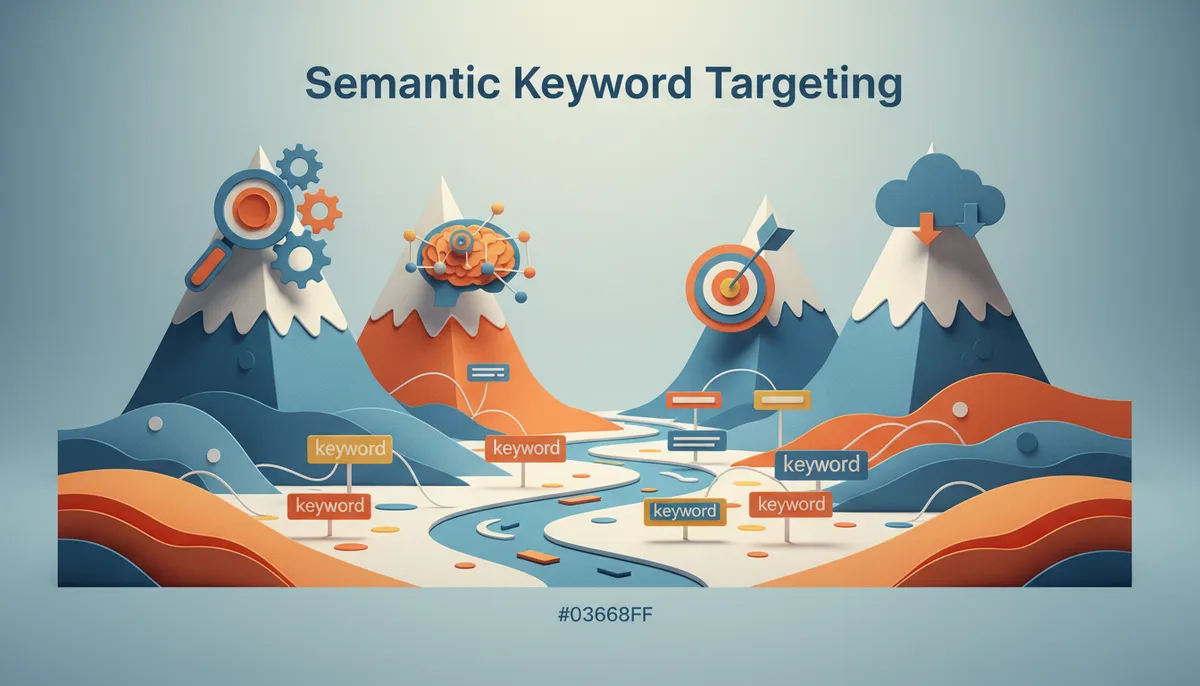
Single-keyword optimization is dead. Modern search algorithms understand context, intent, and relationships between terms. They recognize that someone searching for “project management software” is also interested in “task tracking tools,” “team collaboration platforms,” and “workflow automation.” This is semantic keyword targeting—using clusters of related terms that signal comprehensive topic coverage.
Semantic targeting improves rankings because search engines see your content as authoritative. When an article naturally incorporates related terms and concepts, algorithms understand you’re providing complete information rather than gaming the system with keyword repetition. This approach aligns with how people actually search and how AI models understand language.
Effective semantic targeting requires understanding search intent. What problem is the searcher trying to solve? What related questions might they have? What subtopics need coverage to fully address their needs? Answering these questions creates content that ranks for dozens or hundreds of related searches instead of just one keyword.
How to Implement Semantic Targeting
- Identify your primary keyword and list 10-15 related terms
- Analyze top-ranking pages to find commonly covered subtopics
- Include related terms naturally throughout your content
- Answer questions that naturally arise from the main topic
- Use variations of your keywords in headings and paragraphs
- Link to related content on your site to show topic relationships
Automation handles semantic targeting better than manual research. AI-powered content systems analyze search intent and competitor gaps automatically, then structure articles around semantic keyword clusters. This ensures comprehensive coverage without overthinking keyword placement or density.
The result is content that reads naturally while satisfying algorithm requirements. Readers get valuable information, and search engines see authoritative coverage. This balance is essential for ranking in 2026, where user experience metrics increasingly influence search positions.
5. Leverage Content Performance Feedback Loops
The best SEO marketing systems improve over time through feedback loops. Publishing content is just the beginning—tracking performance, analyzing what works, and adjusting strategy based on real data creates continuous improvement. Businesses that implement feedback loops see ranking improvements accelerate as their systems learn and adapt.
Feedback loops connect analytics back to content creation. When you publish an article, you track rankings, traffic, engagement, and conversions. This data reveals which topics resonate, which keywords drive results, and which content formats perform best. These insights inform future content decisions, creating a cycle of constant optimization.
Manual feedback loops are time-consuming. Checking rankings, analyzing traffic sources, identifying improvement opportunities, and adjusting content strategy takes hours weekly. Automation platforms handle this continuously, monitoring performance and making optimization recommendations automatically.
Components of Effective Feedback Loops
- Real-time rank tracking for target keywords across search platforms
- Traffic analysis showing which articles drive the most visitors
- Engagement metrics revealing content that keeps readers on-site
- Conversion tracking connecting content to business outcomes
- Automated alerts for ranking changes or traffic drops
- Performance-based content recommendations for future topics
Platforms that integrate with Google Analytics and Search Console provide comprehensive performance visibility. They identify technical issues like broken links, ranking drops, and indexing problems automatically. Instead of manually monitoring dozens of data points, you receive actionable insights that improve results.
The cumulative effect of feedback loops is significant. Content strategy becomes more precise over time, focusing on proven topics and formats. This reduces wasted effort on content that doesn’t perform while doubling down on what works. According to recent data from industry leaders, this approach helps SEO teams identify ranking opportunities faster than manual methods, processing millions of queries to find the best targets.
6. Automate Technical SEO Tasks
Technical SEO creates the foundation for content success. Even the best articles won’t rank if your website has technical problems like slow load times, broken links, poor mobile optimization, or indexing issues. Manual technical audits catch problems eventually, but automated monitoring catches them immediately and often fixes them without human intervention.
Technical SEO automation handles repetitive tasks that consume hours weekly. This includes monitoring site speed, checking for broken links, ensuring proper indexing, optimizing image compression, managing redirects, and generating XML sitemaps. These tasks are critical but don’t require creative thinking—they’re perfect candidates for automation.
Modern SEO platforms include technical monitoring that runs continuously in the background. They scan your site daily, identify issues, and either fix them automatically or alert you with specific recommendations. This prevents small technical problems from becoming major ranking obstacles.
Technical Tasks Worth Automating
- Site speed monitoring and image optimization recommendations
- Broken link detection and automatic redirect suggestions
- Meta tag generation for all published content
- XML sitemap updates whenever new content publishes
- Mobile optimization checks across all pages
- Structured data implementation for rich snippets
- Internal linking optimization based on topic relevance
Automating technical SEO reduces the expertise barrier. Small businesses without dedicated technical staff can maintain website health as effectively as enterprises with full IT teams. The automation handles complexity while you focus on strategy and growth.
Technical automation also ensures consistency. Human administrators might forget to update sitemaps, miss broken links, or delay optimization fixes. Automated systems never forget, never skip checks, and handle problems immediately. This reliability keeps your site performing optimally for both search engines and visitors.
7. Scale Content Production Without Expanding Teams
Traditional content scaling requires hiring—more writers, more editors, more SEO specialists. This approach is expensive, slow to implement, and introduces quality control challenges. By the time you’ve hired and trained a content team, market conditions have changed and you’re playing catch-up again.
Content automation solves the scaling problem without proportional cost increases. A single person can oversee a system producing 30, 100, or 300+ articles monthly. The automation handles research, writing, optimization, and publishing while the human focuses on strategy, quality review, and business growth.
This approach is particularly valuable for agencies managing multiple clients. Instead of hiring additional staff for each new client, automation platforms let you scale across 5, 10, or more client accounts without expanding headcount. The Agency plan from SEO Rocket supports 10 client workspaces and generates 300 articles monthly, replacing the work of multiple content teams at a fraction of the cost.
Benefits of Automated Content Scaling
- Consistent quality across all content without managing multiple writers
- Predictable monthly costs instead of variable staffing expenses
- Immediate scaling when business needs increase
- No hiring delays, training periods, or turnover risks
- Focus on strategy and optimization instead of production management
- Agency-level capabilities without agency-level overhead
Cost efficiency is dramatic. Traditional SEO agencies charge $3,000-$5,000 monthly for similar content volume. Freelance writers cost $100-$300 per article, making 30 articles monthly cost $3,000-$9,000 plus management time. Automation platforms like SEO Rocket deliver the same output for $99-$799 monthly, reducing cost per article to approximately $3.
The quality argument against automation is outdated. Modern AI content systems produce comprehensive, well-researched articles that rank effectively. They follow SEO best practices consistently, something even experienced human writers sometimes miss. The combination of automation for production and human oversight for strategy creates better results than either approach alone.
Businesses using automated content systems report consistent organic traffic growth without the burnout associated with manual content creation. The system handles the repetitive work while teams focus on high-value activities like strategy development, audience research, and conversion optimization.
Transform Your SEO Marketing Strategy Today
SEO marketing in 2026 rewards businesses that embrace automation. The strategies outlined above—automated keyword research, daily publishing systems, AI search optimization, semantic targeting, performance feedback loops, technical automation, and scalable content production—work together to create unstoppable organic growth momentum.
The businesses dominating search results aren’t working harder than their competitors. They’ve built systems that work automatically, generating and optimizing content while they focus on serving customers and growing revenue. This is the future of SEO marketing: intelligent automation that produces results consistently without consuming your time.
You can implement these strategies starting today. Platforms like SEO Rocket offer free 3-day trials that demonstrate exactly how automated SEO marketing works. Setup takes under 10 minutes—connect your website, review automatically discovered keywords, approve your content calendar, and the system handles everything else.
The choice is clear: continue spending hours weekly on manual SEO tasks that automation handles better, or invest that time in strategy and growth while your content system runs automatically. The businesses making this shift are seeing compound growth that manual approaches simply cannot match. Start your automated SEO marketing system and join them in building consistent, long-term organic traffic.
FAQs
Q: What is SEO marketing automation and how does it work in 2026?
A: SEO marketing automation uses AI-powered systems to handle keyword research, content creation, optimization, and publishing automatically. In 2026, these platforms analyze search intent, generate comprehensive articles optimized for both Google and AI search engines, and publish content daily without manual work. The automation creates consistent organic traffic growth while saving 10-20 hours weekly compared to manual SEO processes.
Q: Can SEO marketing be fully automated or does it need human input?
A: SEO marketing automation handles production tasks like keyword discovery, writing, optimization, and publishing completely. However, human expertise remains valuable for strategy decisions, final quality reviews, and authority building through backlink outreach. The best approach combines automation for repetitive tasks with human oversight for creative direction and business alignment. This balance delivers better results than either approach alone.
Q: How does automated SEO marketing improve search rankings?
A: Automated SEO marketing improves rankings through consistent daily publishing, comprehensive semantic keyword targeting, and proper optimization for both traditional search engines and AI platforms. The automation creates more content opportunities, builds domain authority faster through regular updates, and ensures technical SEO best practices are followed consistently. This compound effect generates exponentially more organic traffic than sporadic manual publishing.
Q: What is the cost difference between automated SEO marketing and traditional agencies?
A: Traditional SEO agencies typically charge $3,000-$5,000 monthly for content and optimization services. Automated platforms like SEO Rocket cost $99-$799 monthly depending on volume needs, reducing cost per article to approximately $3 compared to $100-$300 for freelance writers. The automation delivers similar or better content volume and consistency at 5-10% of traditional agency costs while eliminating management overhead.
Q: How do I optimize content for AI search engines like ChatGPT and Perplexity?
A: AI search optimization requires comprehensive articles (3,000+ words) with clear structure, direct answers to common questions, semantic keyword clusters, and factual accuracy. Content should use natural language, logical heading organization, and internal linking that helps AI models understand topic relationships. Modern automation platforms structure content automatically for both Google and AI search engines, ensuring maximum visibility across all platforms in 2026.