
Key Takeaways
-
Leverage AI-powered SEO tools to automate content creation, generating up to 300 optimized articles monthly with minimal human intervention.
-
Structure content for both traditional search engines and AI platforms like ChatGPT to maximize visibility across search ecosystems.
-
Choose SEO AI tools that provide end-to-end automation, covering keyword research, content generation, optimization, and direct publishing.
-
Focus on AI tools that optimize for search intent and can be cited as authoritative sources by AI answer platforms.
-
Evaluate AI-generated content rigorously, checking for factual accuracy, readability, uniqueness, and comprehensive topic coverage.
-
Calculate cost-effectiveness by measuring content output volume and quality per monthly subscription, not just absolute pricing.
-
Prioritize platforms that offer dual optimization strategies targeting both Google rankings and AI-powered search results.
SEO AI has fundamentally changed how businesses approach content creation and search optimization in 2026. Instead of spending hours researching keywords, drafting articles, and manually optimizing content, AI-powered tools now handle these tasks automatically. This shift allows businesses to produce consistent, high-quality content that ranks on Google and appears in AI-generated search results from ChatGPT, Perplexity, Claude, and other platforms.
The integration of artificial intelligence into SEO workflows has created a new category of tools designed specifically for content automation. These platforms combine keyword research, content generation, optimization, and publishing into single systems that require minimal human intervention. For small businesses, agencies, and marketing teams managing multiple websites, this automation eliminates the bottleneck of manual content production while maintaining quality standards.
Modern SEO AI platforms go beyond simple content generation. They analyze competitor strategies, identify content gaps, optimize for user intent, and structure articles to maximize visibility across traditional search engines and AI-powered answer systems. This comprehensive approach ensures content performs well across all platforms where potential customers search for information.
Understanding which SEO AI tools deliver genuine results versus those that create low-value content is critical. The wrong choice can lead to de-indexation penalties, wasted resources, and missed ranking opportunities. This guide examines seven proven SEO AI solutions that actually drive traffic and conversions in 2026.
What Makes SEO AI Different from Traditional SEO Tools
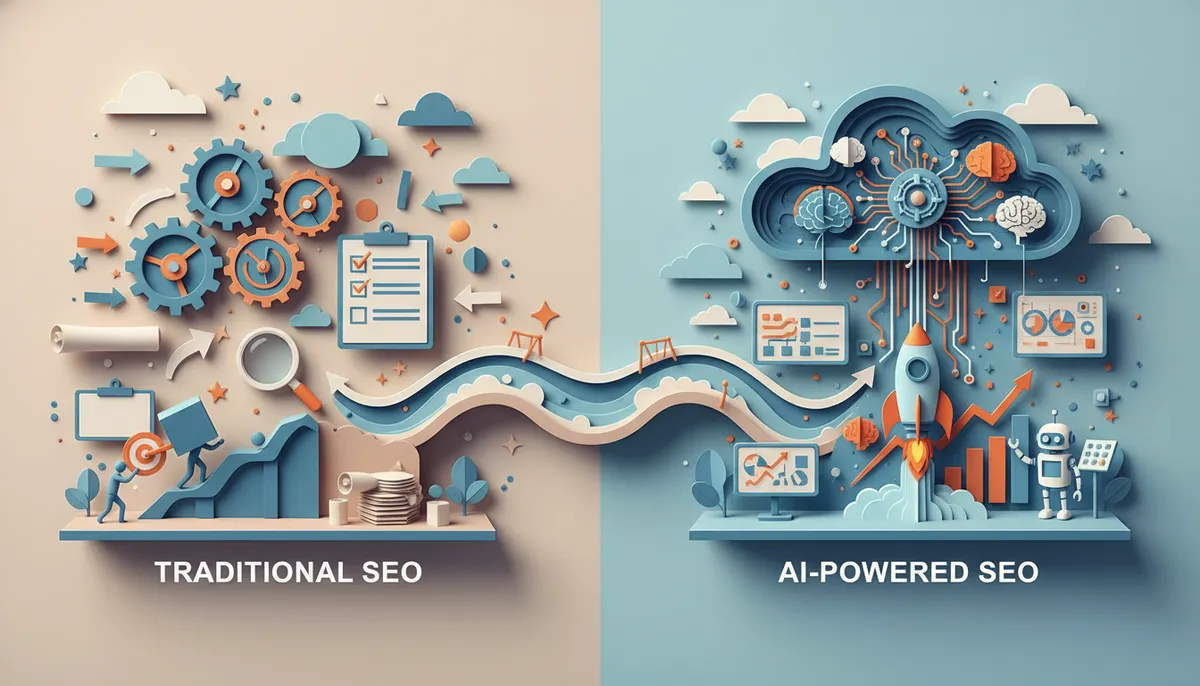
Traditional SEO tools require constant manual input. You research keywords, analyze competitors, create content briefs, write articles, optimize on-page elements, and schedule publishing separately. Each step demands time and expertise. SEO AI platforms automate this entire workflow, transforming weeks of work into minutes of setup.
The fundamental difference lies in automation depth. Traditional tools provide data and suggestions. SEO AI platforms execute the entire process. They discover ranking opportunities, generate optimized content, add internal links, create metadata, and publish directly to your website. This end-to-end automation enables consistent daily publishing without expanding your team.
Automation vs Manual Optimization
Manual SEO optimization requires checking keyword density, adjusting heading structures, optimizing title tags, writing meta descriptions, and ensuring proper internal linking. This process takes 2-3 hours per article. SEO AI tools complete these tasks in seconds with real-time scoring and automatic adjustments.
The speed advantage compounds over time. A marketing team manually producing 8 articles monthly spends approximately 24 hours on optimization alone. An AI-powered system handles this instantly while generating 30-300 articles monthly depending on your plan. This 10-30x productivity increase explains why agencies and businesses increasingly adopt automated SEO content platforms for their workflows.
AI Search Visibility Beyond Google Rankings
Google rankings remain important, but 2026 search behavior includes AI platforms like ChatGPT, Perplexity, Claude, Gemini, and Copilot. These systems synthesize information from multiple sources to answer questions directly. Traditional SEO focuses exclusively on Google’s algorithm. SEO AI optimizes content structure so AI models can extract and cite your information as authoritative sources.
This dual optimization approach ensures your content appears in traditional search results AND AI-generated answers. Articles structured for AI visibility include clear definitions, data-backed claims, proper citation formatting, and comprehensive coverage of subtopics. These elements help AI systems identify your content as trustworthy and relevant when answering user queries.
7 Essential SEO AI Tools for Content Automation
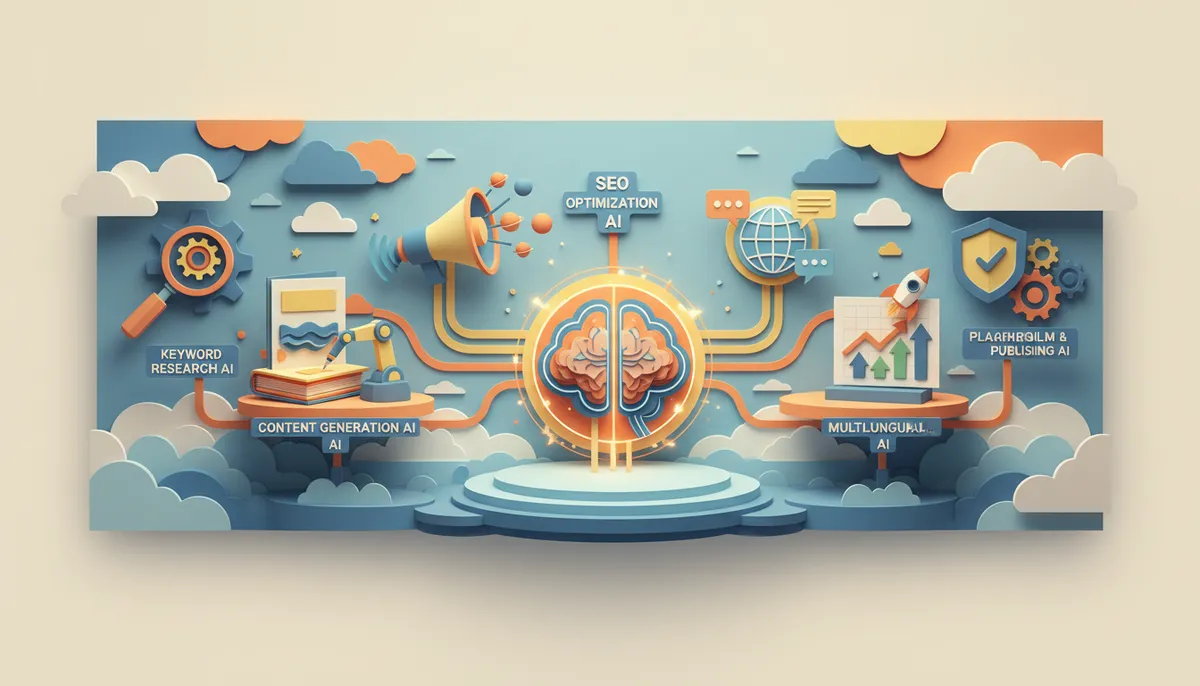
The right SEO AI tool depends on your specific needs, team size, and content volume requirements. Some platforms excel at keyword research, others at content generation, and a few provide complete end-to-end automation. The following seven tools represent the most effective options for businesses serious about scaling their SEO content in 2026.
1. SEO Rocket – Complete Content Automation Platform
SEO Rocket stands apart as the only platform that fully automates the entire SEO content workflow from keyword discovery to daily publishing. Setup takes under 10 minutes. Connect your WordPress, Webflow, Shopify, or Wix site, and the system automatically discovers keyword opportunities based on your industry and competitors.
The platform generates one 3,000-word SEO-optimized article daily for the Business plan or ten daily articles for the Agency plan. Each article includes keyword optimization, internal and external linking, AI-generated images, metadata, business mentions, and direct publishing to your website. This eliminates the need for content calendars, manual scheduling, or copy-pasting between tools.
What makes SEO Rocket particularly valuable is its focus on AI search visibility. Articles are structured specifically so ChatGPT, Perplexity, Claude, and other AI platforms can reference them as trusted sources. This dual optimization for Google and AI search engines ensures maximum visibility across all platforms where potential customers search.
The pricing model reflects genuine value: approximately $3 per long-form article. Compared to freelance writers charging $200-500 per article or agencies requiring $3,000-5,000 monthly retainers, the cost efficiency becomes obvious. The Agency plan supports 10 client workspaces, making it ideal for marketing agencies managing multiple brands. A lifetime plan option provides permanent access without ongoing subscription costs.
2. Semrush – Comprehensive SEO Intelligence
Semrush has evolved from a keyword research tool into a comprehensive SEO platform with AI-powered content features. The Content Marketing Toolkit analyzes top-ranking pages and generates data-driven briefs specifying optimal word count, semantic keywords, readability targets, and content structure.
The platform processes billions of keywords and backlinks daily, providing competitive intelligence that informs content strategy. Topic Research identifies trending subjects and questions within your niche. The SEO Writing Assistant scores content in real-time, suggesting improvements for readability, keyword usage, and tone consistency.
While Semrush excels at research and analysis, it requires manual content creation and publishing. You still need to write articles, optimize them based on recommendations, and upload to your CMS separately. This makes it more suitable for teams with dedicated writers rather than businesses seeking complete automation.
3. Surfer SEO – Content Optimization Focused
Surfer SEO analyzes the top 10 ranking pages for any keyword and creates optimization guidelines based on that data. The Content Editor provides real-time scoring as you write, measuring keyword density, content structure, paragraph length, and image usage against competitor benchmarks.
The AI Outline Generator creates detailed content structures based on common patterns among top-ranking pages. This speeds up the planning phase significantly. Surfer also includes a SERP Analyzer that identifies why specific pages rank well, helping you understand which elements to incorporate into your content.
The primary limitation is that Surfer focuses on optimization rather than generation or publishing. You still need to produce the actual content and manually upload it to your website. For teams with strong writing capabilities seeking optimization guidance, Surfer provides valuable data-driven recommendations.
4. Ahrefs – Advanced Keyword Intelligence
Ahrefs maintains one of the largest backlink databases and keyword indexes, making it exceptional for research and competitive analysis. The Keywords Explorer analyzes search volume, keyword difficulty, click metrics, and ranking potential across 170 countries. This depth helps identify opportunities competitors overlook.
The Content Gap tool reveals keywords your competitors rank for but you don’t, creating a roadmap for content expansion. Site Explorer provides detailed analysis of any domain’s backlink profile, organic traffic, and top-performing content. These insights inform strategic decisions about which topics to prioritize.
Ahrefs recently added AI-powered content features, but the platform remains primarily a research and analysis tool. You gain exceptional data for planning content strategy, but execution still requires manual effort. The learning curve is steeper than simpler tools, making it better suited for experienced SEO professionals.
5. SE Ranking – Predictive SEO Analytics
SE Ranking differentiates itself with predictive analytics that forecast traffic changes and ranking shifts before they happen. The AI engine detects patterns across keyword relationships, identifying early signals of algorithm updates or competitive threats. This proactive approach helps you adjust strategy before losing rankings.
The Content Marketing module includes AI writing assistance, competitor analysis, and performance tracking. Keyword clustering handles thousands of queries simultaneously, grouping them by intent and relationship. This reduces research time from days to minutes while improving targeting accuracy.
The platform integrates well with marketing workflows, providing white-label reports for agencies and detailed analytics for in-house teams. However, like most tools, it requires manual content creation and publishing. The value lies in data quality and predictive insights rather than automation.
6. Jasper – AI Content Generation
Jasper focuses specifically on AI content generation, using natural language processing to create marketing copy, blog posts, and social content. The platform includes templates for various content types and allows brand voice customization to maintain consistency across outputs.
The Boss Mode feature enables long-form content creation with minimal prompting. You provide a topic and key points, and Jasper generates complete articles. The SEO Mode integrates with Surfer SEO to optimize content during generation, incorporating target keywords and recommended content structure.
The challenge with Jasper is that it generates content without the full SEO workflow. You still need keyword research tools, content calendars, optimization checking, and manual publishing. For businesses seeking complete automation, Jasper represents only one piece of the puzzle. The content quality also requires human review and editing to ensure accuracy and brand alignment.
7. RankIQ – Traffic Prediction for Blog Posts
RankIQ specializes in analyzing content performance potential before you publish. The platform calculates expected traffic growth for blog posts based on search volume, competition, and content quality. This helps prioritize topics with the highest ROI potential.
The Content Optimizer provides specific recommendations for improving individual posts, including keyword usage, content length, and structural improvements. The AI algorithm identifies underperforming content that could rank better with optimization, creating a prioritized list for updates.
RankIQ works best for established blogs with existing content libraries. The traffic predictions help identify which new topics to pursue and which existing posts to update first. However, it doesn’t generate content or automate publishing, requiring integration with other tools for complete workflow automation.

How to Choose the Right SEO AI Tool for Your Business
Selecting the appropriate SEO AI tool depends on several factors including team size, content volume requirements, technical expertise, and budget constraints. Understanding these variables helps narrow options to solutions that genuinely fit your workflow rather than forcing your process to accommodate tool limitations.
Assessing Your Automation Needs
Consider where bottlenecks exist in your current content process. If keyword research consumes too much time, tools like Ahrefs or Semrush provide comprehensive keyword intelligence. If writing articles is the bottleneck, content generation tools like Jasper or SEO Rocket offer solutions. If optimization and publishing create delays, platforms with direct CMS integration save hours of manual work.
Complete automation requires a platform handling all stages: research, generation, optimization, and publishing. Partial automation tools address specific bottlenecks but require manual steps for other phases. For businesses seeking true hands-off operation, end-to-end platforms eliminate the need to manage multiple tools and manual transitions between workflow stages.
Evaluating Content Quality Standards
Not all AI-generated content meets the quality standards required for strong SEO performance in 2026. Low-value content risks de-indexation penalties from Google, wasting time and resources. High-quality AI content includes original insights, proper source citations, natural language flow, and comprehensive topic coverage.
Test potential tools by generating sample content and evaluating it against your standards. Does it require extensive editing? Does it include factual errors? Does it sound robotic or natural? Quality assessment should include readability scores, uniqueness checks, and comparison against top-ranking competitor content in your niche.
| Quality Factor | What to Check | Red Flags |
|---|---|---|
| Factual Accuracy | Verify statistics, dates, and claims | Outdated information, unsourced claims |
| Readability | Flesch-Kincaid score, sentence length | Complex jargon, run-on sentences |
| Uniqueness | Plagiarism check, content comparison | Duplicate paragraphs, common phrasing |
| Natural Flow | Read full articles aloud | Robotic transitions, repetitive structure |
| Topic Coverage | Compare to top-ranking competitors | Superficial treatment, missing subtopics |
Budget and Scalability Considerations
SEO AI tools range from $50 monthly for basic features to $800+ for agency-level platforms. Calculate cost per article to understand true value. A $99 monthly subscription producing 30 articles costs $3.30 per piece. A $500 subscription producing 10 articles costs $50 per piece. The absolute price matters less than output volume and quality.
Scalability becomes critical as your content needs grow. Can the platform handle increased volume without proportional cost increases? Does it support multiple team members or client workspaces? Agency plans should accommodate at least 5-10 clients with separate dashboards and billing. Lifetime plan options eliminate long-term subscription costs if you commit to a platform.
Common SEO AI Mistakes to Avoid in 2026
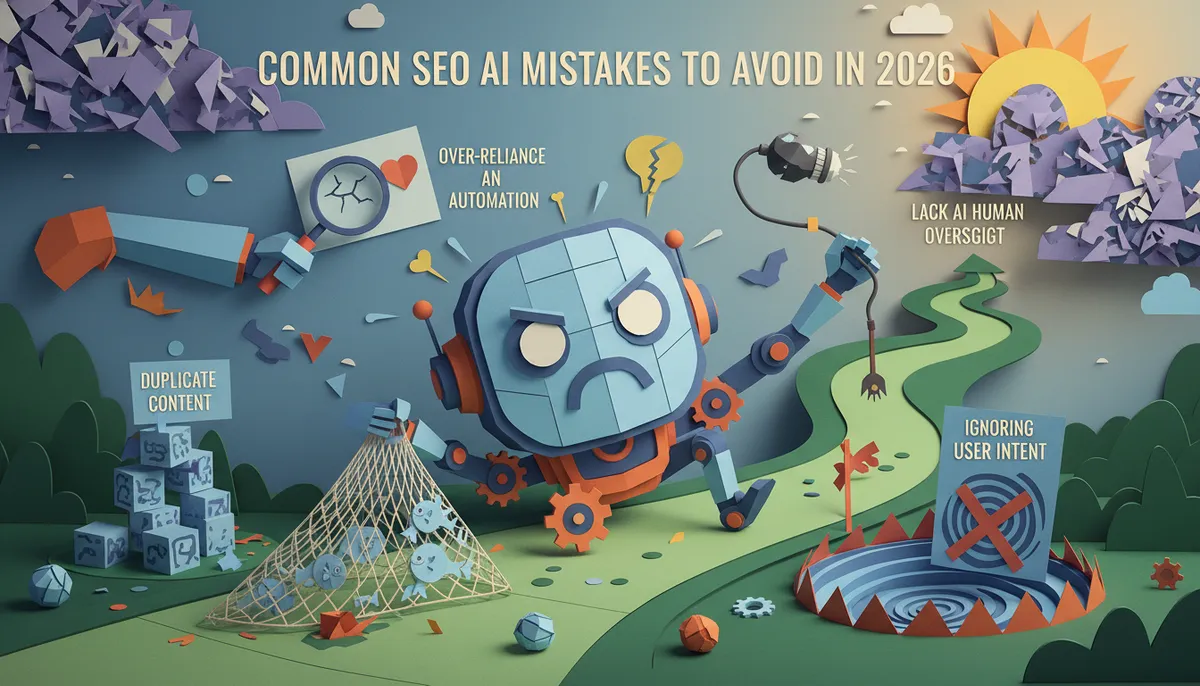
As SEO AI adoption increases, certain mistakes become more common. These errors waste resources, damage rankings, and create more work than proper implementation. Understanding these pitfalls helps you avoid them while competitors struggle with preventable problems.
Publishing AI Content Without Human Review
Complete automation doesn’t mean zero oversight. While AI tools generate optimized content, human review ensures brand alignment, factual accuracy, and unique value. Publishing without verification risks spreading misinformation, using inappropriate tone, or missing opportunities to add proprietary insights.
Establish a review workflow that checks key elements: factual claims, brand voice consistency, internal link relevance, and competitive differentiation. This review takes 10-15 minutes per article compared to 2-3 hours for manual writing, maintaining efficiency while ensuring quality.
Ignoring AI Search Optimization
Many businesses optimize exclusively for Google, missing the growing importance of AI-powered search platforms. ChatGPT, Perplexity, Claude, and similar systems now influence purchase decisions and information discovery. Content optimized only for traditional search misses these channels entirely.
AI search optimization requires structured information that AI models can extract and cite. Include clear definitions, source citations, data points, and comprehensive answers to common questions. Format content with descriptive headings that AI systems can parse to understand topic coverage and relationships.
Neglecting Content Performance Tracking
Automation makes it easy to publish consistently without monitoring results. This creates a dangerous cycle where you produce content that doesn’t perform but continue because the process feels productive. Track key metrics including organic traffic, keyword rankings, time on page, and conversion rates.
Set monthly review checkpoints to analyze which topics drive results and which underperform. Use these insights to refine your keyword targeting and content approach. Most SEO AI platforms include analytics dashboards, but external tools like Google Analytics and Google Search Console provide additional validation.
The Future of SEO AI in Content Marketing
SEO AI continues evolving rapidly. Understanding emerging trends helps you prepare for changes that will affect content strategy over the next 12-24 months. Early adoption of effective approaches creates competitive advantages before they become standard practice.
Predictive Content Strategies
Advanced AI systems now predict which topics will gain search interest before they trend. This enables proactive content creation targeting keywords with low competition but growing demand. Predictive analytics identify seasonal patterns, emerging questions, and shifts in user intent.
Platforms incorporating predictive features allow you to build content libraries addressing future search behavior. This positions your business as an early authority on emerging topics rather than chasing trends after competitors already dominate results. The timing advantage often determines who captures the initial traffic surge.
Multimedia Content Integration
Text-only content becomes less effective as search engines prioritize diverse formats. Modern SEO AI tools automatically generate images, suggest video topics, and create multimedia content that engages multiple learning styles. This integration improves user experience metrics that influence rankings.
Video content particularly impacts AI search visibility. Platforms like YouTube function as search engines, and AI systems increasingly reference video content when answering questions. SEO AI tools that generate video scripts, suggest visual elements, and optimize video metadata provide comprehensive coverage across all content formats.
Personalization at Scale
Future SEO AI platforms will generate content variations targeting specific audience segments, geographic regions, or user intent types. This personalization increases relevance without requiring separate manual content creation for each variation. AI systems automatically adjust tone, examples, and recommendations based on audience characteristics.
Personalization improves conversion rates by addressing specific pain points and preferences. A generalized article about marketing automation might attract traffic, but personalized versions for agencies, e-commerce businesses, and SaaS companies convert better by speaking directly to unique challenges and goals.
Implementing SEO AI in Your Content Workflow
Successful implementation requires planning beyond tool selection. The transition from manual content creation to AI-powered automation affects team roles, approval processes, and quality standards. A structured approach minimizes disruption while maximizing benefits.
Phase 1: Audit Current Content Processes
Document your existing workflow including time spent on each stage:
- Keyword research and topic selection
- Content brief creation and approval
- Article writing and editing
- SEO optimization and formatting
- Image sourcing and creation
- CMS uploading and scheduling
- Internal linking and metadata
- Publishing and promotion
Identify which stages consume the most time and which create the biggest bottlenecks. These areas offer the highest ROI from automation. Calculate your current cost per article including labor, tools, and management overhead. This baseline enables accurate ROI measurement after implementing SEO AI tools.
Phase 2: Select and Configure Your Platform
Choose a platform based on your specific bottlenecks and automation needs. Complete automation platforms work best for businesses seeking maximum efficiency, while specialized tools address particular weaknesses in existing workflows.
Configuration involves connecting your website, importing existing content for baseline analysis, setting brand voice parameters, and establishing keyword targeting criteria. Most platforms provide setup wizards, but allocate 1-2 hours for proper configuration ensuring outputs align with your standards.
Phase 3: Test and Refine Outputs
Generate 5-10 sample articles before full implementation. Review these for quality, brand alignment, and SEO optimization. Identify patterns in areas requiring adjustment such as tone, keyword density, content structure, or internal linking strategy.
Most platforms allow customization of generation parameters. Adjust these based on your test results, then generate another batch to verify improvements. This iterative refinement ensures production-quality output before committing to regular publishing.
Phase 4: Establish Review and Publishing Cadence
Determine your publishing frequency based on business goals and content volume capabilities. Daily publishing compounds SEO benefits faster than weekly or sporadic schedules. The consistency signals to search engines that your site regularly produces fresh, relevant content.
Create a review schedule that maintains quality without becoming a bottleneck. For complete automation platforms, review articles weekly in batches rather than individually before each publication. This maintains oversight while preserving time savings from automation.
Measuring SEO AI Success
Tracking performance validates your investment and identifies optimization opportunities. Establish baseline metrics before implementation, then monitor changes over 90-day periods for meaningful trends.
Primary Performance Indicators
Focus on metrics directly tied to business outcomes:
- Organic traffic growth month-over-month
- Keyword ranking improvements for target terms
- Content production volume increase
- Cost per article reduction
- Time saved on content workflow
- Lead generation from organic content
- Revenue attribution to content marketing
Compare these metrics to your pre-automation baseline. Organic traffic should increase 20-40% within three months of consistent automated publishing. Keyword rankings typically improve after 60-90 days as search engines index and evaluate new content.
Content Quality Metrics
Quantify content quality through measurable factors:
| Metric | Target Range | Measurement Tool |
|---|---|---|
| Average Time on Page | 2-4 minutes | Google Analytics |
| Bounce Rate | 40-60% | Google Analytics |
| Pages per Session | 2-3 pages | Google Analytics |
| Readability Score | 60-70 (Flesch-Kincaid) | Hemingway Editor |
| SEO Score | 80-95 | Platform dashboard |
Monitor these metrics across your content library. Declining engagement suggests quality issues requiring attention. Improving metrics validate that your AI-generated content meets user expectations and search engine quality standards.
SEO AI for Different Business Types
Implementation strategies vary based on business model, team structure, and content goals. Understanding how different organizations leverage SEO AI helps you adapt best practices to your specific situation.
Small Business Implementation
Small businesses with limited marketing resources benefit most from complete automation. Manual content creation competes with operational priorities, making consistency difficult. Automated platforms eliminate this conflict by handling content production without requiring daily attention.
Focus on local SEO opportunities and service-specific keywords. Configure your platform to target geographic modifiers and long-tail keywords with clear commercial intent. Small businesses need fewer articles than enterprises but require higher conversion rates, making keyword selection critical.
Agency Scaling Strategies
Marketing agencies managing multiple clients need tools supporting workspace separation, white-label reporting, and high-volume content production. Agency-tier platforms should handle 10+ clients with individual dashboards and separate publishing credentials.
Automation enables agencies to serve more clients without proportionally increasing headcount. A three-person team using manual methods might manage 5-8 clients. With automation, the same team handles 15-20 clients while improving content consistency and results. This operational leverage directly impacts profitability.
Enterprise Content Operations
Large organizations with complex approval workflows need platforms integrating with existing systems. API access, custom workflows, and advanced permission controls become essential. Enterprise implementations often require technical support for integration with existing marketing stacks.
Focus on content governance ensuring brand consistency across departments and regions. Establish clear guidelines for AI-generated content including legal review requirements, brand voice parameters, and approval hierarchies. Enterprise-scale automation succeeds when it enhances rather than circumvents established processes.
Conclusion
SEO AI has transformed content marketing from a resource-intensive manual process into an efficient, scalable system. The right platform eliminates bottlenecks in keyword research, content creation, optimization, and publishing while maintaining the quality standards required for strong search performance. Businesses that adopt complete automation gain significant competitive advantages through consistent publishing, comprehensive topic coverage, and optimization for both traditional and AI-powered search engines.
The seven tools outlined provide proven solutions for different aspects of SEO content automation. For businesses seeking true end-to-end automation without managing multiple platforms, integrated solutions deliver the greatest time savings and simplest workflows. The ability to generate, optimize, and publish 30-300 high-quality articles monthly with minimal oversight represents a fundamental shift in what’s possible with content marketing.
Success with SEO AI requires choosing tools aligned with your specific needs, implementing structured workflows, and monitoring performance metrics that matter to your business. The platforms that automate the entire process from keyword discovery through daily publishing provide the highest ROI by eliminating manual work at every stage. As search behavior continues evolving toward AI-powered answers, optimizing for visibility across all platforms where customers search becomes increasingly critical.
The content automation capabilities available in 2026 weren’t possible even two years ago. Early adopters who implement these systems now build traffic and authority advantages that compound over time. Every month of delay means competitors publish more content, capture more rankings, and establish stronger positions in both traditional and AI search results. Start automating your SEO content today to begin building the consistent publishing system that drives long-term organic growth.
FAQs
Q: What is SEO AI and how does it work?
A: SEO AI refers to artificial intelligence tools that automate the entire content creation workflow including keyword research, article generation, optimization, and publishing. These platforms analyze search patterns, competitor strategies, and ranking factors to produce content optimized for both traditional search engines and AI-powered platforms like ChatGPT and Perplexity.
Q: Can AI-generated content rank well on Google in 2026?
A: Yes, high-quality AI-generated content ranks well when it provides genuine value, includes original insights, and follows proper optimization practices. Google focuses on content quality rather than creation method. The key is using AI tools that produce comprehensive, well-researched articles rather than thin, generic content that risks de-indexation.
Q: How much does SEO AI automation cost compared to hiring writers?
A: Complete SEO AI automation platforms typically cost $99-799 monthly and produce 30-300 articles, averaging $3-10 per article. Freelance writers charge $200-500 per article, while agencies require $3,000-5,000 monthly retainers. Automation provides 20-50x cost savings while enabling consistent daily publishing that manual methods cannot match.
Q: What is the difference between SEO AI tools and traditional SEO software?
A: Traditional SEO tools provide data and recommendations but require manual execution of keyword research, content creation, optimization, and publishing. SEO AI platforms automate the entire workflow end-to-end, handling everything from keyword discovery to daily publishing without manual intervention. This complete automation saves 15-20 hours weekly compared to traditional methods.
Q: Do SEO AI tools optimize for AI search engines like ChatGPT?
A: Advanced SEO AI platforms specifically structure content for visibility in AI-powered search results from ChatGPT, Perplexity, Claude, Gemini, and similar systems. This includes clear definitions, proper citations, comprehensive topic coverage, and formatting that AI models can parse and reference as authoritative sources when answering user questions.