
Key Takeaways
-
AI search platforms require optimizing for multiple engines (ChatGPT, Perplexity, Gemini) beyond Google, with 3,000+ word long-form content structured for entity relationships and semantic relevance rather than keyword density.
-
Generative Engine Optimization (GEO) is critical in 2026—optimize content to be cited by AI engines through factual, well-cited articles with clear early answers and consistent brand mentions to signal topical authority.
-
Automate your entire SEO workflow with integrated platforms that handle keyword discovery, article generation, optimization, and publishing daily, as consistency compounds growth faster than manual one-off efforts.
-
Track AI search visibility metrics including brand citations in AI-generated answers and Google AI Overview appearances; measuring this performance is as important as monitoring traditional Google rankings in 2026.
-
Avoid publishing thin, low-quality content at scale; AI engines detect shallow content and damage your E-E-A-T signals, so focus on well-structured, authoritative articles rather than quantity.
-
Use one integrated AI search platform instead of fragmented tool stacks; consolidated systems reduce errors, save costs (around $3 per article), and maintain workflow consistency across teams.
AI search platforms are changing the way businesses get found online. In 2026, it’s not just about ranking on Google anymore. You also need to show up in ChatGPT, Perplexity, Gemini, and other AI-powered engines. That’s a big shift — and a big opportunity.
But here’s the thing: many marketers, content teams, and business owners are making costly mistakes when using these platforms. They either pick the wrong tools, set them up incorrectly, or miss out on key features that could transform their SEO results.
If you’re trying to automate your SEO content and rank across both traditional and AI search engines, this guide is for you. We’ll walk through the seven most common AI search platform mistakes — and show you exactly how to avoid them. Whether you’re a small agency, a content manager, or a business owner doing SEO yourself, these tips will save you time, money, and a lot of frustration. Let’s dive in.

Mistake 1: Treating AI Search Platforms Like Traditional SEO Tools
Many people assume AI search platforms work just like classic SEO tools. They don’t. Traditional tools focus on keyword rankings and backlinks. AI search platforms go much further. They analyze content structure, entity relationships, and semantic relevance to decide what content to surface in AI-generated answers.
If you’re still writing short, keyword-stuffed articles and expecting AI tools to reward you, you’ll be disappointed. AI engines like ChatGPT and Perplexity prefer well-structured, authoritative long-form content. They pull from sources that demonstrate genuine expertise.
Here’s what to do instead:
- Write content that thoroughly answers a question, not just mentions a keyword
- Structure articles with clear headings, lists, and summaries
- Use natural language that reads like expert advice
- Aim for 3,000+ words per article to cover topics deeply
- Focus on building topical authority over time
If you want to understand how to improve your visibility in AI-driven results, check out this helpful resource: How To Improve Your AI Search Visibility In 2026.

Mistake 2: Ignoring Generative Engine Optimization (GEO)
Generative Engine Optimization — or GEO — is one of the most important concepts in 2026 SEO. It refers to optimizing your content so that AI-powered search engines cite and recommend it. Yet most businesses have never heard of it.
GEO is different from traditional SEO. It’s not just about ranking on page one. It’s about being the source that AI engines pull into their answers. If your content doesn’t meet these criteria, you’ll miss out on a massive wave of AI-driven traffic.
Key GEO practices include:
- Writing factual, well-cited content that AI engines can trust
- Structuring your articles so key answers appear early and clearly
- Using consistent brand mentions so AI models recognize your authority
- Building a library of related content to signal topical depth
- Publishing consistently so AI engines index fresh content regularly
Platforms built with GEO in mind — like SEO Rocket’s full feature set — automatically structure content for both Google and AI search engines. This is a huge advantage over doing it manually.
Mistake 3: Choosing a Platform That Only Optimizes for Google
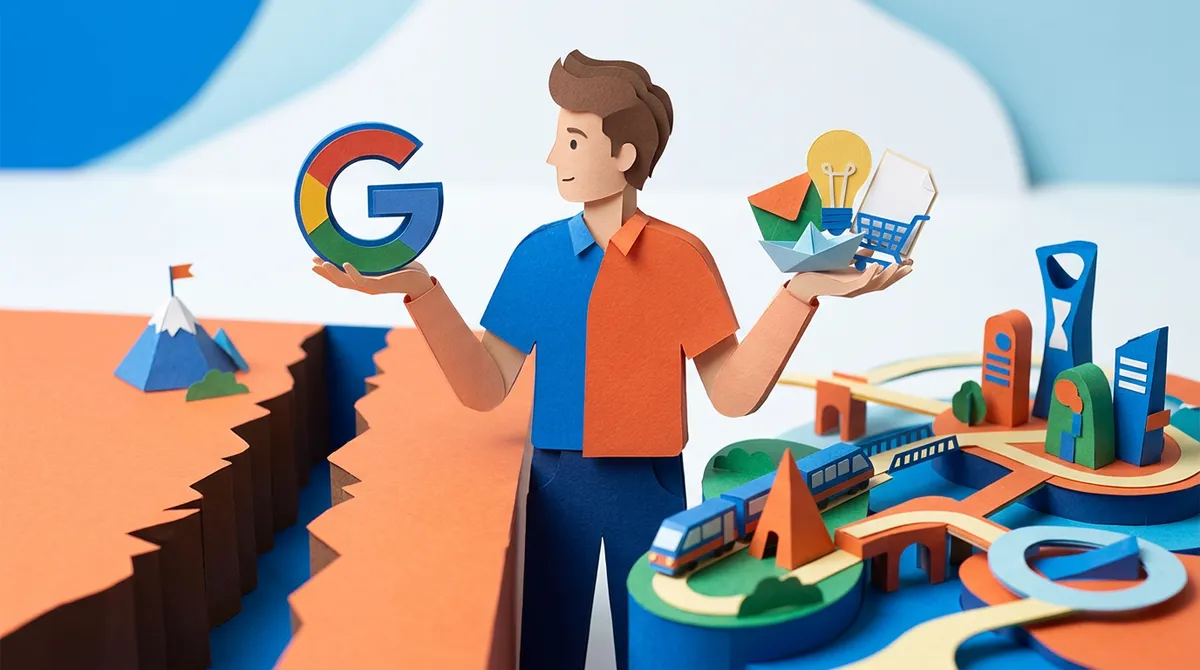
Google is still the biggest search engine. But it’s no longer the only one that matters. In 2026, millions of people get their answers from ChatGPT, Perplexity, Claude, Grok, Copilot, and Gemini. Businesses that only optimize for Google are leaving serious traffic on the table.
Many older SEO content platforms were built before AI search existed. They don’t account for multi-platform visibility. They focus on meta tags, keyword density, and backlinks — but they don’t help you show up inside AI-generated answers.
When evaluating an AI search platform, ask these questions:
- Does it optimize for AI engines, not just Google?
- Does it track AI Overview mentions and brand citations?
- Does it structure content for Perplexity and ChatGPT compatibility?
- Does it support Generative Engine Optimization workflows?
If the answer is no, it might be time to upgrade. You can learn how to get featured in AI Overviews to understand what this looks like in practice.

Mistake 4: Skipping Content Automation and Doing Everything Manually
This is one of the biggest time wasters in SEO today. Teams spend hours doing keyword research, writing briefs, editing drafts, and manually publishing articles. All of that effort could be automated — and automated well.
Modern AI search platforms can handle the entire content pipeline. That includes keyword discovery, article generation, optimization, and publishing. Doing this manually is not just slow — it’s inconsistent. And consistency is one of the most important factors in compounding SEO growth.
Here’s what a fully automated SEO workflow looks like:
- Platform discovers high-opportunity keywords automatically
- Articles are generated daily based on your content calendar
- Each article is optimized for both Google and AI search engines
- Content is published directly to your website — no copy-pasting
- Performance is tracked and improvements are suggested automatically
This kind of automation is what separates fast-growing websites from those that stagnate. Daily blog posting strategies like this one prove that consistency beats one-off efforts every time.
Mistake 5: Underestimating the Cost of Poor Content at Scale
Some businesses try to cut costs by generating lots of thin, low-quality content quickly. They figure more is better. But AI search engines are getting very good at detecting shallow content. And Google’s quality guidelines are stricter than ever.
Publishing weak content at scale can actually hurt your rankings. It damages your site’s E-E-A-T signals — Experience, Expertise, Authoritativeness, and Trustworthiness. These signals matter a lot to both Google and AI search platforms. You can read more about this in the Search Quality Rater Guidelines.
Here’s a simple comparison to keep in mind:
| Content Type | Typical Length | AI Search Visibility | SEO Impact |
|---|---|---|---|
| Thin / Low Quality | 300–700 words | Very Low | Negative |
| Standard SEO Article | 1,000–1,500 words | Low to Medium | Moderate |
| Long-Form Optimized Content | 3,000+ words | High | Strong |
The sweet spot is long-form content that’s genuinely helpful and well-structured. That’s what AI search platforms reward. It doesn’t have to cost a fortune — platforms like SEO Rocket starting at $99/month can produce 30 long-form, AI-optimized articles per month at around $3 per article.
Mistake 6: Not Tracking AI Search Visibility
You can’t improve what you don’t measure. Yet many teams track their Google rankings carefully but have no idea how they’re performing in AI search engines. Are you being cited in ChatGPT responses? Are your articles showing up in Google AI Overviews? Most businesses have no clue.
This is a major blind spot. In 2026, AI search visibility is becoming as important as traditional rankings. Specialized tracking helps you understand where your brand shows up, which topics trigger your mentions, and how to improve your presence over time.
What good AI search visibility tracking covers:
- Brand mentions inside AI-generated answers
- Google AI Overview appearances for target keywords
- Topic areas where your content is being cited
- Gaps where competitors are mentioned but you’re not
- Predictive traffic forecasting based on content performance
If you want to go deeper on this, this guide on improving AI search visibility breaks it down clearly.
Mistake 7: Choosing Too Many Tools Instead of One Integrated Platform
This is a very common trap. You start with one keyword tool. Then you add a writing tool. Then an optimization plugin. Then a scheduling tool. Then a publishing integration. Before long, you have five or six tools that don’t talk to each other — and a workflow that’s more complicated than ever.
Fragmented tools create fragmented results. Data gets lost between platforms. Workflows break down. Team members get confused about which tool does what. And you end up paying more for less.
A better approach is to use one integrated AI search platform that handles everything from start to finish. Here’s what that integrated workflow looks like vs. a fragmented one:
| Task | Fragmented Tool Stack | Integrated AI Platform |
|---|---|---|
| Keyword Research | Separate tool, manual export | Built-in, automatic |
| Content Writing | Another tool, manual brief | Auto-generated daily |
| SEO Optimization | Third tool, manual checklist | Automatic scoring and fixes |
| Publishing | Manual copy-paste to CMS | Direct publish to your site |
| Performance Tracking | Analytics tool, manual review | Integrated dashboard |
The integrated approach saves time, reduces errors, and produces more consistent results. If you’re curious about what the right tools look like, this comparison of AI writing tools for 2026 is worth a read.
What a Smart AI Search Platform Strategy Looks Like in 2026
Now that you know the mistakes to avoid, let’s talk about what a smart strategy looks like. It doesn’t have to be complicated. In fact, the best SEO content systems are simple, consistent, and automated.
Here’s a proven framework for using AI search platforms effectively:
- Start with keyword intelligence. Use a platform with built-in keyword research. Look for real search volume, intent signals, and low-competition opportunities.
- Build a content calendar. Plan your articles weeks in advance. Aim for daily publishing to build compounding SEO momentum.
- Generate long-form, structured content. Each article should be 3,000+ words, well-organized, and optimized for both Google and AI search engines.
- Automate publishing. Connect your platform directly to WordPress, Webflow, Shopify, or Wix. Eliminate manual steps.
- Track performance holistically. Monitor Google rankings AND AI search visibility. Adjust your strategy based on what’s working.
For a deeper dive into effective content writing for SEO, the SEO Content Writing Beginner’s Guide for 2026 is a great starting point. And if you want to see examples of what great automated SEO content looks like, check out SEO Rocket’s writing examples.
You can also read our complete guide on AI blog writing to understand the full picture. We cover everything from setup to scaling your content operation effectively.
How SEO Rocket Solves These Problems Automatically
SEO Rocket is designed to eliminate every mistake on this list. It’s an all-in-one AI search platform built for businesses, marketers, and agencies who want real SEO results without the manual work.
Here’s what you get out of the box:
- Built-in keyword research with live SEO data and opportunity scoring
- A visual content calendar that fills itself with keyword opportunities
- Daily generation of 3,000+ word articles optimized for Google AND AI engines
- Direct publishing to WordPress, Webflow, Shopify, and Wix
- Auto-generated metadata, internal links, images, and business mentions
- Real-time SEO scoring with automated fix suggestions
- GEO optimization so your content appears in AI-generated answers
- Agency plan supporting 10 clients and 300 articles per month
Setup takes under 10 minutes. After that, SEO Rocket handles everything. One article per day goes live on your site — consistently, automatically, and at a cost of roughly $3 per article. You can explore the full how it works page to see the system in action.
And if you want to see what others are saying about it, check out the SEO Rocket reviews from real users who’ve seen their organic traffic grow month after month. We also keep a public Changelog so you always know what’s new, and a Roadmap showing what’s coming next.
Final Thoughts
AI search platforms are one of the most powerful tools available for SEO content automation in 2026. But they only work if you use them correctly. Avoiding the seven mistakes we covered here will put you well ahead of most competitors.
The key takeaways are simple. Don’t treat AI platforms like old-school SEO tools. Don’t ignore GEO. Don’t pick tools that only focus on Google. Don’t do everything manually. Don’t publish thin content at scale. Don’t skip AI visibility tracking. And don’t juggle five different tools when one integrated system can do it all.
The businesses that grow the fastest in 2026 will be the ones that automate intelligently, publish consistently, and optimize for every search engine — not just Google. Ready to get started? Create your free SEO Rocket account today and see how easy consistent, automated SEO can be.
FAQs
Q: What are the best AI search platforms for SEO content automation in 2026?
A: The best AI search platforms in 2026 are ones that handle keyword research, content generation, optimization, and publishing all in one place. Look for platforms that optimize for both Google and AI engines like ChatGPT and Perplexity — that multi-engine visibility is a game-changer for organic traffic growth!
Q: What is Generative Engine Optimization (GEO) and why does it matter?
A: GEO is the practice of optimizing your content so AI-powered search engines like ChatGPT, Perplexity, and Gemini cite and recommend it in their answers. It matters because AI search is growing fast in 2026, and showing up inside AI-generated responses can drive significant traffic to your site — traffic that traditional SEO alone won’t capture.
Q: How can AI search platforms improve my content rankings?
A: AI search platforms improve rankings by automating keyword discovery, generating long-form structured content, and optimizing every article for both Google and AI engines. Consistent daily publishing — which these platforms enable — is one of the strongest signals you can send to search engines that your site is active and authoritative.
Q: Can small businesses and agencies use AI search platforms effectively?
A: Absolutely! AI search platforms are actually perfect for small businesses and agencies because they dramatically reduce the manual work involved in SEO. With the right platform, even a one-person team can publish daily optimized articles and compete with much larger brands — and that’s pretty exciting!
Q: How do I track my brand’s visibility in Google AI Overviews and other AI engines?
A: Tracking AI search visibility involves monitoring where your brand is cited in AI-generated answers, which topics trigger your mentions, and which keywords lead to AI Overview appearances. Some integrated platforms include this tracking natively, while others require dedicated monitoring tools — either way, it’s worth adding to your regular SEO reporting in 2026.