
Key Takeaways
-
Pack content with specific facts, statistics, and named sources—research shows high fact density can boost AI visibility by up to 40% for lower-ranked websites.
-
Write long-form, in-depth content of at least 1,500 words (3,000+ for competitive topics), as short articles rarely get cited by ChatGPT.
-
Allow GPTBot access to your site by checking robots.txt, use server-side rendering, and implement schema markup—technical barriers prevent AI from reading and citing your content.
-
Structure content with clear H2/H3 headers and FAQ sections to help AI models parse information easily and attribute it to your source.
-
Publish consistently (daily is ideal) to signal authority and freshness—active sites with regular updates are more likely to be cited by ChatGPT.
-
Build E-E-A-T signals through author credentials, authoritative backlinks, positive reviews, and regular content updates to establish credibility with AI models.
ChatGPT handles 66 million search-like prompts every single day. That’s a massive audience you could be reaching — if your content gets cited. In 2026, showing up in AI-generated answers is just as important as ranking on Google’s first page. The rules of the game have changed, and smart content creators are already adapting.
The good news? Optimizing content for ChatGPT citations isn’t as complicated as it sounds. It’s a mix of good writing habits, smart structure, and a few technical tweaks. Whether you run a small business, manage a content team, or handle SEO for clients, this guide breaks it all down into simple, actionable steps. Let’s dive in.

What Is Generative Engine Optimization (GEO)?
Before we get into the tips, let’s quickly cover the basics. Generative Engine Optimization (GEO) is the practice of structuring content so AI tools like ChatGPT are more likely to cite it in their responses. It’s different from traditional SEO, but they work together beautifully.
Traditional SEO focuses on ranking in Google’s blue links. GEO focuses on getting your content referenced inside AI-generated answers. Both matter in 2026. In fact, improving your AI search visibility is now one of the highest-impact moves any marketer can make.
|
Traditional SEO |
Generative Engine Optimization (GEO) |
|---|---|
|
Ranks in Google blue links |
Gets cited in AI-generated answers |
|
Focus: keyword density |
Focus: fact density & authority |
|
Optimizes for crawlers |
Optimizes for AI language models |
|
Measures page rank |
Measures brand mentions in AI responses |
|
Content length varies |
Longer, structured content performs better |

Why ChatGPT Citations Matter for Your Business
Gartner predicts a 25% drop in traditional search volume by 2026 due to AI tools. That’s a big shift. If you’re only optimizing for Google, you’re missing a growing chunk of your potential audience.
When ChatGPT cites your content, it’s essentially recommending your brand to millions of users. That builds trust, drives traffic, and positions you as an authority. For agencies and content managers handling multiple clients, this is a competitive edge you don’t want to overlook. You can learn how to get featured in AI overviews to start capturing this traffic today.
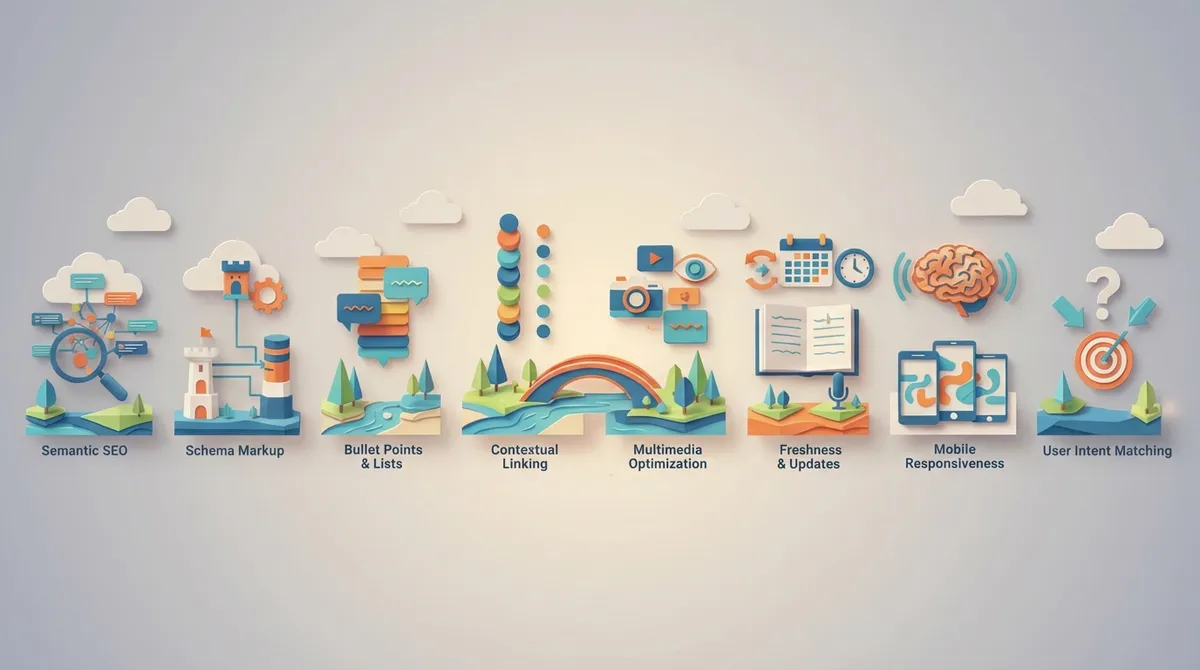
11 Proven Ways to Optimize Content for ChatGPT Citations
1. Pack Your Content with Facts and Statistics
Fact density is one of the biggest factors in AI citations. Research shows that packing content with specific statistics, citations, and data can boost AI visibility by up to 40% for lower-ranked websites. ChatGPT loves content that is informative and specific.
Instead of writing vague claims, include real numbers. Mention study results, percentages, and named sources. Every solid fact you add makes your content more citation-worthy.
-
Use real data from industry studies and reports
-
Cite well-known sources like Gartner, HubSpot, or Google
-
Add year-specific statistics to show freshness
-
Include original research or survey results when possible
2. Write with Clear Structure and Headers
ChatGPT favors content that is easy to scan and understand. Clear H2 and H3 headings help AI models parse your content quickly. Think of your headers as a table of contents for the AI.
Use descriptive headings that answer specific questions. Break long sections into smaller chunks. This makes it much easier for AI to pull out relevant information and attribute it to your source.
3. Use Schema Markup on Your Pages
Schema markup is structured data that tells search engines and AI crawlers exactly what your content is about. Adding schema to your articles, FAQs, and product pages improves your chances of getting cited significantly.
FAQ schema is especially powerful. When ChatGPT pulls answers to common questions, pages with FAQ schema are easier to read and reference. If you’re using an automated content platform, look for one that adds schema markup automatically. Explore SEO Rocket’s features to see how it handles this out of the box.
4. Write Long-Form, In-Depth Content
Short posts rarely get cited by AI. ChatGPT prefers comprehensive content that covers a topic thoroughly. Aim for articles that are at least 1,500 words, with 3,000+ words being the sweet spot for competitive topics.
Long-form content signals authority. It also gives AI more material to work with when generating answers. If you’re publishing short, thin articles, it’s time to rethink your strategy. Check out this guide on SEO content writing for 2026 to sharpen your approach.
5. Secure Placements in Authoritative Lists and Directories
ChatGPT’s recommendations often mirror what appears in top-ranked Google list articles. Getting your brand mentioned in these lists increases your citation likelihood significantly.
Here’s how to do it:
-
Search for “best [your product/service]” list articles in your niche
-
Reach out to the publishers to request inclusion
-
Consider paid directory listings on high-authority sites
-
Publish your own SEO-optimized list articles featuring your brand
-
Build relationships with review sites and industry publications
6. Implement Agent-Ready Technical SEO
AI crawlers like GPTBot need to access your content smoothly. If your site has technical barriers, AI models can’t read your content — and can’t cite it. Here are the key technical elements to check:
-
Server-Side Rendering (SSR): Ensures your content loads fully for bots
-
Descriptive image names: Helps AI understand your visual content
-
Short, keyword-rich URLs: Easier for AI to categorize your pages
-
Optimized robots.txt: Make sure GPTBot isn’t blocked from your site
-
Fast page load speed: Reduces crawl budget waste
Check your robots.txt file right now. Many site owners accidentally block AI crawlers without realizing it. Allowing GPTBot to access your site is a quick win that costs nothing.
7. Build and Monitor Your Online Reputation
ChatGPT incorporates online reputation signals into its recommendations. If your brand has strong reviews, positive mentions, and visible achievements, you’re more likely to get cited.
Actively publicize your wins. Share award recognition, client success stories, and growth milestones. Encourage customers to leave reviews on Google and industry platforms. Monitor your brand mentions regularly using tools like Google Alerts.
8. Use Conversational, Question-Based Content
ChatGPT is a conversational tool. It responds to questions. So your content should answer questions directly. Structure sections to match how people actually ask questions in prompts.
For example, instead of titling a section “Benefits of Automation,” try “What Are the Benefits of Content Automation?” This mirrors how users phrase prompts, making your content more likely to match AI queries.
-
Research common questions in your niche using tools like AnswerThePublic
-
Create dedicated sections that answer each question clearly
-
Add an FAQ section to every major article
-
Use natural, conversational language in your answers
9. Establish E-E-A-T Signals Across Your Site
Google’s Search Quality Rater Guidelines emphasize Experience, Expertise, Authoritativeness, and Trustworthiness (E-E-A-T). These same signals influence what ChatGPT considers a credible source.
Build your E-E-A-T signals by adding author bios with credentials, linking to authoritative external sources, earning backlinks from reputable sites, and keeping your content regularly updated. A well-maintained, credible website is much more likely to be cited by AI.
10. Optimize Metadata for AI Readability
Your meta titles and descriptions aren’t just for Google. AI crawlers use them to understand what a page is about before reading the full content. Write clear, descriptive metadata that includes your main topic and key terms.
Keep meta titles under 60 characters. Keep meta descriptions under 160 characters. Make every word count. If you’re managing a large site, automating this process saves enormous time. Platforms that auto-generate optimized metadata — like SEO Rocket’s automated system — ensure every page is AI-ready from day one.
11. Publish Content Consistently Every Day
Consistency is a powerful signal. Sites that publish fresh, high-quality content regularly are viewed as active and authoritative. ChatGPT is more likely to cite content from sites that are frequently updated and consistently relevant.
Daily publishing is the gold standard. But manually writing and publishing an article every day is exhausting — especially for small teams. This is where daily blog posting strategies and automation tools become game changers.
How SEO Content Automation Makes GEO Easier
Here’s the honest truth: manually optimizing every article for ChatGPT citations is time-consuming. You need fact density, schema markup, long-form structure, optimized metadata, and consistent publishing — all at once, every day.
That’s exactly why SEO content automation tools exist. Platforms like SEO Rocket generate 3,000+ word, fully optimized articles daily — structured specifically for both Google and AI search engines like ChatGPT, Perplexity, and Gemini. Setup takes under 10 minutes, and the system handles keyword research, writing, optimization, and publishing automatically.
For small agencies managing multiple clients, this kind of automation is a lifesaver. Instead of spending hours on each article, you can focus on strategy while the system handles execution. You can explore the best AI writing tools for 2026 to see how automation stacks up.
Key Takeaways: What Matters Most for ChatGPT Citations
Let’s recap the most important points from this guide:
-
Fact density matters more than keyword density — pack your content with real data
-
Structure is everything — use clear headers, bullets, and FAQ sections
-
Technical SEO enables AI access — allow GPTBot, use SSR, and optimize URLs
-
Reputation drives citations — build reviews, mentions, and brand authority
-
Consistency compounds — daily publishing signals authority over time
-
Long-form wins — short content rarely earns AI citations
The search landscape is shifting fast. Gartner’s prediction of a 25% drop in traditional search by 2026 is a wake-up call. Businesses that adapt to AI search now will have a massive head start. Those that don’t risk becoming invisible. For a deeper dive into the tools that make this easier, read our blog for the latest strategies and insights.
Start Optimizing Your Content for AI Citations Today
The 11 strategies in this guide give you a clear roadmap. Start with the quick wins — check your robots.txt, add FAQ sections to existing articles, and improve your fact density. Then work toward bigger changes like consistent daily publishing and schema markup implementation.
If you want to fast-track the whole process, automation is your best friend. SEO Rocket generates fully optimized, citation-ready articles daily for just $99/month — that’s roughly $3 per article. It’s one of the most cost-efficient ways to build AI search visibility at scale.
Ready to make your content impossible for ChatGPT to ignore? Start your free 3-day trial with SEO Rocket and see how automated, AI-optimized content can transform your organic traffic in 2026.
FAQs
Q: What is Generative Engine Optimization (GEO) and how is it different from SEO?
A: GEO is the practice of optimizing content so AI tools like ChatGPT are more likely to cite it in their responses. While traditional SEO focuses on ranking in Google’s search results, GEO focuses on earning brand mentions inside AI-generated answers — both are important strategies in 2026’s evolving search landscape!
Q: How does fact density help my content get cited by ChatGPT?
A: ChatGPT favors content packed with specific statistics, named sources, and verifiable data. Research shows that high fact density can boost AI visibility by up to 40% for lower-ranked sites. The more concrete and credible your information, the more useful it is for AI to reference.
Q: Can AI-generated content rank in ChatGPT responses?
A: Absolutely — as long as it’s structured well, factually rich, and published on an authoritative site! AI-generated content that includes clear headers, schema markup, solid data, and consistent publishing can absolutely earn ChatGPT citations. The key is quality and structure, not whether a human or AI wrote it.
Q: What technical SEO changes do I need to allow AI crawlers like GPTBot?
A: The most important step is checking your robots.txt file to make sure GPTBot isn’t accidentally blocked. Beyond that, using server-side rendering, short keyword-rich URLs, descriptive image names, and fast load speeds all help AI crawlers access and index your content properly.
Q: How often should I publish content to improve my chances of ChatGPT citations?
A: Daily publishing is the gold standard for building AI search authority. Consistent fresh content signals that your site is active and relevant, which makes AI models more likely to trust and cite your pages. If daily publishing sounds overwhelming, SEO content automation tools can handle this for you automatically!