Key Takeaways
-
Agentic AI systems now autonomously manage entire content workflows, from research to publication, dramatically reducing manual marketing tasks.
-
Real-time trend analysis enables proactive content ideation, with AI continuously monitoring data sources to identify emerging opportunities before they peak.
-
Enterprise content management becomes critical, using proprietary data to train specialized AI models that ensure brand consistency and accuracy.
-
Small language models offer domain-specific content generation, providing more accurate and cost-effective solutions for specialized industries.
-
Multi-agent dashboards orchestrate AI content creation, allowing seamless coordination across different specialized agents while maintaining human oversight.
-
Privacy-first AI content automation leverages first-party data and contextual signals to create personalized experiences without invasive tracking.
AI content automation has evolved from simple text generation tools into sophisticated agentic systems that autonomously manage entire content workflows. In 2026, businesses are witnessing a fundamental shift where AI doesn’t just assist with content creation—it proactively analyzes trends, generates drafts, optimizes for search engines, and publishes content across multiple channels. This transformation is enabling marketing teams to scale personalized content while maintaining brand consistency and addressing critical privacy concerns. For small SEO agencies, in-house marketing teams, and content managers, understanding these emerging trends is essential to staying competitive in an increasingly automated digital landscape.
The stakes have never been higher. With 58% of marketing teams already using generative AI to accelerate content production, and 72% of organizations citing regulatory compliance as a defining challenge, the path forward requires both technological adoption and strategic oversight. This article explores 11 transformative trends in AI content automation that are reshaping how businesses create, manage, and distribute content in 2026.
1. Agentic AI Systems Take Over Multi-Step Content Tasks
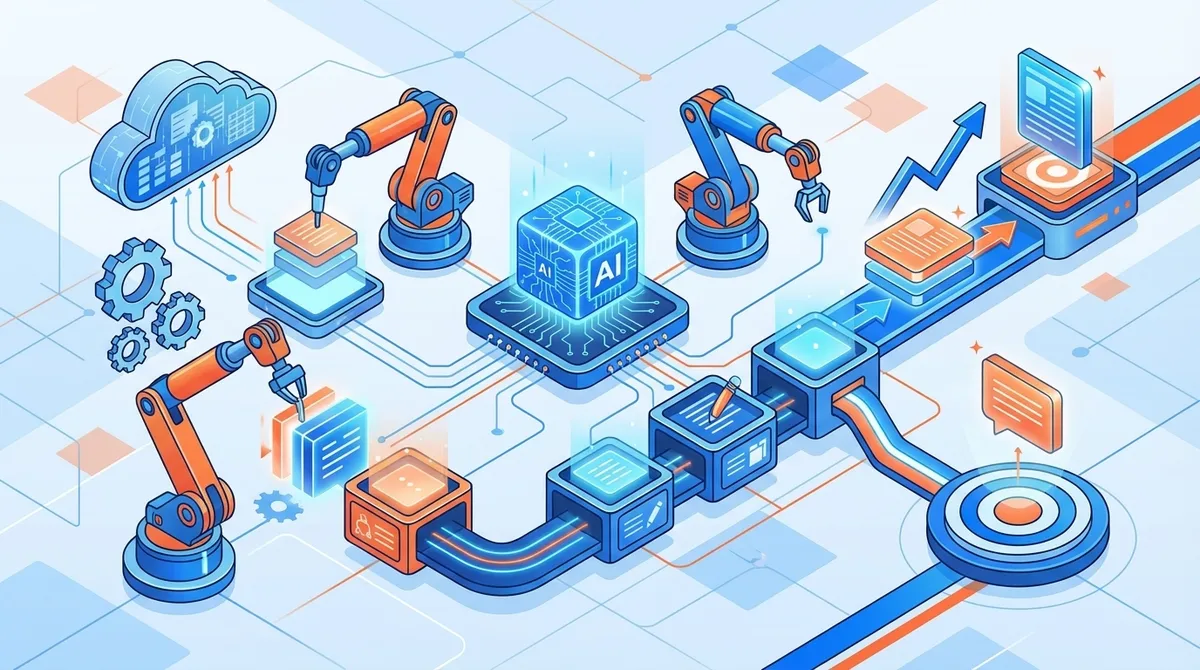
The most significant shift in AI content automation is the emergence of agentic AI systems that function as autonomous team members rather than passive tools. Unlike previous generations of AI that required constant human prompting, these systems independently complete complex, multi-step workflows—from competitor analysis and topic ideation to drafting, editing, and publishing.
Agentic AI operates with goal-oriented intelligence, making decisions based on predefined objectives and real-time data. For example, an agentic system can monitor your content calendar, identify gaps in coverage, research trending topics in your niche, generate outlines, produce drafts, optimize for SEO, and schedule publication—all without human intervention. This represents a fundamental departure from traditional AI writing assistants that simply generate text based on prompts.
For digital marketing consultants and e-commerce SEO specialists, this means dramatically reduced time spent on routine content tasks. Instead of spending hours researching keywords and crafting articles, marketers can focus on strategic planning and creative direction while AI handles execution. Platforms like SEO Rocket exemplify this shift by automating the entire content lifecycle—from keyword discovery to daily publishing—enabling businesses to produce 3,000+ word SEO-optimized articles without manual intervention.

2. Real-Time Trend Analysis Powers Proactive Content Ideation
AI content automation in 2026 excels at proactive trend spotting through continuous analysis of search volume data, social media sentiment, and content performance metrics. These systems don’t wait for marketers to identify topics; they autonomously detect emerging opportunities and recommend content strategies before trends peak.
This capability fundamentally changes content planning. Instead of reactive quarterly content calendars, businesses can now deploy AI systems that monitor hundreds of data sources simultaneously, identifying micro-trends and seasonal patterns that human teams might miss. The automation extends to gap analysis, where AI identifies underserved topics in your content library and prioritizes creation based on ranking potential and competitive advantage.
| Traditional Content Planning | AI-Powered Trend Analysis |
|---|---|
| Quarterly brainstorming sessions | Continuous 24/7 monitoring |
| Manual keyword research | Automated opportunity discovery |
| Reactive to market changes | Proactive trend prediction |
| Limited data sources | Multi-channel data integration |
| Human bias in topic selection | Data-driven prioritization |
For small SEO agencies managing multiple clients, this automation delivers competitive intelligence at scale. AI systems can track competitor content strategies across dozens of domains, alerting teams to gaps and opportunities that can be exploited quickly with automated content generation.

3. Enterprise Content Management Becomes AI’s Foundation
As AI systems become more sophisticated, the quality of enterprise content management directly determines their accuracy and effectiveness. In 2026, organizations are discovering that proprietary data—internal documents, product specifications, brand guidelines, and historical performance data—forms the essential foundation for reliable AI content automation.
Enterprise content serves as the training ground for small language models and provides context for retrieval-augmented generation (RAG) systems. This approach significantly reduces AI hallucinations by grounding outputs in verified, company-specific information. When AI generates content about your products or services, it references your actual documentation rather than making assumptions based on general internet knowledge.
For content managers responsible for large websites, this integration ensures brand consistency across thousands of pages. AI systems trained on your enterprise content automatically adopt your tone, terminology, and messaging frameworks, eliminating the inconsistency that plagued earlier generative AI tools. The governance layer ensures that sensitive information remains protected while still enabling AI to produce accurate, compliant content.

4. Small Language Models Deliver Specialized Performance
While large language models dominate headlines, small language models (SLMs) are proving more practical for enterprise AI content automation. These domain-specific models are trained on focused datasets related to particular industries or functions, delivering higher accuracy with lower computational costs and faster response times.
SLMs excel in scenarios requiring specialized knowledge—technical documentation, product descriptions, industry-specific blog content, and compliance-sensitive communications. By training on curated enterprise content rather than the entire internet, these models produce outputs that align closely with organizational standards and technical accuracy requirements.
Key advantages of small language models include:
- Reduced infrastructure costs compared to large model APIs
- Faster inference times enabling real-time content generation
- Greater control over model behavior and outputs
- Easier fine-tuning for specific brand voices and requirements
- Lower risk of generating off-brand or inaccurate content
For small business owners with limited technical resources, platforms that leverage SLMs provide enterprise-grade AI capabilities without the complexity or cost of managing large model infrastructure. This democratization of AI technology levels the playing field, allowing smaller organizations to compete with larger enterprises in content production velocity.
5. Multi-Agent Dashboards Enable Orchestrated Automation
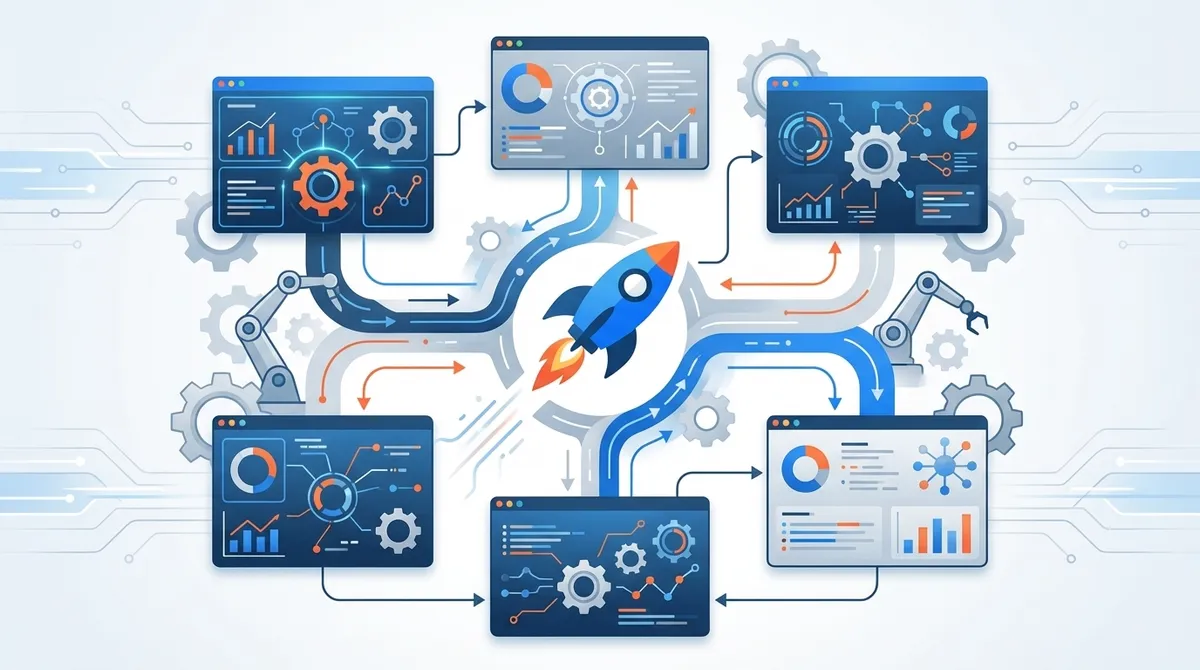
The complexity of modern content workflows requires coordination across multiple specialized AI agents, each handling specific tasks. Multi-agent dashboards have emerged as control planes that orchestrate these systems, providing oversight while maintaining automation efficiency.
These dashboards allow marketing teams to monitor AI agents operating across different tools—content management systems, SEO platforms, social media schedulers, and analytics tools. Each agent specializes in its domain: one handles keyword research, another generates drafts, a third optimizes for search engines, and yet another manages publishing schedules. The dashboard provides visibility into their activities and allows human operators to intervene when necessary.
This orchestration model mirrors how human teams operate, with specialized roles working toward common goals. The difference is speed and scale—AI agents don’t require coordination meetings or hand-offs. They communicate through shared data structures and execute tasks based on predefined workflows and dynamic priorities.
In-house marketing teams benefit from this transparency, as they can track content production across all stages without micromanaging individual tasks. The dashboard surfaces exceptions requiring human judgment while allowing routine work to proceed automatically. Advanced platforms integrate these multi-agent systems into unified interfaces that simplify oversight without sacrificing automation depth.

6. Privacy-First Personalization Reshapes Content Strategy
As privacy regulations tighten globally and third-party cookies disappear, AI content automation is pivoting toward privacy-first personalization strategies built on first-party data and explicit consent. This shift requires new approaches to dynamic content generation that respect user privacy while maintaining relevance.
Modern AI systems create personalized content experiences using contextual signals rather than invasive tracking. They analyze on-page behavior, explicitly provided preferences, and aggregated cohort data to tailor content without identifying individual users. This consent-driven automation ensures compliance with regulations like GDPR and CCPA while still delivering customized experiences that improve engagement.
The technical implementation involves edge computing and federated learning approaches where personalization happens closer to the user without centralizing sensitive data. AI models generate content variations based on general patterns rather than personal profiles, maintaining privacy while optimizing for conversion and engagement.
| Old Personalization Model | Privacy-First AI Automation |
|---|---|
| Third-party cookie tracking | First-party data and consent |
| Individual user profiles | Aggregated cohort patterns |
| Centralized data collection | Edge processing and federation |
| Assumed preferences | Explicit user choices |
| Compliance challenges | Built-in regulatory adherence |
7. Generative AI Amplifies Human Creativity in Marketing
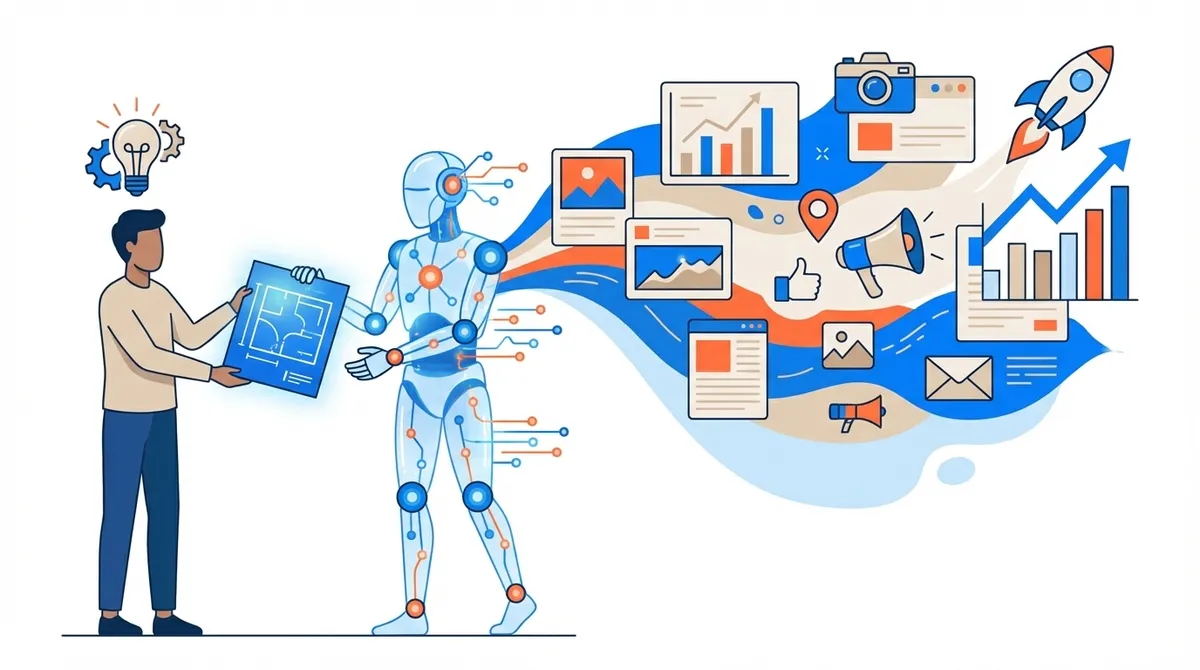
Rather than replacing marketers, AI content automation in 2026 amplifies human creativity by handling execution while humans focus on ideation and strategy. This shift positions marketers as “idea directors” who guide AI systems in producing content that aligns with strategic objectives and brand vision.
With 58% of marketing teams already using generative AI to accelerate content creation, the competitive advantage has shifted from production capacity to creative direction. The best results come from combining human understanding of audience psychology, cultural context, and brand storytelling with AI’s ability to generate, test, and optimize variations at scale.
Multimodal generation capabilities enable this creativity to extend beyond text into video, audio, interactive narratives, and immersive experiences. AI systems can now produce complete multimedia content packages—blog posts with embedded videos, podcasts with automatically generated transcripts and show notes, infographics with data visualizations, and social media content optimized for each platform’s unique requirements.
For digital marketing consultants, this amplification effect means delivering higher value to clients through creative strategy rather than production labor. AI handles the time-consuming work of asset creation, allowing consultants to focus on the strategic thinking that truly differentiates their services. Solutions offering comprehensive automation enable consultants to scale their impact without proportionally scaling their team size.
8. SEO Optimization Becomes Real-Time and Continuous
AI content automation has transformed SEO from a periodic optimization task into a continuous, real-time process embedded throughout the content lifecycle. Modern systems analyze search engine algorithm updates, competitor movements, and ranking performance to automatically adjust content strategies without waiting for monthly reviews.
This real-time optimization includes automatic metadata refinement, internal linking adjustments, content refreshes for declining pages, and opportunity identification for featured snippets. AI systems monitor hundreds of ranking factors simultaneously, making micro-adjustments that compound into significant traffic gains over time.
The automation extends to technical SEO elements—structured data markup, XML sitemap updates, canonical tag management, and mobile optimization checks. These technical requirements, which traditionally consumed significant developer resources, now happen automatically as AI systems publish and manage content.
Key benefits of continuous AI-powered SEO optimization:
- Faster response to algorithm updates and ranking changes
- Consistent application of best practices across all content
- Identification of optimization opportunities humans might overlook
- Reduction in SEO maintenance overhead and technical debt
- Improved ranking velocity through compounding daily improvements
For e-commerce SEO specialists managing thousands of product pages, this continuous optimization is transformative. AI systems can audit, optimize, and refresh product content at scale, ensuring every page maintains maximum ranking potential without manual intervention. The result is sustained organic traffic growth that compounds over time as optimization improvements accumulate.
9. AI Search Engine Visibility Becomes Critical
Beyond traditional search engines, AI content automation in 2026 optimizes for visibility in AI-powered platforms like ChatGPT, Perplexity, Claude, Gemini, Copilot, and Grok. These systems represent a new content distribution paradigm where AI models reference and cite content as sources within conversational responses.
Optimizing for AI search engines requires different structural approaches than traditional SEO. Content must be authoritative, well-structured with clear headings, fact-based with proper citations, and formatted to facilitate extraction by AI models. The goal is positioning your content as a trusted source that AI systems reference when answering user queries in your domain.
This optimization includes implementing structured data that AI models can parse easily, providing clear attribution information, maintaining factual accuracy with cited sources, and organizing content in logical hierarchies that map to common question patterns. The payoff is appearing within AI-generated answers, driving traffic from an entirely new channel that traditional SEO doesn’t address.
Small SEO agencies that understand this shift can differentiate their services by offering AI search optimization alongside traditional SEO. As more users turn to AI assistants for information discovery, visibility in these platforms becomes increasingly valuable. Content automation systems that optimize for both Google and AI search engines provide comprehensive visibility across the modern search landscape.
10. Regulatory Compliance Automation Addresses Growing Complexity
With 72% of organizations citing regulatory compliance and data sovereignty as defining AI challenges for 2026, automated compliance checking has become essential for content automation systems. These tools scan generated content for potential legal issues, privacy violations, copyright concerns, and industry-specific regulatory requirements before publication.
Compliance automation includes checking for prohibited claims in regulated industries like healthcare and finance, verifying accessibility standards like WCAG compliance, detecting potential trademark or copyright infringements, and ensuring adherence to advertising disclosure requirements. These checks happen automatically during the content generation process, flagging issues for human review before publication.
The complexity of global operations adds another layer—content must comply with regulations across multiple jurisdictions, each with unique requirements for data handling, advertising standards, and consumer protection. AI systems can maintain jurisdiction-specific rule sets and apply appropriate checks based on target audiences and publication locations.
| Compliance Challenge | AI Automation Solution |
|---|---|
| Privacy regulations (GDPR, CCPA) | Automated data handling checks |
| Industry-specific claims restrictions | Content scanning for prohibited language |
| Accessibility requirements | WCAG compliance verification |
| Copyright and trademark risks | Automated infringement detection |
| Multi-jurisdiction operations | Location-specific rule application |
11. Platform Integration Creates Seamless Publishing Workflows
The final trend consolidating AI content automation in 2026 is deep integration with content management systems, enabling truly seamless publishing workflows. Rather than generating content that requires manual copying and formatting, modern AI systems connect directly to WordPress, Webflow, Shopify, Wix, and other platforms to publish automatically.
These integrations handle all aspects of publication—formatting content according to site templates, uploading and optimizing images, configuring metadata and SEO settings, establishing internal linking structures, and scheduling publication for optimal timing. The result is content that appears on your website exactly as intended, without human intervention in the publishing process.
Advanced integrations also enable bi-directional communication, where AI systems monitor published content performance and use that data to refine future content strategies. This feedback loop creates continuous improvement, with each published piece informing the optimization of subsequent content based on real engagement and conversion data.
For content managers juggling multiple websites or blog properties, these integrations eliminate the bottleneck of manual publishing. Content flows automatically from ideation through optimization to publication, with human oversight focused on strategy and quality assurance rather than execution mechanics. The efficiency gains are substantial—what once required hours of formatting and uploading now happens instantly and automatically.
SEO Rocket exemplifies this integrated approach by connecting directly to major CMS platforms and handling the entire workflow from keyword discovery through daily publication. This level of integration represents the future of content automation—systems that operate as invisible infrastructure, consistently producing and publishing optimized content without requiring constant attention.
Conclusion: The Strategic Imperative of AI Content Automation
AI content automation in 2026 has matured from experimental technology into strategic infrastructure that determines competitive positioning in digital marketing. The trends outlined above—from agentic systems and enterprise content foundations to privacy-first personalization and seamless platform integration—collectively represent a paradigm shift in how businesses approach content creation and distribution.
The competitive implications are clear: organizations that successfully implement comprehensive AI content automation gain substantial advantages in production velocity, SEO performance, and resource efficiency. With costs as low as $3 per long-form article and systems capable of daily publication without manual intervention, the economic case for automation is compelling. More importantly, the quality and consistency advantages ensure that automated content performs as well or better than manually created alternatives.
For small SEO agencies, in-house marketing teams, content managers, digital marketing consultants, e-commerce SEO specialists, and small business owners, the question is no longer whether to adopt AI content automation, but how quickly you can implement systems that deliver these capabilities. The compounding nature of SEO rewards early adopters who begin building content libraries and establishing topical authority before competitors recognize the opportunity.
The strategic approach requires selecting platforms that offer comprehensive automation rather than piecemeal tools requiring manual coordination. Integration depth, optimization sophistication, and true end-to-end automation distinguish transformative solutions from incremental improvements. As you evaluate options, prioritize systems that eliminate manual work while maintaining quality and brand consistency—the hallmarks of mature AI content automation.
Ready to experience the future of content automation? Start your SEO Rocket trial today and discover how automated daily publishing of 3,000+ word SEO-optimized articles can transform your organic traffic growth. With setup taking under 10 minutes and no ongoing maintenance required, you can begin building your automated content engine immediately and start seeing results within weeks.
FAQs
Q: What are agentic AI systems in content creation?
A: Agentic AI systems are autonomous software agents that independently complete multi-step content workflows without constant human prompting. Unlike traditional AI tools that simply generate text on demand, agentic systems proactively analyze trends, conduct competitor research, generate content drafts, optimize for SEO, and publish—all while making goal-oriented decisions based on predefined objectives and real-time data.
Q: How does AI automate content ideation and trend analysis?
A: AI automates content ideation by continuously monitoring search volume data, social media sentiment, competitive content performance, and seasonal patterns across hundreds of data sources simultaneously. These systems identify emerging opportunities, detect content gaps in your existing library, and prioritize topics based on ranking potential—enabling proactive content planning rather than reactive quarterly calendars that rely on manual research.
Q: What role does enterprise content play in AI accuracy?
A: Enterprise content serves as the foundational training data for small language models and retrieval-augmented generation systems, significantly improving AI accuracy by grounding outputs in verified company-specific information. When AI references internal documentation, product specifications, and brand guidelines rather than general internet knowledge, it produces more accurate, on-brand content while reducing hallucinations and maintaining consistency across all generated materials.
Q: How can AI ensure brand consistency in generated content?
A: AI ensures brand consistency by training on your enterprise content—style guides, approved messaging frameworks, product documentation, and historical content that reflects your brand voice. Advanced systems apply governance layers that enforce terminology standards, tone requirements, and messaging alignment automatically. This approach eliminates the inconsistency common with general AI tools, ensuring every piece of generated content adheres to your brand standards without manual editing.
Q: What privacy challenges arise with AI content automation?
A: Privacy challenges in AI content automation include compliance with regulations like GDPR and CCPA, managing first-party data responsibly, avoiding invasive tracking for personalization, and ensuring data sovereignty across multiple jurisdictions. Modern solutions address these through privacy-first architectures that use consent-driven automation, contextual signals instead of personal profiles, edge processing to minimize data centralization, and automated compliance checking that flags potential violations before publication.