
Key Takeaways
-
SEO AI tools in 2026 transform content creation by automating keyword research, optimization, and publishing in one integrated platform.
-
Top AI writing platforms can generate SEO-optimized articles in minutes, dramatically reducing content production time and cost.
-
Automated content generation enables consistent daily publishing, creating compounding SEO growth through increased site authority and keyword coverage.
-
Professional AI writing tools now optimize for both traditional search engines and AI search platforms like ChatGPT and Gemini.
-
The best AI writing platforms provide real-time SEO scoring, automatically suggesting improvements during content generation.
-
Direct CMS integration and automated publishing separate professional AI content platforms from basic text generation tools.
-
AI writing platforms can reduce content creation costs from $500 per article to as low as $3-10, making professional SEO accessible for small businesses.
Finding the best writing AI for SEO content in 2026 means choosing a platform that doesn’t just generate words. It means selecting a solution that understands search intent, automates optimization, and publishes consistently. For businesses, agencies, and content managers focused on organic growth, the right AI writing tool can transform how you approach content creation. Traditional writing tools require manual keyword research, content planning, optimization checks, and publishing workflows. Modern AI platforms automate all of this, saving hundreds of hours while improving search rankings across Google and AI-powered search engines like ChatGPT, Perplexity, and Gemini.
The difference between basic AI writing tools and professional SEO content platforms is massive. Basic tools generate text based on prompts. Professional platforms integrate keyword discovery, competitor analysis, real-time optimization scoring, automated publishing, and AI search visibility into one system. This article explores what makes the best writing AI for SEO content, compares leading platforms, and shows how automation is changing content marketing forever.

Why AI Writing Tools Matter for SEO Content in 2026
AI writing tools have evolved far beyond simple text generation. In 2026, the best platforms function as complete SEO content systems. They combine natural language processing with real-time search data to produce articles that rank immediately and improve over time. The biggest advantage is speed. What once took eight hours of research, writing, and optimization now takes minutes.
AI writing tools also solve the consistency problem. Most businesses struggle to publish regularly because content creation is time-intensive. Automated platforms solve this by generating and publishing daily without manual intervention. This consistent publishing creates compounding SEO growth. Each new article adds authority, internal linking opportunities, and keyword coverage. Over months, this builds unstoppable organic traffic momentum.
Another major benefit is cost efficiency. Traditional content creation involves hiring writers, editors, SEO specialists, and project managers. AI platforms replace this entire team with one subscription. For small businesses and agencies, this means professional-grade content at a fraction of the cost. Instead of paying $500 per article, businesses now pay $3-10 per article with full automation.
Key Features That Define the Best Writing AI Platforms
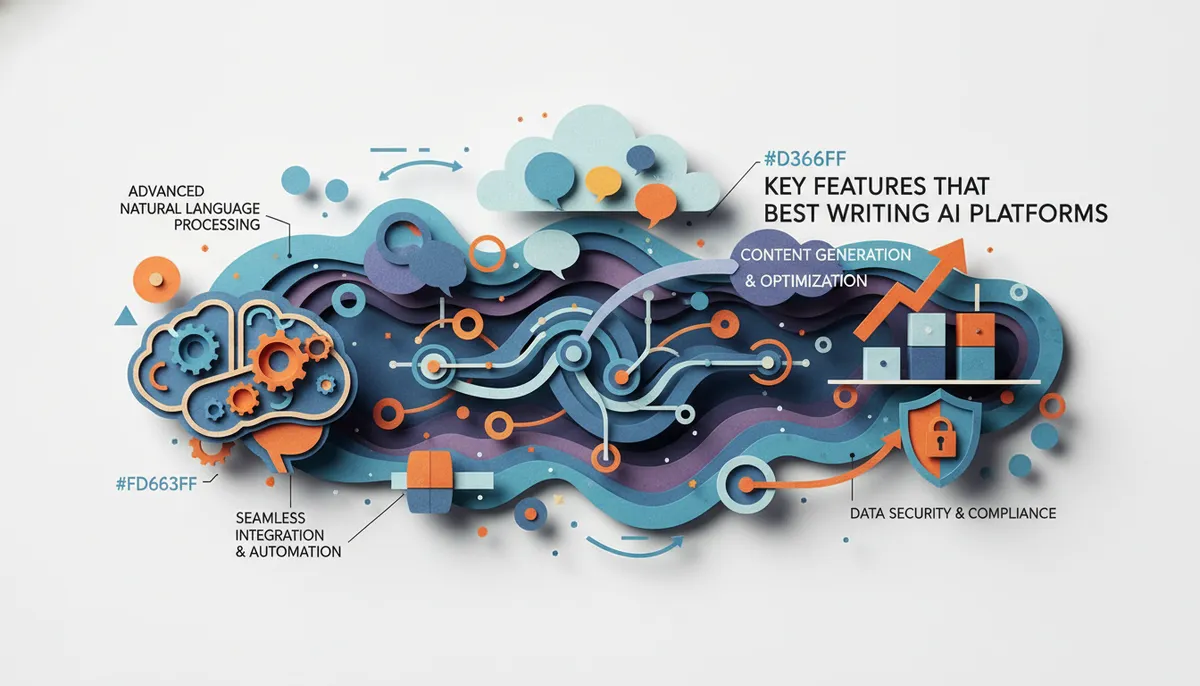
The best writing AI platforms share several critical features that separate them from basic text generators. Understanding these features helps you choose the right solution for your business.
Integrated Keyword Research and Planning
Top-tier platforms include built-in keyword research tools that analyze search volume, competition, and intent. Instead of using separate tools like Ahrefs or SEMrush, everything happens in one dashboard. These systems automatically discover keyword opportunities based on your niche and competitor analysis. They show which keywords have the highest traffic potential with the lowest competition. This eliminates guesswork and ensures every article targets profitable search terms.
SEO Rocket takes this further with automatic keyword clustering by intent. It groups related keywords together and creates comprehensive articles that target multiple search queries at once. This approach captures more traffic per article compared to single-keyword targeting. The platform also includes a visual content calendar that automatically fills with recommended keywords based on opportunity analysis.
Real-Time SEO Optimization and Scoring
The best platforms provide real-time SEO scores while generating content. These scores analyze keyword density, readability, meta descriptions, heading structure, internal linking, and semantic keyword usage. Instead of writing first and optimizing later, modern AI tools optimize as they write. This ensures every article meets SEO best practices before publication.
Advanced platforms like SEO Rocket include automated fix suggestions. If the SEO score is low, the system explains exactly what to improve and can automatically implement fixes. This removes the technical burden from content creators and ensures consistent quality across all articles.
Automated Content Generation at Scale
Basic AI writing tools require manual prompts for each article. Professional platforms automate the entire generation process. You add keywords to a content calendar, and the system generates complete articles on schedule. This automation is crucial for businesses that need consistent publishing without daily management.
Scalenut generates SEO-ready articles in under 5 minutes and offers 100,000 words for $20/month. This speed allows businesses to scale content production dramatically. However, speed alone isn’t enough. The best platforms also ensure quality through multi-stage generation processes that include research, outlining, writing, and optimization.
Direct Publishing and CMS Integration
Most AI writing tools export content as documents or text files. This creates extra work because you must manually upload content to your website. The best platforms publish directly to WordPress, Webflow, Shopify, and Wix. They handle formatting, images, internal links, and metadata automatically. This end-to-end automation is what separates professional platforms from basic tools.
Direct publishing also enables daily content schedules without human intervention. Businesses can plan months of content in advance, and the platform handles everything from generation to publication. This consistency is impossible to maintain manually, especially for small teams or agencies managing multiple clients.
AI Search Optimization for Generative Engines
In 2026, optimizing for Google alone isn’t enough. AI search engines like ChatGPT, Perplexity, Claude, Gemini, Copilot, and Grok now answer millions of queries daily. The best writing AI platforms optimize content for these generative engines through structured formatting, authoritative citations, and clear answers to common questions.
Writesonic supports tracking visibility in AI search results, showing how often your content appears in ChatGPT answers and other AI overviews. This new metric is as important as traditional Google rankings because AI search is rapidly growing. Businesses that optimize for both traditional and AI search gain massive competitive advantages.

Top Writing AI Platforms for SEO Content in 2026
The market offers dozens of AI writing tools, but only a few deliver true SEO content automation. Here’s how the leading platforms compare based on features, pricing, and real-world performance.
SEO Rocket: Complete SEO Content Automation
SEO Rocket is the most comprehensive AI-powered SEO content platform available in 2026. It automates every step from keyword research to daily publishing. The platform discovers keyword opportunities, generates 3,000+ word articles, optimizes for SEO and AI search engines, and publishes directly to your website. Setup takes under 10 minutes, and the system runs autonomously afterward.
What makes SEO Rocket unique is its focus on both Google and AI search visibility. Articles are structured so AI models can reference them as trusted sources. This increases your chances of appearing in ChatGPT answers, Perplexity results, and Google AI Overviews. The platform also generates AI images, embeds videos, creates internal and external links, and includes natural business mentions automatically.
Pricing is simple and cost-effective. The Business plan costs $99/month and generates 30 articles (one per day). The Agency plan costs $799/month and generates 300 articles across 10 client workspaces. There’s also a $1,499 lifetime plan with permanent access and no subscription. At approximately $3 per article, this is exponentially cheaper than traditional content creation while delivering superior results. Learn more about how it works on the official website.
NightOwl by Nightwatch: Full SEO Strategist Automation
NightOwl by Nightwatch offers complete SEO automation including keyword clustering by intent, content generation, site audits, and competitor analysis. It functions as a full-time SEO strategist, handling strategy and execution simultaneously. The platform excels at organizing keywords into logical clusters and creating comprehensive articles that target multiple related searches.
NightOwl’s strength is its strategic approach. Instead of generating random articles, it analyzes your website structure, identifies content gaps, and recommends specific articles to fill those gaps. This strategic planning ensures every piece of content contributes to overall site authority and rankings. However, NightOwl requires more hands-on management compared to fully automated platforms.
Scalenut: Fast AI Writing with Real-Time Optimization
Scalenut provides AI-guided writing with real-time SERP stats and one-click optimization. It generates SEO-ready articles in under 5 minutes, making it one of the fastest platforms available. Pricing starts at $20/month for 100,000 words, which is highly competitive for small businesses and freelancers.
The platform includes a cruise mode that automates the entire writing process based on keyword input. It analyzes top-ranking pages, extracts semantic keywords, and structures content to match successful competitors. This data-driven approach works well for businesses that want fast results without deep SEO knowledge. However, Scalenut lacks direct publishing automation, requiring manual uploads to your CMS.
Surfer AI: Data-Driven Content Guidelines
Surfer AI delivers data-driven content guidelines and real-time optimization based on top-ranking SERPs. It’s ideal for content structure and competitive analysis. Surfer analyzes the top 10 Google results for your target keyword and provides specific recommendations for word count, headings, keywords, and content depth.
Surfer’s editor is intuitive and provides real-time scoring as you write. It shows exactly how your content compares to competitors and what changes will improve rankings. This transparency helps writers understand SEO principles while creating content. The main limitation is that Surfer focuses primarily on Google optimization and doesn’t emphasize AI search engines or automated publishing.
Semrush SEO Writing Assistant: All-in-One Toolkit
Semrush SEO Writing Assistant combines keyword research with real-time suggestions and competitive analysis. It’s recognized as a top all-in-one SEO toolkit. Semrush serves as the undisputed champion for complete SEO suites with keyword research and optimization capabilities. The platform integrates with Google Docs and WordPress, making it easy to optimize content during the writing process.
Semrush excels at providing comprehensive data. You can analyze keyword difficulty, search volume, SERP features, and competitor strategies all in one dashboard. The SEO Writing Assistant checks readability, tone, originality, and SEO score in real-time. However, it doesn’t automate content generation or publishing, making it more suitable for businesses that want SEO guidance rather than full automation.
Jasper: High-Volume Content with Brand Voice
Jasper specializes in high-volume SEO content creation with brand voice customization. It offers templates for blogs, meta descriptions, and other marketing content. Jasper saves several hours per article through structured templates that meet readability and keyword standards. The platform includes autonomous agents for repetitive marketing tasks, which helps agencies scale content production.
Jasper’s brand voice feature allows you to train the AI on your company’s tone and style. This ensures consistency across all content, which is crucial for brand identity. The platform also includes a Chrome extension for generating content directly in your browser. Pricing is higher than competitors, starting around $39/month for basic plans, but the quality and customization options justify the cost for enterprise users.
| Platform | Best For | Starting Price | Key Feature |
|---|---|---|---|
| SEO Rocket | Complete automation & daily publishing | $99/month | End-to-end automation with AI search optimization |
| NightOwl | Strategic SEO planning | Custom pricing | Keyword clustering and site audits |
| Scalenut | Fast content generation | $20/month | 5-minute article generation |
| Surfer AI | Data-driven optimization | $29/month | Real-time SERP analysis |
| Semrush | Comprehensive SEO toolkit | $139.95/month | All-in-one SEO platform |
| Jasper | Brand voice consistency | $39/month | Custom brand training |

How to Choose the Right AI Writing Platform for Your Business
Choosing the best writing AI depends on your specific needs, budget, and content goals. Here are the most important factors to consider.
Level of Automation Required
Determine how much manual work you want to do. If you have time to write, edit, and publish manually, tools like Surfer or Jasper provide excellent guidance and generation. If you want complete hands-off automation, SEO Rocket eliminates all manual work from keyword research to publishing.
For small businesses and agencies, full automation is usually the best choice. It allows you to focus on strategy and client relationships instead of content production. Full automation also ensures consistent publishing, which is critical for SEO growth.
Content Volume and Publishing Frequency
Consider how much content you need monthly. If you publish 1-2 articles per month, manual tools work fine. If you need daily publishing or manage multiple websites, automated platforms with direct publishing capabilities become essential.
Consistent publishing creates compounding SEO benefits. Each new article adds authority, builds internal linking structures, and covers more keywords. Businesses that publish daily see exponentially faster growth than those that publish sporadically. This is why automation matters so much in 2026.
Budget and Cost Per Article
Calculate your true cost per article including research time, writing time, editing, and publishing. Traditional content creation costs $200-500 per article when you factor in all labor. AI platforms cost $3-50 per article depending on the plan and automation level.
SEO Rocket’s Business plan costs $99/month for 30 articles, which equals $3.30 per article. This is 60-150 times cheaper than traditional methods while delivering equal or better results. For businesses that previously couldn’t afford consistent content, AI platforms make professional SEO accessible.
AI Search Optimization Capabilities
In 2026, appearing in AI search results is as important as Google rankings. Choose platforms that optimize for generative engines, not just traditional search. This means structured content, clear answers, authoritative citations, and formats that AI models can easily parse and reference.
Platforms like SEO Rocket and Writesonic specifically optimize for AI Overviews, ChatGPT, Perplexity, and other generative search engines. This forward-thinking approach ensures your content remains visible as search behavior evolves. Businesses that ignore AI search will lose significant traffic in coming years.
Integration with Your Existing Tools
Check which CMS platforms the AI tool integrates with. If you use WordPress, Webflow, Shopify, or Wix, direct publishing saves enormous time. If the platform doesn’t integrate with your CMS, you’ll spend hours manually uploading content, which defeats the purpose of automation.
Also consider integration with analytics tools, keyword research platforms, and project management software. The best platforms work seamlessly with your existing workflow rather than requiring you to adopt entirely new systems. SEO Rocket’s roadmap shows upcoming integrations and features based on user feedback.
Common Mistakes to Avoid with AI Writing Tools
Even the best AI writing tools can produce poor results if used incorrectly. Here are the most common mistakes businesses make and how to avoid them.
Treating AI as a Complete Replacement for Strategy
AI tools automate execution, but strategy still matters. You must choose the right keywords, understand your audience, and align content with business goals. AI cannot decide which products to promote or which market segments to target. Treat AI as a powerful assistant that executes your strategy, not as the strategist itself.
Successful businesses use AI to scale their existing content strategies. They define their niche, identify target keywords, and let AI handle the production. This combination of human strategy and AI execution produces the best results.
Ignoring Brand Voice and Customization
Default AI-generated content can sound generic. The best platforms allow you to customize tone, style, and voice to match your brand. Take time to configure these settings and provide examples of your preferred writing style. This small upfront investment creates consistently branded content that resonates with your audience.
SEO Rocket includes business mention features that naturally incorporate your company into relevant articles. This keeps your brand visible without sounding promotional. It’s a subtle but powerful way to build brand authority through content.
Publishing Without Human Review
While full automation is powerful, reviewing AI-generated content ensures accuracy and quality. Most platforms include unlimited rewrites, so you can refine articles before publication. Establish a quick review process where you check facts, tone, and alignment with business goals.
This doesn’t mean editing every sentence. It means scanning for obvious errors, ensuring the article matches your expectations, and making strategic adjustments. A 10-minute review maintains quality while preserving the time-saving benefits of automation.
Focusing Only on Google Rankings
Many businesses still optimize exclusively for Google, ignoring AI search engines. This is a critical mistake in 2026. AI Overviews, ChatGPT, Perplexity, and Claude now influence millions of search decisions. Content that works well in traditional search but fails in AI search will gradually lose visibility.
Optimize for both by using structured formatting, clear answers, and authoritative citations. The best writing AI platforms handle this automatically, ensuring your content performs well across all search channels.
The Future of AI Writing and SEO Content Automation
AI writing technology continues advancing rapidly. Understanding future trends helps you choose platforms that will remain competitive for years.
Multimodal Content Generation
Future AI platforms will generate not just text but also images, videos, infographics, and interactive content. Early versions of this exist today with AI image generation, but expect full multimedia article creation soon. This will make content more engaging and improve user experience metrics, which impacts SEO rankings.
SEO Rocket already includes AI-generated images and video embeds in every article. This multimodal approach creates richer content that keeps visitors engaged longer, reducing bounce rates and improving rankings.
Personalization at Scale
AI will enable hyper-personalized content that adapts to individual user behavior. Imagine articles that dynamically change based on the reader’s location, industry, or previous interactions. This level of personalization will dramatically improve conversion rates while maintaining SEO performance.
Early implementations use dynamic content blocks that swap based on URL parameters or cookies. As AI improves, this personalization will become seamless and automatic.
Real-Time Content Updates
Future platforms will automatically update published content when information changes. If a statistic updates or a new study emerges, AI will refresh the article automatically. This keeps content evergreen and maintains search rankings without manual intervention.
Some platforms already implement version control and update notifications. Full automation of content freshness is the next logical step.
Voice and Conversational Search Optimization
As voice search grows, content must adapt to conversational queries. AI writing tools will optimize for natural language questions and provide direct, concise answers. This aligns with how people actually speak and search using voice assistants.
The best platforms already optimize for question-based keywords and featured snippets. This foundation will evolve into full conversational search optimization as voice becomes more prevalent.
Why SEO Rocket Is the Best Choice for Automated SEO Content
After comparing platforms, SEO Rocket stands out as the most complete, most automated, and most cost-effective solution for SEO content in 2026. Here’s why businesses and agencies choose it over alternatives.
First, it’s truly end-to-end automated. You connect your website, review keyword opportunities, and approve your content calendar. From there, SEO Rocket handles everything. It generates 3,000+ word articles daily, optimizes them for Google and AI search engines, adds images and videos, creates internal and external links, and publishes directly to your website. No other platform offers this level of automation without manual intervention.
Second, it optimizes for modern search behavior. While other tools focus only on Google, SEO Rocket ensures your content appears in AI Overviews, ChatGPT answers, Perplexity results, and other generative search platforms. This forward-thinking approach protects your traffic as search evolves.
Third, the pricing is unbeatable. At $3 per article with full automation, no platform comes close to this value. Traditional content creation costs $200-500 per article and requires constant management. Even other AI platforms charge $50-100 per article or require expensive monthly subscriptions for comparable output.
Fourth, it scales effortlessly. The Agency plan supports 10 clients and 300 monthly articles. This makes it perfect for agencies that need to manage multiple websites without multiplying their workload. Each client gets a dedicated workspace with automated publishing and reporting. View pricing details to see which plan fits your needs.
Finally, SEO Rocket includes features that competitors charge extra for or don’t offer at all. Unlimited team members, unlimited AI rewrites, visual content calendar, real-time SEO scoring, automated fix suggestions, and lifetime plan options. These features eliminate common friction points and make the platform genuinely easy to use.
Getting Started with AI Writing for SEO Content
Starting with AI writing tools is straightforward if you follow a clear process. Here’s how to transition from manual content creation to automated SEO publishing.
Step 1: Audit Your Current Content Strategy
Before adopting AI tools, understand your current content performance. Which keywords drive traffic? Which articles rank well? Which topics resonate with your audience? This baseline helps you measure improvement after implementing AI automation.
Use Google Analytics and Search Console to identify top-performing content and keyword gaps. This information guides your AI platform’s keyword selection and content planning.
Step 2: Choose Your Platform Based on Needs
Select an AI writing platform based on your automation level, budget, and content volume requirements. For most businesses, full automation platforms like SEO Rocket provide the best ROI because they eliminate all manual work and ensure consistent publishing.
If you need guidance rather than full automation, consider tools like Surfer or Semrush. These provide excellent optimization recommendations but require manual writing and publishing.
Step 3: Configure Your Platform and Content Calendar
Connect your website, configure brand voice settings, and set up your content calendar. Most platforms include keyword suggestion tools that recommend profitable topics. Add these keywords to your publishing schedule based on priority and opportunity.
SEO Rocket’s setup takes under 10 minutes. The platform automatically discovers keywords, analyzes competitors, and suggests content topics. You simply approve the calendar, and publishing begins immediately. Sign up to start automating your SEO content today.
Step 4: Monitor Performance and Optimize
After publishing begins, monitor rankings, traffic, and engagement metrics. AI platforms improve over time as they learn your audience and niche. Look for articles that rank quickly and analyze why they succeeded. Use these insights to refine future content.
Most platforms include performance tracking dashboards that show which articles drive traffic and conversions. Use this data to double down on successful topics and adjust underperforming areas.
Step 5: Scale Based on Results
Once you see consistent results, scale your content production. Add more keywords to your calendar, target additional topics, or expand into related niches. The beauty of automation is that scaling doesn’t increase your workload. You plan more content, and the platform handles execution.
For agencies, this scaling means adding more clients without adding staff. The Agency plan’s 10-client support allows you to manage multiple websites from one dashboard with automated publishing and reporting for each.
Start Automating Your SEO Content Today
The best writing AI for SEO content in 2026 isn’t just about generating text. It’s about complete automation from keyword research to daily publishing. Platforms like SEO Rocket eliminate manual work, optimize for Google and AI search engines, and deliver consistent results at a fraction of traditional costs.
If you’re still creating content manually, you’re competing with businesses that publish daily with full automation. This gap will only widen as AI improves. The businesses that adopt automation now will dominate their niches while competitors struggle with inconsistent publishing and rising content costs.
The choice is clear. Continue spending hours on manual content creation, or automate the entire process and focus on strategy and growth. SEO Rocket makes this transition effortless with under-10-minute setup, daily automated publishing, and proven results across thousands of businesses. Start automating your SEO content for $99/month and see why automation is the future of content marketing.
FAQs
Q: What makes the best writing AI different from basic text generators?
A: The best writing AI platforms integrate keyword research, real-time SEO optimization, automated publishing, and AI search visibility into one system. Basic generators only produce text from prompts, while professional platforms automate the entire content workflow from strategy to publication, including competitor analysis and performance tracking.
Q: How much does AI writing for SEO content cost in 2026?
A: AI-powered SEO content platforms range from $20 to $800 per month depending on automation level and article volume. SEO Rocket costs $99/month for 30 articles (approximately $3 per article), which is 60-150 times cheaper than traditional content creation that costs $200-500 per article including research, writing, and optimization.
Q: Can AI writing tools optimize for both Google and AI search engines?
A: Yes, the best platforms optimize for both traditional Google search and AI-powered search engines like ChatGPT, Perplexity, Claude, and Gemini. They use structured formatting, clear answers, and authoritative citations that AI models can reference. This dual optimization is critical in 2026 as AI Overviews and generative search grow rapidly.
Q: Do AI writing platforms require manual content editing before publishing?
A: Full automation platforms like SEO Rocket generate, optimize, and publish content without manual editing. However, many businesses choose to do quick 10-minute reviews to ensure accuracy and alignment with business goals. Most platforms offer unlimited rewrites, allowing you to refine content while maintaining the time-saving benefits of automation.
Q: How quickly can I see SEO results from AI-generated content?
A: Results vary based on domain authority and competition, but businesses typically see initial rankings within 2-4 weeks and significant traffic growth within 3-6 months. The key advantage of AI platforms is consistent daily publishing, which creates compounding SEO benefits. Each new article adds authority and keyword coverage, accelerating traffic growth exponentially over time.