
Key Takeaways
-
Combine SEO and AIO strategies instead of treating them as competing approaches for maximum search visibility
-
Use AI content platforms that prioritize comprehensive, high-quality articles with unique insights and proper expertise signals
-
Optimize content structure with clear headings, bullet points, and tables to increase AI citation potential
-
Demonstrate E-E-A-T signals by including industry data, case studies, and authoritative sources in automated content
-
Target both traditional search engines and emerging AI search platforms like ChatGPT and Perplexity
-
Ensure content is easily extractable with short paragraphs, semantic HTML, and direct answers
-
Measure success across traditional traffic metrics and AI citation frequency, not just rankings
If you’re treating SEO and AIO like competing strategies, you’re already making a costly mistake. In 2026, search visibility isn’t about choosing between traditional search engine optimization and AI optimization—it’s about understanding how they work together to maximize your reach. Too many businesses are either ignoring AI search completely or abandoning proven SEO tactics for shiny new AI tools. Both approaches leave serious money on the table.
The truth is, SEO and AIO aren’t enemies. They’re complementary forces that, when combined properly, create a content powerhouse that ranks on Google, gets cited in ChatGPT, appears in Perplexity answers, and shows up in AI Overviews across platforms. But get the balance wrong, and you’ll either waste time on outdated tactics or publish low-quality AI content that Google actively penalizes.
Let’s break down what SEO and AIO actually mean, the biggest mistakes people make with both, and how to build a content system that dominates human and AI search in 2026. Whether you’re a small agency managing multiple clients or an in-house marketing team trying to scale content output, understanding this distinction will transform your results.
Understanding SEO and AIO in the Content Automation Industry
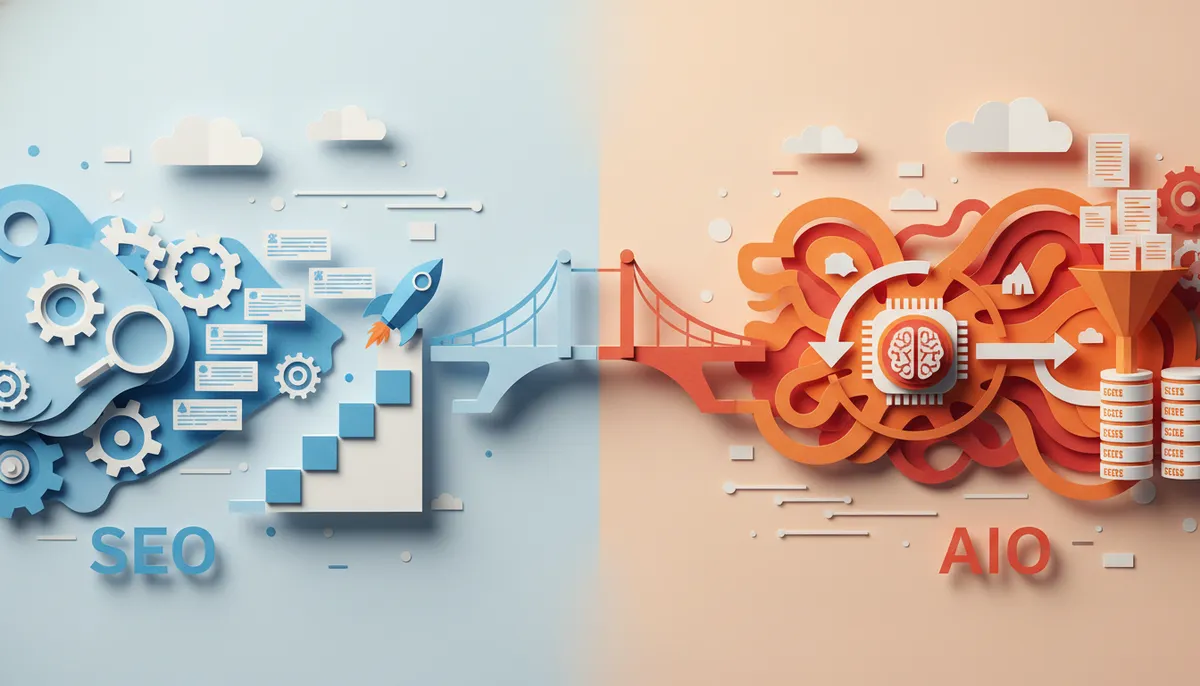
SEO, or Search Engine Optimization, has been the gold standard for digital visibility since the early 2000s. It focuses on ranking your content in traditional search engines like Google and Bing by targeting specific keywords, earning backlinks, optimizing page speed, and creating content that matches user intent. The goal is simple: get people to click through from search results to your website.
AIO, or AI Optimization (sometimes called AI-assisted Optimization), represents the evolution of content creation and distribution in an AI-driven world. It’s about making your content easily parsable, quotable, and citable by AI language models like ChatGPT, Claude, Gemini, Perplexity, Copilot, and Grok. AIO doesn’t replace SEO—it extends it into new search environments where users get answers without clicking links.
Think of it this way: SEO gets you traffic. AIO gets you authority and citations in AI-generated answers. Both matter tremendously in 2026.
Why This Matters for Content Automation
For businesses in the SEO content automation space, this distinction is critical. Automated content platforms must now optimize for both traditional search algorithms and AI extraction systems. That means your content needs to be:
- Structured with clear headings and semantic HTML for Google crawlers
- Written with natural language and direct answers for AI summarization
- Formatted with tables, lists, and FAQs for easy data extraction
- Rich with expertise and firsthand experience to satisfy E-E-A-T requirements
- Fresh and regularly updated to stay relevant across all platforms
Platforms like SEO Rocket have built these requirements directly into their automated content generation, ensuring every article published meets both SEO and AIO standards without manual intervention. This is the future of content marketing—automation that understands multiple search ecosystems.
Mistake #1: Treating SEO and AIO as Separate Strategies
The single biggest mistake businesses make is viewing SEO and AIO as competing approaches. Marketing teams waste valuable time debating whether to optimize for Google or AI search when the answer should always be both. This either/or mentality creates gaps in your visibility strategy that competitors can exploit.
In reality, AIO acts as an efficiency layer that enhances SEO. It automates repetitive optimization tasks like metadata generation, alt-text creation, and structured data implementation while ensuring your content is formatted for AI consumption. When you separate these strategies, you’re essentially choosing to be invisible in one search environment or the other.
The Real Relationship Between SEO and AIO
Here’s what actually works in 2026:
- Use SEO to identify high-value keywords with real search volume and commercial intent
- Apply AIO techniques to structure that content for maximum extractability by AI systems
- Optimize for traditional ranking factors (backlinks, page speed, mobile-friendliness)
- Format content with clear answers, bullet points, and tables that AI models can easily cite
- Measure success across both traditional traffic metrics and AI citation frequency
This integrated approach ensures you’re building authority everywhere users search for information. SEO gets people to your site. AIO makes sure AI systems recognize you as a trusted source even when users never click through. Both outcomes drive business growth.
| Aspect | SEO Focus | AIO Focus | Combined Benefit |
|---|---|---|---|
| Primary Goal | Drive clicks and traffic | Earn citations and authority | Visibility across all search types |
| Content Structure | Keyword-optimized headings | Clear, extractable answers | Ranks well and gets quoted |
| Success Metrics | Rankings, clicks, conversions | AI citations, brand mentions | Comprehensive visibility tracking |
| Optimization Tools | Keyword research, link building | Structured data, semantic markup | Automated multi-platform optimization |

Mistake #2: Using Low-Quality AI Content Without Human Oversight
Google made its position crystal clear in 2026: low-value AI-generated content gets penalized. If you’re pumping out generic, formulaic articles using basic AI tools without any quality control, your rankings are going to tank. This is where many businesses misunderstand what AIO actually means.
AIO isn’t about letting AI write whatever it wants and hitting publish. It’s about using AI to scale high-quality content creation while maintaining editorial standards. The automation should handle structure, research, and optimization—but the content itself must demonstrate genuine expertise, experience, and value to readers.
What Google Actually Penalizes
Google’s algorithms in 2026 specifically target what they call “lazy AI content.” This includes:
- Generic articles that could apply to any business in an industry
- Content with no original insights or firsthand experience
- Articles that simply reword existing information without adding value
- Keyword-stuffed text that prioritizes search engines over readers
- Content that lacks E-E-A-T signals (Experience, Expertise, Authoritativeness, Trustworthiness)
- Automated content with factual errors or outdated information
The solution isn’t to avoid AI—it’s to use better AI systems with proper quality controls. Platforms like SEO Rocket build E-E-A-T optimization directly into their content generation, automatically including industry-specific expertise, citing authoritative sources, and formatting content to demonstrate genuine value. This is automation done right.
The Quality Control System You Need
Here’s how to avoid the low-quality AI content trap:
- Choose AI content platforms that prioritize long-form, comprehensive articles (3,000+ words)
- Ensure your system automatically includes relevant data, statistics, and citations
- Look for platforms that generate unique insights rather than generic advice
- Verify that automated content includes proper internal and external linking
- Use systems with real-time SEO scoring and automated fix suggestions
When automation is done correctly, your content should be indistinguishable from expert-written articles. That’s the standard you need to meet in 2026 to succeed with both SEO and AIO strategies. Learn more about quality automation at our features page.
Mistake #3: Ignoring Content Structure for AI Extraction
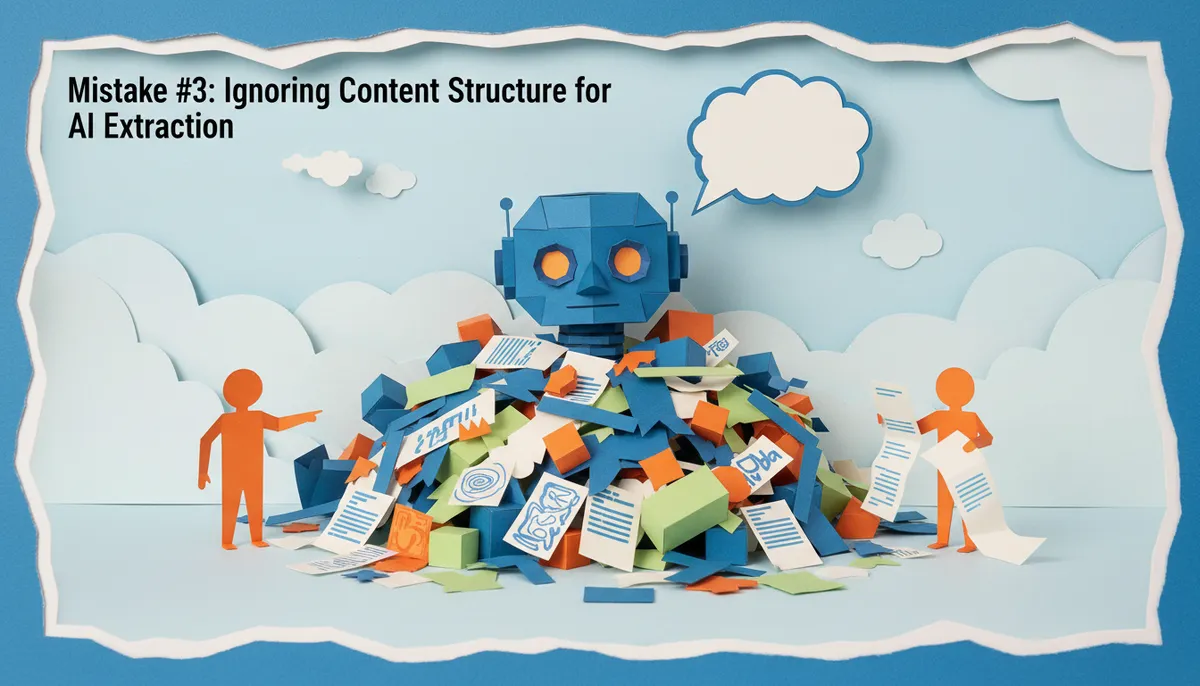
Even if your content is high-quality, it won’t get cited in AI answers if it’s poorly structured. AI models like ChatGPT, Perplexity, and Gemini prioritize content that’s easy to parse, extract, and summarize. If your articles are walls of text without clear sections, you’re essentially invisible to AI search.
This is where AIO optimization becomes technical. The way you format headings, use semantic HTML, implement structured data, and organize information directly impacts whether AI systems can extract and cite your content. Most businesses completely ignore this aspect of optimization.
Essential Structural Elements for AIO Success
To maximize AI citations and visibility, your content needs these elements:
- Descriptive H2 and H3 headings that clearly indicate section topics
- Short paragraphs (2-4 sentences) that make information scannable
- Bullet points and numbered lists for easy extraction of key points
- Tables that organize data, comparisons, and specifications
- FAQ sections with direct answers to common questions
- Semantic HTML markup that tells AI systems what information represents
According to the Conductor 2026 AEO/GEO Benchmarks Report, the five most likely page types to be cited in AIO results are blog content, video content, article content, news content, and product pages. What these formats have in common is clear structure and easy extractability.
How to Structure Content for Maximum Visibility
Follow this content organization framework:
- Start with a clear introduction that directly addresses the search intent
- Use descriptive headings that include semantic keywords (not just target keywords)
- Break complex topics into multiple subsections with H3 tags
- Include at least one table that organizes comparison data or specifications
- Add 4-6 bullet point lists throughout the article for scannable information
- Use numbered lists for steps, processes, or ranked information
- End with a FAQ section that answers related questions directly
This structure serves both human readers and AI extraction systems. It improves readability, reduces bounce rate, increases time on page, and makes your content quotable for AI-generated answers. That’s the double benefit of proper AIO optimization.
Mistake #4: Neglecting E-E-A-T Signals in Automated Content
E-E-A-T—Experience, Expertise, Authoritativeness, and Trustworthiness—has become the cornerstone of both SEO and AIO success in 2026. Google uses these signals to determine content quality, and AI models rely on them to identify trustworthy sources for citations. Yet many automated content systems completely ignore E-E-A-T.
This mistake is particularly common with basic AI writing tools that generate content without any industry context or authoritative sourcing. The result is content that might read well but lacks the trust signals needed to rank on Google or get cited by AI systems. You can’t fake expertise—it must be built into your content.
What E-E-A-T Actually Means for Content Automation
Here’s how each element applies to automated SEO content:
| E-E-A-T Element | What It Means | How to Demonstrate It |
|---|---|---|
| Experience | Firsthand knowledge of the topic | Include specific examples, case studies, and industry insights |
| Expertise | Deep understanding of the subject matter | Reference industry data, statistics, and authoritative sources |
| Authoritativeness | Recognition as a trusted source | Earn backlinks, citations, and mentions from other experts |
| Trustworthiness | Reliability and accuracy of information | Cite sources, update content regularly, maintain transparency |
The best automated content platforms build E-E-A-T signals directly into their generation process. They automatically include relevant statistics, cite authoritative external sources, reference industry best practices, and format content to demonstrate genuine expertise rather than generic advice.
Building E-E-A-T Into Your Content System
To avoid this mistake, your content automation should include:
- Automatic citation of authoritative sources like .edu, .gov, and industry leaders
- Integration of current statistics and data points from 2026
- Industry-specific examples and use cases relevant to your niche
- Author bio sections that establish credentials and expertise
- Regular content updates to maintain accuracy and freshness
- Clear source attribution using proper external linking
This approach ensures every automated article demonstrates the expertise and trustworthiness that both Google and AI systems require. It’s not about gaming the system—it’s about genuinely providing valuable, authoritative information that deserves to rank and be cited.
Platforms like SEO Rocket handle this automatically, ensuring every article includes proper E-E-A-T signals without requiring manual research or source hunting.
Mistake #5: Focusing Only on Google and Ignoring AI Search Platforms
The biggest strategic mistake businesses make in 2026 is optimizing exclusively for Google while ignoring the explosive growth of AI search platforms. ChatGPT, Perplexity, Claude, Gemini, Copilot, and Grok now handle billions of searches monthly, and users increasingly trust AI-generated answers over traditional search results.
If your content strategy doesn’t account for these platforms, you’re missing massive visibility opportunities. These aren’t fringe search engines—they’re becoming the primary way people find information, especially for complex topics that benefit from AI summarization.
The Reality of AI Search in 2026
Here’s what’s actually happening in the search landscape:
- Users are asking conversational questions to AI chatbots instead of typing keywords into Google
- AI platforms cite sources but often don’t send traffic directly to websites
- Being cited in AI answers builds brand authority even without clicks
- AI search is growing faster than traditional search across all demographics
- Younger users prefer AI answers over traditional search results for many query types
- AI Overviews now appear at the top of Google results, changing traditional SEO dynamics
This doesn’t mean traditional SEO is dead—it means your optimization needs to expand beyond Google-only strategies. You need content that performs well in both environments.
How to Optimize for Both Google and AI Search
The winning approach combines traditional SEO with AIO best practices:
- Continue targeting valuable keywords with search volume and commercial intent
- Structure content with clear, direct answers that AI models can extract
- Include conversational language that matches how people ask AI questions
- Add comprehensive data tables and comparison charts AI systems can reference
- Build topical authority by publishing consistently on related subjects
- Monitor AI citations alongside traditional ranking metrics
- Ensure content is fresh and regularly updated across all platforms
The good news is that content optimized for AI search also performs better in traditional search. The clear structure, direct answers, and authoritative sourcing that AI systems prefer are the same elements that help you win featured snippets and rank well on Google.
This is why platforms like SEO Rocket are specifically designed for multi-platform optimization. Every article generated is structured to perform well on Google, get cited by AI systems, and appear in AI Overviews across ChatGPT, Perplexity, Claude, Gemini, Copilot, and Grok. Check out our guide to improving AI search visibility for more strategies.
Building a Combined SEO and AIO Content Strategy
Now that you understand the critical mistakes to avoid, let’s talk about building a content system that actually works. The goal is to create a sustainable, automated workflow that produces high-quality content optimized for both traditional search engines and AI platforms without requiring constant manual intervention.
This is where content automation platforms become essential. Manual content creation simply can’t keep up with the publishing frequency required to build authority across multiple search ecosystems. You need a system that can generate, optimize, and publish content daily while maintaining quality standards.
The Essential Components of a Modern Content System
Your content automation platform should include:
- Built-in keyword research with live SEO data showing volume and competition
- Automated content calendar that schedules articles based on strategic priorities
- Long-form article generation (3,000+ words) with proper structure and formatting
- Real-time SEO scoring with automated suggestions for improvement
- Automatic internal and external linking to boost authority signals
- Direct publishing integration with WordPress, Webflow, Shopify, and Wix
- AI-optimized metadata, alt-text, and structured data generation
- Performance tracking across both traditional and AI search platforms
When all these components work together, you get a content machine that operates with minimal manual effort while producing professional-quality articles that rank and get cited. This is the difference between struggling to publish once a week versus automatically publishing daily.
The Daily Publishing Advantage
Consistent publishing creates compounding SEO benefits that most businesses never experience. Here’s why daily content matters:
- Search engines reward freshness and regular updates with better rankings
- More content means more opportunities to rank for long-tail keywords
- Daily publishing builds topical authority faster than sporadic posting
- Consistent updates signal to AI systems that your site is an active, current resource
- More indexed pages create more internal linking opportunities
- Regular content gives you more data to optimize and improve over time
The challenge is maintaining quality at this publishing frequency. That’s why automation is essential—but it must be the right kind of automation. Generic AI writing tools can’t match the strategic approach required for true SEO and AIO success.
SEO Rocket solves this by combining keyword intelligence, long-form generation, multi-platform optimization, and daily publishing into one integrated system. Setup takes less than 10 minutes, and the platform handles everything else automatically. See how it works at our how it works page.
Measuring Success Across SEO and AIO Channels
You can’t improve what you don’t measure, and in 2026, your measurement framework needs to extend beyond traditional SEO metrics. Tracking only Google rankings and organic traffic gives you an incomplete picture of your content performance. You need to monitor visibility across all search platforms.
This means establishing new KPIs that capture both traditional search success and AI citation frequency. Many businesses struggle with this because the tools they use only track Google performance. Comprehensive content platforms should provide visibility into all search channels.
Key Metrics to Track for SEO and AIO Success
| Metric Category | SEO Metrics | AIO Metrics |
|---|---|---|
| Visibility | Keyword rankings, featured snippets | AI citations, brand mentions in AI answers |
| Traffic | Organic sessions, page views, click-through rate | AI referral traffic, zero-click authority building |
| Engagement | Bounce rate, time on page, pages per session | Content extractability, quote frequency |
| Authority | Domain authority, backlink profile | AI trust signals, citation frequency across platforms |
Tools and Tracking Methods
To monitor performance across both channels, you’ll need:
- Traditional SEO tools for ranking and traffic data (Google Analytics, Search Console)
- AI citation tracking to see which content gets quoted by AI platforms
- Performance comparison dashboards showing SEO and AIO results side by side
- Content gap analysis to identify optimization opportunities
- Competitive benchmarking across both traditional and AI search
The most sophisticated content automation platforms include built-in tracking for both SEO and AIO performance. This eliminates the need to piece together data from multiple tools and gives you a complete view of your content’s impact.
For more insights on tracking modern SEO performance, check out our beginner’s guide to SEO content writing.
Why Automation Is Essential for SEO and AIO Success
Let’s be honest: manually managing both SEO and AIO optimization is overwhelming. Between keyword research, content creation, technical optimization, publishing, and performance tracking, you’re looking at 10-15 hours of work per article. Most businesses can’t sustain that effort consistently.
This is why automation has become essential rather than optional. The businesses winning in 2026 aren’t trying to do everything manually—they’re using intelligent automation platforms that handle the tactical execution while they focus on strategy and growth.
What Should Be Automated
Here’s what automation should handle for you:
- Keyword discovery and opportunity mapping based on your industry
- Content calendar creation with strategic topic sequencing
- Long-form article generation following SEO and AIO best practices
- Metadata optimization including titles, descriptions, and alt-text
- Internal linking between related articles and important pages
- External linking to authoritative sources and references
- Image generation and video embedding for visual content
- Publishing to your website without manual intervention
- SEO scoring and optimization recommendations
- Performance tracking and reporting
When these elements are automated properly, you eliminate the bottlenecks that prevent consistent publishing. You shift from producing a few articles per month to publishing daily without increasing your workload.
The ROI of Content Automation
Consider the economics: hiring a content writer to produce one 3,000-word article typically costs $300-500. SEO optimization adds another $100-200. A traditional agency might charge $3,000-5,000 per month for just a few articles.
With platforms like SEO Rocket, you get 30 fully optimized, long-form articles per month for $99. That’s roughly $3 per article—a 99% cost reduction compared to traditional approaches. For agencies, the Agency plan delivers 300 articles monthly for $799, with support for 10 client workspaces.
The time savings are equally dramatic. Instead of spending 15 hours per article, setup takes 10 minutes and the system runs itself. That frees you to focus on strategy, client relationships, and business growth rather than content production.
Explore pricing options to see how automation can transform your content ROI.
Getting Started with Combined SEO and AIO Optimization
You don’t need to overhaul your entire content strategy overnight. The key is to start integrating AIO best practices into your existing SEO workflow systematically. Small improvements compound quickly when applied consistently.
Begin by auditing your current content through both an SEO and AIO lens. Which articles could be restructured for better AI extraction? Where are you missing opportunities to include tables, bullet points, or direct answers? What content needs E-E-A-T signals strengthened?
Your 30-Day Action Plan
Here’s a practical roadmap to get started:
- Week 1: Audit your top 10 performing articles for AIO optimization opportunities. Add tables, restructure headings, and include FAQ sections.
- Week 2: Set up a content automation platform that handles both SEO and AIO optimization. Connect your website and configure publishing settings.
- Week 3: Build a content calendar with 30 days of keyword-optimized topics. Let automation handle the article generation and publishing.
- Week 4: Monitor performance across both traditional and AI search channels. Identify what’s working and double down on successful approaches.
Choosing the Right Automation Platform
Not all automation tools are created equal. Look for platforms that specifically address both SEO and AIO requirements:
- Long-form content generation (3,000+ words minimum)
- Built-in keyword research with competitive analysis
- Automatic E-E-A-T signal integration
- Multi-platform optimization for Google and AI search
- Direct publishing to major CMS platforms
- Real-time SEO scoring and improvement suggestions
- Agency support with multi-client management
- Unlimited rewrites and team collaboration
SEO Rocket includes all these features in a single integrated platform designed specifically for businesses and agencies that need consistent, high-quality content at scale. The system handles everything from keyword discovery to daily publishing, letting you maintain a competitive content schedule without the traditional time and cost investment.
Ready to see how it works? Start your free 3-day trial and publish your first optimized article today.
The Future of SEO and AIO Integration
Looking ahead, the line between SEO and AIO will continue to blur. Google is already integrating AI Overviews directly into search results, and traditional search engines are becoming more AI-powered every month. The distinction we’re making today between SEO and AIO will eventually feel unnecessary.
What matters is building a content system that succeeds regardless of how users search for information. Whether they type a query into Google, ask ChatGPT a question, or use Perplexity for research, your content should be positioned to provide value and earn visibility.
What’s Coming Next
Based on current trends, here’s what to expect in the coming months and years:
- Further integration of AI features into traditional search engines
- Increased emphasis on E-E-A-T signals as AI determines content quality
- Growth of conversational search queries over keyword-based searches
- More sophisticated AI extraction requiring better content structure
- Continued penalties for low-quality automated content
- Rise of multi-modal content combining text, images, and video
The businesses that thrive will be those that adopt automation early while maintaining quality standards. The old model of manual content creation simply can’t keep pace with the publishing frequency required to build authority across multiple platforms.
Content automation isn’t about cutting corners—it’s about leveraging technology to execute proven strategies at scale. When done right, automated content outperforms manually created content because it consistently applies best practices that human writers often skip due to time constraints.
For more insights on staying ahead of SEO trends, visit our blog for the latest strategies and updates.
Conclusion: Stop Making These Mistakes and Start Winning
The five mistakes we’ve covered—treating SEO and AIO as separate, using low-quality AI content, ignoring structure, neglecting E-E-A-T, and focusing only on Google—are costing businesses serious visibility and revenue in 2026. The good news is that they’re all completely avoidable with the right approach and tools.
Success in modern search visibility isn’t about choosing between SEO and AIO. It’s about building an integrated content system that optimizes for both traditional search engines and AI platforms simultaneously. It’s about automating the tactical execution while maintaining quality standards that satisfy both Google’s algorithms and AI extraction systems.
The businesses and agencies winning in this environment share a common trait: they’ve embraced intelligent automation that handles the complexity of multi-platform optimization without sacrificing quality. They publish consistently, optimize comprehensively, and track performance across all search channels.
SEO Rocket was built specifically for this new reality. It automates everything from keyword research to daily publishing while ensuring every article meets both SEO and AIO requirements. Setup takes less than 10 minutes, and the platform handles all the technical optimization, content generation, and publishing automatically. You get consistent, high-quality content that ranks on Google and gets cited by AI systems—without the traditional time investment or agency costs.
Stop treating content creation as a manual chore. Turn it into an automated system that compounds growth month after month. Start your free 3-day trial with SEO Rocket and see how automated SEO and AIO optimization can transform your visibility and traffic. Your first optimized article could be published today.
FAQs
Q: What is the main difference between SEO and AIO in 2026?
A: SEO focuses on ranking content in traditional search engines like Google to drive clicks and traffic to your website. AIO (AI Optimization) focuses on making your content easily extractable and citable by AI language models like ChatGPT, Perplexity, and Gemini. While SEO drives direct traffic, AIO builds authority through citations in AI-generated answers. The best strategy combines both approaches for maximum visibility across all search platforms.
Q: Can AIO completely replace traditional SEO strategies?
A: No, AIO doesn’t replace SEO—it complements and extends it. Traditional SEO still drives valuable website traffic and conversions through Google and other search engines. AIO adds a new dimension by optimizing content for AI platforms that generate answers without sending clicks. You need both strategies working together to maximize visibility in 2026 and beyond. Platforms like SEO Rocket automatically optimize for both SEO and AIO simultaneously.
Q: How do I avoid Google penalties for AI-generated content?
A: Focus on quality over quantity. Google penalizes low-value, generic AI content that lacks expertise and original insights. To avoid penalties, use AI tools that incorporate E-E-A-T signals (Experience, Expertise, Authoritativeness, Trustworthiness), cite authoritative sources, include current statistics, and provide genuine value to readers. Content should be comprehensive (3,000+ words), well-structured, and demonstrate real expertise in your industry. Quality automation platforms build these requirements into their content generation process.
Q: What content structure works best for both SEO and AIO?
A: The ideal structure includes descriptive H2 and H3 headings, short paragraphs (2-4 sentences), multiple bullet point and numbered lists, data tables for comparisons, FAQ sections with direct answers, and semantic HTML markup. This format makes content scannable for human readers while being easily extractable for AI systems. Include clear, direct answers to questions, use conversational language, and organize information logically with proper hierarchy. This structure improves rankings, user engagement, and AI citation frequency.
Q: Why should I track AI citations alongside traditional SEO metrics?
A: AI citations represent a new form of brand visibility and authority that doesn’t show up in traditional analytics. While AI-generated answers may not send direct traffic, being cited builds credibility and positions your brand as a trusted source. As more users rely on AI platforms for information, citation frequency becomes increasingly important for long-term brand awareness and authority. In 2026, comprehensive search visibility requires monitoring both traditional rankings and AI platform citations to get a complete performance picture.