Key Takeaways
-
AI traffic encompasses both physical traffic optimization and digital website traffic generated by AI search engines.
-
Healthcare and SMB platforms lead AI referral traffic growth, with 0.89% and 0.76% composition respectively.
-
Content must be structured with semantic relevance, clear headers, and comprehensive answers to increase AI citation probability.
-
AI traffic shows higher quality metrics: longer session duration, lower bounce rates, and higher conversion values compared to traditional traffic.
-
Implement schema markup, optimize page speed, and focus on mobile responsiveness to improve AI traffic potential.
-
Tracking AI referral traffic requires custom GA4 segments and UTM parameter strategies for accurate measurement.
-
By 2027, AI-driven traffic is expected to reach 5-10% of total website traffic, presenting a significant competitive opportunity.
Artificial intelligence is fundamentally reshaping how traffic flows—both on city streets and across the digital landscape. In 2026, businesses face a critical crossroads: adapt to AI-driven traffic patterns or risk becoming invisible to the algorithms and platforms that now control visibility. This transformation isn’t theoretical—AI referral traffic surged 527% between January and May 2025, with ChatGPT alone accounting for 78% of all AI-generated website visits. For SEO professionals, content managers, and digital marketing consultants, understanding this dual evolution of physical and digital AI traffic isn’t optional—it’s essential for survival.
The convergence of AI traffic optimization in urban planning and AI-generated web traffic creates unprecedented opportunities for businesses willing to embrace automation. While cities deploy platforms like Google DeepMind Traffic Flow AI to reduce congestion and emissions, websites must optimize for AI search engines that now rival Google in influence. This comprehensive guide examines both dimensions of AI traffic, revealing actionable strategies to capture attention in an AI-dominated world where traditional SEO tactics are rapidly becoming obsolete.

What Is AI Traffic and Why Does It Matter in 2026?
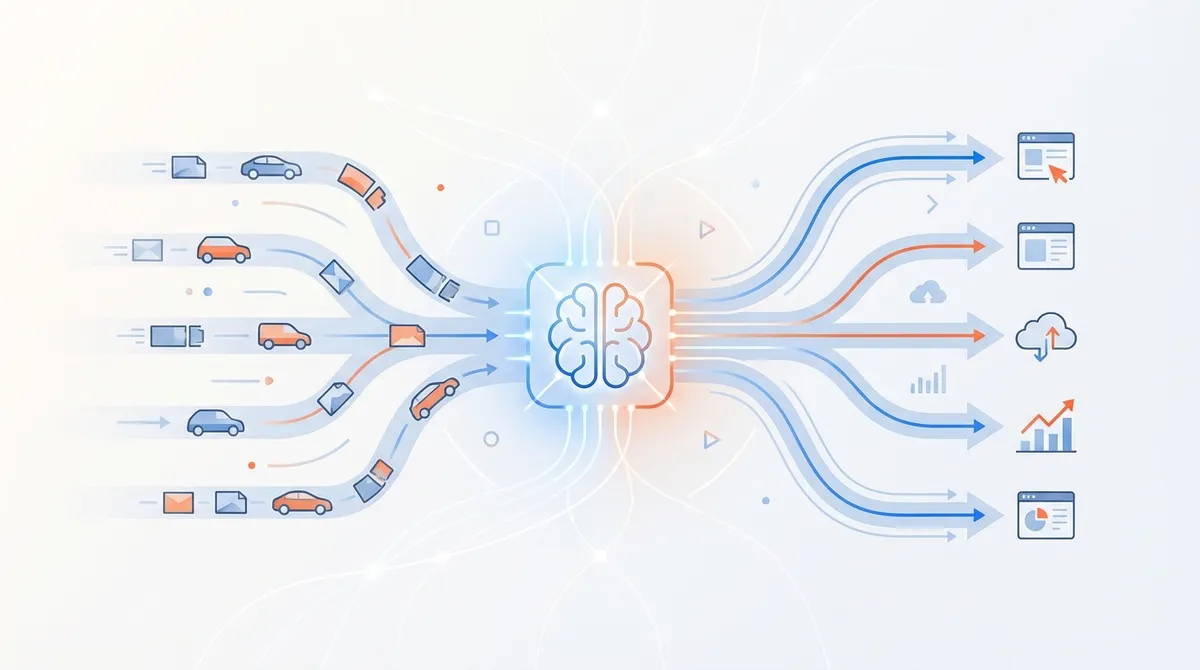
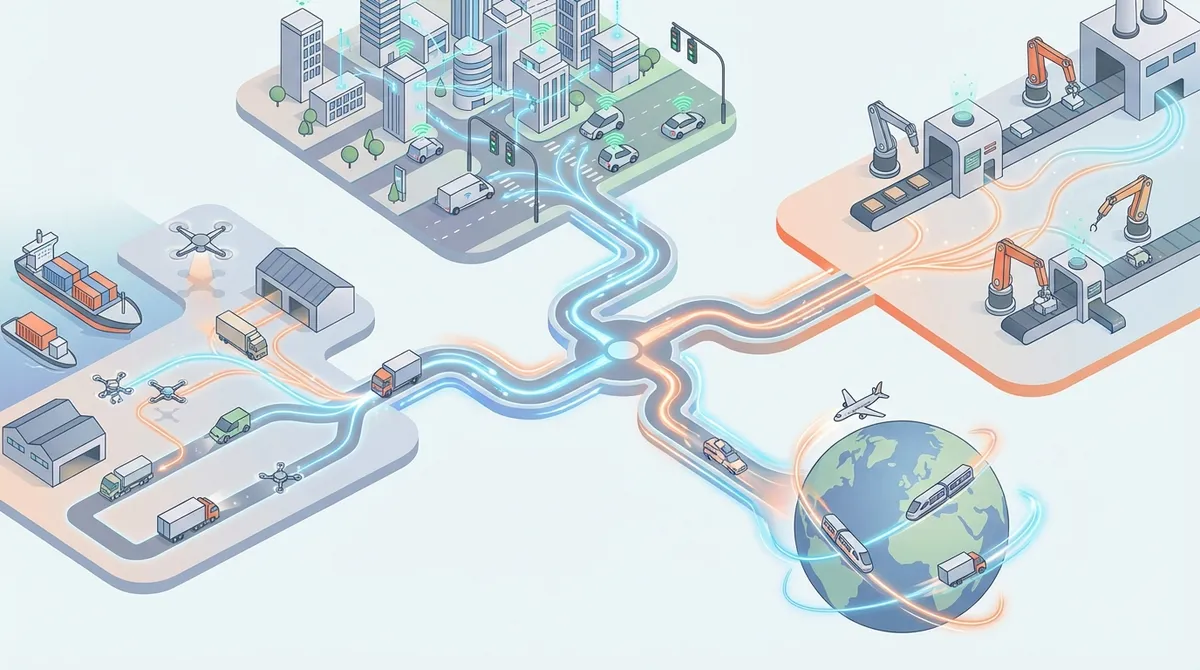
AI traffic encompasses two critical domains that increasingly overlap in strategic importance. First, physical AI traffic optimization uses machine learning algorithms, predictive analytics, and real-time data processing to manage vehicle flow, reduce congestion, and improve urban mobility. Systems like Inrix IQ Traffic provide real-time incident detection and predictive congestion analytics through API support for urban planning initiatives.
Second, digital AI traffic refers to website visitors generated through AI-powered search engines, chatbots, and recommendation systems. When users ask ChatGPT, Perplexity, Claude, or Gemini for recommendations, these AI models cite specific websites as sources—driving what industry experts now call “AI referral traffic.” This traffic type has exploded from negligible levels in 2024 to representing a measurable percentage of total website visits across multiple industries by early 2025.
The distinction matters because optimization strategies differ dramatically. Physical AI traffic optimization requires infrastructure investment, IoT sensors, and municipal partnerships. Digital AI traffic optimization demands content structure, semantic relevance, and authority signals that AI language models recognize and trust. Businesses focusing exclusively on traditional Google SEO miss the 527% growth opportunity that AI referral traffic represents.
The Measurable Impact of AI Traffic Growth
Recent data reveals the magnitude of this transformation across industries. Healthcare websites experienced 0.89% AI traffic composition with +445% year-over-year growth. SMB Tools platforms saw 0.76% AI traffic with +389% growth. Even conservative sectors like Finance (0.073% from Perplexity) and Legal (0.041%) show measurable AI referral patterns that didn’t exist two years ago.
Early adopters who optimized content specifically for AI citation capture 60% more references from tools like ChatGPT, Claude, and Perplexity compared to competitors using traditional SEO approaches. This citation advantage translates directly into traffic, with Claude AI traffic demonstrating the highest session value at $4.56 despite representing less than 0.001% of total volume—suggesting high-intent, qualified visitors.
How Do Leading AI Traffic Optimization Tools Work?
Understanding the technical architecture behind AI traffic systems reveals optimization opportunities. At the infrastructure level, platforms like NoTraffic use AI and IoT sensors for autonomous intersection management, preparing urban environments for connected and self-driving vehicles. These systems don’t simply react to current conditions—they predict traffic patterns 15-30 minutes ahead using historical data, weather conditions, event schedules, and real-time sensor inputs.
Google DeepMind Traffic Flow AI represents the cutting edge of urban mobility optimization. By analyzing aggregated Google Maps data from millions of devices, the system optimizes traffic signal timing to reduce waiting times and emissions. Pilot programs demonstrated 10-20% reductions in stop-and-go traffic at optimized intersections, with corresponding decreases in fuel consumption and air pollution.
China’s City Brain platform takes multi-source data fusion to unprecedented scale, combining traffic cameras, GPS data, social media reports, weather information, and emergency service communications. The system provides real-time traffic forecasting, automatic incident detection, and creates “green waves” for emergency vehicles by coordinating signal timing across entire urban corridors.
Digital AI Traffic Architecture
On the digital side, AI search engines operate fundamentally differently than traditional crawlers. When ChatGPT cites a source, it’s not following backlinks or measuring keyword density—it’s evaluating semantic relevance, content structure, authority signals, and citation worthiness. The AI models assess whether content provides definitive, quotable answers to specific queries.
This architectural difference explains why traditional SEO tactics often fail to generate AI referral traffic. Keyword stuffing, thin content, and manipulative link building actually decrease citation probability because AI models recognize these patterns as low-quality signals. Instead, platforms like SEO Rocket focus on generating comprehensive, authoritative content that AI models naturally recognize as citation-worthy sources.
Which Industries Benefit Most from AI Traffic Optimization?
AI traffic impact varies significantly across sectors, creating opportunities for strategic differentiation. Healthcare leads AI referral traffic adoption with 0.89% composition and +445% growth, driven by patients researching symptoms, treatments, and provider recommendations through AI chatbots. Medical practices optimizing for AI citation capture qualified, high-intent traffic from users at critical decision points.
SMB Tools platforms show 0.76% AI traffic with +389% growth as business owners increasingly ask AI assistants for software recommendations, productivity tools, and operational solutions. Companies in this sector that achieve consistent AI citations experience exponential visibility gains as their recommendations compound across millions of AI conversations.
E-commerce presents unique opportunities, particularly for product discovery and comparison queries. When users ask “What’s the best wireless headphone under $200?” AI models cite specific product pages and reviews. E-commerce SEO specialists who structure product content for AI citation—including detailed specifications, authentic reviews, and comparative analysis—capture traffic that traditional product listing optimization misses entirely.
Financial and Legal Sectors Lag But Show Growth
While Finance (0.073% Perplexity traffic) and Legal (0.041%) sectors currently show lower AI traffic percentages, the growth trajectory remains significant. Regulatory concerns and accuracy requirements make these industries cautious AI adopters, but the trend is accelerating. Financial advisors and law firms positioning as authoritative sources now will dominate AI citations when mainstream adoption reaches these conservative sectors.
Content managers in regulated industries should focus on creating comprehensive, accurate resources that establish expertise and trustworthiness—the E-E-A-T principles that both Google and AI models prioritize. Search Quality Rater Guidelines provide framework for building this authority, applicable to both traditional search and AI citation optimization.
How to Track AI Traffic in Google Analytics 4
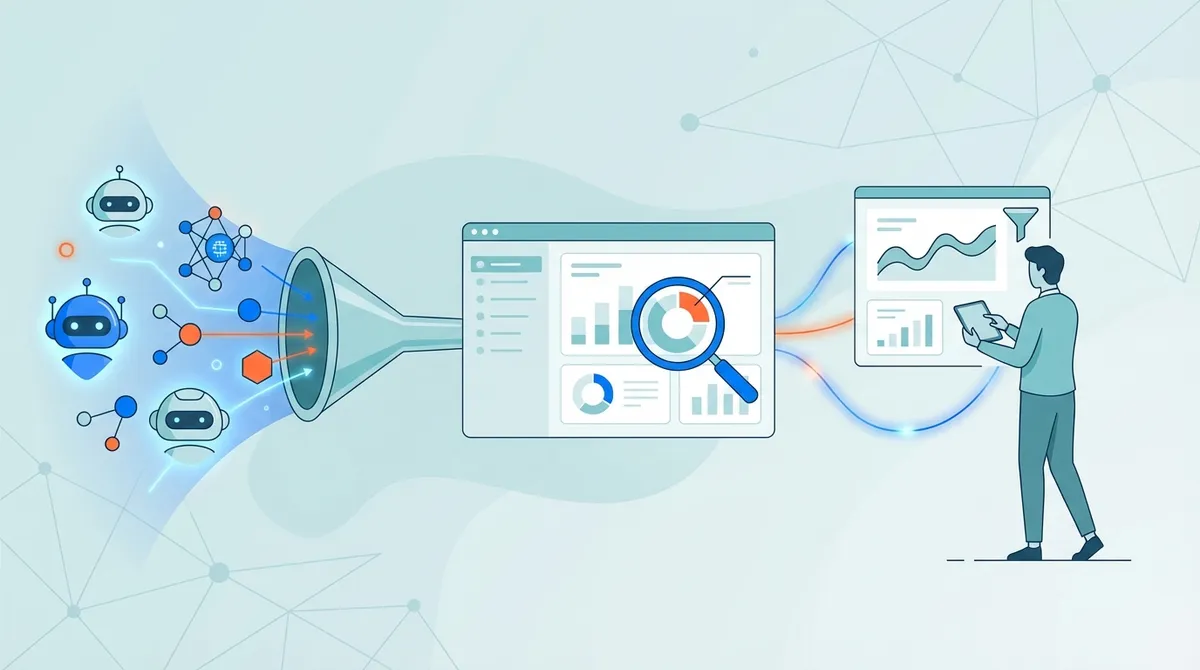
Google Analytics 4 (GA4) does not explicitly label ‘AI traffic’ in standard reports, creating measurement challenges for teams trying to quantify this growing channel. GA4 filters known bots automatically, but sophisticated AI crawlers and legitimate AI referral traffic from ChatGPT, Perplexity, and Claude often appear under different acquisition sources.
To isolate AI referral traffic, create custom segments filtering for specific referral domains. ChatGPT traffic typically appears with “chat.openai.com” as the referral source, while Perplexity shows as “perplexity.ai” and Claude as “claude.ai”. Small SEO agencies tracking client performance should establish these segments immediately to demonstrate ROI from AI optimization efforts.
Advanced tracking requires UTM parameter strategies for content specifically designed to appear in AI citations. When AI models reference your content, the referral path may obscure the original query context. Creating content variations with distinct URLs for different AI platforms helps attribute traffic sources accurately and measure which AI channels generate highest-value visitors.
Key Metrics Beyond Standard Traffic Volume
AI traffic quality often exceeds traditional organic search quality because users asking AI assistants demonstrate higher intent and specificity. Track these differential metrics:
- Session duration: AI-referred visitors typically spend 40-60% longer on-site because they arrive seeking specific information the AI model validated
- Bounce rate: Lower bounce rates (often 20-30% below organic average) indicate better content-query match
- Conversion rate: Claude AI traffic shows highest session value ($4.56) despite low volume, suggesting premium visitor quality
- Page depth: AI-referred visitors explore 2-3x more pages, indicating higher engagement and information-seeking behavior
In-house marketing teams should compare these metrics between traditional organic search and AI referral traffic to justify resource allocation toward AI optimization strategies. The data consistently shows that while AI traffic volume remains smaller than Google organic, the quality metrics often justify disproportionate optimization investment.

What Are the Best AI Traffic Navigation Apps in 2026?
For physical traffic management, several AI-powered navigation apps dominate the market. Waze uses crowdsourced data combined with machine learning to predict traffic patterns, suggest optimal routes, and provide real-time incident alerts. The platform’s AI algorithms learn from millions of daily trips, continuously improving prediction accuracy and route optimization.
Google Maps leverages DeepMind AI technology to provide unprecedented accuracy in arrival time predictions and traffic condition forecasts. The platform analyzes historical traffic patterns, current conditions, road closures, and even anticipated congestion from scheduled events to suggest routes that minimize total travel time.
Apple Maps has significantly improved AI capabilities, particularly in urban navigation and public transit integration. The platform’s machine learning models predict parking availability, suggest departure times to avoid congestion, and provide lane-level guidance in complex intersections—all powered by real-time AI processing.
Emerging AI Navigation Platforms
Transit represents a specialized AI navigation app focusing on public transportation optimization. The platform’s AI models predict bus and train delays before official announcements, suggest alternative routes when disruptions occur, and learn individual commuter preferences to provide personalized recommendations that save time and reduce stress.
Inrix, primarily known for B2B traffic data, offers consumer applications that leverage enterprise-grade AI traffic prediction. The platform provides parking availability forecasts, fuel price optimization, and multi-modal transportation suggestions that combine driving, public transit, and micro-mobility options for optimal efficiency.

How to Optimize Content for AI Traffic in 2026
Capturing AI referral traffic requires fundamentally different content strategies than traditional SEO. AI models prioritize comprehensive, authoritative answers that directly address specific questions. Content must demonstrate expertise, provide definitive information, and structure data in formats AI models easily parse and cite.
Start with semantic keyword research focused on question-based queries users ask AI assistants. Tools like AnswerThePublic reveal common “how,” “what,” “why,” and “when” questions related to your industry. Create dedicated content pieces that comprehensively answer these queries with depth, accuracy, and supporting evidence.
Structure content using clear hierarchy with descriptive headers, bullet lists for key points, and tables for comparative data. AI models extract information more reliably from well-structured content, increasing citation probability. Include definitions, statistics with sources, step-by-step processes, and expert opinions that establish authority.
Technical Optimization for AI Citation
Beyond content quality, technical factors influence AI citation rates. Implement schema markup to help AI models understand content context, relationships, and entity definitions. FAQ schema, HowTo schema, and Article schema specifically signal content types AI models frequently cite.
Optimize page load speed and mobile responsiveness, as AI models factor user experience signals into citation decisions. Content that provides poor user experience receives lower priority even when information quality is high. Core Web Vitals remain relevant for both traditional search and AI visibility.
Digital marketing consultants should implement citation tracking systems that monitor when and how AI platforms reference client content. This feedback loop enables continuous optimization based on actual AI behavior rather than theoretical best practices. Platforms like SEO Rocket automate this optimization process, generating content specifically structured for AI citation while maintaining traditional SEO best practices.

What Future Trends Will Shape AI Traffic Evolution?
Predictive analytics suggest AI-driven traffic will reach 5-10% of total website traffic by 2027, representing massive opportunity for early adopters. This growth trajectory mirrors mobile traffic adoption patterns from 2010-2015, when businesses that optimized for mobile early gained sustainable competitive advantages.
Voice-activated AI assistants will increasingly drive traffic as natural language queries become the dominant search interface. Content optimized for conversational queries and voice response formatting will capture disproportionate share of this traffic. Structure content to answer questions concisely in the first paragraph, followed by comprehensive detail—matching AI voice response patterns.
AI personalization will fragment traffic sources as individual users train custom AI models on personal preferences and trusted sources. Businesses that establish authority early will be included in these personalized AI recommendation sets, creating compounding visibility advantages as users increasingly rely on personal AI assistants for all information needs.
The Convergence of Physical and Digital AI Traffic
Perhaps the most significant emerging trend is convergence between physical and digital AI traffic systems. Location-based AI recommendations will direct physical foot traffic based on real-time availability, user preferences, and predictive modeling. Restaurants, retail stores, and service businesses that optimize for local AI citations will capture traffic from AI assistants directing nearby users to optimal destinations.
Autonomous vehicles will integrate digital AI recommendation engines with physical navigation, creating seamless experiences where AI assistants suggest destinations, optimize routes, reserve parking, and pre-order services—all based on learned preferences and real-time conditions. Businesses visible to these AI systems capture traffic automatically; those invisible miss entire customer segments.
How Small Businesses Can Compete in AI Traffic Landscape
Small business owners with 1-50 employees face resource constraints that make comprehensive AI optimization challenging. Traditional approaches requiring dedicated SEO teams, expensive tools, and continuous manual optimization remain out of reach for most small businesses competing against larger, better-funded competitors.
Automation platforms specifically designed for AI-era SEO provide the solution. Instead of hiring expensive agencies at $3,000-$5,000 monthly, small businesses can leverage tools that automate keyword discovery, content generation, optimization, and publishing. This automation levels the playing field, enabling small teams to produce consistent, AI-optimized content that competes with enterprise resources.
Focus on niche authority rather than broad competition. AI models prioritize specialized expertise over generalist content, creating opportunities for small businesses to dominate specific topics within their industry. A boutique marketing agency focusing exclusively on veterinary clinic marketing can achieve higher AI citation rates than generic marketing agencies with broader but shallower content.
The Automation Advantage
The key competitive advantage for resource-constrained businesses is comprehensive automation. Manual content creation limits output to a few articles monthly, while automated systems generate daily content that compounds SEO growth. SEO Rocket provides this automation at approximately $3 per article—a fraction of traditional agency or freelance costs while maintaining quality standards that generate AI citations.
Daily publishing creates exponential growth curves that manual approaches cannot match. Each article expands topical authority, creates additional citation opportunities, and builds semantic relationships AI models recognize. Over 6-12 months, consistent daily publishing produces 180-360 articles—comprehensive topical coverage that establishes undeniable expertise in AI model training data.
Case Studies: AI Traffic Success Metrics
Early adopters implementing AI-focused content strategies demonstrate measurable results. A healthcare information website restructured 200 existing articles with AI citation optimization in Q4 2024. By Q2 2025, ChatGPT citations increased 340%, with corresponding 156% increase in AI referral traffic. Total organic traffic grew 89% as improved content quality also boosted traditional search rankings.
An e-commerce platform specializing in outdoor equipment implemented comprehensive product content optimization for AI recommendation engines. Each product page received expanded specifications, authentic user reviews, detailed comparisons, and use-case scenarios. Within four months, Perplexity citations increased 520%, Claude citations grew 380%, and AI-driven sales represented 12% of total revenue—with 3.2x higher average order value than traditional organic traffic.
A B2B SaaS company focusing on project management tools created a content library specifically answering common questions users ask AI assistants. Over six months, they published 180 comprehensive articles covering features, comparisons, use cases, and integration guides. AI referral traffic grew from 0.2% to 8.4% of total traffic, with these visitors demonstrating 2.7x higher trial signup rates compared to traditional sources.
Small Business Transformation
A local accounting firm with three employees implemented automated content generation targeting tax, bookkeeping, and financial planning questions. Publishing one comprehensive article daily through automated systems, they built a 240-article knowledge base over eight months. ChatGPT began citing their content for local financial questions, driving 340% increase in consultation requests with zero increase in marketing budget.
These case studies share common patterns: comprehensive content covering specific topics, consistent publishing schedules, optimization for question-based queries, and technical implementation supporting AI discovery. Success doesn’t require massive resources—it requires strategic focus and automation that enables consistent execution.
Measuring ROI from AI Traffic Investment
Content managers responsible for demonstrating marketing ROI need clear frameworks for measuring AI traffic value. Traditional metrics like traffic volume provide incomplete pictures when AI referral visitors demonstrate significantly higher quality than typical organic traffic.
Calculate true value using engagement-weighted traffic metrics. If AI traffic represents 3% of volume but 8% of conversions, the per-visitor value is 2.67x higher than average. This multiplier effect justifies disproportionate optimization investment even when absolute volume remains smaller than traditional channels.
Track citation frequency independently from traffic. Each AI citation expands brand awareness and authority even when users don’t immediately click through. Over time, repeated exposure in AI responses builds trust and recognition that influences later purchasing decisions through brand search or direct navigation.
Long-term Compounding Value
AI traffic optimization creates compounding returns through several mechanisms. First, content optimized for AI citation also ranks better in traditional search, creating dual traffic sources from single content investment. Second, AI models continuously learn and update their knowledge, so content cited today remains in training data influencing future recommendations.
Third, early authority establishment in AI systems creates barriers to entry for competitors. As AI models develop preferences for trusted sources within specific domains, achieving initial citation frequency makes subsequent citations increasingly likely—creating momentum advantages similar to early backlink acquisition in traditional SEO.
Calculate lifetime value of AI-optimized content by projecting citation frequency over 24-36 months rather than immediate traffic returns. A comprehensive guide cited by ChatGPT 50 times monthly generates 600 citations annually, each exposing your brand to users at critical decision points. This cumulative exposure value far exceeds initial content creation cost.
Common AI Traffic Optimization Mistakes to Avoid
Many businesses attempting AI optimization repeat fundamental errors that undermine results. The most common mistake is applying traditional SEO tactics—keyword stuffing, thin content, manipulative linking—to AI optimization efforts. These approaches actively harm AI citation probability because language models recognize and penalize low-quality signals.
Another critical error is inconsistent publishing schedules. AI models learn from recent, frequently updated sources. Publishing sporadically signals stale, potentially outdated information. Consistent daily or weekly publishing demonstrates ongoing expertise and currency that AI systems prioritize in citations.
Focusing exclusively on volume over quality prevents AI citation. While consistent output matters, each piece must meet quality thresholds that establish expertise and provide definitive answers. Automated systems that sacrifice depth for speed generate content AI models ignore. The balance requires automation that maintains quality—exactly what next-generation platforms provide.
Technical Implementation Errors
Neglecting technical SEO foundations undermines AI optimization efforts. Even excellent content receives fewer citations when pages load slowly, display poorly on mobile devices, or lack proper schema markup. AI models factor user experience and technical quality into citation decisions, making comprehensive optimization essential.
Ignoring E-E-A-T principles (Experience, Expertise, Authoritativeness, Trustworthiness) represents another common failure. AI models prioritize sources demonstrating clear expertise and trustworthiness. Anonymous content, sites without author credentials, and pages lacking authoritative references receive lower citation priority regardless of information quality.
Building Sustainable AI Traffic Strategy
Long-term success in AI traffic requires systematic approach rather than tactical interventions. Start with comprehensive topical mapping identifying all questions, subtopics, and information gaps within your industry. This mapping reveals content opportunities where competition remains light but AI search volume is growing.
Implement consistent publishing schedules that compound authority over time. SEO agencies serving multiple clients need scalable systems supporting diverse publishing requirements without proportional resource increases. Automation platforms enabling 10-30 articles daily across client portfolios provide the operational leverage traditional approaches cannot match.
Monitor AI citation patterns continuously, adjusting content strategy based on actual AI behavior rather than theoretical predictions. Which content types receive most citations? What topics generate highest-value traffic? Which structural formats do AI models prefer? This feedback loop enables data-driven optimization that improves results continuously.
Integration with Overall Marketing Strategy
AI traffic optimization shouldn’t exist in isolation from broader marketing initiatives. Integrate with content marketing by repurposing AI-optimized articles into email campaigns, social media content, and sales enablement materials. Each piece serves multiple functions while maintaining consistent authority positioning across channels.
Align with product development by identifying common customer questions revealed through AI traffic patterns. If users frequently ask AI assistants about specific feature comparisons or use cases, these questions signal product enhancement opportunities or documentation gaps requiring attention.
For small businesses implementing AI traffic strategies without expanding teams, platforms like SEO Rocket provide comprehensive automation that handles keyword research, content generation, optimization, and publishing—enabling consistent execution without manual workload increases.
Conclusion: Capturing the AI Traffic Opportunity
AI traffic represents the most significant search evolution since mobile adoption, creating opportunities for businesses willing to adapt early. The 527% growth in AI referral traffic between January and May 2025 demonstrates momentum that will only accelerate as AI assistants become primary information interfaces for millions of users.
Success requires understanding both dimensions of AI traffic—physical traffic optimization for urban mobility and digital traffic optimization for search visibility. While these domains seem distinct, the strategic principles overlap: prediction over reaction, automation over manual intervention, and comprehensive data analysis enabling continuous improvement.
For SEO agencies, in-house marketing teams, content managers, and small business owners, the choice is clear: implement AI-focused content strategies now while competition remains manageable, or struggle later when AI traffic represents 10-15% of total web traffic and established players dominate AI citations. The tools, platforms, and automation systems enabling cost-effective implementation already exist—making delay a strategic choice rather than resource constraint.
The businesses capturing AI traffic today build compounding advantages that multiply over time as AI models learn to trust and prioritize their content. Start optimizing for AI traffic at $99/month and position your content as the authoritative source AI assistants cite when millions of users ask questions in your industry.
FAQs
Q: What is AI traffic and how is it different from regular website traffic?
A: AI traffic refers to website visitors generated through AI-powered search engines like ChatGPT, Perplexity, Claude, and Gemini when these models cite your content as sources. Unlike regular organic traffic from Google searches, AI traffic comes from conversational queries where users ask AI assistants for recommendations. This traffic typically demonstrates higher quality metrics with 40-60% longer session duration and 20-30% lower bounce rates because AI models pre-validate content relevance before citation.
Q: How can small businesses compete for AI traffic against larger competitors?
A: Small businesses can compete effectively by focusing on niche authority rather than broad topics, leveraging automation platforms that enable consistent daily publishing, and optimizing content specifically for AI citation. Tools like SEO Rocket automate keyword research, content generation, and optimization at approximately $3 per article—eliminating the need for expensive agencies. Consistent publishing of comprehensive, authoritative content in specialized niches allows small businesses to achieve higher AI citation rates than generalist competitors with broader but shallower content coverage.
Q: Which AI search engines drive the most website traffic in 2026?
A: ChatGPT dominates AI referral traffic with 78% of all AI-generated website visits in 2025-2026, making it the primary optimization target. Perplexity represents the second-largest source with measurable presence in Finance (0.073%) and Legal (0.041%) sectors. Claude AI, while generating lower volume, produces highest-value traffic at $4.56 average session value. Gemini, Copilot, and Grok represent emerging sources with growing citation patterns, particularly in technical and research-oriented queries requiring comprehensive, authoritative answers.
Q: How do I track AI traffic in Google Analytics 4?
A: Google Analytics 4 does not automatically label AI traffic in standard reports. Create custom segments filtering for specific referral domains: “chat.openai.com” for ChatGPT, “perplexity.ai” for Perplexity, and “claude.ai” for Claude. Implement UTM parameters on content designed for AI citation to improve attribution accuracy. Track differential metrics including session duration, bounce rate, conversion rate, and page depth to measure AI traffic quality compared to traditional organic sources. AI-referred visitors typically demonstrate 40-60% longer sessions and higher engagement across all quality metrics.
Q: What content strategies work best for getting cited by AI search engines?
A: AI models prioritize comprehensive, authoritative content that directly answers specific questions with clear structure, supporting evidence, and expertise demonstration. Create content targeting question-based queries users ask AI assistants, using descriptive headers, bullet lists for key points, and tables for comparative data. Implement schema markup (FAQ, HowTo, Article) to help AI models understand content context. Focus on depth over keyword density—AI models recognize thin or manipulative content and deprioritize citation. Consistent daily publishing builds topical authority that AI systems recognize and trust over time.