
Key Takeaways
-
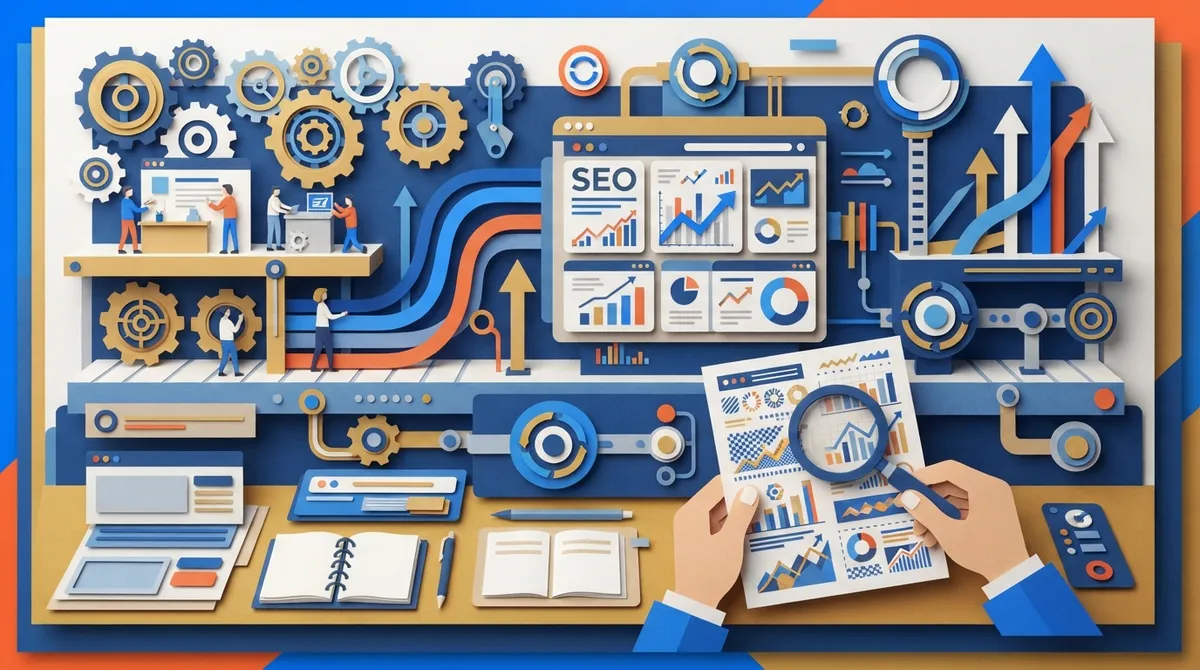
An SEO tool agency combines SEO software with human strategy and expertise, using automation for research and drafting while humans handle fact-checking, editorial review, and strategic decisions to ensure content quality and business impact.
-
77% of SEO teams use AI for content briefs, but 58% refuse full automation of writing; teams with AI-central processes save 7+ hours weekly, proving automation works best when paired with human quality controls, not as a replacement.
-
AI-generated content is Google-approved if accurate and helpful; the risk isn't automation itself but 'scaled content abuse'—producing low-value pages to manipulate rankings—which Google penalizes regardless of who wrote it.
-
Most agencies use 3+ SEO tools together (91% use at least 2); unified platforms handling keyword research through publishing eliminate manual handoffs and reduce costs from $3,000-$5,000/month retainers to ~$99/month for daily publishing.
-
Optimize content for both Google and AI search engines like ChatGPT and Perplexity, not just traditional rankings; this emerging visibility channel is critical in 2026 and often overlooked by agencies focused only on Google metrics.
-
Implement quality controls at every workflow stage—fact-checking, editorial review, duplicate detection, and performance monitoring—to prevent automation from becoming a liability; skipping these steps turns efficiency into ranking risk.
If you’ve been searching for an “seo tool agency” and feeling a little confused about what that even means, you’re not alone. It’s not a standard industry term, and different companies use it differently. Some think it means an agency that just resells software. Others think it’s a fancy way to say “we use AI now.” Neither answer really captures what’s happening in 2026.
Here’s the simple truth: an SEO tool agency is a service provider that blends SEO software with real human strategy. They use automation to handle the boring, repetitive stuff. Then they use expertise to make sure the content actually helps your business grow. Think of it like a chef using a food processor. The machine chops faster, but the chef still decides what goes in the dish.
In this article, we’ll break down exactly what these agencies do, how automation fits in, and how to avoid the common traps that hurt rankings instead of helping them. Whether you run a small agency, manage in-house marketing, or handle content for an e-commerce store, this guide will help you make smarter choices in 2026 and beyond.

What Is an SEO Tool Agency, Really?
An SEO tool agency combines two things: SEO software and human judgment. The software handles keyword research, content briefs, on-page checks, and reporting. The humans decide what matters, what’s accurate, and what fits your brand voice.
This matters because the phrase itself isn’t standardized. Some agencies call themselves “tool agencies” because they built proprietary dashboards. Others use the term because they resell existing platforms. When you’re evaluating one, always ask how they define it. A good agency will explain their exact process, not just throw around buzzwords.
According to a 2026 report from Keyword.com, 77% of surveyed SEO teams already use AI for content briefs. But 58% say they will not fully automate content writing. That tells you something important: even the most tech-forward teams still want a human hand guiding the final product.
The Core Services These Agencies Offer
Most SEO tool agencies handle a mix of the following:
- Keyword and SERP research using live search data
- Topic clustering and content-gap analysis
- Content brief creation for writers or AI tools
- On-page SEO checks (titles, headers, meta descriptions)
- Internal linking suggestions
- Publishing workflows connected to your CMS
- Performance reporting tied to traffic and rankings
Notice that none of these tasks require a human to type every word by hand. That’s the whole point of automation. It frees up time for strategy, not busywork. If you want to understand this shift more deeply, our guide on what content automation actually means for your SEO breaks it down further.
How Automation Fits Into the Agency Workflow
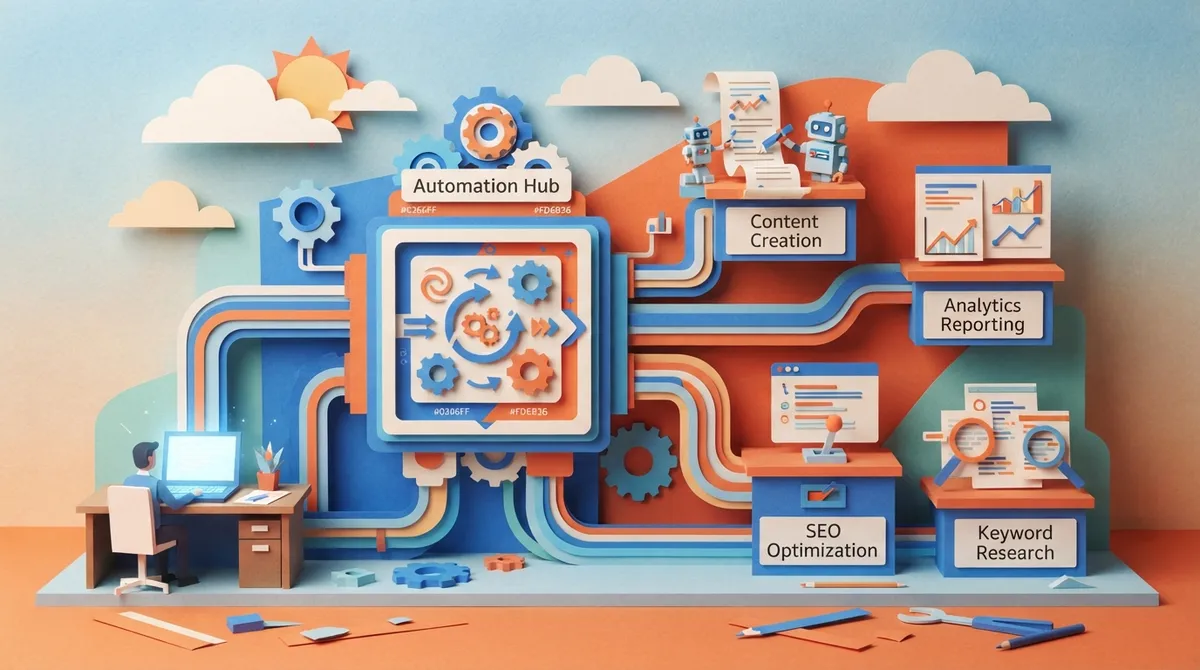
A typical workflow looks like a relay race. Data comes in from tools like Google Search Console and analytics platforms. Then it moves through SEO research software. Next, it heads into content creation and project management tools. Finally, it lands in your CMS for publishing.
Automation handles the handoffs between these stages. It can spot a keyword opportunity, generate a brief, and even draft an article. But someone still needs to check the facts, confirm originality, and hit publish with confidence. Skipping that step is where things go wrong.
The same Keyword.com report found that 81% of teams with AI central to their delivery process saved at least seven hours per week. Compare that to just 11% of teams still testing AI tools. That’s a huge time difference. But remember, this is a reported association, not solid proof that AI alone caused the savings. Good process design plays a role too.
Why Multiple Tools Are the Norm, Not the Exception
You might assume one tool can do everything. In reality, most agencies stitch together several systems. The Keyword.com report also found that 91% of respondents use at least two tools in their SEO stack. A full 65% use three or more.
This is why platforms that combine research, writing, and publishing into one system are becoming so valuable. Instead of juggling five subscriptions, agencies want one dashboard that does it all. That’s exactly the gap SEO Rocket’s features were built to fill, from keyword discovery all the way through daily publishing.
Is Automated or AI-Written Content Safe for SEO?
This is probably the question we hear most. And the answer is simple: yes, but only if it’s done right. Google’s own guidance on generative AI content says AI-assisted content is allowed. What matters is whether the content is accurate, useful, and follows their Search Essentials.
Google does warn against something called “scaled content abuse.” This means producing tons of low-value pages just to manipulate rankings. It doesn’t matter if a human or a machine wrote it. If the content adds nothing new and exists only to game the algorithm, it can hurt your site.
So the real question isn’t “is this AI-written?” It’s “is this actually helpful?” A good SEO tool agency builds quality checks into every step, not just at the end.
Quality Controls Every Agency Should Have
- Fact-checking against reliable sources before publishing
- Editorial review for tone, accuracy, and clarity
- Duplicate and thin-content detection
- Metadata and structured-data validation
- Ongoing monitoring of indexing, traffic, and conversions
Without these steps, automation can turn into a liability instead of an asset. Google’s Search Quality Rater Guidelines place heavy emphasis on experience, expertise, authority, and trust. Skipping quality control puts all of that at risk.
Comparing Manual SEO vs. Tool-Powered Agency Work
| Factor | Manual SEO Process | SEO Tool Agency Approach |
|---|---|---|
| Keyword Research | Hours of spreadsheet work | Automated research with live data |
| Content Planning | Manual calendars, easy to fall behind | Built-in calendar with auto-scheduling |
| Writing Speed | Days per article | One 3,000-word article generated per day |
| Publishing | Manual copy-paste into CMS | Direct publishing to WordPress, Webflow, Shopify, Wix |
| Monthly Cost | $3,000–$5,000 for agency retainers | Starting around $99/month |
| Consistency | Depends on team bandwidth | Daily publishing without gaps |
This comparison shows why so many small agencies and in-house teams are shifting toward automation-first models. It’s not about replacing expertise. It’s about removing the bottlenecks that used to slow everything down.
How to Choose the Right SEO Tool Agency or Platform
Not every automated tool is created equal. Some focus only on Google rankings and ignore how AI search engines like ChatGPT, Perplexity, and Gemini pull information. Others produce short, thin articles that don’t hold up over time. Here’s what to look for instead.
Checklist for Evaluating an SEO Content Automation Partner
- Do they generate long-form content (2,000+ words) instead of thin posts?
- Is the content optimized for both traditional search and AI search engines?
- Can they publish directly to your website without manual copy-paste?
- Do they include built-in SEO scoring and auto-fix suggestions?
- Is there a visual calendar so you can plan weeks or months ahead?
- Do they support multiple client workspaces if you run an agency?
If a platform checks all these boxes, it’s likely built for the way SEO actually works in 2026, not the way it worked five years ago. This is exactly the model behind how SEO Rocket works, where setup takes under 10 minutes and the system handles keyword discovery, writing, optimization, and publishing without you lifting a finger.
Why AI Search Visibility Matters Now More Than Ever
Search isn’t just about Google anymore. People ask ChatGPT, Claude, and Perplexity questions daily. If your content isn’t structured to be referenced by these AI models, you’re missing a growing slice of visibility. Learn more about this shift in our piece on improving your AI search visibility in 2026.
A smart SEO tool agency doesn’t just chase Google rankings. It builds content that can be pulled into AI answers and overviews too. That’s a huge shift from just two or three years ago, and it’s only going to grow.
Measuring Results From SEO Content Automation
Automation is only worth it if you can measure the payoff. Here’s a simple process for tracking what matters:
- Set a baseline for organic traffic, rankings, and conversions before starting
- Track new keyword rankings weekly using rank tracking tools
- Monitor indexing status to confirm pages are actually getting crawled
- Review engagement metrics like time on page and bounce rate
- Check conversion data to see if traffic turns into leads or sales
- Compare cost per article against traditional agency rates
Consistency plays a huge role here. Publishing one article occasionally won’t move the needle much. But daily publishing, done well, builds compounding growth over months. That’s the entire philosophy behind tools designed for daily output rather than occasional bursts.
Real Cost Comparison Worth Knowing
Traditional SEO agencies often charge $3,000 to $5,000 per month for a handful of articles and basic strategy work. Compare that to automated platforms that produce a full 3,000-word article daily for around $99 a month, roughly $3 per article. For small business owners and lean marketing teams, that math is hard to ignore.
If you’re an agency managing multiple clients, the math gets even better. A platform supporting 300 articles a month across 10 client workspaces changes what’s possible for small teams competing against bigger firms. You can explore pricing details on the SEO Rocket pricing page to see how this compares to traditional retainer models.
Common Mistakes to Avoid When Automating SEO Content
Even with great tools, mistakes happen. Here are the ones we see most often, and how to sidestep them.
- Publishing without review: Always have a quality check step, even if it’s quick.
- Ignoring search intent: Content must match what people actually want to know.
- Skipping internal links: Connected content helps both users and search engines navigate your site.
- Chasing volume over value: Ten thin articles won’t beat one genuinely useful one.
- Forgetting AI search engines: Optimizing only for Google leaves visibility on the table.
Avoiding these mistakes is easier when your platform builds quality checks into the workflow automatically. Real-time SEO scoring and auto-fix suggestions catch problems before they become habits. If you want more detail on structuring content that avoids these traps, check out our beginner’s guide to SEO content writing for 2026.
The Future of SEO Tool Agencies
Looking ahead, the line between “agency” and “software” keeps blurring. Fewer businesses want to hire a team of five people to manage blog content. More want a system that runs itself, with occasional human check-ins for strategy and quality control.
This shift favors platforms built for full automation from day one, not tools bolted onto old workflows. Setup that takes minutes instead of weeks. Publishing that happens automatically instead of manually. Content built for both Google and AI search from the start.
We’ve watched this space evolve for years, and the agencies that thrive in 2026 are the ones embracing this shift instead of fighting it. You can see real examples of what this looks like in practice on our writing examples page, or read testimonials from teams already using this approach on our reviews page.
Wrapping It Up
An SEO tool agency, at its best, isn’t about replacing people with robots. It’s about giving smart teams the leverage to do more with less time. Automation handles research, drafting, and publishing. Humans steer the strategy, check the facts, and make sure everything actually serves your readers.
If you’re ready to stop juggling five different tools and start publishing consistent, SEO-optimized content every single day, it might be time to try a fully automated system built for exactly this. You can start for $99/month and see your content calendar fill itself with real keyword opportunities within minutes. Or if you’re ready to jump in right now, go ahead and sign up to connect your site and watch your first article get scheduled today.
FAQs
Q: What does an SEO tool agency do?
A: An SEO tool agency combines SEO software with human strategy to handle keyword research, content creation, optimization, and publishing. Think of it as pairing smart automation with real expertise, so you get speed without losing quality. The best agencies always add human review before anything goes live.
Q: Can AI-generated content actually rank on Google?
A: Yes, it absolutely can! Google has said clearly that AI-assisted content is fine, as long as it’s accurate, useful, and follows their Search Essentials guidelines. The key is making sure your content genuinely helps readers instead of just filling space to game rankings.
Q: Does Google penalize automated or AI-written content?
A: Not simply for being automated. Google’s concern is with what it calls scaled content abuse, meaning tons of low-value pages made just to manipulate rankings. If your automated content is original, helpful, and well-reviewed, you’re in good shape.
Q: How can an agency automate content without creating thin pages?
A: The trick is building quality checks right into the workflow. That means fact-checking, editorial review, duplicate content checks, and monitoring performance after publishing. Automation should speed up the process, not skip the important steps.
Q: What should I look for when choosing an SEO content automation partner?
A: Look for long-form content (2,000+ words), direct publishing to your website, built-in SEO scoring, and optimization for both Google and AI search engines like ChatGPT and Perplexity. A visual content calendar and support for multiple client workspaces are huge bonuses if you’re running an agency.




