
Key Takeaways
-
Search engines rank websites through three steps: crawling (bots discover pages), indexing (analyzing content), and ranking (ordering results by relevance). Understanding these fundamentals helps you focus on what actually matters for visibility.
-
Avoid the 11 common mistakes that quietly tank rankings: poor site structure, keyword stuffing, inconsistent publishing, thin content, and skipping on-page elements like titles and meta descriptions. Consistency and human-focused writing beat outdated tactics.
-
SEO automation platforms handle keyword research, content planning, metadata creation, and scheduling automatically, reducing manual work from hours per week to minutes. This consistency directly improves rankings and traffic growth while costing $99+ monthly versus $3,000-5,000 for agency support.
-
AI-generated content is allowed by Google if it's accurate, original, and helpful with human oversight. Focus on genuine value and quality checks rather than mass-producing thin pages, which violates Google's guidelines and gets filtered out.
Ever wonder why some websites show up on page one of Google while yours sits quietly on page five? You’re not alone. So many business owners, marketers, and agency folks ask the same question: what is SEO and how does it actually work? The good news is that once you understand the basics, you can avoid the small mistakes that quietly hold your website back.
In this friendly guide, we’ll walk through exactly what SEO means, how search engines actually find and rank your content, and the 11 common mistakes people make when they misunderstand the process. Whether you run a small agency, manage in-house marketing, or own a growing business, this article will help you feel confident about your SEO strategy. Let’s get into it together.

What Is SEO, Really?
SEO stands for search engine optimization. In plain terms, it’s the practice of helping search engines like Google understand your website content. It also helps real people find and trust what you’ve written.
Think of SEO as building a clear path for both robots and humans. Search engines need to read your pages easily. People need answers that are helpful, accurate, and easy to digest. When you do both well, your rankings tend to improve naturally over time.
For businesses using SEO Content Automation, this process becomes even more important. You’re not just writing one article. You’re planning, producing, and publishing content consistently, so understanding the fundamentals protects your investment.
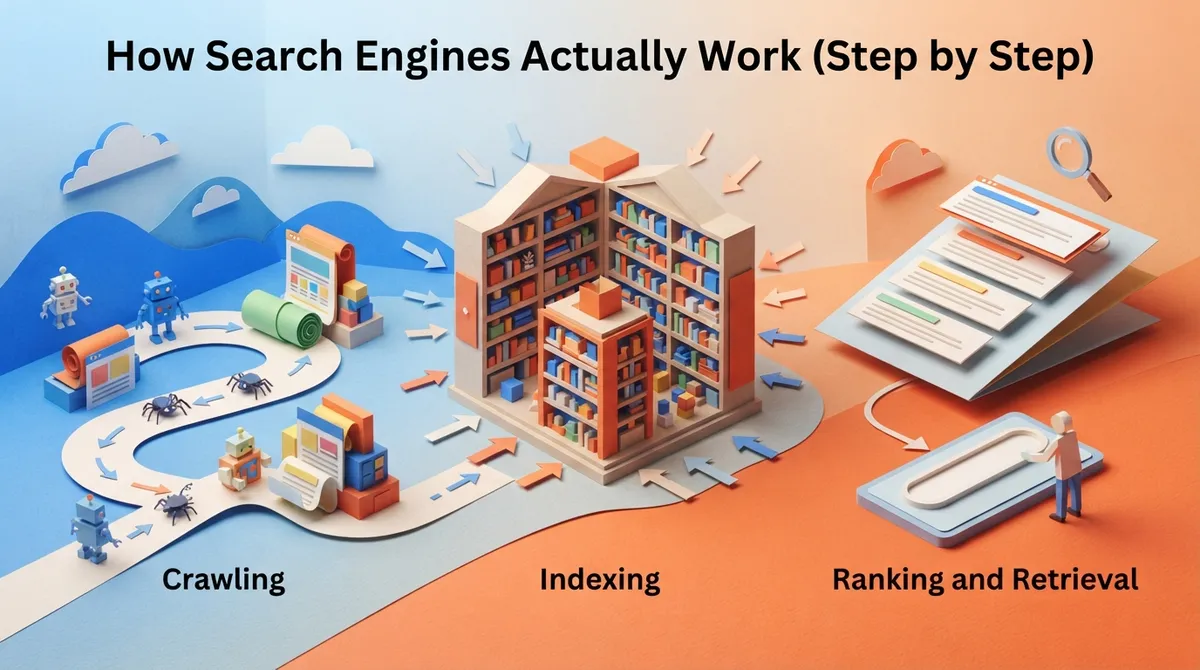
How Search Engines Actually Work (Step by Step)
Search engines like Google follow a fairly simple three-step process. Understanding these steps helps you avoid wasting time on the wrong priorities.
- Crawling: Search engines send out automated programs called bots to scan publicly available web pages. These bots follow links from page to page, discovering new and updated content along the way.
- Indexing: Once a page is crawled, the search engine tries to understand what it’s about. It looks at the words, images, structure, and context, then stores that information in a massive database called an index.
- Ranking: When someone types a search query, the search engine scans its index and decides which pages best answer that question. It then ranks those pages in order, from most to least helpful.
Google’s own documentation notes that its ranking systems evaluate hundreds of billions of web pages in a fraction of a second. That’s a lot of competition, which is exactly why understanding SEO basics matters so much.
11 Common SEO Mistakes That Hurt Your Rankings
Now let’s get into the mistakes. These are the missteps we see again and again, especially among teams new to SEO Content Automation or those scaling up content production quickly.
1. Ignoring Technical Accessibility
If search engines can’t crawl your site properly, nothing else matters. Broken links, slow load times, and confusing site structures make it hard for bots to do their job.
2. Writing for Robots Instead of People
Stuffing keywords unnaturally into your content used to work years ago. Today, Google rewards content that reads naturally and actually helps the reader.
3. Skipping Keyword Research Entirely
Guessing what your audience searches for is risky. A solid keyword research process shows you real search volume, competition levels, and searcher intent, so you’re writing content people actually want.
4. Publishing Inconsistently
One blog post a month won’t build momentum. Search engines and readers both respond well to steady, predictable publishing schedules.
5. Forgetting About On-Page Elements
Titles, headings, meta descriptions, and image alt text all give search engines extra clues about your content. Skipping these is like leaving out important labels on a map.
6. Overlooking Internal Linking
Internal links help search engines understand how your pages relate to each other. They also help readers discover more of your helpful content.
7. Copying Content Instead of Creating Original Value
Google’s helpful-content guidance is clear: original, useful content wins. Thin or duplicated content tends to get filtered out over time.
8. Neglecting E-E-A-T Signals
Experience, expertise, authoritativeness, and trustworthiness matter more than ever. Readers and search engines both want to know that real knowledge sits behind your content.
9. Using AI Content Without Any Human Oversight
Google permits AI-assisted content, but it must be accurate, useful, and original. Skipping human review can lead to factual errors or content that feels generic and unhelpful.
10. Producing Large Amounts of Low-Value Pages
Google’s scaled-content-abuse policy specifically targets sites that mass-produce thin pages purely to manipulate rankings. Quality always needs to come before quantity.
11. Not Tracking Performance Over Time
SEO isn’t a one-and-done task. Without tracking rankings, traffic, and engagement, you won’t know what’s working or what needs adjusting.
How SEO Content Automation Helps You Avoid These Mistakes
Here’s the encouraging part. Most of these mistakes happen because manual SEO work is time-consuming and easy to get wrong. This is exactly where SEO Content Automation platforms shine.
Tools built for this purpose can handle keyword research, content planning, on-page optimization, and publishing schedules automatically. Instead of juggling spreadsheets and guessing at keyword opportunities, you get a structured system that follows best practices consistently.
For example, SEO Rocket’s built-in workflow takes care of keyword discovery using live SEO data, so you always know which topics are worth writing about. You can review the full feature set to see how research, writing, and optimization work together in one place.
Key Areas Automation Can Support
- Keyword research based on real search volume and competition data
- Topic planning through a visual content calendar
- Draft generation that follows on-page SEO best practices
- Metadata creation, including titles and meta descriptions
- Internal link suggestions to strengthen site structure
- Ongoing content updates and quality checks
- Direct publishing to your website on a consistent schedule
Automation should always support human judgment, not replace it entirely. Fact-checking, subject-matter accuracy, and editorial review still matter, even when a platform handles the heavy lifting.
Manual SEO vs. Automated SEO: A Quick Comparison
| Task | Manual SEO Process | Automated SEO Process |
|---|---|---|
| Keyword Research | Hours of spreadsheet work and guesswork | Instant keyword lists with live data |
| Content Planning | Manual calendars, often inconsistent | Automatic scheduling and topic mapping |
| Writing | Freelancers or in-house writers, slow turnaround | Daily long-form articles generated automatically |
| Optimization | Manual checks for headings, links, and metadata | Real-time SEO scoring with auto-fix suggestions |
| Publishing | Copy-paste into CMS manually | Direct publishing to WordPress, Webflow, Shopify, or Wix |
| Monthly Cost | $3,000 to $5,000 for agency support | Starting around $99 per month |
How to Build a Simple, Mistake-Free SEO Routine
Let’s simplify things even further. Here’s a step-by-step routine that keeps your SEO efforts on track, whether you’re doing it yourself or using automation.
- Start with keyword research to find real opportunities based on search volume and intent.
- Plan your content calendar weeks or months in advance instead of writing reactively.
- Write content that answers the searcher’s question clearly and completely.
- Add proper titles, headings, and meta descriptions to every page.
- Link related pages together so search engines understand your site structure.
- Review content regularly for accuracy, freshness, and helpfulness.
- Track rankings and traffic monthly to see what’s actually working.
This routine works whether you’re managing one website or ten client accounts. The key is consistency, not perfection on the first try.
Why This Matters for AI Search Too
SEO isn’t just about traditional Google results anymore. Generative AI search features, like Google’s AI Overviews, rely on the same crawlable, indexed content that powers regular search. Google has confirmed that these features use retrieval-augmented generation, pulling from indexed pages to create grounded answers with supporting links.
This means there’s no secret shortcut or special trick for showing up in AI answers. Solid, foundational SEO remains the priority. If you want a deeper look at how to prepare your content for these evolving search experiences, check out this guide on improving your AI search visibility in 2026.
Helpful Resources to Keep Learning
Google’s own Search Quality Rater Guidelines offer excellent insight into what makes content genuinely helpful. It’s worth a read if you want to understand quality standards straight from the source.
If you’re curious about how content planning fits into a bigger strategy, this piece on building a topic cluster strategy is a great next step. And for teams comparing writing approaches, this beginner’s guide to SEO content writing breaks things down simply.
Bringing It All Together
Understanding what SEO is and how it works doesn’t have to feel overwhelming. At its heart, it’s about making your website easy for search engines to find and genuinely useful for real people. Avoid the 11 mistakes we covered, and you’ll already be ahead of a lot of your competition.
If manual keyword research, content calendars, and publishing schedules feel like too much on your plate, you’re not alone. Many small agencies, in-house teams, and busy business owners are turning to automation to keep their SEO consistent without burning hours every week.
You can see real examples of automated content in action by browsing writing samples here, or check out what other users are saying in the reviews section. For a closer look at how the whole system fits together, our blog is full of practical guides worth exploring.
Ready to put your SEO on autopilot without sacrificing quality? You can start for $99 a month and let automation handle the research, writing, and publishing while you focus on running your business.
FAQs
Q: What is SEO and how does it work step by step?
A: SEO is the practice of helping search engines and people find and understand your website content. It works through three steps: crawling your pages, indexing what they find, and ranking pages based on relevance and quality. Get those three steps right, and you’re well on your way to better visibility.
Q: How can SEO content automation improve an organic search strategy?
A: Automation handles the time-consuming parts of SEO, like keyword research, content planning, and publishing schedules, so you can stay consistent without burning hours every week. It follows best practices automatically, reducing the chance of common mistakes. Many teams find they publish more often and see steadier traffic growth as a result.
Q: Is AI-generated content allowed by Google?
A: Yes, Google allows AI-assisted content as long as it’s accurate, useful, original, and follows their Search Essentials guidelines. The key is making sure a human reviews the content for quality and fact-checking before it goes live. Think of AI as a helpful assistant, not a replacement for good judgment.
Q: How do you automate SEO content without creating spam?
A: The trick is focusing on genuine value instead of just churning out pages. Good automation tools include quality checks, human review steps, and originality, so you’re never just mass-producing thin content. Prioritize helpfulness over volume, and you’ll stay on the right side of search engine guidelines.
Q: How do crawling, indexing, and ranking differ?
A: Crawling is when search engine bots discover your pages by following links. Indexing is when they analyze and store that content in a giant database. Ranking is the final step, where the search engine decides which pages best answer a specific search query and puts them in order.