Key Takeaways
-
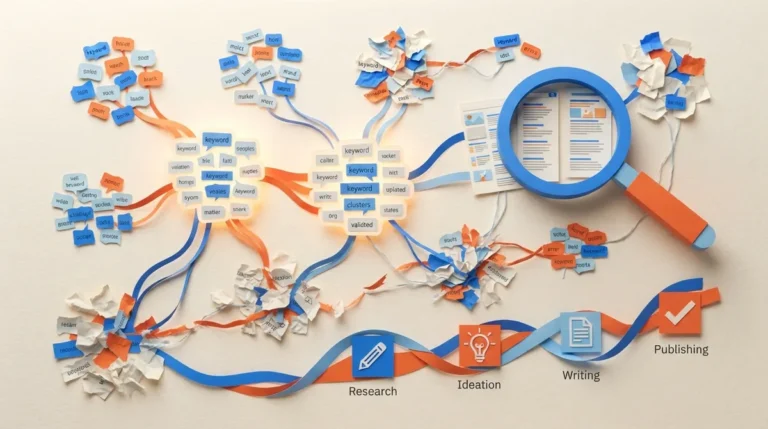
Modern content automation platforms now handle the entire SEO workflow—keyword research, article writing, optimization, and publishing—in one place, eliminating the need to juggle multiple separate tools and subscriptions.
-
A small business can build a functional SEO stack for $75-$150/month by combining one paid content automation platform with free tools like Google Search Console and Analytics 4, compared to $3,000-$5,000/month for traditional agency services.
-
Traditional SEO suites excel at research and reporting but still require separate tools for writing and publishing, leaving gaps that waste time and require multiple logins and subscriptions.
-
AI search optimization is now essential—platforms that optimize content for ChatGPT, Perplexia, and Gemini are becoming critical since many users skip Google searches entirely for recommendations.
-
Human review of automated content remains important; verify factual accuracy, local relevance, brand voice, search intent alignment, and quality standards before publishing, even with AI assistance.
-
Track qualified organic traffic, non-branded impressions, rankings for commercially relevant terms, and leads generated—not just article volume—to measure whether your SEO investment actually drives business results.
Running a small business is hard enough without spending your evenings buried in spreadsheets, trying to figure out which keywords might bring in customers. If you have ever typed “small business SEO tools” into Google at 11 p.m., you are not alone. Most owners want the same thing: more visitors, more leads, and less busywork. The good news? In 2026, small business SEO tools have grown up. They no longer just hand you a list of keywords and wish you luck. The best ones now research, plan, write, and publish content for you.
This guide walks you through the two main paths small businesses take: traditional all-in-one SEO suites versus modern content automation platforms. We will cover pricing, features, pros and cons, and how to pick the right fit for your business type. Whether you run a local service company, an online store, or a marketing agency juggling multiple clients, you will walk away knowing exactly what to look for.

What Small Business SEO Tools Actually Do
Before comparing options, let’s get clear on what these tools cover. Most small business SEO tools fall into four buckets, and understanding them helps you avoid buying something you don’t need.
- Keyword and competitor research: Finds search terms your customers use and shows what competitors rank for.
- Technical SEO auditing: Scans your site for broken links, slow pages, and crawl errors.
- Content optimization and generation: Helps you write or automatically creates blog posts and pages that target those keywords.
- Rank and performance tracking: Shows whether your rankings, traffic, and leads are actually moving.
Here’s the catch. Many small businesses buy a research tool, then still need a writer, then still need someone to publish and track results. That’s three separate tools and three separate bills. This is exactly why content automation platforms have become so popular. They connect the whole workflow instead of leaving you to stitch it together yourself.
All-in-One SEO Suites: The Traditional Route
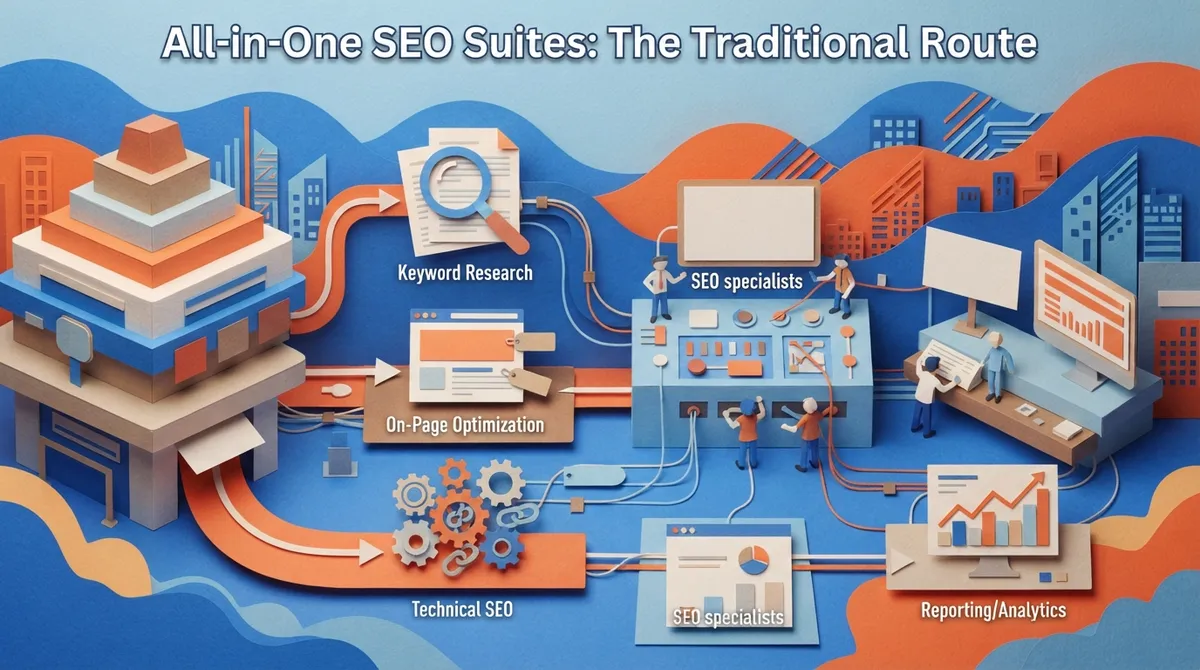
Tools like large SEO suites have been around for years. They are strong at research, site audits, and reporting. But they were built for SEO professionals, not busy small business owners who just want content published.
Pricing Snapshot for Popular SEO Suites
Pricing varies a lot depending on the provider and plan. Here is a general snapshot based on current market comparisons, though you should always confirm details directly with any vendor before buying.
| Tool Type | Typical Monthly Price | Best For |
|---|---|---|
| Basic keyword tool (e.g. Ubersuggest-style) | ~$12/month | Solo owners on a tight budget |
| Mid-tier starter SEO platform | ~$29-$49/month | Small teams needing light research |
| Full-featured research suite (e.g. Ahrefs Lite) | ~$129/month | Agencies doing deep competitor analysis |
| Full-featured suite (e.g. Semrush entry plan) | ~$139/month | Marketing teams needing reporting tools |
| Technical crawler (e.g. Screaming Frog) | ~$279/year | Technical SEO audits only |
Notice something? None of these tools actually write or publish your content. You still need a writer, an editor, and someone to log into WordPress or Shopify and hit publish. For a small business owner wearing five hats already, that gap is exhausting.
Content Automation Platforms: The Modern Approach
Content automation platforms flip the script. Instead of giving you data and leaving you to act on it, they close the loop. They find the keyword, plan the topic, write the article, optimize it, and publish it to your website. Some plans on the market advertise 30 or more articles a month for roughly $39-$99, though publishing volume alone does not guarantee rankings or sales, so quality controls matter just as much as speed.
This is where SEO Rocket stands out. Instead of forcing you to juggle a research tool, a writing tool, and a publishing plugin, it handles the entire pipeline in one place. You connect your website, review the keyword opportunities it finds, approve your content calendar, and it takes care of the rest. Setup takes under 10 minutes, and there is nothing left dangling for you to manually finish.
How the SEO Rocket Workflow Compares
- Connect your site (WordPress, Webflow, Shopify, or Wix).
- Review keyword opportunities based on real search volume, competition, and intent.
- Approve your content calendar weeks or months in advance.
- SEO Rocket generates a 3,000+ word article optimized for both Google and AI search engines.
- The article auto-publishes to your site with images, internal links, and metadata already in place.
- You track performance and let the system refine future topics based on results.
Compare that to the traditional route, where each of those steps often requires a different login, a different subscription, and a different person on your team. If you want to see real examples of what this looks like in practice, the writing examples page is worth a look before you commit to any plan.
Feature Comparison: Suites vs. Automation Platforms
| Feature | Traditional SEO Suite | Content Automation Platform |
|---|---|---|
| Keyword research | Yes | Yes, built-in |
| Content writing | No (separate tool needed) | Yes, fully automated |
| Direct CMS publishing | Rarely | Yes |
| AI search optimization (ChatGPT, Perplexity, Gemini) | Limited | Yes, built for it |
| Daily publishing cadence | Manual only | Automatic, one article per day (Business plan) |
| Team collaboration | Often limited by seat count | Unlimited team members |
| Typical monthly cost | $29-$165+ | $99/month for 30 articles |
If you want to dig deeper into how automated internal linking, metadata, and content structure come together behind the scenes, this piece on automated internal linking breaks it down clearly.
Which Option Fits Your Business Type
Not every small business needs the same tool. Here’s a quick breakdown based on business model.
- Local service businesses (plumbers, dentists, salons) need local keyword discovery, Google Business Profile insights, and location pages. Automation platforms that publish consistently help these businesses build topical authority in their city over time.
- E-commerce stores need product and category page content at scale. Manual writing simply cannot keep pace with hundreds of SKUs, which makes automated content generation especially valuable here.
- Small SEO agencies need to serve multiple clients without hiring more writers. A platform built for multi-client workflows, like the Agency plan, solves this directly.
- In-house marketing teams at mid-sized companies need consistent output without burning out one or two content staffers.
- Digital marketing consultants want a tool that helps them deliver faster results and stand out from other consultants offering the same manual services.
For example, a local dental practice like Smile District benefits from steady, locally relevant blog content that answers real patient questions month after month, rather than one-off posts written whenever someone finds the time.
Building a Realistic SEO Stack on a Small Budget
You don’t need to spend a fortune to get real results. A practical small-business stack often combines a few free tools with one paid platform that does the heavy lifting.
- Google Search Console (free) to monitor how Google sees your site.
- Google Analytics 4 (free) to track visitor behavior and conversions.
- Google Business Profile (free) if you serve local customers.
- One paid content automation platform to handle research, writing, and publishing.
Industry estimates suggest a solo founder or small business can run a functional SEO stack for roughly $75-$150 per month by pairing one automation platform with these free tools. Compare that to hiring a traditional agency, which often costs $3,000-$5,000 a month for similar output. You can review current plans and what’s included on the pricing page to see how the numbers stack up for your business.
Human Review Still Matters
Automation should help you, not replace good judgment. Even with AI-assisted drafting, someone on your team should check a few things before hitting publish.
- Factual accuracy and up-to-date claims
- Local relevance and correct business details
- Brand voice and tone consistency
- Search intent alignment with the target keyword
- Compliance with search engine quality standards
Google’s own Search Quality Rater Guidelines make it clear that helpful, trustworthy content wins over thin or spammy pages, no matter how it was produced. That’s why the strongest platforms build in real-time SEO scoring and fix suggestions, so quality checks happen automatically rather than as an afterthought.
Measuring What Actually Matters
Publishing 30 articles a month means nothing if none of them bring in customers. Content volume is not a success metric by itself. Instead, track these numbers monthly.
- Qualified organic traffic (not just total visitors)
- Non-branded impressions in Google Search Console
- Rankings for commercially relevant search terms
- Leads or sales generated from organic content
- Conversion rate on blog and landing pages
- Cost per organic acquisition compared to paid ads
If you’re curious how these metrics tie back into your content strategy, this guide on Google Analytics integration shows how to connect the dots between publishing and real business outcomes.
Why AI Search Visibility Is the New Frontier
Ranking on Google is no longer the whole game. More people now ask ChatGPT, Perplexity, Gemini, or Claude for recommendations instead of typing into a search bar. Small business SEO tools that only optimize for Google are already behind.
This is a core reason SEO Rocket structures every article to be citation-friendly for AI models, not just crawlable for Google. If you want to understand how this shift works in practice, this article on improving AI search visibility is a great starting point. You can also browse the full feature list to see exactly how AI-optimized publishing works under the hood.
Final Checklist Before You Choose a Tool
Use this quick checklist to evaluate any small business SEO tool before you commit your budget.
- Does it connect keyword research directly to content creation?
- Can it publish directly to your CMS without manual copy-pasting?
- Does it optimize for AI search platforms, not just Google?
- Are there clear usage limits, and do they match your growth plans?
- Does it include human-in-the-loop review options?
- What is the real cost per article once you add up every tool needed?
You can also browse customer reviews to see how other small business owners and agencies answered these same questions before choosing their stack. And if you want more comparisons like this one, our blog covers dozens of tool breakdowns and strategy guides for 2026.
Wrapping It Up: Pick the Path That Saves You Time
Small business SEO tools have come a long way from simple keyword lists. Today, you get to choose between piecing together research, writing, and publishing tools yourself, or letting one platform handle the entire workflow automatically. For most small business owners, agencies, and marketing teams, the second path saves time, saves money, and produces more consistent results.
If you’re ready to stop juggling five different logins and start publishing SEO-optimized content on autopilot, you can start for $99 a month and see your first article go live within days. Or if you’d rather explore the dashboard first, go ahead and sign up to get started today.
FAQs
Q: What are the best small business SEO tools for a limited budget?
A: It really depends on what you need most. If you just need keyword ideas, a basic tool starting around $12 a month works fine. But if you want research, writing, and publishing all handled for you, an all-in-one content automation platform often ends up cheaper overall since you’re not paying for three separate subscriptions.
Q: Can AI SEO tools actually write and publish blog posts automatically?
A: Yes, and this is one of the biggest shifts we’ve seen recently. Platforms like SEO Rocket can research a keyword, write a full 3,000-word article, and publish it directly to your WordPress, Shopify, or Webflow site without you lifting a finger. It’s a huge time saver compared to the old way of doing things.
Q: What’s the difference between an SEO suite and a content automation platform?
A: Great question, and one we get a lot. SEO suites are mostly built for research, audits, and reporting. They’re powerful, but you still need separate tools to write and publish content. Content automation platforms connect the whole process, so you get research, writing, and publishing in one place.
Q: How do I choose an SEO tool for a local service business?
A: Look for a tool that understands local search intent and can help you build location-specific content consistently. Automation platforms that publish regularly tend to build local authority faster than one-off blog posts written whenever there’s spare time.
Q: How can a small business measure the ROI of automated SEO content?
A: Don’t just count articles published, that number alone doesn’t tell you much. Instead, track organic traffic growth, rankings for terms that matter to your business, and how many leads or sales come from your content. Those numbers give you the real picture of whether your investment is paying off.