
Key Takeaways
-
Most teams searching for Ahrefs alternatives need finished, published content that ranks, not just keyword data—Ahrefs finds opportunities but doesn't write, optimize, or publish articles automatically.
-
Full-suite platforms like Semrush ($117-140/month) offer research plus AI writing tools, while budget options like SE Ranking ($52/month) work better for freelancers, but none fully automate the writing-to-publishing workflow.
-
Stacking five separate tools (research, optimization, AI writing, analytics, CMS) creates friction with multiple logins and manual copy-pasting; fully automated platforms eliminate this by combining keyword research, writing, optimization, and publishing in one system.
-
Semrush's backlink index now exceeds Ahrefs' (43 trillion vs. 35 trillion links in 2026), and Semrush includes built-in content generation features, making it stronger for agencies wanting an all-in-one research and writing platform.
-
AI search visibility through ChatGPT, Perplexity, and Claude is now critical—traditional Google-only SEO strategies miss growing traffic from AI-generated answers that cite sources differently than classic search rankings.
-
Small agencies, in-house teams, and content managers save significant time and money by switching to automated systems that publish optimized articles daily rather than manually managing research, writing, and publishing across multiple tools.
If you have ever typed “ahrefs competitors” into Google at 11 PM, wondering if there is a better way to handle your SEO workload, you are in good company. Ahrefs is a fantastic tool for backlink research and keyword discovery. But here is the honest truth: finding a keyword is only step one. You still have to write the article, optimize it, and publish it. That is where a lot of small agencies, in-house teams, and busy business owners hit a wall.
This guide walks you through the best Ahrefs competitors and alternatives in 2026, with a focus on tools that go beyond research and actually help you produce content. We will cover full-suite SEO platforms, content optimizers, budget picks, and enterprise tools. By the end, you will know exactly which type of tool fits your workflow, and why more teams are shifting toward automated content systems instead of juggling five different subscriptions.

Why People Look for Ahrefs Competitors in the First Place
Ahrefs is well known for its backlink data, keyword research, and competitor analysis. It is a trusted name in SEO. But most teams do not just need data. They need finished, published content that ranks.
Ahrefs generally helps you find opportunities. It does not write your articles, optimize them for on-page SEO, or publish them to your website. That gap is exactly why so many marketers search for alternatives.
Here are the most common reasons people start comparing Ahrefs to other tools:
- They want built-in content generation, not just keyword lists
- They need a lower price point for a small team or solo business
- They want automated publishing instead of manual copy-pasting
- They need bigger backlink indexes or different data angles
- They want AI-assisted briefs and drafts baked into the platform
- They manage multiple client accounts and need scalable workflows
The Main Categories of Ahrefs Alternatives
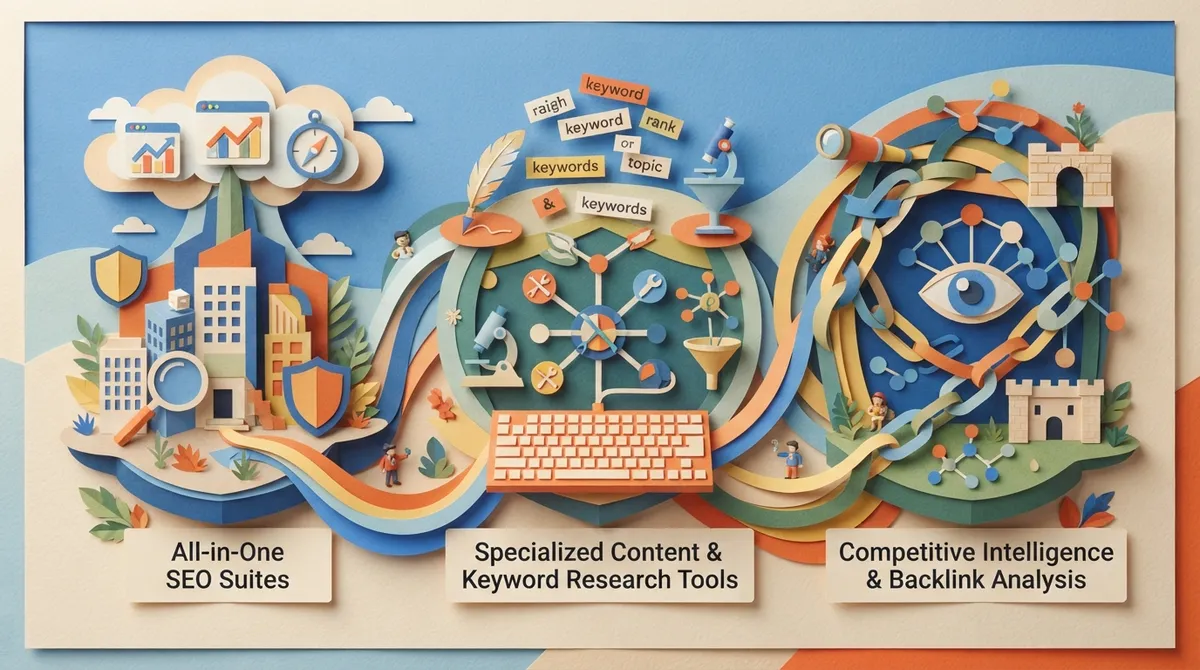
Not every Ahrefs competitor does the same job. It helps to think of them in three buckets.
1. Full-Suite SEO Platforms
These tools try to do everything Ahrefs does, plus a bit more. Semrush is the most common comparison here. It combines keyword research, backlink analysis, competitor gap reports, rank tracking, and site audits. It also includes AI-assisted writing features like ContentShake AI, making it a strong pick for agencies that want one dashboard for research and drafting.
SE Ranking is another full-suite option, but it leans toward a lower price point. It offers keyword research, rank tracking, site audits, and backlink monitoring, which makes it popular with freelancers and small-to-midsize teams.
2. Content Optimization Specialists
Surfer SEO and Clearscope fall into this group. They do not replace Ahrefs. Instead, they analyze top-ranking pages and tell you what topics, structure, and keywords to include in your draft. Surfer leans into AI-assisted writing workflows, while Clearscope focuses on grading and refining content you already have.
3. Enterprise Content-Operations Platforms
Bigger organizations often need more than research and optimization. They need workflow management, bulk publishing, governance, and reporting across dozens or hundreds of pages. Tools like seoClarity, BrightEdge, and AirOps live in this space. They are built for scale, but they usually come with custom pricing and steeper learning curves.
Top Ahrefs Alternatives Ranked by Use Case
Here is a practical ranking based on what most teams actually need in 2026.
- Semrush – Best all-around alternative for agencies and larger marketing teams that want research, competitor analysis, and AI content tools in one place.
- SE Ranking – Best budget-friendly full-suite option for freelancers and small agencies.
- Surfer SEO – Best for teams that already have a writer or AI tool and just need on-page optimization guidance.
- Clearscope – Best for content teams focused on grading and refining existing drafts.
- Moz Pro – Best for teams that want an established toolkit with strong link metrics.
- SpyFu – Best for competitor keyword and paid search intelligence.
- Majestic – Best for teams that care primarily about deep backlink analysis.
- Ubersuggest – Best cheap option for solo bloggers and very small businesses.
- Mangools – Best for simplicity and ease of use.
- seoClarity or BrightEdge – Best for enterprise teams needing bulk workflow automation and governance.
Pricing Comparison: What These Tools Actually Cost
Pricing varies a lot depending on features, usage limits, and whether AI credits are included. Here is a snapshot based on 2026 comparison data.
| Tool | Approximate Starting Price | Best For |
|---|---|---|
| Semrush | $117–$140/month | Agencies, full-suite research + AI writing |
| SE Ranking | ~$52/month | Freelancers, small agencies |
| Surfer SEO | $49–$59/month | On-page content optimization |
| Clearscope | ~$129/month | Content grading and briefs |
| Moz Pro | ~$99/month | Established SEO toolkit |
| Majestic | ~$49.99/month | Backlink-focused research |
| SpyFu | ~$39/month | Competitor keyword + PPC data |
| Ubersuggest | ~$12/month | Budget-conscious solo users |
| seoClarity | Custom pricing | Enterprise bulk workflows |
Keep in mind that prices and plan limits change often, so it is worth double-checking before you commit. One 2026 comparison even noted that Semrush’s backlink index sits around 43 trillion links, compared to roughly 35 trillion for Ahrefs, though these numbers depend heavily on how each company counts and updates its data (source: WebSEOTrends, 2026).
Why Research Tools Alone Are Not Enough Anymore
Here is the part most comparison articles skip. Even if you pick the “best” Ahrefs alternative for research, you still have a content gap to fill. Someone has to turn that keyword list into a finished article. Someone has to optimize it. Someone has to publish it and keep the schedule consistent.
For small agencies juggling multiple clients, that workload adds up fast. For in-house marketing teams with limited headcount, it can feel impossible to keep pace. For content managers running large blogs, manual publishing becomes a bottleneck no matter how good your keyword research is.
This is exactly the gap that SEO Rocket’s feature set is built to close. Instead of stopping at keyword discovery, SEO Rocket takes the next steps automatically: writing, optimizing, and publishing full articles every single day.
A Practical Stack vs. a Fully Automated System
Many teams try to solve this by stacking tools together:
- A research platform like Ahrefs, Semrush, or SE Ranking for keywords
- A content optimizer like Surfer or Clearscope for on-page guidance
- An AI writing tool for drafting
- Google Search Console and analytics for tracking performance
- A CMS plugin or manual process for publishing
That is five separate logins, five separate learning curves, and a lot of copy-pasting between tabs. It works, but it is slow and prone to human error.
SEO Rocket was built to replace that entire stack with one system. It includes built-in keyword research with live SEO data, so you are not guessing which topics are worth your time. You can read more about how the platform actually plans and writes content on the how it works page.
How SEO Rocket Compares to a Traditional Ahrefs Workflow
Let’s break this down step by step, the way you would actually experience it.
- Keyword research: Instead of manually exporting keyword lists from Ahrefs and deciding what to prioritize, SEO Rocket surfaces real opportunities based on search volume, competition, and intent, directly inside its calendar.
- Content planning: Rather than managing a spreadsheet, you drag a keyword into the built-in calendar. That is the entire planning step.
- Writing: One full, SEO-optimized article gets generated per day for standard plans, following on-page best practices automatically.
- Optimization: Metadata, internal links, external links, and structure are handled as part of the generation process, not a separate task.
- Publishing: Articles go live directly to WordPress, Webflow, Shopify, or Wix without you copying a single word.
- Monitoring: You track what is working and adjust your keyword calendar going forward.
This is a meaningfully different experience than using Ahrefs (or any research-only tool) and then manually handling the other five steps yourself. If you want to see real output examples before deciding, the writing examples page shows exactly what a finished article looks like.
Who Benefits Most From an Automated Approach
Different teams get different value here, so let’s break it down by audience.
Small SEO Agencies
You are managing multiple client accounts with a small team. Manually researching keywords in Ahrefs and then writing articles for each client does not scale well. An automated system lets you serve more clients without hiring more writers.
In-House Marketing Teams
You likely wear five hats already. Consistent publishing often falls to the bottom of the list when budgets are tight and deadlines pile up. Daily automated articles keep your blog active even during your busiest weeks.
Content Managers
If you oversee a large site with hundreds of pages, consistency is everything. An automated calendar that fills itself with relevant keywords takes a huge chunk of planning off your plate.
Digital Marketing Consultants
You need to show clients fast, visible results. Being able to say “we publish daily, optimized content automatically” is a strong differentiator compared to competitors who bill hourly for manual writing.
E-commerce SEO Specialists
Product and category pages need fresh, optimized content at scale. Manually writing hundreds of pages is not realistic, but an automated system can keep pace with your catalog.
Small Business Owners
You do not have time to learn a complex SEO tool, let alone manage a content calendar by hand. A system that handles research, writing, and publishing for a flat monthly cost is far more practical than hiring an agency for $3,000 to $5,000 a month.
A Simple Framework for Choosing Your Ahrefs Alternative
Use this checklist to figure out what actually matters for your situation.
- Do you need raw research data, or do you need finished content?
- How much manual work are you willing to do each week?
- What is your monthly budget, and does it include writing costs?
- Do you manage one website or multiple client sites?
- Do you need AI search visibility for platforms like ChatGPT and Perplexity, not just Google?
- How important is publishing speed and consistency to your growth goals?
If your honest answer leans toward “I want this handled for me,” a fully automated platform will likely save you more time and money than stacking multiple research and writing tools. If you are curious about pricing tiers for different team sizes, the pricing page breaks down options for solo businesses and agencies alike.
Beyond Google: Why AI Search Visibility Matters Now
Most Ahrefs alternatives were built with Google in mind. But search behavior is shifting. People now ask ChatGPT, Perplexity, Claude, and Gemini questions directly, and those tools cite sources in their answers.
Content structured for traditional SEO does not always translate well into AI-generated answers. This is a newer consideration that many legacy tools have not fully adapted to yet. If your content strategy only optimizes for classic Google rankings, you may be missing a growing share of search traffic. According to Google’s own Search Quality Rater Guidelines, helpfulness and trustworthiness remain central to how content gets evaluated, which applies whether a human or an AI system is doing the evaluating.
Real-World Considerations Before You Switch Tools
Switching your SEO stack is not something to do on a whim. Here are a few things worth checking first.
- Export your current keyword lists and historical data before canceling any subscription
- Check whether your new tool integrates with your CMS (WordPress, Webflow, Shopify, Wix)
- Confirm whether pricing includes content generation or just research
- Ask about team seats if you manage multiple people or clients
- Look for a trial period so you can test real output before committing
If you want a deeper look at how automated publishing actually works day to day, our guide to content automation SEO covers the mechanics in more detail. And if you are still comparing keyword tools specifically, this breakdown of automated keyword research tools is a good next read.
For businesses that also care about local visibility alongside content publishing, working with a trusted local partner matters too. Local service businesses like Smile District show how consistent, well-optimized content pairs naturally with strong local reputation management.
Final Thoughts: Research Tools vs. Full Automation
Ahrefs and its competitors are genuinely useful for understanding the SEO landscape. Semrush, SE Ranking, Surfer, Clearscope, and the enterprise platforms each solve a piece of the puzzle. But none of them, on their own, take you from “here is a keyword” to “here is a published, optimized article” without manual effort somewhere in between.
SEO Rocket was built to close that entire gap. It combines built-in keyword research with automated writing, optimization, and daily publishing, all from one dashboard. Setup takes under 10 minutes, and articles publish directly to your site without any copy-pasting. For a full walkthrough of what is included, check the features overview, read what current users say on the reviews page, or browse the FAQs for common setup questions.
If you are ready to stop juggling separate tools for research, writing, and publishing, you can start for $99/month and let the system handle your content calendar from day one. Or if you just want to explore the platform first, you can sign up and see your first automated article inside minutes. For more SEO strategy breakdowns like this one, feel free to read our blog anytime, and if you have specific questions, our team is always reachable through our support channel.
FAQs
Q: What is the best Ahrefs competitor for SEO content automation?
A: It really depends on what you need! If you want research plus AI writing help, Semrush is a solid pick. But if you want the entire process automated, from keyword discovery to published articles, a dedicated content automation platform will save you far more time.
Q: Is Semrush better than Ahrefs for content marketing and competitor research?
A: Semrush and Ahrefs are both strong, and it often comes down to personal preference and pricing. Semrush edges ahead for teams wanting built-in AI content tools alongside research, while Ahrefs remains a favorite for deep backlink analysis.
Q: Which Ahrefs alternative has the best AI content-generation features?
A: Surfer SEO leans into AI-assisted drafting, and Semrush offers ContentShake AI. That said, neither one fully automates the writing and publishing process the way a dedicated content automation platform does.
Q: Is Surfer SEO a replacement for Ahrefs or only a content optimization tool?
A: Surfer is primarily a content optimization tool, not a full Ahrefs replacement. It helps you structure and improve drafts based on top-ranking pages, but it does not replace Ahrefs’ backlink and keyword research depth.
Q: What is the cheapest Ahrefs alternative for small businesses and agencies?
A: Ubersuggest and SE Ranking tend to be the most budget-friendly options, starting around $12 to $52 per month depending on features. Just remember, cheaper research tools still leave you responsible for writing and publishing content yourself.