Key Takeaways
- Automated keyword research tools like SEO Rocket transform traditional SEO workflows by generating and publishing fully optimized content in minutes.
- AI-powered platforms now offer end-to-end solutions that handle keyword discovery, content creation, and publishing without manual intervention.
- Modern keyword research tools integrate AI to analyze market gaps, identify long-tail opportunities, and create topic clusters that align with advanced search engine algorithms.
- 75% of marketers now use automated tools to identify keyword opportunities, reporting significant increases in website traffic and organic growth.
- Effective keyword research platforms should provide comprehensive metrics including search volume, keyword difficulty, seasonal trends, and click potential.
- Top tools like Semrush and Ahrefs offer sophisticated keyword analysis but still require significant manual work compared to fully automated solutions.
- Businesses should prioritize platforms that offer complete automation, covering everything from keyword research to content publishing in a single integrated system.
Automated keyword research has revolutionized how businesses and agencies approach SEO in 2026. The days of manually compiling keyword lists in spreadsheets are over. Today’s AI-powered keyword research tools deliver real-time insights, competitor analysis, and comprehensive keyword clustering in minutes rather than hours. This transformation has become essential for digital marketers, SEO agencies, content managers, and business owners who need to scale their SEO efforts efficiently. With search engines evolving rapidly and AI-powered search platforms like ChatGPT, Perplexity, and Gemini changing how users discover information, automated keyword research ensures you stay competitive without dedicating endless hours to manual analysis. According to recent industry data, 75% of marketers now use automated tools to identify new keyword opportunities, and 90% report increased website traffic after implementing these solutions. The right automated keyword research platform can transform your entire content strategy, helping you identify high-value opportunities that drive meaningful organic growth.

1. SEO Rocket: Best All-in-One Automated Keyword Research Solution
SEO Rocket stands out as the most comprehensive automated keyword research platform for 2026, combining intelligent keyword discovery with complete end-to-end content automation. Unlike traditional keyword tools that simply provide data, SEO Rocket automatically discovers keyword opportunities, analyzes market potential, and builds a ready-to-execute content calendar—all without manual intervention. The platform takes under 10 minutes to set up and immediately begins identifying ranking opportunities specific to your business niche and competitive landscape.
What makes SEO Rocket revolutionary is its integration of keyword research with actual content production and publishing. The system doesn’t just tell you which keywords to target; it generates fully optimized 3,000+ word articles daily based on those keywords and publishes them directly to your WordPress, Webflow, Shopify, or Wix site. This eliminates the traditional workflow gap between keyword research and content execution that plagues most businesses. At approximately $3 per article with the Business plan at $99/month delivering 30 articles, SEO Rocket offers unmatched value compared to hiring content writers or managing multiple separate tools.
The platform’s keyword discovery engine analyzes your existing content, examines competitor rankings, identifies market gaps, and surfaces long-tail opportunities with genuine traffic potential. It automatically groups related keywords into topic clusters, ensuring your content strategy addresses comprehensive subject areas rather than isolated keywords. This clustering approach aligns perfectly with how modern search engines—both traditional and AI-powered—understand and rank content. SEO Rocket optimizes for Google while simultaneously ensuring your content appears as trusted sources in AI search results from ChatGPT, Perplexity, Claude, Gemini, Copilot, and Grok.
For agencies managing multiple clients, the Agency plan at $799/month supports 10 client workspaces and generates 300 monthly articles with complete automation. Each workspace receives independent keyword research, content calendars, and publishing workflows. The platform also offers unlimited team members and unlimited AI rewrites, giving you flexibility to refine content when needed. Additionally, SEO Rocket provides a unique $1,499 lifetime plan with permanent access and no recurring subscription fees—an option virtually no competitor offers at this scale.
Built-in features include real-time SEO scoring, automated internal and external linking, AI-generated images and video embeds, business mention integration, and auto-fix suggestions for optimization issues. The visual content calendar automatically populates with keyword opportunities ranked by difficulty and traffic potential, making strategic decisions straightforward. SEO Rocket’s approach eliminates the need for separate keyword research tools, content writing platforms, optimization checkers, and scheduling systems. Learn more about this comprehensive approach on the Features page.
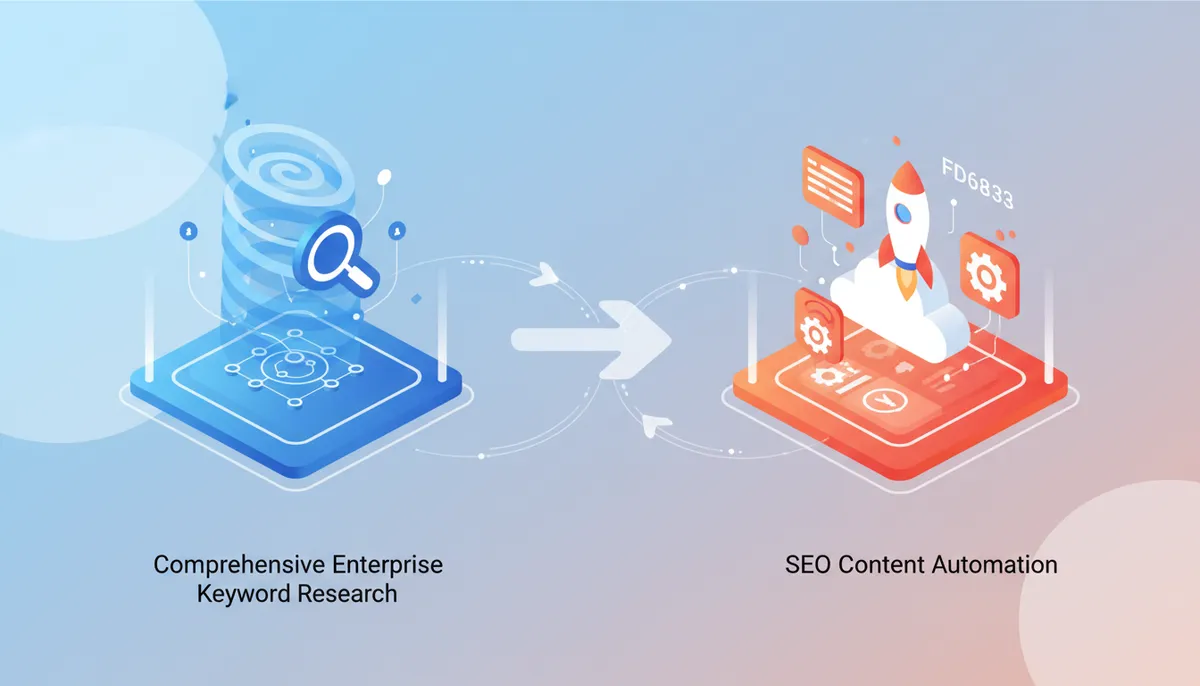
2. Semrush: Comprehensive Enterprise Keyword Research Platform
Semrush remains one of the most popular automated keyword research platforms in 2026, particularly among established marketing teams and larger agencies. The tool’s AI Assistant feature helps users identify new keyword opportunities efficiently, with 75% of marketers using it for discovery purposes. The platform reported that 90% of users experienced increased website traffic after implementing their keyword recommendations, demonstrating the quality of their algorithmic suggestions.
The strength of Semrush lies in its massive keyword database and sophisticated filtering options. Users can analyze search volume, keyword difficulty scores based on actual SERP analysis, cost-per-click data for paid campaigns, seasonal trend patterns, and click potential that accounts for zero-click searches. The platform also offers competitive gap analysis, showing which keywords your competitors rank for that you don’t, providing immediate opportunities for content expansion.
Semrush’s Keyword Magic Tool generates thousands of related keyword suggestions from a single seed keyword, organizing them by topic groups, question-based queries, and semantic variations. The position tracking feature monitors your rankings automatically and alerts you to significant changes, allowing quick response to algorithm updates or competitive movements. Integration with content marketing workflows enables teams to move seamlessly from keyword research to content brief creation and performance tracking.
However, Semrush requires significant manual work compared to fully automated solutions. While it excels at providing data and insights, users must still manually select keywords, create content plans, write articles, optimize content, and publish—each step requiring separate tools and human intervention. Pricing starts at $129.95/month for the Pro plan, making it more expensive than streamlined alternatives while offering less automation. For businesses seeking true end-to-end automation rather than just keyword data, platforms like SEO Rocket provide better value by handling the entire workflow from keyword discovery through content publishing.

3. Ahrefs Keyword Explorer: Data-Driven Research Tool
Ahrefs Keyword Explorer maintains its reputation as one of the most data-rich keyword research tools available in 2026, boasting a database containing over 100 million keywords across multiple countries and languages. The platform uses AI to suggest related terms and automatically cluster keywords by topic, helping users build comprehensive content strategies that address entire subject areas rather than individual keywords in isolation.
The tool’s keyword difficulty metric stands out for its accuracy, analyzing the top 10 ranking pages and calculating how many backlinks you’d need to compete effectively. This realistic assessment helps businesses prioritize winnable opportunities instead of pursuing impossibly competitive terms. Ahrefs also provides detailed SERP overview data, showing which types of content currently rank (articles, videos, product pages, forums) and what content angle appears most successful, giving strategic direction for content creation.
Ahrefs’ Content Gap analysis identifies keywords where competitors rank but your site doesn’t, revealing immediate expansion opportunities. The platform tracks search volume history, allowing you to spot trending topics early and capitalize on growing interest before markets become saturated. Parent topic grouping shows how individual keywords relate to broader subjects, helping content teams create pillar pages and supporting articles that comprehensively cover topics.
Despite these strengths, Ahrefs shares the same limitation as Semrush: it provides excellent research data but requires extensive manual work to execute. Users must export keyword lists, manually create content briefs, hire writers or write content themselves, separately optimize articles, and manually publish—a workflow requiring multiple tools and significant time investment. Pricing starts around $99/month for basic access, with fuller features requiring higher-tier plans. Businesses seeking complete automation rather than just research data should consider integrated solutions that handle content generation and publishing alongside keyword discovery.

4. Jasper AI: AI-Powered Content and Keyword Integration
Jasper AI has evolved significantly in 2026, expanding from a pure content generation tool to include integrated keyword research capabilities. Starting at $39/month, Jasper offers a more affordable entry point than many enterprise SEO platforms while combining keyword discovery with AI-powered content creation. This integration addresses one of the major pain points in traditional SEO workflows—the disconnect between keyword research and content production.
Jasper’s keyword research module uses AI to analyze search trends, identify semantic variations, and suggest content angles based on what’s currently ranking for target keywords. The platform examines competitor content and identifies gaps in coverage, helping users create more comprehensive articles that address questions competitors miss. This competitive intelligence feeds directly into Jasper’s content generation engine, allowing users to move from keyword selection to draft content in a single workflow.
The tool provides content brief templates that incorporate keyword research findings, including primary keywords, semantic terms, suggested headings, questions to answer, and recommended article length. This structured approach helps maintain SEO best practices while leveraging AI for faster content creation. Jasper also offers tone and style customization, ensuring generated content matches brand voice requirements across different client accounts or website properties.
However, Jasper still requires significant manual oversight and multi-step processes. Users must review keyword suggestions, manually approve content directions, edit AI-generated drafts, separately optimize for SEO, and handle publishing through other tools. While more integrated than pure research platforms, Jasper doesn’t offer the true end-to-end automation that eliminates manual work entirely. Additionally, Jasper doesn’t directly publish to websites, requiring users to copy content into their CMS manually. For businesses seeking complete automation that handles keyword discovery, content generation, optimization, and publishing in one system, alternatives like SEO Rocket provide more comprehensive solutions with daily automated publishing.

5. Boltic.io: AI-Driven Keyword Clustering and Automation
Boltic.io represents the newer generation of automated keyword research tools specifically designed to eliminate manual spreadsheet management and provide intelligent keyword clustering. The platform uses AI to automatically group related keywords based on search intent, semantic relationships, and topical relevance, helping businesses move beyond individual keyword targeting to comprehensive topic coverage.
The tool’s automation extends to performance monitoring, tracking how keyword groups perform over time and identifying which clusters drive the most valuable traffic. This insight helps prioritize content updates and expansion efforts on topics with proven ROI. Boltic.io’s intent-based clustering ensures that commercial, informational, and navigational keywords are grouped appropriately, allowing content teams to create targeted pieces that match user search intent precisely.
Boltic.io integrates with workflow automation platforms, enabling teams to trigger actions based on keyword performance changes. For example, declining rankings for a keyword cluster might automatically create a task for content refresh, while improved rankings could trigger social media promotion or internal linking updates. This workflow integration helps businesses respond quickly to ranking changes without constant manual monitoring.
The platform also provides competitor keyword monitoring, alerting users when competitors begin ranking for new terms or lose positions on tracked keywords. This competitive intelligence allows proactive content strategy adjustments, helping businesses capture opportunities as they emerge rather than discovering them weeks later through manual analysis.
Despite these innovations, Boltic.io focuses primarily on keyword organization and monitoring rather than complete content automation. Users still need separate tools for content creation, optimization, and publishing. The platform serves teams well who already have content production capabilities but struggle with keyword organization and performance tracking. However, businesses seeking a single solution that handles the entire process from keyword discovery through daily content publishing should evaluate platforms that provide end-to-end automation without requiring multiple tool integrations.

Key Features to Look for in Automated Keyword Research Tools
When evaluating automated keyword research platforms for 2026, several critical features separate truly useful tools from those that simply add complexity. Understanding these features helps businesses make informed decisions that align with their specific needs, team capabilities, and growth objectives.
Comprehensive Keyword Metrics
Effective automated keyword research tools must provide detailed metrics including accurate search volume data, realistic keyword difficulty scores based on actual SERP analysis rather than simple domain authority calculations, cost-per-click information for understanding commercial value, seasonal trend patterns that reveal cyclical opportunities, and click potential data that accounts for zero-click searches and featured snippets. Without comprehensive metrics, businesses risk pursuing keywords that look attractive superficially but offer limited actual traffic potential or require unrealistic resources to rank competitively.
Intelligent Keyword Clustering
Modern SEO success requires topic-based content strategies rather than isolated keyword targeting. Automated tools should group related keywords into logical clusters based on semantic relationships, search intent, and topical relevance. This clustering capability helps content teams create comprehensive pillar pages and supporting articles that thoroughly address subjects, improving rankings across entire keyword groups rather than individual terms. Tools that only provide flat keyword lists without clustering leave significant strategic work to users.
Competitor Gap Analysis
Understanding where competitors rank and you don’t provides immediate content opportunities with proven demand. Automated keyword research platforms should identify competitor gaps, analyze why competitors succeed for those terms, and prioritize opportunities based on achievability and traffic potential. This competitive intelligence transforms keyword research from guessing what might work to pursuing validated opportunities with clear demand.
Integration with Content Workflows
The most valuable automated keyword research tools integrate directly with content creation, optimization, and publishing workflows. Platforms that export CSV files or require manual data transfer create friction that slows execution and increases error risk. Look for solutions that seamlessly move from keyword discovery to content brief creation to article generation to publishing, minimizing manual touchpoints. According to industry research published in the Search Quality Rater Guidelines, content quality and relevance remain paramount, making integrated workflows that maintain quality throughout the process essential.
Real-Time Performance Tracking
Automated keyword research shouldn’t end at discovery. Effective platforms continuously monitor how targeted keywords perform, alerting teams to ranking changes, emerging opportunities, and declining positions requiring content refreshes. This ongoing monitoring transforms keyword research from a one-time activity to a continuous optimization process that adapts to algorithm updates and competitive changes.
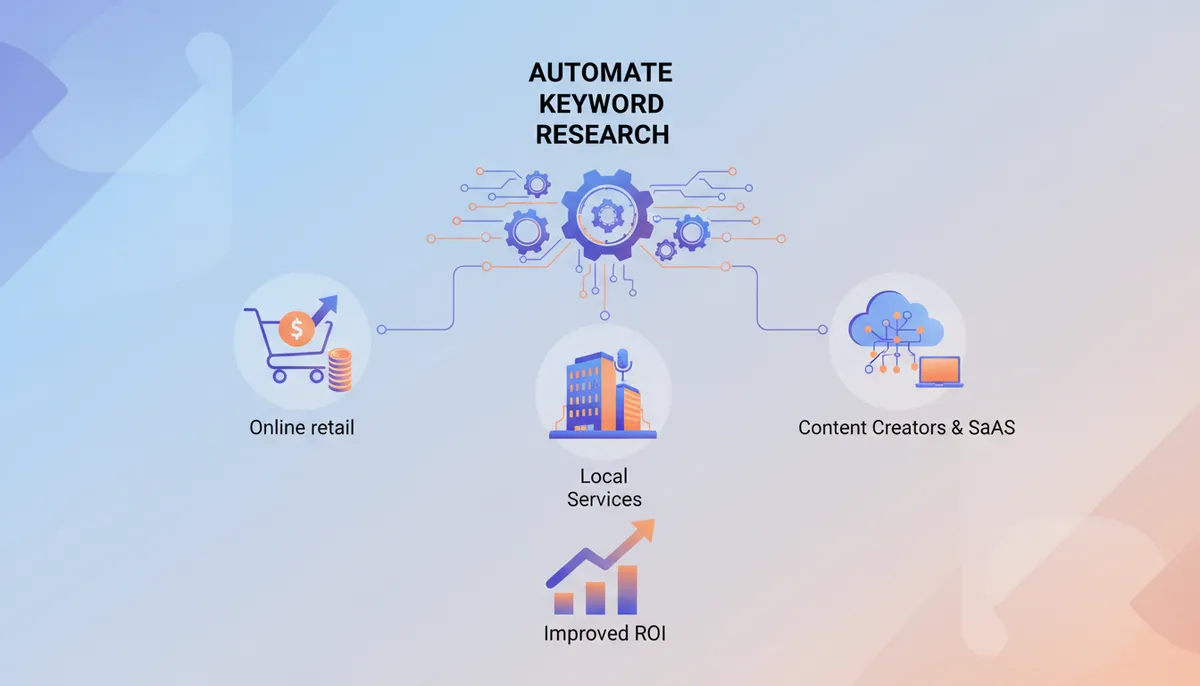
Benefits of Automated Keyword Research for Different Business Types
Different business types gain distinct advantages from automated keyword research, making it valuable across various organizational structures and goals.
Small SEO Agencies
Small SEO agencies managing 5-15 clients face constant pressure to deliver results without proportionally expanding team size. Automated keyword research enables these agencies to efficiently identify opportunities across multiple client accounts, create comprehensive content strategies in hours rather than days, and demonstrate value through consistent execution. The time savings allow small teams to serve more clients profitably while maintaining quality. Platforms offering multi-workspace support, like SEO Rocket’s Agency plan at $799/month for 10 client workspaces and 300 monthly articles, provide scalability that was previously accessible only to larger agencies with substantial resources.
In-House Marketing Teams
In-house marketing teams at mid-sized companies typically manage limited budgets and tight deadlines while competing against well-resourced competitors. Automated keyword research helps these teams punch above their weight by quickly identifying winnable opportunities, creating data-driven content strategies that secure executive buy-in, and executing consistently without requiring additional headcount. The ability to demonstrate ROI through systematic keyword targeting and performance tracking strengthens the marketing department’s position and budget security.
Content Managers
Content managers responsible for large websites or blogs with hundreds or thousands of pages need systematic approaches to identify content gaps, prioritize updates, and plan new content. Manual keyword research becomes impossible at this scale. Automated tools provide the organizational structure necessary to manage complex content ecosystems, ensuring comprehensive topic coverage and preventing redundant or cannibalistic content. Performance tracking helps prioritize which existing content requires refreshing and which new topics offer the greatest growth potential.
E-commerce SEO Specialists
E-commerce sites face unique challenges with large inventories requiring optimized product and category pages. Automated keyword research helps e-commerce specialists identify long-tail product keywords, optimize category page targeting, discover informational content opportunities that drive top-of-funnel traffic, and monitor competitive positioning on commercial terms. The scale of e-commerce keyword research makes automation essential rather than optional—manual approaches simply cannot keep pace with inventory changes and competitive dynamics.
Small Business Owners
Small business owners with 1-50 employees rarely have dedicated SEO specialists and must balance marketing with operational responsibilities. Automated keyword research provides these businesses with professional-grade insights without requiring expertise or significant time investment. Platforms with true end-to-end automation, handling everything from keyword discovery through content publishing, enable small businesses to maintain consistent SEO efforts that would otherwise require hiring agencies or full-time specialists. The cost efficiency of automated solutions at $99-799/month versus $3,000-5,000/month for traditional agency services makes professional SEO accessible to businesses that previously couldn’t justify the investment.
How Automated Keyword Research Has Evolved for AI Search
The emergence of AI-powered search platforms has fundamentally changed keyword research requirements in 2026. Traditional keyword research focused exclusively on ranking in Google’s standard search results, but today’s landscape includes ChatGPT, Perplexity, Claude, Gemini, Copilot, and Grok—each with different content preferences and citation behaviors.
Modern automated keyword research tools must consider how AI search engines reference and cite content differently than traditional search engines. AI platforms prioritize comprehensive, authoritative content that directly answers questions and provides detailed context. They tend to cite sources that thoroughly explain topics rather than content optimized primarily for keyword density or backlink profiles. This shift requires keyword research tools to identify not just high-volume keywords but also the comprehensive question-based queries and semantic variations that AI models use to understand topic expertise.
SEO Rocket specifically addresses this evolution by optimizing content for both traditional Google rankings and AI search visibility. The platform structures articles so AI models can easily extract and reference information, increasing the likelihood your business appears in AI-generated answers and overviews. This dual optimization ensures your content investment delivers returns across all major search platforms—both traditional and AI-powered—rather than limiting visibility to Google alone.
The competitive advantage of early adoption is substantial. Most businesses still optimize exclusively for traditional search, leaving AI search visibility relatively uncrowded. Automated keyword research tools that understand and optimize for AI search behavior provide first-mover advantages as these platforms grow in usage. Research indicates AI search platforms are capturing increasing percentages of search market share, making optimization for these channels essential for long-term SEO success rather than optional experimentation.
Choosing the Right Automated Keyword Research Tool for Your Needs
Selecting the optimal automated keyword research platform depends on your specific business model, team structure, technical capabilities, and strategic objectives. Consider these key decision factors when evaluating options.
Level of Automation Required
Determine whether you need just keyword data and insights or complete end-to-end automation including content creation and publishing. If your team has strong writing capabilities and established content workflows, data-focused tools like Ahrefs or Semrush may suffice. However, if you want to eliminate manual work and achieve consistent daily publishing without ongoing management, fully automated platforms that handle the entire process from keyword discovery through content publication provide better value and results. The choice between these approaches fundamentally determines which tools will actually help you achieve your goals versus simply adding more data to analyze manually.
Budget and Cost Per Article
Compare total cost of ownership including tool subscriptions, content creation expenses, optimization time, and publishing management. Traditional keyword research tools at $99-130/month appear affordable until you add $150-300 per article for writers, $50-100 per article for editors, and hours of project management time. Fully automated platforms that include content generation typically deliver cost per article around $3-5, making them substantially more economical for businesses publishing regularly. Calculate your true cost per published article including all labor and tool expenses to make accurate comparisons.
Scalability Requirements
Consider your growth trajectory and whether tools can scale with your needs. Agencies particularly need platforms supporting multiple client workspaces with independent keyword research, content calendars, and publishing workflows. Single-workspace tools create management complexity when serving multiple clients. Similarly, businesses planning aggressive content scaling need platforms that can increase output without proportional cost or management burden increases. Evaluate whether tools charge per article, per workspace, or per user to understand scaling economics.
Integration Capabilities
Assess how tools integrate with your existing technology stack. Direct publishing to WordPress, Webflow, Shopify, or Wix eliminates manual content transfer work. Integration with project management platforms, analytics tools, and workflow automation systems streamlines operations. Tools requiring extensive manual data export and import create friction that slows execution and increases error risk. Prioritize platforms that fit seamlessly into your existing workflows rather than requiring workflow redesign around tool limitations.
Support and Learning Resources
Evaluate the quality and accessibility of customer support, documentation, and training resources. Complex enterprise tools often require significant learning investment and ongoing support needs. Platforms designed for simplicity and automation typically require less support but should still provide responsive assistance when needed. Check the Reviews section to understand real user experiences with support quality and platform usability.
Ready to transform your SEO strategy with true end-to-end automation? Start Your Free Trial today and experience automated keyword research that actually delivers published content, not just spreadsheets of data.
Common Mistakes to Avoid with Automated Keyword Research
Even with powerful automated keyword research tools, businesses frequently make strategic mistakes that limit results and waste resources. Understanding these common pitfalls helps you maximize the value of automation investments.
Focusing Only on High-Volume Keywords
Many businesses instinctively target keywords with the highest search volumes, assuming bigger numbers mean better results. This approach ignores keyword difficulty, commercial intent, and competition levels. High-volume keywords typically face intense competition from established sites with substantial domain authority and backlink profiles. Medium and low-volume long-tail keywords often deliver better ROI because they’re more achievable to rank for, attract users with clearer intent, and collectively drive substantial traffic when you rank for dozens or hundreds of them. Automated keyword research tools identify these opportunities, but users must resist the temptation to focus exclusively on volume metrics.
Ignoring Search Intent
Keywords with identical search volume can have dramatically different conversion potential based on user intent. Informational queries from users researching topics have different value than commercial queries from users ready to purchase. Creating content that mismatches intent—such as promotional content targeting informational keywords—wastes resources and frustrates users. Effective automated keyword research categorizes keywords by intent, helping teams create appropriate content types for each cluster.
Treating Keyword Research as One-Time Activity
Search trends, competition, and algorithm behavior constantly evolve. Businesses that conduct keyword research once and never revisit strategy miss emerging opportunities and fail to respond to declining performance. Effective automated keyword research includes continuous monitoring, regular strategy refinement, and systematic content updates. Platforms that automate this ongoing process provide sustained competitive advantages versus those requiring manual periodic research efforts.
Neglecting Internal Linking Opportunities
Automated keyword research often reveals natural opportunities for internal linking between related content pieces. Many businesses fail to capitalize on these connections, limiting their ability to build topical authority and distribute page authority throughout their site. When new content targets keywords related to existing pages, strategic internal linking strengthens both pieces. Tools that automate internal linking as part of content creation ensure these opportunities aren’t missed.
Not Optimizing for AI Search Alongside Google
With AI-powered search platforms rapidly gaining users, optimizing exclusively for traditional Google rankings increasingly leaves traffic potential untapped. Content structured for AI search visibility requires slightly different approaches including comprehensive question answering, clear section organization, and authoritative depth. Businesses using keyword research tools that don’t consider AI search optimization miss significant visibility opportunities. As mentioned on the How it works page, modern automated systems should optimize for both traditional and AI-powered search platforms simultaneously.
Future Trends in Automated Keyword Research
Automated keyword research continues evolving rapidly, with several emerging trends shaping how businesses will approach SEO strategy through 2026 and beyond.
Real-Time Trend Detection
Advanced AI systems increasingly identify emerging keyword opportunities in real-time as search volumes begin rising, before trends become widely recognized. This capability allows early content creation that captures traffic surges rather than reactive content published after opportunities peak. Businesses leveraging real-time trend detection gain first-mover advantages and establish topical authority before markets saturate.
Voice and Conversational Search Optimization
Voice search and conversational AI queries continue growing in prominence, requiring keyword research that identifies natural language question patterns rather than just short keyword phrases. Automated tools increasingly analyze how users actually phrase voice queries and conversational questions to AI assistants, helping businesses create content that matches these longer, more specific search patterns.
Intent-Based Content Automation
Future automated keyword research platforms will more tightly integrate intent analysis with automated content generation, creating not just keyword lists but complete content strategies with recommended content types, formats, angles, and publication sequences based on user journey stages. This strategic automation helps businesses build comprehensive funnels rather than isolated content pieces.
Cross-Platform Keyword Intelligence
As search behavior fragments across Google, AI platforms, social media, and niche search engines, automated keyword research will increasingly provide unified intelligence across all platforms. Rather than separate research for each channel, integrated tools will identify opportunities and optimize content for visibility wherever target audiences search—whether traditional search engines, AI chatbots, YouTube, TikTok, or emerging platforms.
Predictive Keyword Performance
AI systems are becoming capable of predicting keyword performance before content is created, analyzing factors including domain authority, existing content quality, backlink profiles, and competitive landscapes to forecast ranking probability and traffic potential. This predictive capability helps businesses prioritize efforts toward opportunities most likely to deliver ROI rather than pursuing keywords unlikely to rank regardless of content quality.
These trends point toward increasingly intelligent, integrated, and automated SEO systems that handle progressively more strategic work rather than just tactical execution. Businesses adopting platforms at the forefront of these capabilities gain compounding advantages as automation sophistication increases.
Conclusion
Automated keyword research has transformed from a luxury feature to an essential component of competitive SEO strategy in 2026. The platforms covered in this guide—SEO Rocket, Semrush, Ahrefs, Jasper AI, and Boltic.io—each offer distinct approaches to keyword discovery and analysis, but they differ dramatically in automation depth, workflow integration, and true hands-off capabilities.
For businesses and agencies seeking the most comprehensive solution that eliminates manual work entirely, SEO Rocket delivers unmatched end-to-end automation. The platform handles keyword discovery, content generation, optimization, and daily publishing in one integrated system, producing 3,000+ word articles optimized for both traditional Google rankings and AI-powered search visibility. At approximately $3 per article with Business plans starting at $99/month or Agency plans at $799/month supporting 10 clients, SEO Rocket provides exceptional value compared to traditional agencies costing $3,000-5,000 monthly or piecing together multiple separate tools and freelancers.
The evolution toward AI-powered search makes optimization for platforms like ChatGPT, Perplexity, Claude, Gemini, Copilot, and Grok equally important as Google optimization. Tools specifically designed for this multi-platform reality provide future-proof strategies rather than approaches that will require complete overhaul as AI search adoption grows. The compounding benefits of consistent daily publishing, automated internal linking, and comprehensive topical coverage create sustainable competitive advantages that manual approaches simply cannot match.
Whether you’re a small business owner managing SEO alongside operational responsibilities, a content manager overseeing large website portfolios, an in-house marketing team with limited resources, or an agency serving multiple clients, the right automated keyword research platform dramatically impacts your efficiency, results, and growth trajectory. Evaluate options based on your specific needs for automation depth, scalability, integration capabilities, and optimization for modern search landscapes including both traditional and AI-powered platforms.
The businesses that will dominate SEO in 2026 and beyond are those leveraging true automation that handles the complete workflow from keyword discovery through daily content publishing. The competitive advantage of consistent execution at scale cannot be replicated through manual effort, regardless of team size or budget. For additional insights into how comprehensive automation transforms SEO results, explore the Pricing options that fit your business needs and growth objectives. Ready to experience the power of true end-to-end SEO automation? Start Your Automated Content Journey Today and let AI handle your keyword research, content creation, and publishing while you focus on growing your business.
FAQs
Q: What is automated keyword research and why is it important in 2026?
A: Automated keyword research uses AI-powered tools to discover, analyze, and cluster keywords without manual effort. In 2026, it’s essential because search behavior has fragmented across traditional search engines and AI platforms like ChatGPT and Perplexity, requiring comprehensive multi-platform optimization that manual research cannot efficiently deliver. Automated tools identify opportunities faster, analyze competitor gaps systematically, and integrate with content workflows to transform research into published content rather than leaving insights stranded in spreadsheets.
Q: How does SEO Rocket’s automated keyword research differ from tools like Semrush and Ahrefs?
A: SEO Rocket provides complete end-to-end automation from keyword discovery through daily content publishing, while Semrush and Ahrefs focus primarily on providing keyword data and insights that require manual execution. SEO Rocket automatically identifies keyword opportunities, generates 3,000+ word optimized articles, and publishes them directly to your website daily—eliminating the workflow gap between research and execution. This integrated approach costs approximately $3 per article versus $150-300 for traditional content creation, making it substantially more efficient and economical for consistent SEO execution.
Q: Can automated keyword research tools optimize for AI-powered search engines?
A: Yes, advanced automated keyword research platforms like SEO Rocket specifically optimize content for both traditional Google rankings and AI-powered search platforms including ChatGPT, Perplexity, Claude, Gemini, Copilot, and Grok. These tools structure content to be easily referenced by AI models, increasing the likelihood your business appears in AI-generated answers and overviews. This dual optimization is increasingly critical as AI search platforms capture growing percentages of search market share in 2026 and beyond.
Q: What is the typical cost comparison between automated keyword research tools?
A: Pricing varies significantly based on automation depth. Data-focused tools like Semrush start at $129.95/month and Ahrefs around $99/month but require separate content creation and publishing expenses. Content-integrated tools like Jasper AI start at $39/month but still require manual publishing. Fully automated platforms like SEO Rocket at $99/month for businesses or $799/month for agencies include keyword research, content generation, optimization, and publishing, delivering approximately $3 per article versus $150-300 for traditional freelance content creation—providing substantially better total cost of ownership for regular publishing needs.
Q: How does keyword clustering improve SEO strategy?
A: Keyword clustering groups related keywords by topic, search intent, and semantic relationships rather than treating each keyword individually. This approach helps businesses create comprehensive content that addresses entire subject areas, improving rankings across multiple related keywords simultaneously. Modern search engines—both traditional and AI-powered—favor comprehensive topical coverage over isolated keyword targeting, making clustering essential for effective SEO strategy. Automated tools that provide intelligent clustering save hours of manual organization work while ensuring strategic coherence across your content calendar.