
Key Takeaways
-
Choose AI writing tools that combine keyword research, competitor analysis, and direct CMS publishing in one system rather than piecing together multiple standalone tools, as full automation platforms deliver better SEO results than text-only generators.
-
Test AI writing software with your actual target keywords and real search intents before purchasing, since marketing demos often differ significantly from real-world performance on your specific content needs.
-
Look for tools with built-in editorial review workflows and brand voice consistency features to avoid generic, robotic output that damages SEO rankings and reader engagement.
-
Optimize content for both Google and AI search platforms like ChatGPT, Perplexity, and Gemini, as search behavior is shifting and tools that ignore AI platforms put you at a competitive disadvantage.
-
Calculate cost per article rather than just monthly fees—automated platforms can produce 30+ articles monthly at ~$3.30 each, compared to $375–$1,250 per article through traditional agencies or freelancers.
-
Ensure your AI tool automates internal linking suggestions and includes real-time SEO scoring with optimization fixes, as manual linking weakens site structure and most basic tools skip this critical ranking factor.
Staring at a blank content calendar is one of the worst feelings in marketing. You know you need fresh blog posts every week, but your team is stretched thin, and hiring more writers costs a fortune. This is exactly why so many business owners and marketers are turning to ai software writing tools in 2026. But here’s the thing: not all of these tools are built the same, and picking the wrong one can waste your time and money.
In this guide, we’ll walk through what ai software writing actually means for SEO, what features actually matter, and how to choose a tool that helps you rank instead of just filling space on your blog. Whether you run a small agency, manage content for a growing company, or handle SEO for an online store, this article will help you make a smart choice. Let’s get into it.
What Is AI Software Writing in SEO Content Automation?
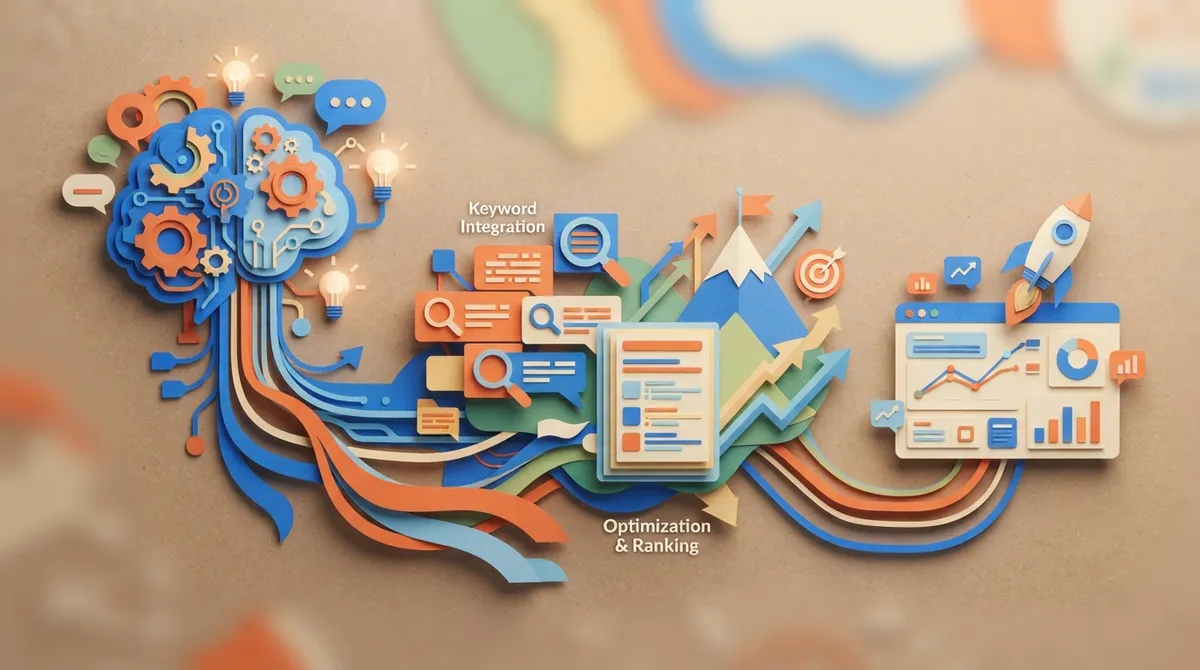
AI software writing refers to tools that use artificial intelligence to research, draft, and often publish content automatically. But in the world of SEO, it means much more than just generating text. The best tools handle keyword research, study your competitors, build content outlines, and optimize your headings before a single sentence gets written.
Think of it like the difference between a basic calculator and a full accounting system. Both can add numbers, but only one runs your entire business. Modern ai software writing tools aim to be the second kind: complete systems, not just typing assistants.
According to recent research, automated SEO content creation is now defined as using AI and machine learning to generate, optimize, and publish search-friendly content across the whole content lifecycle. That means the tool doesn’t stop at writing. It also helps with metadata, internal links, and even publishing to your website.
Why This Matters More Than Ever in 2026
Search engines and AI platforms like ChatGPT, Perplexity, and Gemini are changing how people find information. Your content needs to be optimized not just for Google, but for these AI search tools too. Our guide on how to improve your AI search visibility in 2026 covers this shift in detail.
Businesses that stick with old-school writing methods risk falling behind. Meanwhile, those using smart automation are publishing more content, more consistently, and seeing real traffic growth.
Key Features to Look for in AI Writing Software
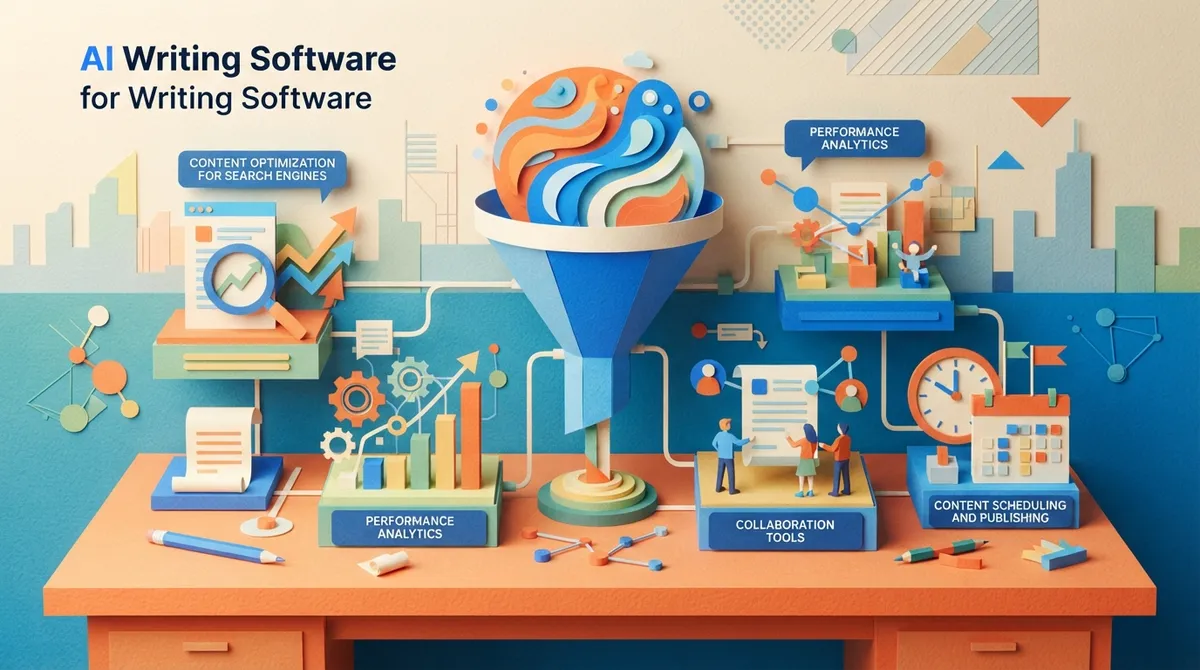
Not every ai software writing tool deserves your budget. Here are the features that actually move the needle for SEO performance.
- Live keyword research: Tools should pull real search volume and competition data, not guesses.
- Competitor analysis: The software should study top-ranking pages and help you beat them.
- Content briefs and outlines: Structured plans lead to better, more focused articles.
- On-page optimization: This includes headings, metadata, and keyword placement.
- Internal linking suggestions: Good internal links help search engines understand your site.
- Auto-publishing to your CMS: WordPress, Webflow, Shopify, and Wix support saves hours.
- Brand voice consistency: The tool should sound like you, not a generic robot.
Sight AI’s 2026 review of automated SEO writing tools notes that the best options now combine real-time SERP analysis with full workflow automation. That’s the standard you should hold any tool to before you commit your budget.
Avoiding Generic, Low-Quality Output
One big worry business owners have is that AI content will sound robotic or repetitive. This is a fair concern. The solution is using tools that build from a brand knowledge base and include editorial review steps. Structured workflows help keep quality high, even when content is generated fast.
Our article on 7 blog writer AI mistakes that kill your SEO rankings breaks down common pitfalls to avoid when relying on automation.
How to Choose the Right AI Software Writing Tool: 7 Steps
Picking the right platform doesn’t have to feel overwhelming. Follow these steps to make a confident decision.
- Define your content goals. Are you trying to rank for local searches, product pages, or informational blog posts?
- Test with real keywords. Don’t judge a tool by demo content. Try it with your actual target keywords.
- Check for multiple search intents. A good tool should handle informational, commercial, and transactional content.
- Review site-structure awareness. The best tools understand your existing pages and suggest smart internal links.
- Look at publishing options. Does it connect directly to your website, or do you have to copy and paste?
- Compare pricing to output. Calculate the cost per article, not just the monthly fee.
- Read real reviews. Check what other users say about quality and support.
BlogSEO’s 2026 guidance recommends testing tools this way before making a purchase, since real-world performance often differs from marketing claims.
Comparing Approaches: Standalone Writers vs. Full SEO Systems
There’s a big difference between a tool that just writes text and one that runs your entire SEO content pipeline. Here’s a breakdown to help you see the difference clearly.
| Feature | Standalone AI Writer | Full SEO Content Automation Platform |
|---|---|---|
| Keyword Research | Not included | Built-in with live data |
| Content Length | Usually short-form | Long-form, 3,000+ words |
| Publishing | Manual copy-paste | Direct CMS publishing |
| Internal Linking | Manual | Automated suggestions |
| SEO Scoring | Rare | Real-time with fixes |
| AI Search Optimization | Rarely included | Built for ChatGPT, Perplexity, Gemini |
This is why many marketers are moving away from piecing together multiple standalone tools. Instead, they choose all-in-one systems. Our guide to content automation software explains this shift in more depth.
Who Benefits Most from AI Software Writing Tools?
Different teams have different needs, but almost everyone in SEO can benefit from smart automation. Here’s how it breaks down.
- Small SEO agencies can produce content for multiple clients without hiring more writers.
- In-house marketing teams can hit publishing goals despite limited staff and tight deadlines.
- Content managers can keep large sites updated with consistent, optimized posts.
- Digital marketing consultants can offer faster turnaround and stand out from competitors.
- E-commerce SEO specialists can generate product and category page content at scale.
- Small business owners can finally afford consistent SEO content without a big budget.
If you fall into any of these groups, you already know how much time content creation eats up. Automation gives that time back.
What Makes SEO Rocket Different
SEO Rocket was built to solve the exact problems we’ve covered in this article. It combines keyword research, competitor analysis, content writing, optimization, and publishing into one system. You don’t need to juggle five different tools anymore.
Setup takes less than 10 minutes. You connect your website, review keyword opportunities, and approve your content calendar. From there, SEO Rocket generates and publishes a full, SEO-optimized article every single day. Business plan users get one 3,000-word article daily, while agencies can scale up to 10 articles per day across multiple client accounts.
Every article includes optimized metadata, internal and external links, and even AI-generated images. The system also includes real-time SEO scoring with fix suggestions, so you’re never guessing whether your content is optimized correctly. You can see real examples of the output on our writing examples page.
Built for AI Search, Not Just Google
Here’s something many tools miss: search isn’t just about Google anymore. People are asking questions on ChatGPT, Perplexity, Claude, Gemini, and Copilot. SEO Rocket structures content so these AI models can reference it as a trusted source. Our piece on how to get featured in AI Overviews dives deeper into this strategy.
This is a major advantage over tools that only think about traditional search rankings. As AI search grows, businesses that optimize for both channels will pull ahead.
Cost Comparison: Automation vs. Traditional Methods
Let’s talk numbers, because budget matters. Traditional SEO agencies often charge between $3,000 and $5,000 per month for content services. Freelance writers can also add up quickly once you factor in editing and revisions.
| Method | Monthly Cost | Articles Produced | Cost Per Article |
|---|---|---|---|
| Traditional SEO Agency | $3,000–$5,000 | 4–8 | $375–$1,250 |
| Freelance Writers | $800–$2,000 | 4–10 | $100–$200 |
| SEO Rocket Business Plan | $99 | 30 | ~$3.30 |
This kind of cost efficiency is a major reason so many small business owners and agencies are switching to automated platforms. You can explore full pricing details on our pricing page.
Common Mistakes to Avoid With AI Writing Tools
Even good tools can produce bad results if used the wrong way. Here are mistakes to watch for.
- Publishing content without checking for accuracy or brand voice.
- Ignoring keyword intent and creating content that doesn’t match what searchers want.
- Skipping internal linking, which weakens your site’s overall SEO structure.
- Using tools that only focus on Google and ignore AI search platforms.
- Not reviewing content calendars, leading to duplicate or irrelevant topics.
Our detailed breakdown of AI content writing mistakes that kill your SEO rankings covers these issues and more if you want to dig deeper.
Getting Started With Automated SEO Content
If you’re ready to stop spending hours on content that may or may not rank, automation is worth serious consideration. The market is competitive, with 2026 roundups listing tools like Junia AI, Writer SEO, SEO Writing, and SEO.AI as active players. But the winners in this space combine writing with full workflow automation, not just text generation.
Before committing to any platform, check reviews, test with your real keywords, and confirm it supports direct publishing to your CMS. You can also read more strategies in our beginner’s guide to SEO content writing for 2026.
For businesses managing local service pages alongside content, teams like BluHalo and Wayne & Sons Landscaping & Junk Removal show how consistent, well-optimized content supports long-term visibility across different industries.
Google’s own Search Quality Rater Guidelines emphasize helpfulness and expertise, which is exactly why editorial oversight still matters even with automation. Pairing smart tools with quality checks gives you the best of both worlds.
Final Thoughts on Choosing AI Software Writing Tools
AI software writing has moved far beyond simple text generators. The best tools in 2026 handle research, writing, optimization, and publishing all in one place. This saves time, cuts costs, and helps your content perform better across both traditional search and AI platforms.
SEO Rocket brings all of this together in a system built for speed and scale. You can check out real user feedback on our reviews page or browse detailed feature breakdowns on our features page. If you want to see how the whole process works from start to finish, our how it works page walks through every step.
Ready to stop guessing and start publishing content that actually ranks? You can start for $99/month and see the difference automation makes in your traffic within weeks. We’d love to have you join the growing number of businesses letting SEO Rocket handle the heavy lifting while they focus on growing their business.
FAQs
Q: What is AI software writing in SEO Content Automation?
A: It’s a type of software that uses artificial intelligence to research keywords, write articles, and often publish them for you. In SEO, the best tools go beyond writing and also handle optimization, internal links, and CMS publishing.
Q: How does AI writing software help with SEO?
A: It speeds up content creation while keeping SEO best practices in place, like proper headings, keyword placement, and metadata. This means you can publish consistently without sacrificing quality, which search engines love to see.
Q: Is AI-generated content good for Google rankings?
A: Yes, when it’s done right! Google cares about helpful, well-structured content, not who or what wrote it. Tools that combine automation with editorial quality checks tend to perform best.
Q: Can AI SEO writing tools auto-publish to WordPress or other CMS platforms?
A: Many modern tools can, and it’s a huge time-saver. Look for platforms that connect directly to WordPress, Webflow, Shopify, or Wix so you skip the copy-paste step entirely.
Q: Which AI tools are best for automated SEO content creation in 2026?
A: The best options combine keyword research, competitor analysis, long-form writing, and direct publishing in one system. We’re a little biased, but tools like SEO Rocket were built specifically to check all these boxes at once.