Key Takeaways
-
AI tools break search queries into multiple smaller searches (query fan-out) and blend results together, requiring your content to cover topics from multiple angles rather than targeting single keywords.
-
Three controllable factors determine AI citations: consensus (multiple sources saying the same thing), freshness (recently updated content), and authority (pages that rank well in Google).
-
Conduct a brand gap check by searching your name and main topic across AI tools to identify where competitors appear instead of you and prioritize fixing the biggest gaps first.
-
Structure content using BLUF (main point first), atomic sections, entity-rich writing, and simple language; nearly half of AI-cited pages use list formats like ‘best of’ or comparisons.
-
Branded mentions on third-party sites, community platforms like Reddit and Quora, and YouTube have stronger links to AI visibility than backlinks, making external visibility a top priority.
-
Fix technical setup by checking your robots.txt file for AI crawler blocks (like GPTBot), then track progress through AI referral traffic, bot activity frequency, and direct customer attribution.
Ever wonder why some brands pop up when you ask ChatGPT a question, while others never get mentioned at all? It’s not luck. It’s not magic. It’s a skill you can learn, and honestly, it’s a lot simpler than it sounds once you understand the basics.
Understanding AI search is quickly becoming just as important as understanding Google. AI assistants like ChatGPT, Perplexity, Claude, and Gemini are changing how people find businesses, products, and answers. If your content isn’t set up to get noticed by these tools, you’re leaving traffic and customers on the table. The good news? The brands winning at this game aren’t doing anything mysterious. They’re following a clear set of steps, and you can follow them too.
In this guide, we’ll break down exactly how AI search works, why some content gets cited while other content gets ignored, and what small business owners, agencies, and marketing teams can do right now to start showing up. We’ll also show you how tools like SEO Rocket’s automated features make this whole process a lot easier, especially if you don’t have hours to spend on research and formatting every week.
1. AI Search Doesn’t Work Like Google
Most people assume AI assistants work just like a search engine. You type a question, you get a list of answers. But that’s not what happens behind the scenes.
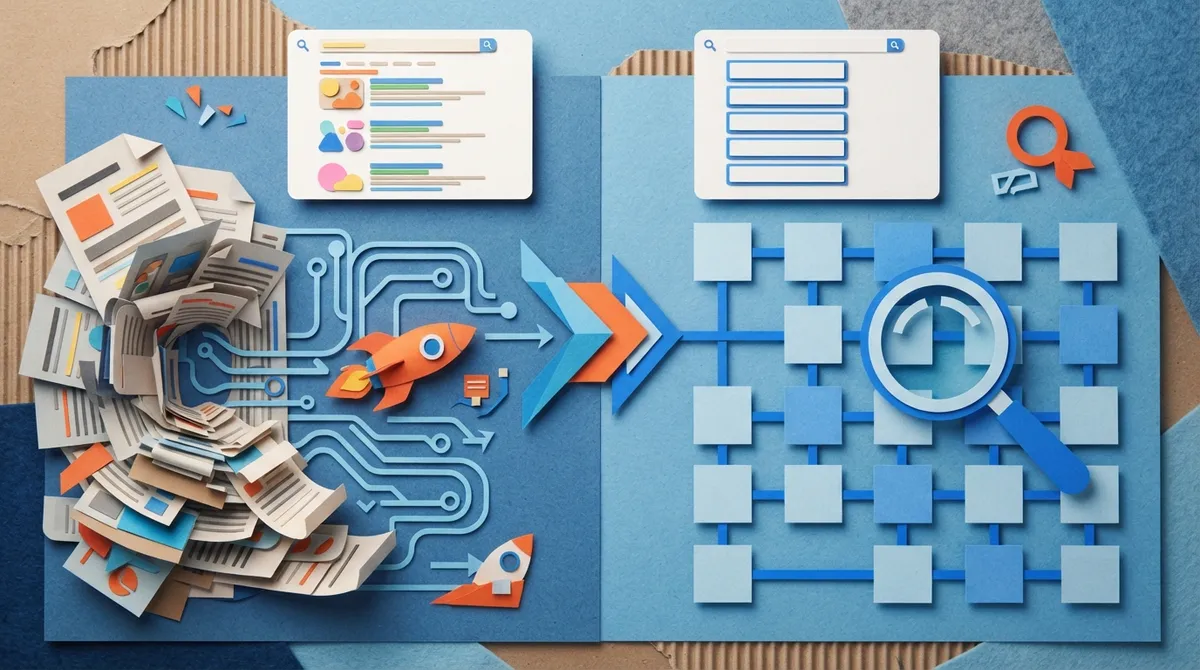
When someone asks an AI tool a question, that single question gets broken into many smaller searches. This is called “query fan-out.” Instead of running one search, the AI runs dozens of them at once, then pulls the best pieces together into one answer.
For example, if someone asks an AI to “recommend the best SEO tools for a small agency,” the AI might quietly search for pricing comparisons, feature lists, user reviews, and case studies all at the same time. Then it blends all of that into a single response.
This means your content can’t just target one keyword and call it done. You need to cover a topic from many angles. This is exactly why full-length, well-structured articles work better than short, thin posts. Learn more about how to improve your AI search visibility in 2026 to get a head start on this shift.
2. Three Things Decide If AI Mentions Your Brand
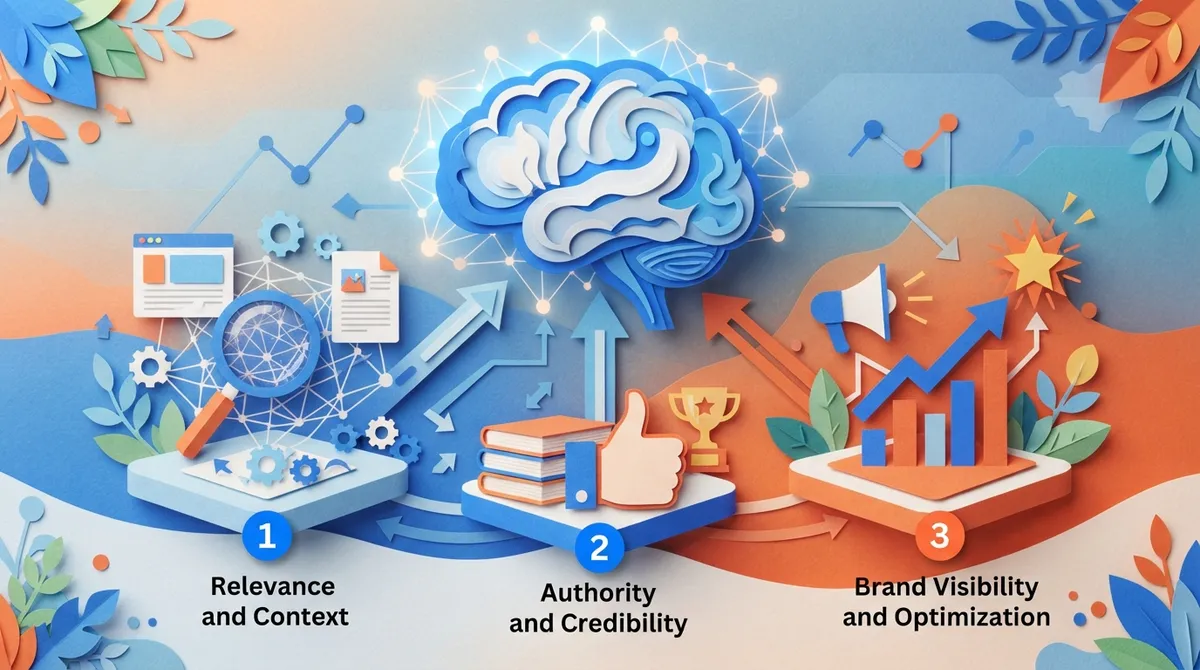
Research shows that AI tools are more likely to cite certain kinds of content. There are three main factors at play, and all of them are things you can actually control.
-
Consensus: The more places online that say the same thing about your brand, the more likely AI is to trust and repeat it.
-
Freshness: AI tools clearly favor recently updated content. Old, stale pages get skipped over.
-
Authority: Most AI citations come from pages that already rank well in Google. Traditional SEO is still the foundation everything else is built on.
This is good news if you’re already investing in solid SEO. It means your existing efforts aren’t wasted. You’re just adding a new layer on top. If you haven’t nailed the basics yet, start with a resource like SEO content writing: a beginner’s guide for 2026.
3. Do a Simple Brand Gap Check
Before you can fix anything, you need to know where you stand. A brand gap analysis simply means checking where your business shows up (or doesn’t) across Google, AI tools, and the wider web.
Here’s a simple way to start this process yourself:
-
Search your brand name plus your main topic across a few AI tools and see what comes up.
-
Search the same topic without your brand name and see who gets mentioned instead.
-
Note any competitors who keep showing up where you don’t.
-
Write down topics where AI seems to associate a different brand with your specialty.
-
Prioritize the biggest gaps first instead of trying to fix everything at once.
This step alone can reveal a lot about where your content strategy needs work. You may find that your competitors are simply publishing more consistently, which is one of the easiest problems to solve. Tools like SEO Rocket can help here, since daily publishing naturally closes these gaps over time.
4. Rethink Keyword Research for Prompts, Not Just Keywords
People don’t type prompts into AI tools the same way they type keywords into Google. They ask full questions, like “what’s the best way to plan a content calendar for a small agency?”
The good news is that your existing keyword research still matters. You just need to add a layer on top. Try this approach:
-
Start with your usual seed keywords from your niche.
-
Turn those into full questions and comparisons, like “best,” “vs,” “top,” and “alternatives.”
-
Check whether the question can be fully answered in a short AI response, or if it truly needs a click-through to your site.
That last point matters a lot. If a search can be completely answered by an AI Overview, people won’t click through no matter how good your page is. Your goal for those searches shifts from earning a click to simply getting your brand named in the answer. This is a big mindset shift, and it’s covered in more depth in how do you get featured in AI Overviews.
5. Structure Content So AI Can Actually Use It
Here’s something that might surprise you: longer content doesn’t automatically win. Studies on AI-cited pages found almost no link between word count and getting cited. Over half of cited pages were under 1,000 words.
What matters more is structure and freshness. Content that gets updated often, and content built in clear formats like lists, comparisons, and reviews, tends to perform much better. Nearly half of all pages cited by ChatGPT are list-style content: “best of,” “top,” and comparison posts.
Beyond format, there are four simple writing habits that help your content get picked up and understood by AI:
|
Principle |
What It Means |
|---|---|
|
BLUF (Bottom Line Up Front) |
Put your main point at the start of every section, not buried at the end. |
|
Atomic Content |
Every section should make sense on its own, since AI often pulls out small chunks. |
|
Entity-Rich Writing |
Use specific names and details instead of vague phrases like “this tool.” |
|
Simple, Declarative Language |
One idea per sentence. Clear subject, verb, object structure. |
These habits aren’t just good for AI. They also make your content easier for humans to skim and understand, which is a win either way. Our complete guide to blog writing with AI covers these formatting tips in more detail.
6. Get Mentioned Beyond Your Own Website
Here’s a stat that surprises most people: branded mentions on other websites have a stronger link to AI visibility than backlinks or domain authority. That means getting your name mentioned elsewhere is one of the highest-value things you can do.
There are three places worth focusing your efforts:
-
Third-party editorial content: Industry blogs, review sites, and comparison posts written by other people about your niche.
-
Community platforms: Reddit, Quora, and niche forums where real conversations happen. These are frequently cited sources for AI tools.
-
Your own other properties: YouTube, podcasts, and social profiles that AI can also crawl and learn from.
YouTube deserves a special mention here. It’s one of the most cited sources across AI platforms, largely because major AI models were trained on huge amounts of YouTube video transcripts. If you have the resources to create even simple, evergreen videos answering common questions in your niche, it can meaningfully boost your AI visibility. Just remember to include your target keyword in the title, description, and spoken audio of the video.
7. Check Your Technical Setup and Track What’s Working
This step is easy to overlook, but it can quietly sabotage everything else. Some websites accidentally block AI crawlers like GPTBot without even realizing it. This often happens through inherited robots.txt settings or default privacy features on hosting platforms.
Take two minutes to check your site by visiting yourdomain.com/robots.txt and looking for any “Disallow” rules next to AI crawler names. If you find any, you’re blocking that AI tool from ever seeing your content.
Once your technical setup is solid, measure your progress using these three signals:
-
AI referral traffic: Visits that come from people clicking through from an AI chat response.
-
AI bot activity: How often AI crawlers visit and read your pages.
-
Self-reported attribution: Simply asking new customers, “how did you hear about us?” This often reveals AI-driven traffic your analytics miss completely.
Bigger companies have found that AI-driven traffic, while smaller in volume, often converts at a much higher rate than regular organic traffic. That’s a strong reason to start paying attention now rather than later.
Why Consistency Beats Perfection
Here’s the honest truth: none of these seven steps require special tools or a huge budget. What they require is consistency. AI tools reward freshness and consensus, which means brands that publish regularly and cover their topics thoroughly will naturally pull ahead of brands that publish once a month and call it a day.
This is exactly the problem SEO Rocket was built to solve. Instead of manually researching keywords, writing long-form articles, formatting them for AI readability, and publishing them one by one, SEO Rocket automates the entire process. You connect your website, review the keyword opportunities the system finds for you, and approve your content calendar. From there, SEO Rocket handles daily publishing of full-length, SEO and AI-optimized articles, built with the exact structural principles covered in this guide.
If you want to see real examples of what this looks like in practice, check out the writing examples or read through some reviews from current users to see the kind of results businesses are getting.
Putting Your AI Search Strategy Together
Let’s recap the seven pieces you now have in hand:
-
Understand that AI breaks your questions into many smaller searches (query fan-out).
-
Focus on consensus, freshness, and authority to boost your citation odds.
-
Run a simple brand gap check to see where you stand versus competitors.
-
Shift your keyword research toward full prompts and questions.
-
Structure content using BLUF, atomic sections, entity-rich writing, and simple language.
-
Build mentions beyond your own site, especially on YouTube and community platforms.
-
Fix your technical setup and track AI referral traffic, bot activity, and attribution.
According to Ahrefs, AI-driven traffic has grown almost tenfold in the past year alone, and it isn’t slowing down. Most businesses haven’t started adapting yet, which means there’s still time to get ahead of the curve. For a deeper technical breakdown, the Search Quality Rater Guidelines from Google remain a solid foundation for understanding what “quality content” really means, both for search engines and AI systems trained on the same principles.
The businesses that win here won’t be the ones with the biggest budgets. They’ll be the ones who show up consistently, month after month, with content built the right way. If you’d like help browsing more tactics like these, feel free to read our blog for regular updates on what’s working in AI search right now.
Ready to Put This Into Practice?
Understanding AI search is one thing. Actually executing on it, week after week, is a whole different challenge, especially if you’re running a small business or managing content for multiple clients. That’s where automation stops being a nice-to-have and becomes a real competitive advantage.
SEO Rocket handles the keyword research, writing, formatting, and publishing so your content is always fresh, always structured for AI citation, and always going out the door on schedule. Setup takes less than 10 minutes, and you can start for $99/month to see how quickly consistent, AI-ready publishing can change your visibility. If you’re ready to stop guessing and start showing up in AI answers, go ahead and sign up today and let the system do the heavy lifting for you.
FAQs
Q: What is AI search and how is it different from Google search?
A: AI search is when tools like ChatGPT or Perplexity answer questions directly instead of showing a list of links. Behind the scenes, they break your question into many smaller searches, gather info from multiple sources, and blend it into one answer. It’s a totally different game than ranking for a single keyword on Google.
Q: How do I get my brand mentioned by AI tools like ChatGPT?
A: Focus on three things: consistency across the web (consensus), keeping your content fresh, and building authority through solid SEO. Getting mentioned on other websites, forums, and even YouTube also helps a ton, since AI tools pull from all of these sources when building an answer.
Q: Does content length matter for AI search visibility?
A: Not as much as you’d think! Studies show barely any link between word count and getting cited by AI. What matters more is clear structure, like lists and comparisons, plus how recently the content was updated. Quality and freshness beat length every time.
Q: Can blocking AI crawlers accidentally hurt my visibility?
A: Yes, and it happens more often than you’d expect. Some websites block AI crawlers like GPTBot without even realizing it, often through old robots.txt settings. It only takes a couple minutes to check your site and fix this, so it’s worth doing right away.
Q: How can I keep up with AI search without spending hours every week?
A: This is exactly why automation tools exist. Platforms like SEO Rocket handle keyword research, writing, formatting, and daily publishing for you, so your content stays fresh and structured the way AI tools prefer, without you having to do it all manually.