
Key Takeaways
-
SEO automation software uses AI to handle keyword research, content creation, and optimization without manual intervention.
-
Modern platforms integrate with CMSs, analyze competitor strategies, and track performance across traditional and AI search engines.
-
Automated platforms generate comprehensive, long-form articles between 2,000-4,000 words that match search intent and ranking requirements.
-
Small teams and agencies can manage multiple client content strategies efficiently, reducing per-article costs dramatically.
-
Platforms offer features like content planning, AI-powered generation, on-page optimization, and real-time SEO scoring.
-
Enterprise solutions provide unlimited keyword tracking, predictive analytics, and competitive intelligence for large-scale content strategies.
-
Businesses must now optimize content for both traditional search engines and AI platforms like ChatGPT, Gemini, and Perplexity.
SEO automation software has changed how businesses approach content creation and search visibility in 2026. Instead of spending hours on keyword research, writing, and optimization, you can now use intelligent platforms that handle these tasks automatically. These tools analyze search engine results, generate content, fix technical issues, and publish articles—all without constant manual input.
If you manage a website, run an agency, or oversee marketing for a growing company, you already know the struggle. Creating consistent, high-quality content takes time you don’t have. SEO automation software solves this problem by turning repetitive tasks into automated workflows that run in the background while you focus on strategy and growth.
This article explains what SEO automation software actually does, how it benefits different types of businesses, and what features matter most when choosing a platform. You’ll also learn how modern tools optimize for both traditional search engines and AI-powered platforms like ChatGPT, Perplexity, and Gemini.

Understanding SEO Automation Software
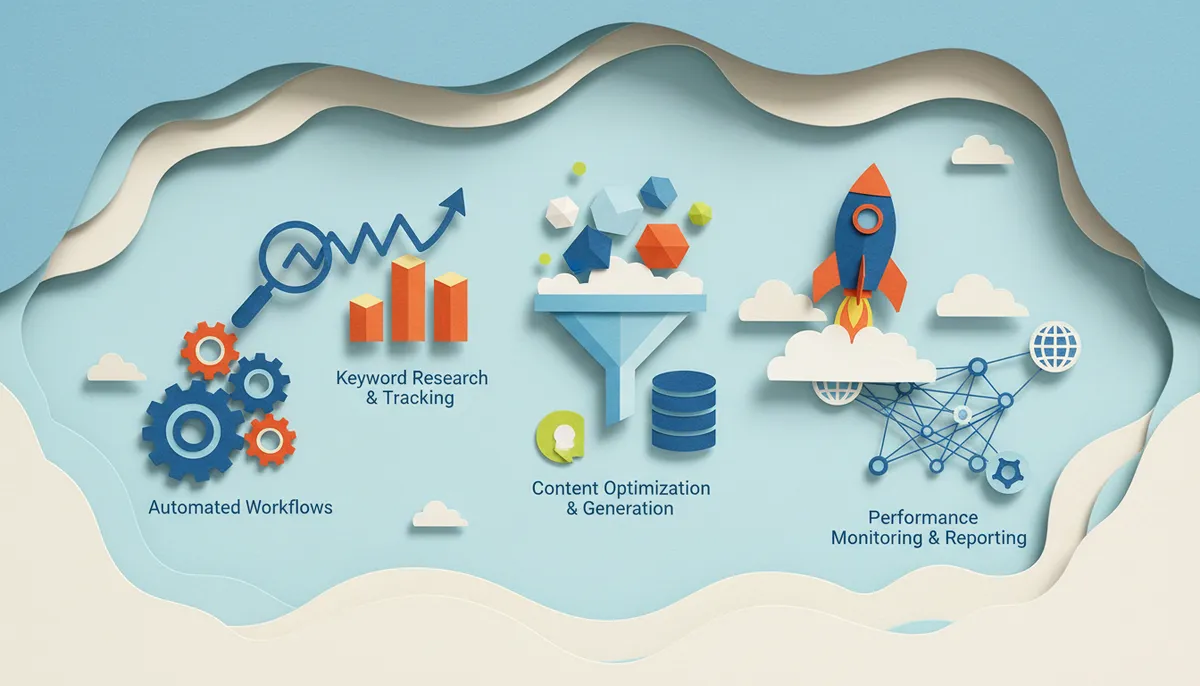
SEO automation software refers to platforms that use artificial intelligence and machine learning to handle content creation, optimization, and publishing tasks. These tools eliminate manual work by automating keyword research, SERP analysis, content generation, on-page optimization, and performance tracking.
Instead of managing spreadsheets, writing briefs, and manually optimizing each article, you set up your preferences once. The software then discovers ranking opportunities, creates content that matches search intent, and publishes it directly to your website. This approach works especially well for businesses that need consistent content output without expanding their team.
Modern SEO automation platforms go beyond basic content generation. They integrate with your content management system, analyze competitor strategies, suggest internal linking opportunities, and track ranking changes. Some platforms even optimize content specifically for AI search engines, ensuring your articles appear in AI-generated answers and overviews.
Core Features of SEO Automation Platforms
The best SEO automation software includes several essential capabilities that work together to create a complete content system. Understanding these features helps you evaluate which platform fits your specific needs and business model.
Automated Keyword Research and Discovery
Keyword research takes hours when done manually. SEO automation software continuously scans search data to find opportunities based on search volume, competition level, and user intent. Instead of guessing what to write about, you get a prioritized list of keywords that actually have ranking potential.
Tools like SEO Rocket include built-in keyword research engines with live SEO data. The platform analyzes real opportunities and suggests topics that match what your audience searches for. This eliminates the need for separate keyword research subscriptions and streamlines your entire planning process.
LowFruits specializes in long-tail keyword discovery and clustering by analyzing competitor content gaps. Starting at $29.99 per month, it helps identify specific phrases where you can rank quickly without competing against major websites.
Content Planning and Calendar Management
Manual editorial calendars require constant updates and coordination. SEO automation software replaces spreadsheets with visual planning tools that automatically populate with keyword opportunities. You simply approve topics, and the system schedules content creation.
When you add a keyword to your calendar, the platform assigns it a publication date and begins the content generation process. This systematic approach ensures consistent publishing, which search engines reward with improved rankings over time. Most platforms allow you to plan weeks or months ahead, giving you complete visibility into your content pipeline.
The automation extends to team coordination as well. Unlimited team members can access the calendar, review upcoming content, and track performance without email chains or status meetings. This transparency keeps everyone aligned while reducing administrative overhead.
AI-Powered Content Generation
Content generation represents the most significant time-saving feature in SEO automation software. These platforms analyze top-ranking articles, identify common elements, and create comprehensive content that matches search intent. The AI considers reading level, keyword placement, semantic relationships, and content structure.
Modern platforms generate long-form articles between 2,000 and 4,000 words. This length provides enough depth to rank competitively while covering topics thoroughly. The content includes proper heading hierarchy, natural keyword usage, and formatting that improves readability.
Surfer AI focuses on SERP-based writing and supports content generation in 11 languages. This capability helps businesses expand into international markets without hiring multilingual writers. AirOps specializes in content operations and bulk generation with humanization features that make AI-generated text sound more natural.
SEO Rocket’s content engine produces 3,000-word articles daily, complete with optimized metadata, internal links, external references, and brand mentions. The platform automatically includes AI-generated images and video embeds, creating complete articles ready for publication.
On-Page Optimization and Technical SEO
Creating content is only half the battle. Proper optimization ensures search engines understand and rank your pages effectively. SEO automation software handles meta descriptions, title tags, schema markup, alt text, and URL structure automatically.
Alli AI specializes in CMS automations, enabling site-wide updates across thousands of pages. Starting at $169-$249 per month annually, it can add schema markup, update meta tags, and fix broken links without touching individual pages. This capability proves invaluable for large websites with extensive content libraries.
Real-time SEO scoring provides immediate feedback on content quality. The software analyzes keyword density, readability, heading structure, and technical elements. When issues appear, automated fix suggestions tell you exactly what to change. Some platforms apply these fixes automatically, eliminating another layer of manual work.
Clearscope offers content grading and decay detection, alerting you when existing pages lose rankings. This proactive approach helps maintain visibility by identifying content that needs updates before traffic drops significantly.
How Different Businesses Use SEO Automation Software
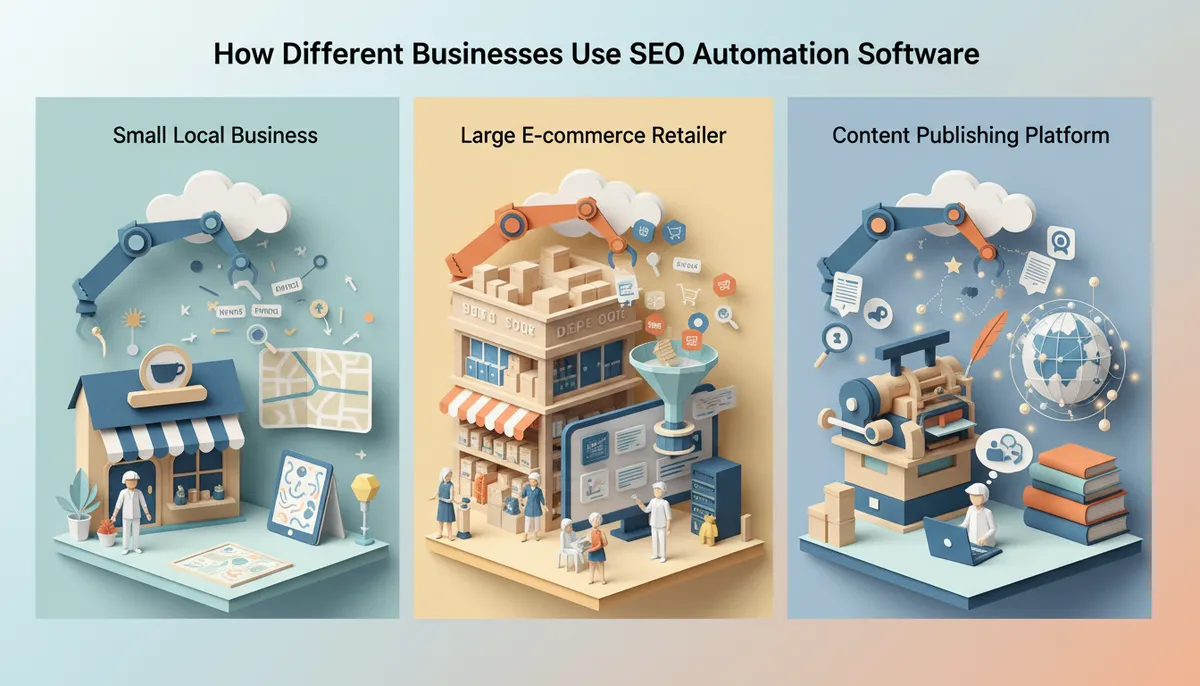
SEO automation software serves various business types, each with unique needs and goals. Understanding how different organizations implement these tools helps you identify the best approach for your situation.
Small SEO Agencies
Small agencies face constant pressure to deliver results for multiple clients without expanding overhead. SEO automation software allows a small team to manage content for 5-10 clients efficiently. The platforms handle keyword research, content creation, and publishing while the agency focuses on strategy and client communication.
Agency-specific plans typically include client workspaces, white-label options, and bulk content generation. This structure lets agencies scale revenue without hiring additional writers or SEO specialists. The cost per article drops significantly compared to freelance writers or in-house teams.
For example, SEO Rocket’s Agency plan supports 10 client workspaces and produces 300 articles monthly at $799. This works out to approximately $2.66 per article, making it dramatically more cost-effective than traditional content creation methods.
In-House Marketing Teams
Marketing teams at mid-sized companies often struggle with content consistency. Other priorities constantly interrupt publishing schedules, creating gaps that hurt SEO performance. SEO automation software removes this inconsistency by maintaining regular output regardless of team availability.
These teams typically use automation platforms to supplement their existing content efforts. The software handles routine blog posts and informational articles while the team focuses on high-value content like case studies, product launches, and thought leadership pieces.
The time savings allow marketing teams to pursue other initiatives. Instead of spending 20 hours weekly on blog content, they might spend 2 hours reviewing and approving automated content. This efficiency makes small teams more productive without additional budget.
E-Commerce SEO Specialists
E-commerce sites need massive amounts of optimized content for product categories, collections, and informational pages. Creating this content manually takes months and requires significant investment. SEO automation software generates category descriptions, buying guides, and comparison articles at scale.
SurgeGraph specializes in bulk generation with humanization features, making it ideal for e-commerce content needs. The platform can create hundreds of product-related articles quickly while maintaining quality standards that help pages rank.
These specialists also benefit from automated technical SEO fixes. Large e-commerce sites often have thousands of pages with optimization issues. Automation platforms identify and correct these problems systematically, improving overall site health without manual audits.
Content Managers and Publishers
Content managers responsible for large blogs or publication sites need consistent output to maintain traffic and engagement. SEO automation software provides the volume these sites require while ensuring each piece meets quality standards.
The automation extends beyond creation to include performance monitoring. Content managers can track which topics drive traffic, identify content decay, and prioritize updates based on data rather than guesswork. This analytical approach improves results over time as the platform learns what works for specific audiences.
Many content managers use automation for foundational content while reserving manual creation for premium pieces. This hybrid approach balances efficiency with creative control, ensuring the site maintains its unique voice while scaling production.

Comparing Top SEO Automation Tools for 2026
Several platforms dominate the SEO automation space in 2026, each with distinct strengths and pricing models. Understanding these differences helps you choose the right tool for your specific situation and budget.
| Platform | Starting Price | Key Strengths | Best For |
|---|---|---|---|
| SEO Rocket | $99/month | Complete automation, AI search optimization, daily publishing | Businesses wanting full end-to-end automation |
| Konvart | $29/month | Comprehensive features, link building, audits, PDF reporting | Budget-conscious users needing multiple SEO tools |
| Surfer AI | Varies | SERP-based writing, 11-language support | International content and multilingual sites |
| Alli AI | $169-$249/month | CMS automations, site-wide technical updates | Agencies managing multiple client websites |
| LowFruits | $29.99/month | Long-tail keyword discovery, competitor gap analysis | Finding quick-win ranking opportunities |
Enterprise SEO Automation Solutions
Enterprise organizations with extensive content needs require different capabilities than small businesses. These platforms handle unlimited keyword tracking, manage massive content libraries, and provide predictive analytics for large-scale strategies.
seoClarity handles unlimited tracking of 100,000+ keywords without per-keyword costs. This pricing model makes sense for enterprises monitoring extensive keyword portfolios across multiple domains. The platform includes AI prioritization that identifies which opportunities will deliver the best return on investment.
BrightEdge’s Data Cube tracks billions of industry keywords and monitors share of voice shifts. This competitive intelligence helps enterprises understand market position and adjust strategies accordingly. The predictive ranking models forecast performance changes based on content updates and optimization efforts.
These enterprise solutions typically start at $2,000+ monthly but provide capabilities that smaller tools cannot match. The investment makes sense for organizations publishing hundreds of articles monthly and managing complex multi-site strategies.
Cost-Effective Options for Small Businesses
Small businesses and solopreneurs need powerful features without enterprise pricing. Several platforms offer free tiers or affordable entry points that provide real value without breaking budgets.
Konvart provides comprehensive automation covering content optimization, link building, audits, rank tracking, and PDF reporting starting at $29 monthly. This makes it significantly more accessible than SEMrush at $199 monthly or Search Atlas at $99 monthly. The platform includes workflow integrations via Zapier or n8n, connecting SEO automation with other business tools.
Many platforms offer free trials or freemium tiers that let you test capabilities before committing. This approach reduces risk and ensures the platform actually delivers on its promises. Look for trials of at least 3-7 days to properly evaluate whether the automation fits your workflow.
Optimizing for AI Search Engines in 2026
Traditional SEO focused exclusively on Google rankings. In 2026, businesses must also optimize for AI search engines like ChatGPT, Perplexity, Claude, Gemini, Copilot, and Grok. These platforms answer user questions by referencing authoritative sources, creating new visibility opportunities.
SEO automation software designed for AI search structures content so AI models can easily extract and cite information. This includes clear answers to common questions, well-organized data, proper source attribution, and factual accuracy. When AI engines trust your content, they reference it in responses, driving traffic and building authority.
The key difference lies in how AI engines evaluate content quality. They prioritize direct answers, expertise signals, and content freshness. Automation platforms optimized for AI search incorporate these elements automatically, ensuring your content meets both traditional SEO standards and AI engine requirements.
Getting featured in AI overviews requires specific optimization techniques that differ from traditional SEO. The content structure, answer format, and authority signals must align with how AI models process and evaluate information.
Implementation and Setup Process
Starting with SEO automation software typically takes less than 15 minutes. Most platforms follow a similar setup workflow that gets you publishing quickly without technical complications.
- Connect your website by installing a plugin or providing API credentials
- Review automatically discovered keyword opportunities
- Approve your content calendar with selected topics
- Configure brand voice and optimization preferences
- Let the platform generate and publish your first articles
The simplicity removes traditional barriers to consistent content creation. You don’t need technical skills, SEO expertise, or content strategy experience. The automation handles complex decisions while you maintain control over what gets published and when.
Most platforms include unlimited rewrites, so if generated content doesn’t meet your standards, you can regenerate with different parameters. This flexibility ensures quality without requiring manual editing or extensive revisions.
Integration with popular content management systems means articles publish automatically without copy-pasting or formatting. The software handles WordPress, Webflow, Shopify, and Wix connections, covering the majority of business websites. Direct publishing maintains consistency and eliminates another manual step in the content workflow.
Measuring ROI from SEO Automation Software
Evaluating whether SEO automation software delivers value requires tracking specific metrics over time. The investment should generate measurable improvements in traffic, rankings, and conversions.
Key Performance Indicators to Track
Monitor these metrics to assess automation platform effectiveness:
- Organic traffic growth month-over-month
- Number of keywords ranking in top 10 positions
- Average time saved on content creation weekly
- Cost per article compared to manual creation
- Conversion rates from organic traffic
- Pages indexed and ranking in AI search results
Most platforms include built-in analytics that track these metrics automatically. You can see exactly which articles drive traffic, how rankings improve over time, and where opportunities exist for optimization or expansion.
The compounding nature of SEO means results improve over time. Your first month might show modest gains, but consistent daily publishing creates momentum. By month three or four, you typically see significant traffic increases as more articles rank and older content gains authority.
Calculating True Cost Savings
Compare SEO automation costs against alternative approaches to understand actual savings. Traditional content creation involves multiple expenses that automation eliminates or reduces dramatically.
Freelance writers typically charge $100-$500 per long-form article. An SEO automation platform producing 30 articles monthly at $99 total costs approximately $3 per article. This represents 97-99% cost reduction compared to freelance rates.
Traditional SEO agencies charge $3,000-$5,000 monthly for content and optimization services. These agencies might produce 4-8 articles monthly at that price point. SEO automation platforms deliver 30-300 articles for $99-$799 monthly, providing 10-20x more content for a fraction of the cost.
The time savings add another dimension to ROI calculations. If your team spends 20 hours weekly on content tasks, automation frees 80-100 hours monthly. At even modest hourly rates, this represents thousands in opportunity cost savings you can redirect toward growth initiatives.
Common Challenges and How to Overcome Them
While SEO automation software delivers significant benefits, users sometimes encounter challenges during implementation or ongoing use. Understanding these issues and solutions helps you avoid common pitfalls.
Maintaining Brand Voice
Automated content sometimes lacks the specific tone or personality that defines your brand. Most platforms address this through voice settings where you specify tone, style, and key phrases. Some platforms learn from your existing content to match your established voice more accurately.
Review initial articles carefully and provide feedback through regeneration requests. The AI learns from these adjustments and improves alignment over time. Many users find that after 5-10 articles, the platform consistently matches their desired voice without extensive editing.
Ensuring Factual Accuracy
AI-generated content occasionally includes outdated information or makes factual errors. Quality automation platforms include fact-checking steps and cite sources for claims. Always review articles before publication, especially for technical topics or industry-specific content.
Enable manual approval workflows if accuracy concerns exist. This adds a review step before publishing, letting you verify facts while still benefiting from automated creation and optimization. The review typically takes 5-10 minutes per article compared to 2-3 hours for manual writing.
Avoiding Content Penalties
Search engines penalize low-quality or duplicate content. Reputable SEO automation platforms use sophisticated AI models that create unique content and check for plagiarism automatically. They also follow search engine guidelines for AI-generated content, including proper disclosure when required.
Choose platforms with proven track records and positive reviews from actual users. Customer testimonials provide insight into whether a platform consistently produces content that ranks without penalties. Look for specific examples of ranking improvements and traffic growth from real businesses.
Future Trends in SEO Automation
SEO automation software continues evolving rapidly as AI capabilities expand and search engines modify ranking algorithms. Several trends will shape the industry throughout 2026 and beyond.
Increased AI Search Integration
More platforms will optimize specifically for AI search engines as these platforms capture larger portions of search traffic. Content structured for AI citations and featured snippets will become standard rather than optional. Automation tools will automatically format content to maximize visibility across both traditional and AI-powered search.
Enhanced Personalization
Future platforms will create content variations optimized for different audience segments. Instead of one article targeting a keyword, automation might generate personalized versions for different industries, experience levels, or geographic regions. This hyper-personalization improves relevance and conversion rates.
Deeper CMS Integration
Expect tighter integration between SEO automation platforms and content management systems. This includes automated schema markup, dynamic internal linking based on topic relevance, and automatic content updates when industry information changes. The line between CMS and SEO platform will blur as capabilities merge.
Predictive Content Strategy
Advanced analytics will predict which topics will trend before competition increases. Platforms will suggest content ideas based on emerging search patterns, giving early movers significant advantages. This predictive approach transforms SEO from reactive to proactive, helping businesses stay ahead of market shifts.
Choosing the Right SEO Automation Platform
Selecting an SEO automation platform requires evaluating your specific needs against available features and pricing. No single platform serves every use case perfectly, so understanding your priorities helps narrow options quickly.
Questions to Ask Before Choosing
- How many articles do you need published monthly?
- Does your team need to review content before publication?
- Do you manage multiple websites or clients?
- What’s your monthly content budget?
- How important is AI search optimization?
- Do you need multilingual content capabilities?
- What level of technical SEO automation do you require?
- Do you prefer subscription or lifetime pricing?
Your answers reveal which platforms align best with your situation. For example, agencies managing multiple clients need workspace features and higher article volumes. Small businesses might prioritize affordability and ease of use over advanced features.
Evaluating Platform Capabilities
Beyond basic features, consider these differentiators when comparing platforms:
- Content quality and readability of generated articles
- Speed from keyword selection to published article
- Customer support responsiveness and availability
- Platform reliability and uptime history
- Integration options with your existing tools
- Reporting depth and actionability of insights
Request demos or trials from your top choices. Actual testing reveals whether the platform matches marketing claims and fits your workflow naturally. Pay attention to how intuitive the interface feels and whether your team adopts it easily.
SEO Rocket’s approach emphasizes complete automation from keyword discovery through publishing, making it ideal for businesses wanting truly hands-off content systems. The platform’s focus on both Google and AI search engines positions it uniquely for 2026’s evolving search landscape.
Getting Started with SEO Automation
Ready to implement SEO automation for your business? Start with clear goals and realistic expectations. SEO automation delivers significant results, but success requires consistent use and patience as your content library builds authority.
Begin with a platform that offers a free trial or money-back guarantee. This removes risk and lets you evaluate real performance with your actual website and keywords. During the trial, focus on setup quality rather than immediate results. Proper configuration ensures better long-term performance.
Most businesses see measurable traffic increases within 60-90 days of consistent automated publishing. Rankings improve as search engines index new content and recognize your site as an active, authoritative source. The compounding effect means month six typically delivers significantly better results than month three.
Consider starting with a smaller plan and scaling up as you confirm results. Many platforms allow easy upgrades without losing existing content or settings. This approach minimizes initial investment while still accessing automation benefits.
SEO automation works best as part of a broader content strategy, not as a complete replacement for all content efforts. Use automation for consistent foundational content while reserving manual creation for high-value pieces requiring unique expertise or perspective. This balanced approach maximizes efficiency while maintaining content quality.
The SEO landscape will continue evolving, but one constant remains: consistent, optimized content drives organic traffic and business growth. SEO automation software simply makes this consistency achievable for businesses of all sizes without massive budgets or teams.
Ready to experience the power of complete SEO automation? Start your free trial today and see how automated content creation transforms your organic traffic. SEO Rocket handles everything from keyword research to daily publishing, letting you focus on growing your business instead of managing content workflows.
FAQs
Q: What is the main benefit of using SEO automation software?
A: The main benefit is saving time while maintaining consistent content output. Instead of spending hours on keyword research, writing, and optimization, the software handles these tasks automatically. You get daily SEO-optimized articles without the manual work, freeing your team to focus on strategy and growth initiatives.
Q: How much does SEO automation software typically cost?
A: Pricing varies widely based on features and volume. Budget-friendly options like Konvart start at $29 per month, while comprehensive platforms like SEO Rocket begin at $99 monthly for businesses. Enterprise solutions can exceed $2,000 monthly but include unlimited keyword tracking and advanced analytics. Most platforms offer free trials to test before committing.
Q: Can SEO automation software optimize for AI search engines?
A: Yes, modern platforms like SEO Rocket specifically optimize content for AI search engines including ChatGPT, Perplexity, Claude, Gemini, Copilot, and Grok. They structure content so AI models can easily extract and cite information, helping your articles appear in AI-generated answers and overviews alongside traditional Google rankings.
Q: How long does it take to see results from SEO automation?
A: Most businesses notice measurable traffic increases within 60-90 days of consistent automated publishing. Rankings improve as search engines index new content and recognize your site as active and authoritative. The compounding effect means results accelerate over time, with month six typically delivering significantly better performance than month three.
Q: Is automated content considered duplicate or low-quality by search engines?
A: No, when using reputable platforms that follow search engine guidelines. Quality SEO automation tools create unique content for each keyword and check for plagiarism automatically. They use sophisticated AI models that generate original articles rather than spinning or copying existing content. The key is choosing platforms with proven track records of ranking success.