Key Takeaways
- Validate AI keyword suggestions against business goals and search intent, ensuring relevance beyond raw metrics.
- Implement a systematic human review process for AI-generated content to add unique insights and maintain brand voice.
- Use comprehensive AI platforms that integrate multiple SEO capabilities instead of disconnected, single-function tools.
- Prioritize long-form, in-depth content (3,000+ words) that comprehensively addresses user questions and search intent.
- Optimize AI-generated content for readability by using strategic headings, formatting, and visual elements.
- Validate technical SEO implementations like structured data and schema markup using official testing tools.
- Connect SEO performance metrics to actual business outcomes, not just rankings and traffic numbers.
- Calculate total AI tool costs including training time, workflow adjustments, and ongoing management requirements.
Using AI for SEO has transformed how businesses approach content creation, optimization, and search visibility in 2026. With the rapid adoption of artificial intelligence tools, marketers are automating tasks that once required hours of manual work—from keyword research to technical audits and content generation. However, the rush to implement AI without strategic planning has created a landscape littered with common mistakes that can undermine your SEO performance rather than enhance it. Understanding these pitfalls is essential for businesses looking to leverage AI effectively while maintaining quality, authenticity, and search engine favor.
The integration of AI into SEO workflows offers unprecedented efficiency, but it also introduces new challenges around content quality, authenticity, and proper tool selection. Many businesses are implementing AI-powered solutions without fully understanding their limitations or how to balance automation with human expertise. In this comprehensive guide, we’ll explore the critical mistakes to avoid when using AI for SEO, ensuring your strategy maximizes benefits while sidestepping the pitfalls that have tripped up countless marketers. Whether you’re a small business owner, SEO agency, or content manager, these insights will help you navigate the AI-SEO landscape successfully in 2026 and beyond.
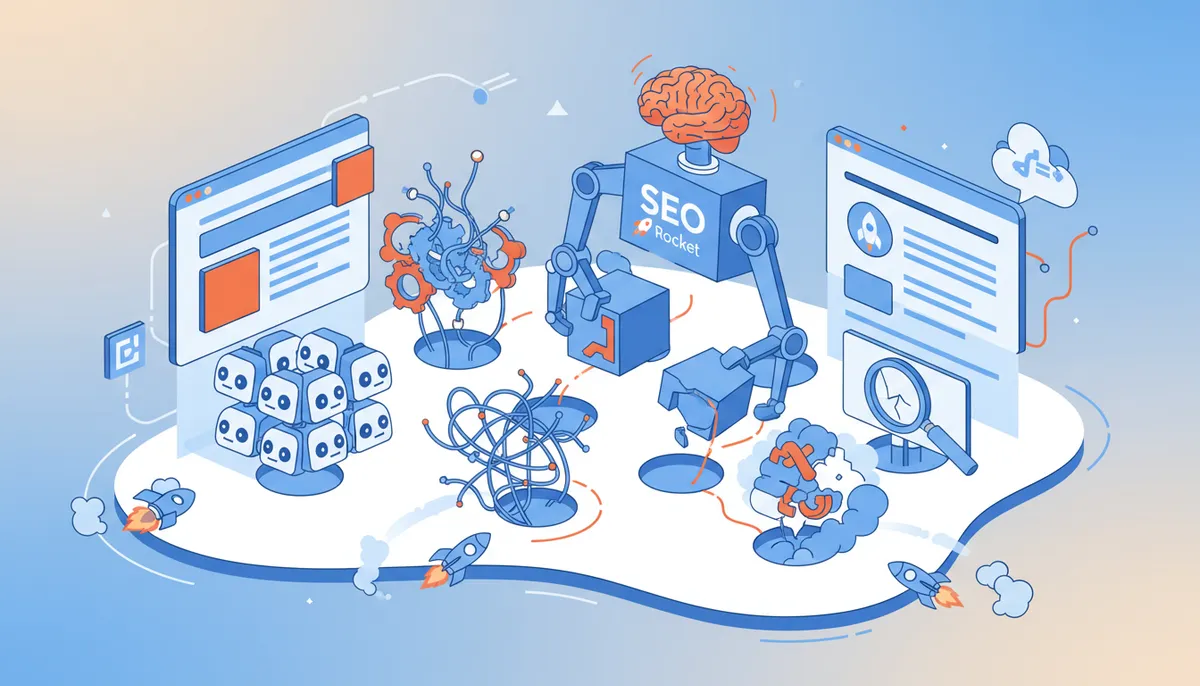
The Most Common AI SEO Implementation Mistakes
One of the most prevalent mistakes businesses make when using AI for SEO is treating it as a complete replacement for human expertise rather than a powerful enhancement tool. While AI can process vast amounts of data and automate repetitive tasks, it lacks the nuanced understanding of brand voice, audience psychology, and strategic thinking that human marketers provide. According to recent statistics, 44% of marketers use AI for social content creation and 43% for SEO analysis, but those who achieve the best results maintain human oversight throughout the process.
Another critical error is implementing multiple disconnected AI tools without a cohesive strategy. Many businesses purchase separate tools for keyword research, content generation, technical audits, and optimization, creating a fragmented workflow that actually reduces efficiency. This approach often leads to inconsistent outputs, duplicated efforts, and difficulty tracking results. The solution lies in selecting comprehensive platforms that integrate multiple AI capabilities into a unified system, similar to how SEO Rocket combines keyword discovery, content generation, optimization, and publishing in one automated workflow.
Over-reliance on AI-generated content without proper editing and quality control represents another significant mistake. While AI has become remarkably sophisticated at producing coherent text, it can still generate factually incorrect information, miss contextual nuances, or create generic content that fails to differentiate your brand. The 25% increase in AI use for keyword research over the past year demonstrates growing adoption, but businesses that publish AI content without thorough review often see declining engagement metrics and reduced search rankings over time.

Keyword Research Mistakes When Using AI Tools
Many marketers make the mistake of accepting AI keyword suggestions without validating them against actual search intent and business goals. AI tools excel at identifying keyword opportunities based on search volume and competition metrics, but they don’t inherently understand your specific business context, target audience nuances, or content capabilities. This disconnect can lead to targeting keywords that don’t align with your products, services, or content expertise, resulting in traffic that doesn’t convert.
Another common error involves ignoring long-tail and semantic keyword variations that AI tools identify. While focusing on high-volume primary keywords seems logical, the real SEO success in 2026 comes from comprehensive topic coverage that includes related terms, questions, and contextual phrases. According to the Search Quality Rater Guidelines, search engines prioritize content that demonstrates comprehensive expertise across topic clusters rather than single-keyword optimization.
Businesses also frequently make the mistake of using AI keyword research tools without understanding how search intent has evolved with AI-powered search engines like ChatGPT, Perplexity, Claude, and Gemini. Traditional keyword metrics designed for Google searches don’t fully account for how users interact with conversational AI systems. Forward-thinking platforms address this by optimizing content for both traditional search engines and AI answer engines, ensuring visibility across all channels where potential customers seek information.
Strategic Keyword Selection with AI
To avoid keyword research mistakes, implement a validation process that combines AI suggestions with human judgment. Start by using AI tools to generate comprehensive keyword lists, then filter them based on business relevance, content feasibility, and strategic value. Consider factors like conversion potential, content differentiation opportunities, and alignment with your expertise areas that AI tools cannot automatically assess.
Create keyword clusters rather than isolated keyword targets. AI tools can identify semantic relationships between terms, but you need to organize these into logical content structures that serve user intent comprehensively. This cluster approach not only improves your chances of ranking for multiple related terms but also positions your content as authoritative on broader topics, which search engines increasingly prioritize.
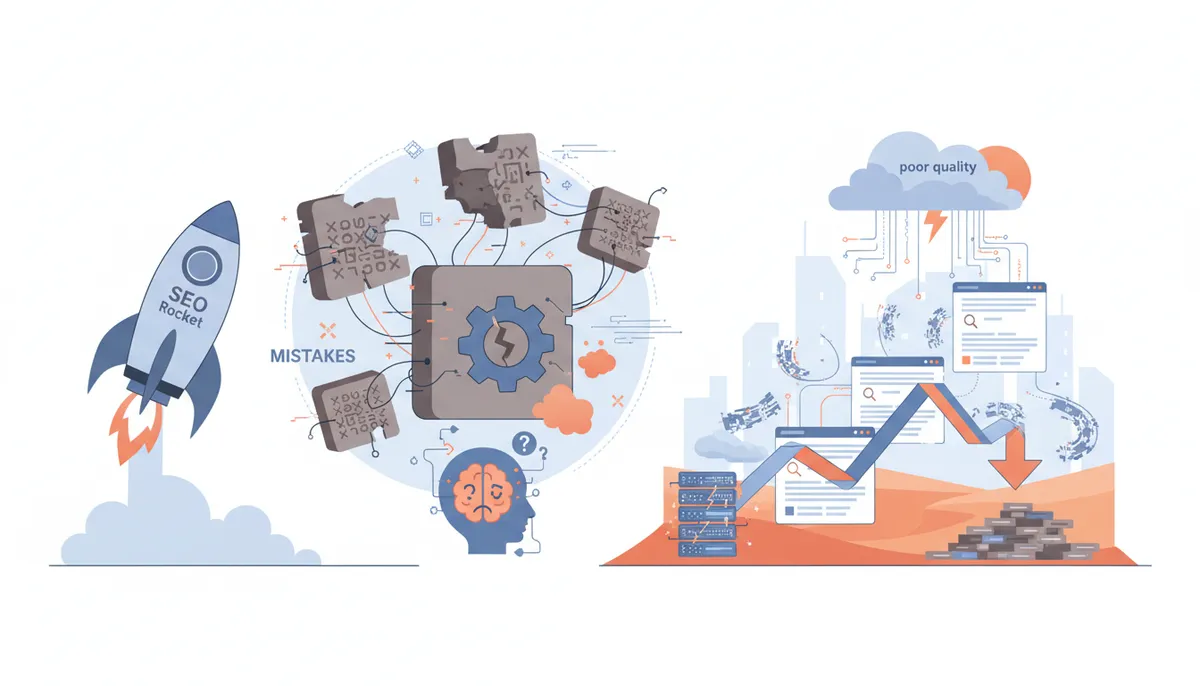
Content Generation Mistakes with AI SEO Tools
One of the most damaging mistakes when using AI for SEO content generation is publishing content without adding unique insights, brand personality, or human expertise. While AI can produce grammatically correct, keyword-optimized articles, it cannot replicate genuine experience, original research, or the distinctive voice that differentiates your brand. Content that reads like every other AI-generated article on the topic will struggle to rank and engage readers, regardless of technical optimization.
Many businesses also make the error of generating short-form content when comprehensive, long-form articles consistently outperform in search rankings. Statistics show that detailed, authoritative content that thoroughly addresses user questions tends to rank higher and earn more backlinks. However, some AI tools default to producing brief 500-1,500 word articles that lack the depth required for competitive topics. Effective AI SEO strategies prioritize platforms that generate substantial 3,000+ word articles that cover topics comprehensively from multiple angles.
Another significant mistake involves neglecting content structure and readability optimization. AI-generated content sometimes lacks logical flow, proper heading hierarchy, or scannable formatting that human readers and search engines both prioritize. Publishing walls of AI-generated text without strategic use of subheadings, bullet points, tables, and visual elements creates poor user experiences that increase bounce rates and reduce dwell time—both negative ranking signals.
Quality Control for AI-Generated SEO Content
Establish a systematic review process for all AI-generated content before publication. This should include fact-checking claims against authoritative sources, verifying that examples and statistics are current and accurate, and ensuring the content provides genuine value beyond what competitors offer. Human editors should enhance AI drafts by adding case studies, personal insights, original data, or expert perspectives that only humans can provide.
Implement readability optimization as a standard step in your AI content workflow. Use tools to assess reading level, sentence complexity, and paragraph length, making adjustments to ensure content is accessible to your target audience. Incorporate visual elements strategically—not just as aesthetic additions but as functional components that clarify complex concepts, break up text, and enhance understanding.
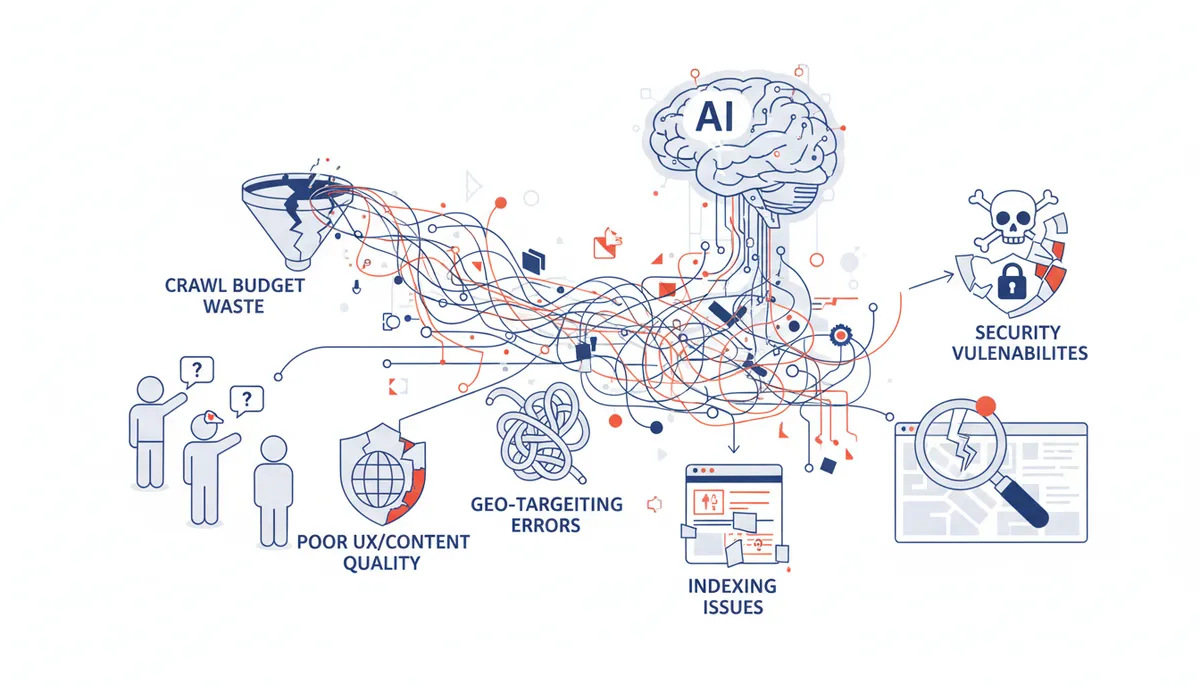
Technical SEO Mistakes When Implementing AI Solutions
A common technical mistake involves implementing AI-generated structured data and schema markup without proper validation. While AI tools can generate schema code automatically, errors in implementation can prevent search engines from properly parsing your content, potentially harming rather than helping your search visibility. Always validate schema markup using Google’s Rich Results Test and Schema.org validators before deploying to your live site.
Businesses frequently overlook the importance of site speed and performance when adding AI-powered features to their websites. Some AI tools require loading heavy JavaScript libraries or making numerous API calls that significantly slow page load times. Since page speed remains a crucial ranking factor, these performance impacts can negate the SEO benefits the AI tools provide. When selecting AI SEO solutions, prioritize those that operate server-side or use optimized delivery methods that don’t compromise site performance.
Another critical error is failing to maintain consistent internal linking strategies when using AI content generation. AI tools may create links inconsistently, miss important internal linking opportunities, or generate links that don’t align with your site architecture strategy. Effective platforms automate intelligent internal linking that strengthens your site’s topical authority and helps search engines understand content relationships. Check out how automated internal linking should work seamlessly within your content ecosystem.
AI-Powered Technical Audit Mistakes
Many businesses run AI technical SEO audits but fail to prioritize the identified issues appropriately. AI audit tools can generate hundreds of recommendations, but not all carry equal importance for your specific situation. Without proper prioritization based on business impact and implementation difficulty, teams often waste resources fixing minor issues while critical problems persist.
Another mistake involves treating AI audit reports as one-time assessments rather than ongoing monitoring systems. Technical SEO issues emerge continuously as content is added, site structure evolves, and search engine requirements change. Implement continuous monitoring that alerts you to new technical issues as they arise rather than discovering problems weeks or months after they’ve impacted your rankings.

AI Personalization and User Experience Mistakes
When implementing AI-driven personalization for SEO, a common mistake is creating such dramatically different experiences for different user segments that search engines cannot effectively crawl and index your content. While personalization can improve engagement metrics, cloaking content from search engine bots or creating too many dynamic variations can trigger algorithmic penalties or prevent proper indexing of your pages.
Businesses also frequently make the error of personalizing content based on limited or inaccurate user data, creating irrelevant experiences that increase bounce rates rather than improve engagement. AI personalization requires substantial, quality data about user preferences, behaviors, and intent. Without this foundation, personalization efforts can backfire, showing users content that doesn’t match their needs and signaling to search engines that your pages provide poor user experiences.
Another significant mistake is implementing AI chatbots and interactive elements without considering their impact on content accessibility and crawlability. Search engines need to access the valuable information contained in conversational interfaces, but content locked behind chatbots or delivered only through JavaScript interactions may not be properly indexed. Ensure that critical information is available in crawlable HTML alongside any AI-powered interactive features.

Data Analysis and Predictive Analytics Mistakes
A frequent mistake when using AI for SEO analytics is focusing exclusively on vanity metrics like keyword rankings and traffic numbers without connecting these to actual business outcomes. AI tools can track countless data points, but without strategic analysis that ties SEO performance to conversions, revenue, and customer lifetime value, you cannot accurately assess ROI or make informed optimization decisions.
Many businesses also make the error of ignoring AI-powered predictive analytics that could help them anticipate market changes, algorithm updates, and shifting user behaviors. With 70% of SEO professionals believing AI-powered tools will revolutionize keyword strategy, those who treat AI as merely a reporting tool rather than a strategic forecasting system miss opportunities to stay ahead of competitors and proactively adjust strategies before trends fully emerge.
Another common mistake involves relying on AI analysis without validating insights through manual inspection and critical thinking. AI can identify patterns and correlations, but it may also detect spurious relationships or miss contextual factors that explain data anomalies. Successful SEO strategies combine AI’s pattern-recognition capabilities with human expertise that understands market context, seasonal variations, and external factors affecting performance.

Budget and Tool Selection Mistakes
One of the most expensive mistakes businesses make is purchasing multiple specialized AI SEO tools instead of investing in a comprehensive platform that integrates all necessary capabilities. While individual tools may excel at specific tasks, the cumulative cost, learning curve, and integration challenges often exceed the benefits. A unified platform that handles keyword research, content generation, optimization, and publishing typically provides better ROI and operational efficiency.
Businesses also frequently underestimate the hidden costs of implementing AI SEO tools, including training time, workflow adjustments, quality control processes, and ongoing management requirements. A tool advertised as “fully automated” may still require significant human oversight, configuration, and content review. When evaluating AI SEO solutions, calculate total cost of ownership including time investments, not just subscription fees.
Another critical mistake is selecting AI SEO tools based on features lists rather than proven results and user reviews. Marketing materials often promise capabilities that don’t deliver in real-world applications or require technical expertise to implement effectively. Before committing to a platform, review authentic user experiences and request demonstrations with content relevant to your specific industry and needs.
Choosing the Right AI SEO Platform
When selecting an AI SEO platform, prioritize those that offer true end-to-end automation rather than just assisted workflows. The difference is substantial: assisted tools still require significant manual input at each stage, while truly automated platforms handle everything from keyword discovery through content generation, optimization, and publishing with minimal human intervention. This distinction becomes especially important for agencies managing multiple clients or businesses publishing content at scale.
Consider platforms that optimize for modern AI search engines alongside traditional search engines. In 2026, users increasingly discover content through ChatGPT, Perplexity, Claude, Gemini, and other AI systems that reference and summarize web content. Tools that only optimize for Google miss the growing audience seeking information through conversational AI interfaces. Comprehensive platforms ensure your content appears as a trusted source across all discovery channels.
Content Authenticity and E-E-A-T Mistakes
A critical mistake when using AI for SEO is neglecting the Experience, Expertise, Authoritativeness, and Trustworthiness (E-E-A-T) signals that search engines increasingly prioritize. AI-generated content often lacks the personal experience, credible author attribution, and verifiable expertise that help establish trustworthiness. Publishing content without clear authorship, credentials, or evidence of real-world experience can significantly limit ranking potential, especially for topics in healthcare, finance, and other YMYL (Your Money or Your Life) categories.
Many businesses make the error of using AI to generate content on topics outside their demonstrated expertise. While AI can write convincingly about almost any subject, search engines assess whether your site has established authority in that domain through historical content, backlinks from relevant sources, and other trust signals. Expanding into unrelated topics simply because AI makes it easy can dilute your topical authority and confuse search engines about your site’s true expertise areas.
Another significant mistake involves failing to properly disclose AI content generation when transparency would enhance rather than diminish trust. While you don’t need to label every AI-assisted article, being transparent about how you use AI as part of a rigorous content development process—with human oversight, expert review, and quality control—can actually strengthen credibility with audiences who value honesty and thoroughness.
Workflow Integration and Scalability Mistakes
Businesses frequently make the mistake of implementing AI SEO tools without properly integrating them into existing content workflows and approval processes. This creates friction between team members, leads to inconsistent quality, and often results in the AI tools being abandoned after initial enthusiasm wanes. Successful implementation requires clear workflows that define when AI is used, what level of human review is required, and how outputs integrate with your content management system.
Another common error is attempting to scale AI content production too quickly without establishing quality benchmarks and monitoring systems. The ability to generate content rapidly can tempt businesses to dramatically increase publishing frequency, but without systems to ensure consistent quality, this often leads to declining content standards that eventually harm search rankings and brand reputation. Scale gradually while monitoring performance metrics to ensure quality remains high as volume increases.
Many teams also make the mistake of not adequately training all stakeholders on how to effectively use AI SEO tools. When only one or two team members understand the tools while others remain skeptical or confused, adoption suffers and potential benefits remain unrealized. Invest in comprehensive training that helps everyone understand both the capabilities and limitations of your AI SEO tools, enabling collaborative workflows that leverage both AI efficiency and human creativity.
The SEO Rocket Advantage for AI-Powered SEO
After examining the numerous mistakes businesses make when implementing AI for SEO, it becomes clear that success requires more than just access to AI tools—it demands a comprehensive, properly integrated system designed specifically for SEO automation. SEO Rocket addresses the common pitfalls outlined above through several key differentiators that set it apart from competitors in the AI SEO space.
SEO Rocket offers true end-to-end automation that eliminates the fragmented workflow problems many businesses face. Rather than juggling separate tools for keyword research, content generation, optimization, and publishing, SEO Rocket integrates all these functions into a single platform that takes just 10 minutes to set up. The system automatically discovers keyword opportunities, generates comprehensive 3,000+ word articles, optimizes them for both traditional and AI search engines, and publishes directly to your WordPress, Webflow, Shopify, or Wix site—all without manual intervention at each stage.
Unlike tools that focus exclusively on Google, SEO Rocket optimizes content for visibility across all major search platforms including ChatGPT, Perplexity, Claude, Gemini, Copilot, and Grok. This multi-platform approach ensures your content appears as a trusted source regardless of how users search for information in 2026 and beyond. The platform’s AI is specifically trained to structure content so that AI models can reference it authoritatively, addressing the growing importance of AI Overview optimization that many competitors ignore.
The platform also solves the scalability challenges that plague businesses attempting to increase content volume. With pricing starting at $99/month for 30 articles (approximately $3 per article) or $799/month for agencies managing up to 10 clients with 300 monthly articles, SEO Rocket provides cost-effective scaling that traditional agencies charging $3,000-$5,000 monthly cannot match. The daily publishing cadence creates the compounding SEO growth that comes from consistent content production—something manual processes struggle to maintain long-term.
Quality control, one of the most common concerns with AI content, is addressed through SEO Rocket’s real-time SEO scoring with automated fix suggestions, unlimited AI rewrites, and built-in optimization for readability, internal linking, metadata, and multimedia integration. The system generates articles with proper structure, strategic subheadings, and comprehensive topic coverage while maintaining the depth and authority that search engines reward. For businesses concerned about maintaining brand voice and expertise signals, the platform allows team collaboration with unlimited members who can review and refine content before publication.
Measuring Success and Avoiding Analysis Paralysis
A final category of mistakes involves how businesses measure and act upon AI SEO performance data. Many make the error of constantly changing strategies based on short-term fluctuations rather than allowing sufficient time for SEO efforts to compound and demonstrate true impact. SEO results typically require 3-6 months to fully materialize, yet businesses often abandon effective AI strategies after just a few weeks when immediate dramatic results don’t appear.
Conversely, some businesses fall into analysis paralysis, endlessly testing and optimizing without committing to a consistent publishing schedule. While testing is valuable, the most significant SEO gains come from consistent, quality content production over time. AI tools enable this consistency, but only when businesses commit to regular publication rather than perfectionism that delays content indefinitely.
Another mistake is failing to establish clear baseline metrics before implementing AI SEO tools, making it impossible to accurately measure their impact. Before deploying any new AI solution, document your current organic traffic, keyword rankings, conversion rates, and other relevant KPIs. This baseline allows you to definitively assess whether your AI investment is delivering the promised returns and identify which specific elements of your strategy are most effective.
Conclusion: Implementing AI for SEO Successfully in 2026
Using AI for SEO in 2026 offers unprecedented opportunities for businesses to scale content production, improve optimization accuracy, and compete effectively in an increasingly complex search landscape. However, as we’ve explored throughout this guide, the path to success is filled with potential mistakes that can undermine your efforts or waste valuable resources. The key to avoiding these pitfalls lies in understanding that AI is a powerful tool that enhances human expertise rather than replaces it, and that successful implementation requires strategic planning, proper tool selection, and ongoing quality control.
The businesses that will thrive in the AI-powered SEO landscape are those that combine automation’s efficiency with human creativity, strategic thinking, and genuine expertise. They select comprehensive platforms that integrate multiple capabilities rather than juggling disconnected tools. They prioritize quality and authenticity over pure volume, optimize for both traditional and AI search engines, and maintain consistent publishing schedules that allow SEO results to compound over time. Most importantly, they avoid the common mistakes of over-relying on AI without human oversight, neglecting E-E-A-T signals, implementing tools without proper integration, and measuring success based on vanity metrics rather than business outcomes.
Whether you’re a small business owner managing SEO independently, an in-house marketing team seeking efficiency, or an agency serving multiple clients, the principles outlined in this guide will help you navigate AI SEO implementation successfully. By avoiding these common mistakes and selecting the right platform for your needs, you can leverage AI to dramatically improve your search visibility, drive qualified traffic, and achieve sustainable growth. Start your AI-powered SEO journey today with a platform designed to eliminate manual work while maintaining the quality and authenticity that search engines and users demand.
FAQs
Q: What are the most common mistakes when using AI for SEO?
A: The most common mistakes include treating AI as a complete replacement for human expertise, implementing disconnected tools without strategy, publishing AI content without quality control, ignoring E-E-A-T signals, and failing to optimize for both traditional and AI search engines. Success requires balancing automation with human oversight and strategic planning.
Q: How can AI improve keyword research for SEO in 2026?
A: AI improves keyword research by analyzing vast datasets to identify high-value opportunities, discovering semantic relationships between terms, predicting search trend shifts, and uncovering content gaps competitors miss. However, businesses must validate AI suggestions against business goals and search intent rather than accepting recommendations blindly. The most effective approach combines AI pattern recognition with human strategic judgment.
Q: Should I disclose that content is AI-generated?
A: Disclosure depends on context and audience expectations. For most SEO content, what matters is quality and accuracy rather than how it was created. However, being transparent about using AI as part of a rigorous content development process with human oversight and expert review can actually enhance credibility. Focus on demonstrating expertise, authoritativeness, and trustworthiness regardless of content creation method.
Q: How long does it take to see results from AI SEO tools?
A: Typical SEO results require 3-6 months to fully materialize, regardless of whether you use AI tools or traditional methods. AI accelerates content production and optimization but doesn’t eliminate the time required for search engines to crawl, index, and rank your content. The advantage of AI lies in enabling consistent, quality content publication that compounds over time, ultimately delivering faster results than sporadic manual efforts.
Q: What should I look for when choosing an AI SEO platform?
A: Prioritize platforms offering true end-to-end automation rather than just assisted workflows, optimization for both traditional and AI search engines, comprehensive integration of keyword research through publishing, proven results with authentic user reviews, scalability for your business needs, and reasonable total cost of ownership including time investments. Avoid tools requiring extensive manual intervention at each stage or those optimizing exclusively for Google while ignoring AI search platforms.