
Key Takeaways
-
AI-powered answer engines are fundamentally changing search, requiring businesses to adapt their content strategy beyond traditional SEO tactics.
-
Content must be structured with direct, extractable answers upfront to be recognized by AI search platforms like Google Overviews and ChatGPT.
-
Frequent content updates and freshness signals are critical for AI engines to prioritize and cite your content as authoritative.
-
Proper Schema markup is essential for AI engines to understand and extract content, making technical optimization crucial.
-
Track AEO success through metrics like AI citation count and brand mentions, not just traditional traffic and click-through rates.
If you’re still optimizing content exclusively for traditional search rankings, you’re making a costly mistake in 2026. The search landscape has fundamentally shifted. AI-powered answer engines now dominate how people find information, and businesses that ignore Answer Engine Optimization (AEO) are losing visibility to competitors who’ve adapted.
Let’s be clear: Search Engine Optimization (SEO) isn’t dead, but relying solely on it is like using a flip phone in the smartphone era. Google’s AI Overviews, ChatGPT, Perplexity, Claude, Gemini, and Copilot have changed everything. These AI engines extract and synthesize information from multiple sources, often answering user questions without requiring a single click to your website.
The mistake most businesses make is treating SEO and AEO as competing strategies when they’re actually complementary. In this article, we’ll break down what you’re getting wrong about SEO versus AEO, how to avoid costly optimization errors, and why SEO Rocket is the only platform built to dominate both traditional search and AI-driven answers simultaneously.
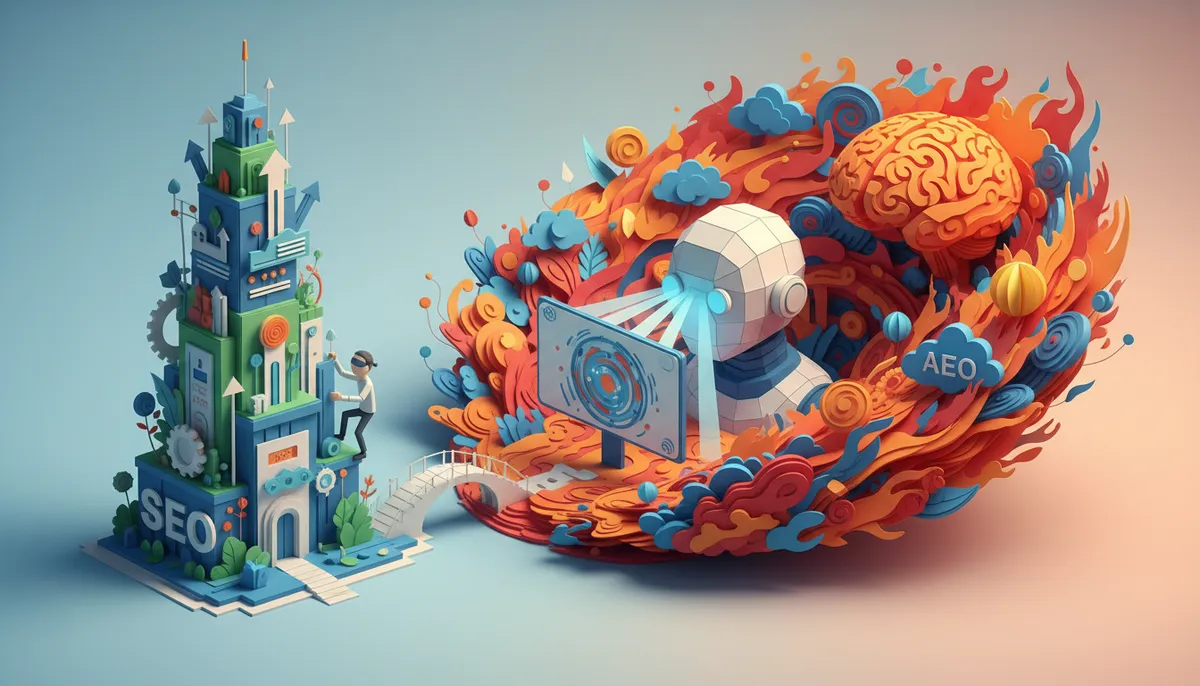
The Fatal Mistake: Ignoring AEO While AI Search Takes Over
Here’s the hard truth: AI-driven search is expected to reduce traditional search volume by 25% by the end of 2026. That’s not a prediction—it’s already happening. If you’re still creating content purely for Google’s traditional blue links, you’re optimizing for a shrinking market.
The biggest mistake businesses make is assuming SEO tactics alone will keep them visible. Traditional SEO focuses on ranking in the top 10 results to earn clicks. But AEO targets a completely different goal: getting your content extracted, cited, and synthesized by AI engines in their direct answers.
Think about your own search behavior. How often do you now get complete answers from Google’s AI Overviews, ChatGPT, or Perplexity without clicking through to any website? That’s the new reality your customers face.
Why Traditional SEO Tactics Fail in AI Search
Traditional SEO was built for human searchers clicking blue links. You optimized for keywords, built backlinks, and hoped to land in position 1-3 for maximum traffic. But AI engines don’t click—they extract.
Here are the critical SEO tactics that no longer work alone:
- Writing long-form content without direct, extractable answers upfront
- Focusing exclusively on keyword density without semantic clarity
- Building pages designed to maximize time-on-site rather than quick answers
- Ignoring structured data and Schema markup that AI engines rely on
- Publishing content once and never updating for freshness signals
- Creating content that buries answers deep within paragraphs
The mistake isn’t doing SEO—it’s doing ONLY SEO. AI engines reward content that’s structured differently, answers questions directly, and maintains frequent freshness updates.
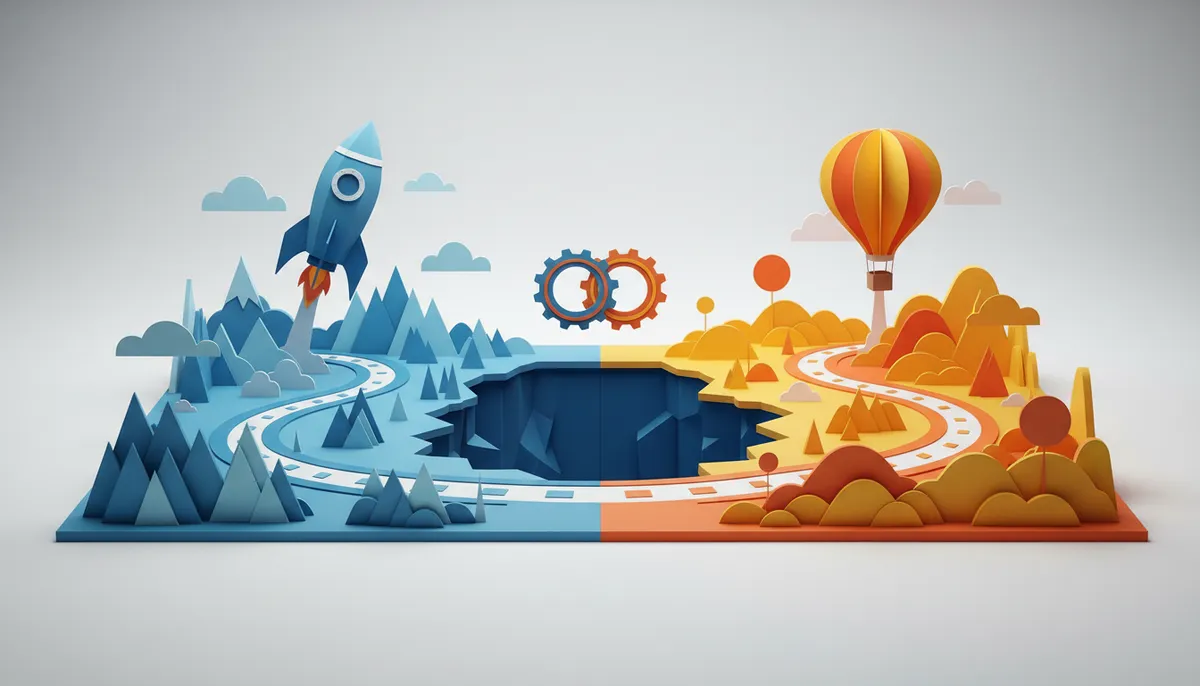
Don’t Assume SEO and AEO Are the Same Thing
This is perhaps the most dangerous assumption in 2026. Many marketers think if they’re doing good SEO, they’re automatically optimized for AI search. Wrong.
SEO and AEO share foundational principles like keyword research, authority building, and quality content. But they diverge significantly in execution, structure, and success metrics.
How SEO and AEO Differ in Practice
| Aspect | SEO | AEO |
|---|---|---|
| Primary Goal | Earn clicks from search results | Get cited in AI-generated answers |
| Content Structure | In-depth, comprehensive articles | Direct answers upfront, then depth |
| Update Frequency | Quarterly or when needed | Frequent updates for freshness |
| Success Metric | Traffic and conversions | Citations and brand mentions |
| Visibility Location | Traditional SERP rankings | AI Overviews, chatbot responses |
| Click Requirement | Yes—users must click through | No—answers appear directly |
The mistake businesses make is using SEO-optimized content formats for AEO goals. AI engines don’t reward long introductions, storytelling hooks, or gradual information reveals. They extract concise, direct answers with clear semantic structure.
For example, a traditional SEO article might take 300 words to answer “What is AEO?” But an AEO-optimized answer provides the definition in the first 50 words, followed by structured details that AI engines can easily parse and cite.

Never Ignore Structured Data and Schema Markup
If your content lacks proper Schema markup in 2026, you’re making a critical AEO mistake. AI engines rely heavily on structured data to understand, categorize, and extract information from your content.
Many businesses assume that writing quality content is enough. It’s not. Without machine-readable structure, even excellent content becomes invisible to AI answer engines.
Schema Types That Matter for AEO
- FAQ Schema: Marks up question-and-answer pairs for direct extraction
- Article Schema: Helps AI engines understand content hierarchy and key points
- How-To Schema: Structures step-by-step processes for AI synthesis
- Organization Schema: Establishes brand authority and credibility
- Product Schema: Essential for e-commerce visibility in AI shopping results
The mistake most content automation tools make is generating content without automatically implementing Schema markup. This leaves your articles technically invisible to AI extraction algorithms, regardless of content quality.
SEO Rocket automatically generates proper Schema markup for every article, ensuring both traditional search engines and AI answer engines can fully understand and cite your content. This dual optimization happens automatically—no manual technical SEO work required.

Don’t Write Content That Buries the Answer
This is the most common content structure mistake for AEO. Traditional SEO often rewards longer content with gradual information reveals. You hook readers, build context, then eventually deliver the answer halfway through a 2,000-word article.
That approach fails spectacularly for AI search. ChatGPT, Perplexity, and Google’s AI Overviews scan for immediate, extractable answers. If your answer is buried beneath 500 words of context, AI engines will skip your content and cite competitors who answer directly.
The AEO Content Structure Formula
- Direct Answer First: Provide the core answer in the first 50-100 words
- Structured Expansion: Use clear H2/H3 headings to organize supporting details
- Lists and Tables: Present information in scannable, extractable formats
- Semantic Clarity: Use precise language without fluff or filler
- Fresh Examples: Include current, relevant examples from 2026
- Multi-Source Credibility: Reference authoritative sources AI engines trust
The mistake businesses make is treating every article like a traditional blog post. AEO requires a hybrid approach: immediate answers for AI extraction, followed by comprehensive depth for traditional SEO ranking.
This is exactly how SEO Rocket structures every automated article—direct answers upfront for AEO visibility, followed by 3,000+ words of comprehensive content for traditional SEO dominance. You get both types of visibility without manually restructuring content.
Avoid Publishing Content Once and Forgetting It
If you’re still following the old “publish and move on” SEO strategy, you’re making a costly AEO mistake. AI engines heavily weight content freshness when determining which sources to cite.
Traditional SEO allows for quarterly content updates or even annual refreshes. But AEO demands much more frequent freshness signals. AI engines like ChatGPT, Perplexity, and Google’s AI Overviews prioritize recently updated content because they aim to provide current, accurate information.
Why Freshness Matters More for AEO
- AI engines check publication and update dates before citing sources
- Recent updates signal active maintenance and accuracy
- Outdated content gets filtered out of AI-generated answers
- Frequent updates compound your authority signals over time
- AI search favors sources with consistent publishing patterns
The mistake most businesses make is creating great content but never returning to refresh it. A 2024 article about SEO best practices becomes stale by 2026, even if the core advice remains valid. Without fresh updates, AI engines assume competitors with 2026 publication dates have more current information.
This is where content automation provides a massive advantage. SEO Rocket publishes fresh, optimized articles daily—creating the consistent freshness signals that AI engines reward. Instead of manually updating old content, you’re constantly adding new, current articles that maintain perpetual freshness across your entire site.
Don’t Measure Success Using Only SEO Metrics
This mistake costs businesses real visibility gains without them even realizing it. If you’re tracking only traditional SEO metrics—rankings, organic traffic, and click-through rates—you’re completely missing your AEO performance.
AEO requires different success measurements because the goals differ fundamentally from traditional SEO. You can have excellent AEO performance while seeing modest traditional traffic gains, simply because AI engines answer user questions without requiring clicks.
Critical AEO Metrics to Track
| Metric | What It Measures | Why It Matters |
|---|---|---|
| AI Citation Count | How often AI engines cite your content | Direct measure of AEO visibility |
| Brand Mentions | References to your business in AI answers | Authority and awareness building |
| AI Overview Appearances | Visibility in Google’s AI-generated results | Top-of-SERP visibility without clicks |
| Zero-Click Visibility | Content shown without click-through | Brand exposure in AI responses |
| AI-Referred Traffic Quality | Conversion rates from AI-driven visits | Higher intent than traditional traffic |
The mistake businesses make is assuming declining click-through rates mean failing SEO. In reality, you might have phenomenal AEO success—your content is being cited extensively in AI answers, building brand authority even without direct traffic.
According to recent data, AI-referred visitors show stronger purchase intent and higher conversion rates than traditional search traffic. This means fewer total visitors but better business outcomes. If you’re only measuring traffic volume, you’re missing this quality shift.
Never Ignore the GEO Factor
Here’s a mistake even sophisticated SEO professionals make: confusing AEO with GEO (Generative Engine Optimization). While related, they target different AI search ecosystems.
AEO focuses on search-integrated AI features like Google’s AI Overviews, Bing’s Copilot, and similar tools that appear within traditional search interfaces. GEO targets standalone AI systems like ChatGPT, Claude, and Gemini that operate independently of traditional search engines.
Why Both Matter for Complete AI Visibility
- Users increasingly bypass Google entirely, going straight to ChatGPT or Perplexity
- Standalone AI tools cite sources differently than search-integrated ones
- GEO optimization requires even more structured, authoritative content
- Multi-platform AI visibility compounds your brand authority
- Different AI engines prioritize different content signals
The mistake businesses make is optimizing only for Google’s AI features while ignoring standalone AI platforms. Your potential customers use ChatGPT, Claude, Perplexity, Gemini, and other tools that operate outside Google’s ecosystem entirely.
SEO Rocket solves this comprehensively by optimizing content for both AEO and GEO simultaneously. Every article is structured for maximum extractability across Google’s AI Overviews, ChatGPT, Perplexity, Claude, Gemini, Copilot, and Grok. You don’t need separate strategies or manual optimization—it’s built into every automated article.
Don’t Use Generic Content Automation Tools for AEO
This is perhaps the most expensive mistake businesses make: assuming any AI writing tool can handle AEO optimization. Most content automation platforms were built for traditional SEO and simply bolt on “AI optimization” as an afterthought.
Generic AI writing tools make critical AEO mistakes:
- They generate content without proper structured data implementation
- They bury answers instead of leading with extractable information
- They ignore freshness signals and publishing consistency
- They don’t optimize for multiple AI search platforms simultaneously
- They require extensive manual editing to meet AEO standards
- They focus on keyword density instead of semantic clarity
- They lack automatic Schema markup generation
The result is content that looks optimized but fails to get cited by AI engines. You’re publishing regularly but gaining no AI visibility because the structural foundation is wrong.
What True AEO Automation Requires
Legitimate AEO automation must handle these elements simultaneously:
- Automatic Schema markup for all content types
- Direct-answer-first content structuring
- Semantic keyword optimization beyond simple density
- Multi-source citation and authority building
- Daily publishing for consistent freshness signals
- Optimization for both traditional search and AI engines
- Real-time scoring for both SEO and AEO effectiveness
SEO Rocket is the only platform built specifically for this dual optimization challenge. It doesn’t just generate content—it automatically implements every technical and structural element required for both traditional SEO rankings and AI answer engine citations.
Every article includes proper Schema markup, direct answers positioned for AI extraction, semantic optimization across multiple AI platforms, and automatic publishing that creates compounding freshness signals. You’re not managing two separate strategies—you’re running one integrated system that dominates both traditional and AI search simultaneously.
Stop Wasting Time on Manual Optimization
Here’s the final critical mistake: trying to manually optimize content for both SEO and AEO. Even if you understand all the technical requirements, implementing them consistently is impossibly time-consuming.
Consider what manual dual optimization requires:
- Keyword research across traditional search and AI query patterns
- Content outlining with both SEO depth and AEO structure
- Writing direct answers while maintaining comprehensive coverage
- Implementing Schema markup manually for every article
- Optimizing metadata for both human readers and AI extraction
- Building internal linking structures that satisfy both SEO and AEO
- Regular content updates to maintain freshness signals
- Monitoring performance across multiple platforms and metrics
A single article optimized properly for both SEO and AEO takes 6-8 hours of expert work. Most businesses can’t maintain that pace, so they publish inconsistently or compromise on optimization quality.
The mistake is treating content creation as a manual process when automation has evolved to handle everything. Sign up for SEO Rocket and you’ll eliminate this entire burden. The platform handles keyword discovery, content generation, dual optimization, Schema implementation, and daily publishing automatically.
How SEO Rocket Eliminates SEO vs AEO Mistakes
Understanding the mistakes is valuable, but eliminating them systematically is what drives results. SEO Rocket is built specifically to avoid every common SEO and AEO optimization error automatically.
Automated Dual Optimization
SEO Rocket generates content that’s simultaneously optimized for traditional search rankings and AI answer engine citations. You don’t choose between SEO and AEO—every article targets both.
Each automated article includes:
- Direct, extractable answers in the opening paragraphs for AEO
- Comprehensive 3,000+ word depth for traditional SEO authority
- Automatic Schema markup implementation
- Semantic keyword optimization across multiple AI platforms
- Structured headings, lists, and tables for AI parseability
- Fresh publication dates and consistent update signals
Daily Publishing for Freshness Signals
Instead of manually updating content quarterly, SEO Rocket publishes fresh, optimized articles daily. This creates perpetual freshness signals across your entire site—exactly what AI engines prioritize when selecting sources to cite.
The Business plan generates 30 articles monthly (one per day), while the Agency plan produces 300 monthly articles (10 per day across multiple clients). This consistency compounds visibility over time as both traditional search engines and AI platforms recognize your site as an actively maintained, authoritative source.
Complete Automation From Research to Publishing
SEO Rocket eliminates manual work at every stage:
- Keyword Discovery: Automatically identifies opportunities using live SEO data
- Content Planning: Visual calendar fills with optimized article schedules
- Article Generation: Creates 3,000+ word dual-optimized content daily
- Technical Optimization: Implements Schema markup, metadata, and linking automatically
- Quality Scoring: Real-time SEO/AEO scoring with automated fix suggestions
- Publishing: Direct integration with WordPress, Webflow, Shopify, and Wix
Setup takes under 10 minutes. After that, you review and approve—the system handles everything else. No manual research, writing, optimization, or publishing required.
Multi-Platform AI Optimization
Unlike tools built only for Google, SEO Rocket optimizes for the complete AI search ecosystem: Google AI Overviews, ChatGPT, Perplexity, Claude, Gemini, Copilot, and Grok.
Your content gains visibility wherever your potential customers search—not just traditional Google results. This multi-platform approach is essential as users increasingly bypass traditional search engines entirely, going directly to AI assistants for answers.
The Cost of Getting SEO vs AEO Wrong
Let’s be direct about what these mistakes actually cost businesses in 2026. Ignoring AEO or improperly implementing it doesn’t just mean missed opportunities—it means losing ground to competitors who’ve adapted.
Lost Visibility in AI Search
With 25% of traditional search volume shifting to AI-driven answers by late 2026, businesses optimizing only for traditional SEO are competing for a shrinking market. Your competitors who’ve implemented proper AEO are capturing the growing AI search segment while you’re fighting for declining traditional traffic.
Wasted Content Investment
If you’re publishing content that isn’t properly structured for AI extraction, you’re wasting your content investment. The articles exist but generate zero AI citations, brand mentions, or visibility in AI Overviews. You’re paying for content creation without capturing the fastest-growing search segment.
Manual Optimization Inefficiency
Businesses trying to manually implement dual optimization spend 6-8 hours per article and struggle to maintain consistency. At typical content costs of $200-500 per manually created article, you’re spending $6,000-15,000 monthly for inconsistent, incomplete optimization.
SEO Rocket produces 30 properly dual-optimized articles monthly for $99—approximately $3 per article. That’s 95% cost savings with superior optimization quality and perfect consistency.
Take Action: Implement Proper Dual Optimization Today
The mistakes outlined in this article are costing businesses visibility, traffic, and growth in 2026. The good news is that fixing them doesn’t require massive effort or technical expertise—it requires the right automation platform.
Stop trying to manually balance SEO and AEO optimization. Stop using generic content tools that ignore AI search requirements. Stop publishing inconsistently and hoping for results.
Start your SEO Rocket plan for just $99/month and implement proper dual optimization automatically. You’ll gain visibility in both traditional search results and AI-generated answers without managing two separate strategies or spending hours on manual optimization.
The setup takes less than 10 minutes. Connect your website, review the automatically discovered keyword opportunities, approve your content calendar, and let the system handle everything else. You’ll start receiving daily optimized articles that drive compounding results across the entire search ecosystem.
The businesses dominating search in 2026 aren’t choosing between SEO and AEO—they’re mastering both simultaneously through automation. Join them.
FAQs
Q: What is the main difference between SEO and AEO?
A: SEO focuses on ranking your content in traditional search results to earn clicks and drive traffic to your website. AEO optimizes your content to be directly cited, extracted, and synthesized by AI answer engines like Google’s AI Overviews, ChatGPT, Perplexity, and Claude—often providing answers without users clicking through to any website. Both are essential in 2026 for complete search visibility.
Q: Will AEO replace traditional SEO completely?
A: No, AEO won’t replace SEO—it complements it. While AI-driven search is growing rapidly and expected to reduce traditional search volume by 25% by late 2026, traditional SEO still drives valuable traffic and conversions. The winning strategy is dual optimization that targets both traditional search rankings and AI answer engine citations simultaneously, which is exactly what platforms like SEO Rocket automate.
Q: How often should I update content for AEO optimization?
A: AEO requires much more frequent freshness signals than traditional SEO. Instead of quarterly updates, you should aim for consistent publishing patterns with regular content updates. The most effective approach is daily publishing of fresh, optimized content, which creates perpetual freshness signals that AI engines prioritize when selecting sources to cite in their answers.
Q: Can I optimize for AEO without technical SEO knowledge?
A: Yes, with the right automation platform. While manual AEO implementation requires technical expertise in Schema markup, content structuring, and semantic optimization, platforms like SEO Rocket handle all technical elements automatically. You get properly structured content with Schema markup, dual optimization, and daily publishing without needing any technical SEO skills.
Q: What metrics should I track for AEO success?
A: Track AI citation count (how often AI engines reference your content), brand mentions in AI-generated answers, appearances in Google AI Overviews, zero-click visibility metrics, and AI-referred traffic quality. These differ from traditional SEO metrics because AEO success often means your content is cited without generating direct clicks, building authority and awareness through AI-powered answers instead of traffic volume alone.