Key Takeaways
-
AI blog generators can produce fully optimized blog posts in under two minutes, transforming content creation speed for businesses
-
Hybrid approaches combining AI generation with human editing deliver maximum efficiency and quality without sacrificing authenticity
-
AI blog generators cost approximately $3 per article, representing 90-95% savings compared to traditional writing services
-
Different content types suit AI or human writing: Use AI for data-driven content, reserve human writers for thought leadership and personal stories
-
SEO-focused AI tools can automatically incorporate keywords, analyze competitors, and generate meta descriptions with high precision
Creating quality blog content takes time, effort, and consistent dedication. Many businesses struggle to publish regularly while maintaining high standards. This challenge has led to a growing debate: should you use an AI blog generator or stick with traditional manual writing?
The answer isn’t simple. Both methods have strengths and weaknesses. AI blog generators can produce content in minutes, while manual writing offers unique human creativity. Understanding when to use each approach helps you make smarter content decisions.
This comparison explores how AI blog generators work, their advantages over manual writing, and when human writers still win. By the end, you’ll know which method fits your content goals best and how to maximize results with either approach.

What Is an AI Blog Generator?
An AI blog generator is software that creates written content using artificial intelligence, natural language processing, and machine learning. These tools analyze billions of online pages to understand writing patterns and produce human-like text based on your prompts.
The technology behind these generators has improved dramatically. They now understand context, maintain consistent tone, and create structured articles with proper formatting. Most platforms can generate blog posts, outlines, headlines, and SEO-optimized content in under two minutes.
Popular AI blog generators integrate directly with platforms like WordPress and Google Workspace. This means you can write, edit, and publish without switching between multiple tools. The convenience factor alone makes these platforms attractive for busy content teams.
How AI Blog Generators Work
AI blog generators use natural language processing to understand your content requirements. You provide a topic, target keywords, and desired tone. The system then searches its training data for relevant information and creates original content matching your specifications.
These tools perform several functions simultaneously:
- Keyword analysis to identify search volume and competition
- Headline generation with multiple variations
- Structured outline creation with H2 and H3 headings
- SEO optimization suggestions and metadata
- Content idea expansion across multiple formats
The best systems also provide SEO scoring, competitor analysis, and gap identification. This helps you understand not just what to write, but how to rank higher than competing content.

Manual Writing: The Traditional Approach
Manual writing involves human writers researching, drafting, editing, and publishing content without AI assistance. This method has been the standard for decades and still dominates many content strategies.
Human writers bring irreplaceable qualities to content creation. They understand nuance, emotion, and cultural context in ways AI cannot replicate. A skilled writer can adapt tone mid-article, inject personality, and make creative connections between unrelated concepts.
Manual writing also ensures complete accuracy and fact-checking. Writers can verify sources, conduct original research, and interview experts. This level of depth creates authoritative content that builds trust with readers.
Strengths of Human Writers
Human writers excel at creating emotionally resonant content. They can tell stories that connect with readers on a personal level. This emotional intelligence separates good content from great content.
Additional human advantages include:
- Original research and expert interviews
- Brand voice consistency across all content
- Creative problem-solving and unique perspectives
- Cultural sensitivity and contextual awareness
- Strategic thinking about content positioning
Writers also adapt quickly to feedback and changing requirements. They can pivot mid-project when priorities shift or new information emerges. This flexibility proves valuable in fast-moving industries.

Speed and Efficiency Comparison
Speed is where AI blog generators shine brightest. These tools can produce fully optimized blog posts in under two minutes. A 3,000-word article that takes a human writer 4-6 hours can be generated instantly.
For businesses publishing daily content, this speed difference is transformative. An AI system like SEO Rocket can generate and publish one article per day automatically. This consistency would require hiring multiple full-time writers.
Manual writing takes significantly longer. Research alone can consume 1-2 hours per article. Then comes outlining, drafting, editing, and formatting. Even experienced writers rarely produce more than 2-3 quality articles per day.
Cost Analysis
The financial difference between AI and manual writing is substantial. Professional writers charge $50-$500 per article depending on length and complexity. SEO agencies often charge $3,000-$5,000 monthly for consistent content production.
AI blog generators cost dramatically less. Platforms like SEO Rocket charge approximately $3 per article when you calculate the monthly subscription against output. This represents savings of 90-95% compared to traditional writing services.
| Method | Monthly Cost | Articles/Month | Cost/Article |
|---|---|---|---|
| Freelance Writer | $3,000 | 20 | $150 |
| SEO Agency | $5,000 | 15 | $333 |
| AI Blog Generator | $99 | 30 | $3 |
Quality and Authenticity Comparison
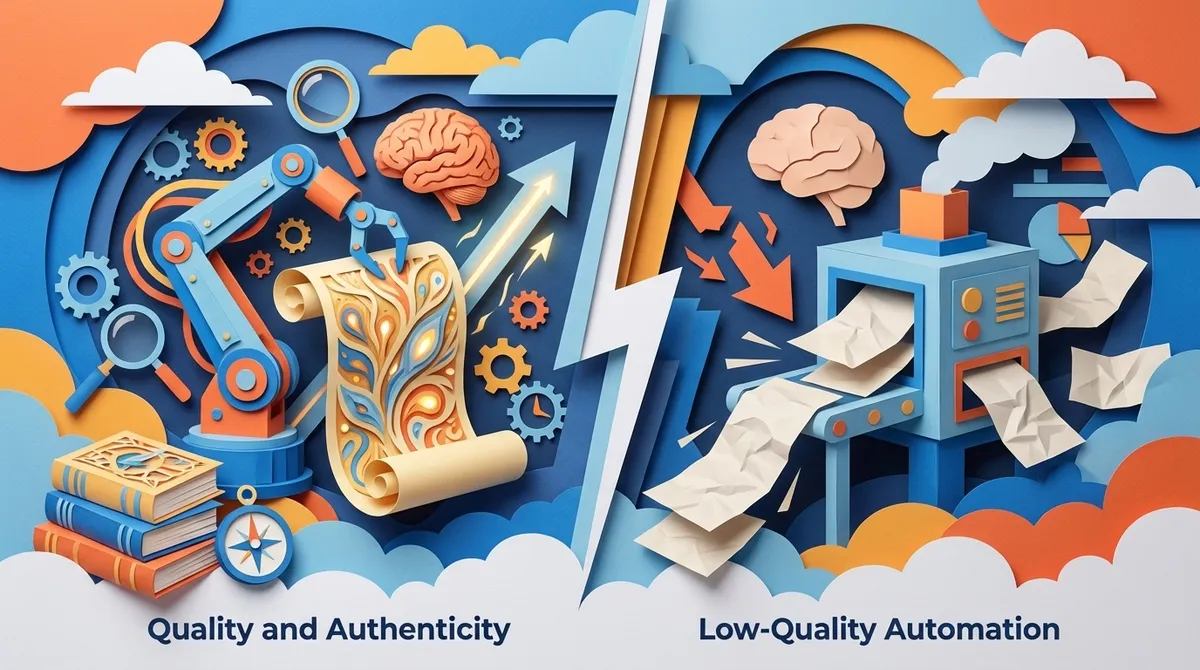
Quality remains the most debated aspect of AI-generated content. Critics argue AI lacks the creativity and depth of human writing. Supporters point to constant improvements making AI content nearly indistinguishable from human work.
The truth sits somewhere in the middle. AI blog generators produce structurally sound, grammatically correct content. They incorporate keywords naturally and follow SEO best practices. However, they sometimes lack the nuanced understanding that makes content truly exceptional.
Human writers create more authentic, personalized content. They inject personality, humor, and unique perspectives that resonate with specific audiences. This authenticity builds stronger connections between brands and readers.
When Quality Matters Most
Certain content types demand human writers. Thought leadership articles, personal stories, and opinion pieces require genuine human experience. No AI can replicate the credibility of a CEO sharing lessons learned from business failures.
Other content types work perfectly with AI generation:
- Product descriptions and specifications
- FAQ pages and knowledge base articles
- How-to guides and tutorials
- News summaries and trend reports
- Listicles and comparison articles
The best approach combines both methods. Use AI for high-volume, data-driven content. Reserve human writers for strategic pieces requiring unique expertise or emotional connection.

SEO Performance: AI vs. Manual
Search engine optimization determines whether your content gets seen. Both AI and manual writing can produce SEO-optimized content, but they approach optimization differently.
AI blog generators excel at technical SEO. They automatically incorporate target keywords at optimal density (around 1.5%), create proper heading structures, and generate meta descriptions. Many platforms analyze competitor content and identify ranking opportunities humans might miss.
According to recent data, Google’s Search Quality Rater Guidelines emphasize experience, expertise, authoritativeness, and trustworthiness (E-E-A-T). AI-generated content can satisfy these criteria when properly configured and edited.
Keyword Research Capabilities
AI blog generators identify SEO opportunities through advanced keyword research, competitor analysis, gap analysis, and rank tracking. RightBlogger’s Keyword Cluster tool can generate 12+ different content categories with 5+ bullet points each from a single keyword. This provides dozens of potential post ideas in seconds.
Manual writers conduct keyword research too, but the process takes longer. They use separate tools like SEMrush or Ahrefs, then manually incorporate findings into content. This multi-step process adds hours to production time.
The advantage of AI systems like SEO Rocket is integration. Keyword research, content generation, optimization, and publishing happen in one automated workflow. This eliminates the inefficiencies of jumping between multiple platforms.

Scalability and Consistency
Scaling content production with human writers means hiring more people. Each new writer requires onboarding, training, and management. Maintaining consistent quality across a growing team becomes increasingly difficult.
AI blog generators scale effortlessly. Whether you need 10 articles or 300 articles monthly, the system handles the workload without quality degradation. Agency plans support multiple clients and unlimited team members without additional costs.
Consistency is another major advantage. AI maintains the same tone, style, and quality across every article. Human writers have off days, varying skill levels, and different interpretations of brand voice.
Managing Multiple Clients
For agencies and consultants, AI blog generators solve a critical challenge. Managing content for multiple clients requires separate strategies, calendars, and writers. This complexity limits how many clients you can serve effectively.
AI platforms designed for agencies streamline multi-client management. You can maintain separate workspaces, content calendars, and brand voices for each client. The system generates content automatically based on each client’s specific keywords and preferences.
SEO Rocket’s Agency plan supports 10 client workspaces with 300 monthly articles. This level of scalability would require a team of 6-8 full-time writers to match manually.

Common Use Cases for Each Method
Understanding when to use AI versus manual writing helps you optimize your content strategy. Different situations call for different approaches based on goals, resources, and content requirements.
AI blog generators work best for:
- High-volume content needs across multiple topics
- Regular publishing schedules requiring daily articles
- Data-driven content like statistics, comparisons, and guides
- SEO-focused content targeting specific keywords
- Product descriptions and technical documentation
Manual writing works best for:
- Thought leadership and executive-level content
- Personal stories and case studies
- Sensitive topics requiring cultural awareness
- Brand manifesto and mission statements
- Creative content like fiction or poetry
Hybrid Approach: Best of Both Worlds
The smartest content strategies combine AI and human efforts. Use AI blog generators for the heavy lifting—research, first drafts, and SEO optimization. Then have human editors refine the content for authenticity and brand alignment.
This hybrid approach delivers maximum efficiency without sacrificing quality. AI handles time-consuming tasks while humans focus on strategic improvements. The result is more content published faster at higher quality than either method alone.
Companies that succeed with AI integration share one defining trait: they integrate AI deeply into high-value workflows. This represents approximately 5% of organizations attempting AI adoption, according to recent research.
Tools and Platforms to Consider
The AI blog generator market offers numerous options. Each platform has different features, pricing, and capabilities. Choosing the right tool depends on your specific content needs and budget.
Popular platforms include specialized solutions for different use cases. Some focus on short-form social content, while others excel at long-form blog posts. Integration capabilities vary significantly between platforms.
When evaluating AI blog generators, consider these factors:
- Content length capabilities (500 words vs. 3,000+ words)
- SEO optimization features and scoring
- Direct publishing integrations with your CMS
- Keyword research and competitor analysis tools
- Team collaboration and multi-client support
- Pricing structure and cost per article
Platform Comparison
Different platforms serve different needs. Some focus exclusively on content generation, requiring separate tools for publishing and optimization. Others offer end-to-end automation handling everything from keyword research to daily publishing.
| Feature | Basic AI Writers | Full Automation Platforms |
|---|---|---|
| Keyword Research | Manual import | Automatic discovery |
| Content Length | 500-1,500 words | 3,000+ words |
| Publishing | Manual copy-paste | Direct automated publishing |
| SEO Optimization | Basic suggestions | Real-time scoring with auto-fixes |
| Multi-Client Support | Limited | Dedicated workspaces |
For businesses wanting true automation, platforms like SEO Rocket eliminate manual work entirely. The system handles keyword discovery, content generation, optimization, and publishing without human intervention after initial setup.
Future of Content Creation
AI technology continues advancing rapidly. Each year brings improvements in understanding context, maintaining consistency, and generating creative content. The gap between AI and human writing narrows as models become more sophisticated.
However, human writers aren’t becoming obsolete. Instead, their role is evolving. Writers increasingly act as strategists, editors, and brand voice guardians rather than pure content producers. This shift allows them to focus on high-value creative work.
The future likely involves deeper AI-human collaboration. AI will handle research, first drafts, and optimization. Humans will provide strategic direction, emotional intelligence, and final quality control. This division of labor maximizes the strengths of both approaches.
Emerging Trends
Several trends are reshaping content creation:
- AI search optimization for platforms like ChatGPT, Perplexity, Claude, Gemini, Copilot, and Grok
- Voice and video content generation beyond written text
- Personalized content created dynamically for individual users
- Real-time content optimization based on performance data
- Integration of AI with entire marketing workflows
Staying competitive means adapting to these changes. Companies that embrace AI augmentation while maintaining human oversight will outperform those using either approach exclusively.
Making the Right Choice for Your Business
Choosing between AI blog generators and manual writing depends on your specific situation. Consider your budget, content volume needs, quality requirements, and available resources.
Small businesses with limited budgets benefit most from AI blog generators. The cost savings and efficiency gains make consistent content production possible without hiring writers. This levels the playing field against larger competitors with bigger content teams.
Established brands with existing content teams can use AI to supplement human writers. Let AI handle routine content while writers focus on strategic pieces requiring unique expertise. This maximizes output without compromising brand voice.
Questions to Ask Yourself
Before deciding, answer these questions:
- How many articles do you need to publish monthly?
- What is your content budget per article?
- Do you have in-house writers or editors?
- How important is brand voice consistency?
- Are you focused primarily on SEO traffic?
- Do you need content for multiple clients?
If you need high volume, have limited budget, and focus on SEO, AI blog generators are likely your best option. If you need highly specialized content with unique expertise, manual writing may be worth the investment.
Implementation: Getting Started with AI
Starting with an AI blog generator is straightforward. Most platforms offer free trials or demos. This lets you test capabilities before committing to a subscription.
Setup typically takes under 10 minutes. You connect your website through WordPress, Webflow, Shopify, or Wix integrations. The system analyzes your site and automatically discovers keyword opportunities based on your niche.
After setup, you review the auto-generated content calendar and approve topics. From there, the AI handles everything—generation, optimization, image creation, and publishing. Many users report seeing traffic improvements within 60-90 days as published content begins ranking.
Best Practices for Success
To get the best results from AI blog generators:
- Review and edit AI-generated content before publishing
- Provide clear brand voice guidelines and examples
- Regularly update keyword targets based on performance
- Monitor SEO scores and implement suggested improvements
- Combine AI content with occasional human-written strategic pieces
Remember that AI is a tool, not a complete replacement for human judgment. The best results come from treating AI as a highly capable assistant that requires oversight and direction.
Real-World Results and Case Studies
Businesses using AI blog generators report significant improvements in organic traffic and search rankings. The consistency of daily publishing creates compounding SEO benefits over time.
One common pattern emerges across successful implementations: companies that publish content daily see faster ranking improvements than those publishing weekly. AI makes daily publishing realistic for businesses of any size.
Cost savings are equally impressive. Companies switching from freelance writers or agencies to AI systems typically reduce content costs by 90% or more while maintaining or improving output quality.
What to Expect
Setting realistic expectations helps ensure satisfaction with AI blog generators. Don’t expect overnight results—SEO takes time regardless of how content is created. However, consistent daily publishing accelerates the timeline significantly.
Most businesses see initial ranking improvements within 30-60 days. Significant traffic growth typically appears after 90-120 days as more content gets indexed and begins ranking. This timeline matches traditional SEO but with far less manual effort required.
Conclusion: Which Method Wins?
The AI blog generator versus manual writing debate doesn’t have a universal winner. The best choice depends on your specific goals, resources, and content requirements. Both methods have legitimate use cases.
AI blog generators win on speed, cost, scalability, and consistency. They’re ideal for businesses needing high-volume, SEO-focused content on limited budgets. The efficiency gains are undeniable, especially for agencies managing multiple clients.
Manual writing wins on authenticity, creativity, and specialized expertise. It’s essential for content requiring unique perspectives, emotional resonance, or deep subject matter expertise. Human writers excel at strategic thought leadership that builds brand authority.
The smartest approach combines both methods. Use AI for the bulk of content production and reserve human writers for strategic pieces requiring special attention. This hybrid strategy delivers maximum output at optimal quality.
If you’re ready to experience the efficiency of AI-powered content automation, start for $99/month and see how automated daily publishing transforms your SEO results. With setup taking under 10 minutes and zero ongoing maintenance required, there’s no easier way to scale your content strategy in 2026.
FAQs
Q: What is an AI blog generator and how does it work?
A: An AI blog generator is software that creates written content using artificial intelligence, natural language processing, and machine learning. It analyzes billions of online pages to understand writing patterns and produces human-like text based on your prompts. These tools can generate blog posts, outlines, headlines, and SEO-optimized content in under two minutes while handling keyword research, optimization, and formatting automatically.
Q: Can AI blog generators replace human writers completely?
A: AI blog generators cannot completely replace human writers, but they can handle a large portion of content production. AI excels at data-driven, SEO-focused content and high-volume publishing. However, human writers remain essential for thought leadership, personal stories, sensitive topics, and content requiring unique expertise or emotional connection. The best approach combines AI efficiency with human oversight and strategic input.
Q: How much does an AI blog generator cost compared to hiring writers?
A: AI blog generators cost dramatically less than hiring writers. Professional writers charge $50-$500 per article, while SEO agencies charge $3,000-$5,000 monthly. AI platforms like SEO Rocket cost approximately $3 per article at $99/month for 30 articles. This represents savings of 90-95% compared to traditional writing services while maintaining consistent quality and SEO optimization.
Q: Will Google penalize AI-generated content?
A: Google does not penalize content simply because it’s AI-generated. According to Google’s Search Quality Rater Guidelines, the focus is on experience, expertise, authoritativeness, and trustworthiness (E-E-A-T). AI-generated content that provides value, is accurate, and properly optimized can rank well. The key is ensuring content meets quality standards regardless of how it’s created. Many successful websites use AI-generated content and maintain strong rankings.
Q: What are the main advantages of using an AI blog generator?
A: The main advantages include dramatic time savings (2 minutes vs. 4-6 hours per article), cost efficiency ($3 vs. $150+ per article), unlimited scalability without hiring, consistent daily publishing, automatic SEO optimization, keyword research integration, and direct publishing to WordPress and other platforms. AI blog generators also eliminate writer’s block, maintain consistent quality, and free up human resources for strategic work that requires unique expertise.