Key Takeaways
-
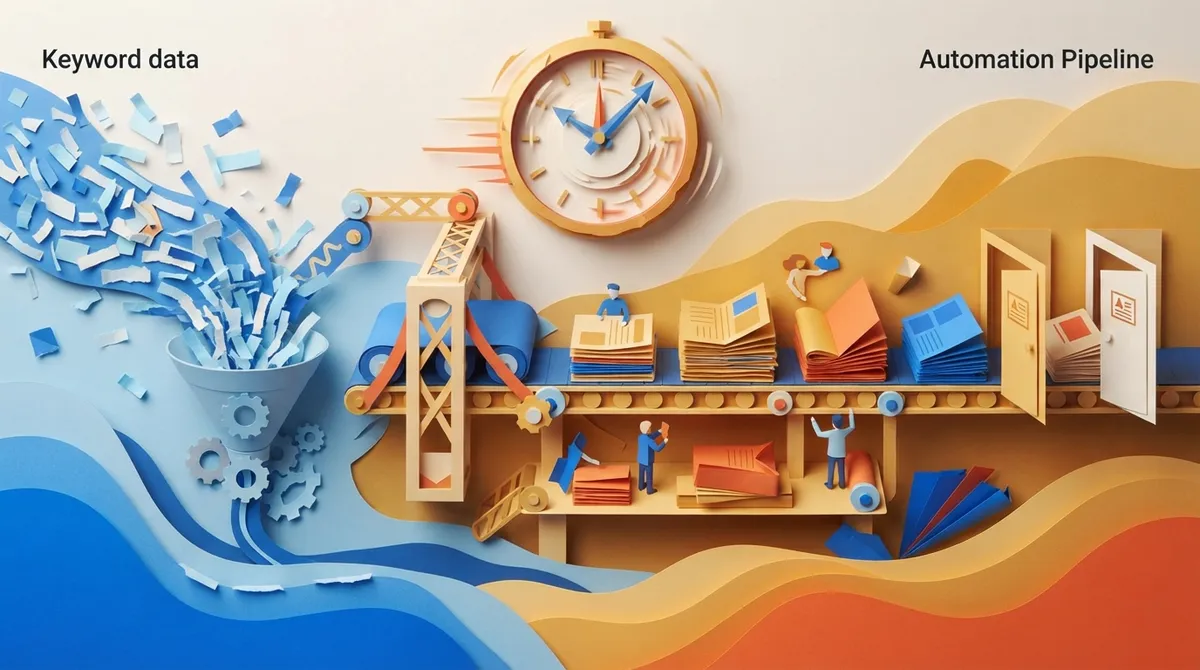
Semrush excels at research but lacks content production—the real gap is turning keyword data into finished, published articles without manual writing and publishing workflows.
-
Full-stack automation platforms like SEO Rocket eliminate the research-to-publishing bottleneck by automating keyword discovery, writing 3,000+ word articles, optimization, and direct publishing in under 10 minutes of setup.
-
True cost-per-article matters more than subscription price; Semrush's $139.95 entry tier becomes $200-300+ when adding content tools, writer time, and editing labor versus $99/month all-in alternatives.
-
AI search visibility is now critical—tools must optimize for ChatGPT, Perplexity, and Gemini, not just Google; most traditional SEO platforms treat this as an expensive add-on rather than core functionality.
-
Evaluate tools across the entire content lifecycle (research, drafting, optimization, publishing, refreshing) rather than individual features; most competitors solve one piece while full-automation platforms handle all stages.
-
Small agencies, in-house teams, and e-commerce sites need scalable content output without hiring additional writers—automation is the only viable way to maintain healthy margins and consistent publishing velocity.
If you have ever stared at a Semrush dashboard wondering why you still don’t have any published articles, you are not alone. Semrush is packed with data. Keyword volume, competitor gaps, backlink charts, technical audits — it’s all there. But data is not content. And content is what actually shows up in Google and gets read by real people. That gap between research and finished, published articles is exactly why so many marketers go looking for semrush competitors in the first place.
This guide walks through the honest landscape of Semrush alternatives in 2026. We’ll cover the traditional SEO suites, the content-optimization specialists, and the newer automation platforms that actually write and publish content for you. Whether you run a small agency, manage an in-house content team, or you’re a business owner trying to figure out SEO without hiring a whole department, this breakdown is for you.
Why People Search for Semrush Competitors
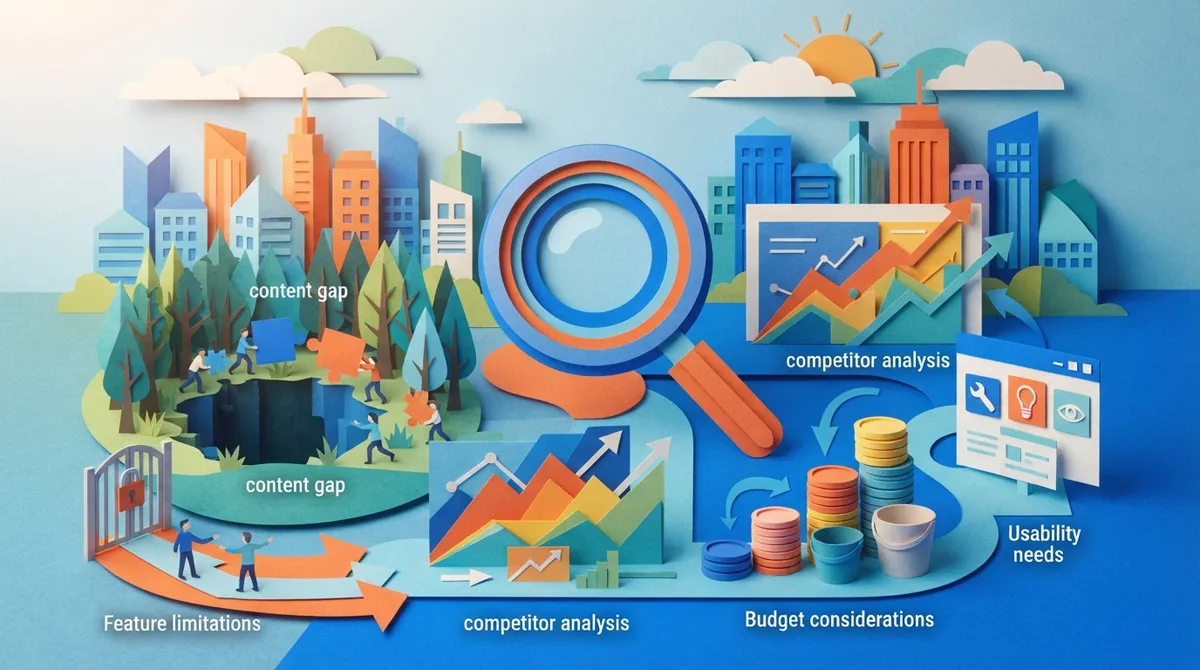
Semrush is a genuinely useful tool for research. It shows keyword volume, competitor rankings, backlink profiles, and technical site issues. But most of that value stops at the research stage. Someone still has to turn all that data into a finished article, optimize it, and publish it on the site.
That’s the part that frustrates a lot of teams. Here are the most common reasons people start shopping for alternatives:
- Pricing feels modular, and costs climb fast once you add content tools or AI-search features
- Semrush is a research platform, not a writing or publishing system
- Small teams don’t have hours to turn keyword lists into finished blog posts
- Agencies need to manage many clients without hiring more writers
- Newer AI search engines like ChatGPT and Perplexity need differently optimized content
If any of these sound familiar, you’re in the right place. Let’s look at what’s actually out there.

How Semrush Pricing Actually Breaks Down
Before comparing alternatives, it helps to know what Semrush actually costs. The pricing is modular, which means your final bill depends on which features you need.
| Plan | Monthly Price | Best For |
|---|---|---|
| SEO Classic Pro | $139.95 | Solo marketers, freelancers |
| SEO Classic Guru | $249.95 | Growing teams, content tools included |
| SEO Classic Business | $499.95 | Agencies, larger sites |
| Content Toolkit (add-on) | $60 | Extra content features |
| SEO + AI Search Starter | $199 | Teams wanting AI visibility tracking |
| SEO + AI Search Advanced | $549 | Larger orgs needing full AI-search data |
Notice something? None of these plans include a system that writes and publishes full articles for you every day. You still need a separate workflow — or a separate tool — to turn that research into content. That’s the real gap semrush competitors are trying to fill.
15 Semrush Competitors Worth Knowing in 2026
Here’s a full rundown of the tools people compare against Semrush, grouped by what they’re actually good at.
Traditional SEO Research Suites
- Ahrefs — Known for deep backlink data and keyword research, starting around $29/month for its entry plan. Great for link analysis, but still requires a separate writing process.
- SE Ranking — A more affordable all-in-one option, around $103.20/month on annual billing. Covers rank tracking, audits, and keyword research.
- Moz Pro — Starts near $39/month annually. A solid, simpler alternative for smaller sites that don’t need enterprise-level data.
- SpyFu — Starts around $39/month. Popular for competitor ad and keyword spying, less focused on content production.
- Mangools — Budget-friendly at about $29.90/month annually. Good for small businesses just getting started with keyword research.
Content Optimization Platforms
- Surfer SEO — Starts at $49/month. Helps optimize drafts using data from top-ranking pages, but you still need to write the draft first.
- Frase — Also starts at $49/month. Strong for research and content briefs, though final drafting still needs human input.
- Clearscope — Starts at $129/month. Popular with enterprise content teams for content scoring and NLP recommendations.
- MarketMuse — Starts around $99/month. Focused on topical authority and content planning across a whole site.
- Thruuu — A SERP analysis tool that helps map content structure based on what’s already ranking.
Workflow and Automation Tools
- AirOps — Offers a free Solo tier and paid plans for larger teams. Built for multi-step SEO workflows like content refreshes and bulk automation.
- StoryChief — Combines planning, collaboration, and distribution in one place, useful for teams publishing across multiple channels.
Enterprise Platforms
- Conductor — An enterprise SEO platform with governance, reporting, and workflow tools. Pricing and setup are typically much higher than the other options here.
Experimentation and Testing Tools
- SEOTesting — Priced from $50/month for one site up to $375/month for 20 sites. A specialized complement for testing SEO changes, not a full replacement for content production.
Full Content Automation Platforms
- SEO Rocket — Built to close the exact gap Semrush leaves open. Instead of handing you a keyword list and stopping there, it plans, writes, optimizes, and publishes full articles automatically, every single day.
This last category is where the real difference shows up. Research tools tell you what to write about. Content-optimization tools help you polish a draft you already wrote. But very few tools actually finish the job — writing the article, optimizing it, and putting it live on your website without you touching a keyboard.
What Actually Matters When Comparing Semrush Alternatives
It’s easy to get distracted by feature lists. Instead, judge each tool by the full content lifecycle: research, brief creation, drafting, optimization, review, publishing, refreshing, and measuring results. Semrush is strong on research and weak on the rest.
Here’s a simple checklist to run through with any tool you’re considering:
- Does it find keyword opportunities based on real search volume and intent?
- Does it write a complete, long-form draft — not just an outline?
- Does it optimize the content automatically, or do you need a separate tool?
- Can it publish directly to your website (WordPress, Webflow, Shopify, Wix)?
- Does it help you show up in AI search tools like ChatGPT, Perplexity, and Gemini?
- What’s the real cost per finished article, not just the subscription price?
That last point matters more than people realize. A $139 monthly plan sounds cheap until you add a $60 content add-on, a writer’s hourly rate, and an editor’s time. Suddenly one article costs hundreds of dollars.
Why SEO Rocket Stands Out From the Pack
Most tools on this list solve one piece of the puzzle. SEO Rocket was built to solve the whole thing. Instead of stitching together a keyword tool, a writing tool, and a publishing workflow, it does everything from one dashboard.
Here’s how the process works, step by step:
- Connect your website — WordPress, Webflow, Shopify, or Wix — in a few clicks.
- Review the keyword opportunities SEO Rocket automatically discovers using live SEO data.
- Approve your content calendar, planning weeks or months ahead.
- SEO Rocket writes a full, 3,000+ word article optimized for both Google and AI search engines.
- The article publishes automatically to your site — no copy-pasting required.
Setup takes under 10 minutes. After that, there’s no monthly maintenance. The Business plan produces one full article per day, and the Agency plan scales up to 10 articles per day across multiple client workspaces. You can explore exactly how it works before deciding if it fits your workflow.
Where SEO Rocket Beats Traditional Research Tools
- Automation: Most competitors require manual prompts, editing, or scheduling. SEO Rocket automates the entire process end to end.
- Content length: Many tools produce short 500–1,500 word posts. SEO Rocket generates 3,000+ word articles built to rank.
- AI search visibility: Most tools focus only on Google. SEO Rocket structures content so AI models can cite it as a trusted source.
- Publishing: Competitors leave you copy-pasting drafts. SEO Rocket publishes directly to your site every day.
- Speed: Traditional workflows take hours per article. SEO Rocket takes 10 minutes to set up, then runs on its own.
- Cost: Hiring an agency can run $3,000–$5,000 a month. SEO Rocket starts at a fraction of that cost.
You can also check out real writing examples and read what current users say in the reviews section before making a decision.
Pricing Comparison: Semrush vs. SEO Rocket
| Feature | Semrush (Research Focus) | SEO Rocket (Full Automation) |
|---|---|---|
| Keyword research | Yes, included | Yes, built-in and automated |
| Full article writing | Not included | Yes, 3,000+ words daily |
| Direct publishing | Not included | Yes, to WordPress, Webflow, Shopify, Wix |
| AI search optimization | Add-on tier, extra cost | Built into every article |
| Monthly cost (entry tier) | $139.95+ | $99/month |
| Setup time | Hours of manual work | Under 10 minutes |
The numbers speak for themselves. When you factor in writing time, editing, and publishing labor, the true cost of a Semrush-based workflow is much higher than the subscription price suggests.
Choosing the Right Tool for Your Situation
Not every business needs the same setup. Here’s a quick guide based on who you are:
- Small SEO agencies managing several clients need scalable output without hiring more writers — automation is the only way to keep margins healthy.
- In-house marketing teams juggling limited resources need consistent publishing without burning out their small team.
- Content managers overseeing large blogs need a system that keeps output steady across dozens of topics.
- Digital marketing consultants want a tool that helps them deliver faster results and stand out from competitors offering the same old services.
- E-commerce SEO specialists need to produce large volumes of product and category content without slowing down the catalog.
- Small business owners with limited budgets need something affordable that doesn’t require a full marketing hire.
If any of these describe you, a pure research tool like Semrush is probably not enough on its own. You’ll want to pair it with — or replace it with — a system that finishes the job.
Common Mistakes When Switching from Semrush
Switching tools can go wrong if you’re not careful. Here are the mistakes to avoid:
- Choosing a tool based only on keyword database size, ignoring content production capability.
- Forgetting to check if the tool publishes directly to your CMS.
- Not accounting for AI search visibility, which is now a major traffic source.
- Skipping a review process for accuracy, brand voice, and factual safeguards.
- Underestimating the true cost per article once labor is included.
Human oversight still matters. Automated workflows can accelerate briefs, outlines, and optimization, but review remains important for accuracy and compliance with search quality standards, similar to guidance found in Google’s own Search Quality Rater Guidelines. Good automation tools build review checkpoints into the process rather than skipping them entirely.
Getting Started the Right Way
If you’re ready to move past research-only tools, the transition doesn’t have to be complicated. Start by mapping out your content lifecycle: research, drafting, optimization, publishing, and refreshing old posts. Then compare tools against that full list, not just their keyword database.
For deeper reading on how automated content fits into a broader SEO strategy, our guide on scaling organic traffic with content automation breaks down the process step by step. You might also enjoy our take on improving AI search visibility, since that’s quickly becoming just as important as ranking in classic Google results.
You can also browse the full feature list or check current pricing to see which plan fits your team size and publishing goals.
Final Thoughts
Semrush is a powerful research tool, and it’s not going anywhere. But research alone doesn’t fill your blog with fresh, ranking content. The real question isn’t whether Semrush is good — it’s whether you have a system to turn its data into published articles, week after week, without burning out your team.
That’s the gap SEO Rocket was built to close. It handles keyword discovery, writing, optimization, and daily publishing in one automated system, so you spend less time managing tools and more time growing your business. For updates on new features, you can always check the changelog or see what’s coming next on the roadmap.
Ready to stop juggling separate tools for research, writing, and publishing? Start for $99/month and let your content calendar fill itself with keyword opportunities that actually turn into published articles.
FAQs
Q: What is the best Semrush competitor for SEO content automation?
A: It really depends on what you need most. If you want a tool that writes and publishes full articles automatically every day, SEO Rocket is built exactly for that. If you just need deeper keyword or backlink data, Ahrefs or SE Ranking might be a better fit.
Q: Is Ahrefs better than Semrush for content research?
A: Ahrefs is often praised for its backlink data and keyword depth, and it starts at a lower price point around $29/month. That said, neither Ahrefs nor Semrush actually writes and publishes your content for you, so you’ll still need a separate solution for that part.
Q: What’s the most affordable Semrush alternative for small businesses?
A: Mangools and Moz Pro are both budget-friendly options for basic keyword research, starting under $40/month. But if you want research plus finished, published articles, SEO Rocket’s $99/month plan covers the whole process in one place.
Q: Can any of these tools help with AI search visibility, not just Google?
A: Yes, this is becoming a bigger deal every year. SEO Rocket builds AI search optimization into every article it publishes, helping your content show up in tools like ChatGPT, Perplexity, and Gemini, not just traditional Google results.
Q: Do I still need Semrush if I use a content automation tool?
A: Not necessarily. Many content automation platforms, including SEO Rocket, have built-in keyword research using live SEO data, so you may not need a separate research subscription at all. It really comes down to whether you want one tool or several working together.